What Gold Jewelry Doesn’t Tarnish Over Time?
If you’re in the market for gold jewelry that won’t tarnish over time, you’ve come to the right place! The best options include pure 24K gold or pieces that are alloyed with platinum.
Pure gold is an excellent choice because it doesn’t react with moisture or oxygen, which means it retains its shine indefinitely.
On the other hand, platinum adds durability and forms a protective layer that helps resist tarnish.
Be cautious with lower-karat gold, as those with copper or nickel alloys can discolor over time.
Additionally, gold plating may wear off, leading to potential tarnishing.
By sticking to pure gold or platinum alloyed pieces, you can ensure your jewelry will last beautifully.
Keep exploring to discover the best ways to care for your precious items!
Why Pure Gold Remains Untarnished

Because pure gold doesn’t react with oxygen or moisture, it stays untarnished over time.
You’ll find that pure gold is inert, meaning it resists corrosion and maintains its shine without losing color.
Unlike gold alloys, which mix pure gold with metals like copper or nickel, pure gold contains no elements that cause tarnish or oxidation.
This natural stability guarantees your 24K gold jewelry keeps its luster, even with daily wear.
However, pure gold’s softness can affect its durability, so jewelers often combine it with other metals to make it stronger.
Still, the pure gold component itself remains unaffected by tarnishing processes, making it ideal if you want jewelry that looks flawless for years without any discoloration or corrosion.
The Role of Platinum in Tarnish Resistance

You’ll find that platinum’s natural corrosion resistance makes it a standout choice for jewelry that needs to last without losing its shine.
When alloyed with gold, platinum enhances the metal’s durability and tarnish resistance, giving you the best of both worlds.
This combination guarantees your jewelry stays beautiful with minimal upkeep.
Platinum’s Corrosion Resistance
When you choose platinum for your jewelry, you’re opting for a metal that naturally resists tarnish and corrosion.
Platinum’s dense and stable atomic structure makes it highly oxidation-resistant, forming a thin, protective oxide layer that prevents discoloration over time.
Unlike other metals, platinum doesn’t require plating or coatings to maintain its shine, thanks to its exceptional corrosion resistance.
This quality ensures your jewelry remains durable, retaining its luster even with regular wear.
Because platinum withstands chemical reactions that often cause tarnish in metals like gold or silver, it’s a preferred choice for high-end pieces designed to last a lifetime.
If you want jewelry that combines lasting beauty and minimal maintenance, platinum’s corrosion resistance makes it a reliable and elegant option.
Alloying Benefits With Gold
Although gold is prized for its rich color and malleability, alloying it with platinum substantially boosts its resistance to tarnish and wear.
When you choose a gold-platinum alloy, you benefit from:
- Enhanced tarnish-resistant properties thanks to platinum’s inert nature.
- Increased durability, making your jewelry last longer without losing its shine.
- Superior resistance to oxidation and environmental corrosion.
- A beautiful blend that combines gold’s warmth with platinum’s natural whiteness.
Platinum’s dense, stable composition means it won’t react easily, helping your jewelry maintain its luster over time.
By alloying gold with platinum, you get a piece that’s not only stunning but also highly resistant to the dulling effects of daily wear and oxidation.
This ensures your jewelry stays radiant for years.
Differences Between Gold Alloys and Their Tarnish Potential

You’ll find that pure gold won’t tarnish because it’s non-reactive, keeping its shine intact.
However, when other metals like copper or silver mix in alloys, they can cause tarnishing over time.
Understanding how these compositions react to moisture and chemicals helps you pick jewelry that stays bright longer.
Pure Gold Resistance
Because pure gold (24K) is non-reactive, it doesn’t tarnish or discolor. This makes it the most durable choice for jewelry.
When you choose 24K gold, you’re selecting a metal with high purity and exceptional gold resistance. Here’s what you should know about pure gold’s resistance to tarnish:
- Pure gold’s non-tarnish quality comes from its chemical inertness. This means it won’t react with air or moisture.
- 24K gold jewelry maintains its luster over time without needing special care.
- High purity in gold reduces the risk of discoloration compared to lower karat alloys.
- Although pure gold is softer, its non-reactive nature ensures long-lasting brilliance.
Opting for pure gold guarantees you minimal tarnishing and maximum shine.
Alloy Composition Effects
Pure gold’s resistance to tarnish sets a high standard, but most jewelry you encounter combines gold with other metals to improve durability and color.
When you choose gold jewelry, the karat value tells you the amount of pure gold mixed with an alloy. Lower karat gold, like 10K or 14K, contains more base metals such as copper or silver, which can reduce tarnish resistance over time.
Rose gold, with its copper alloy, offers better tarnish resistance than silver alloys but may discolor if exposed to harsh chemicals.
White gold often uses nickel or palladium alloys and relies on plating to protect against tarnish and skin reactions.
Gold-filled pieces, with a thick gold layer bonded to a base metal, resist tarnishing better than thin plating but can tarnish if that layer wears off.
Common Tarnish Causes
When you wear gold jewelry, the likelihood of tarnish depends largely on the alloy metals mixed with the gold.
Pure 24k gold resists oxidation, so it won’t tarnish. However, lower-karat gold contains metals that can cause issues.
Here are common tarnish causes to watch out for:
- Copper in alloys reacts with moisture and sweat, leading to tarnish over time.
- Nickel, often used in 14k and 18k gold, can accelerate tarnish and cause allergies.
- Lower purity alloys with more base metals tarnish faster than higher-karat gold like 18k.
- Thin or worn plating exposes base metals underneath, making gold-plated jewelry prone to tarnish.
Understanding these factors helps you choose jewelry that stays bright and beautiful longer.
How 18k and 14k Gold Compare in Durability
Although 18k gold contains a higher percentage of pure gold than 14k, you’ll find it’s more resistant to tarnish and discoloration.
With about 75% pure gold, 18k gold offers superior tarnish resistance compared to 14k gold’s 58.3% purity.
The increased gold alloy in 14k, often copper or nickel, makes it more prone to discoloration and tarnishing when exposed to moisture or chemicals.
While 18k gold is softer, it resists scratching and maintains its shine longer.
Both gold types provide good durability for daily wear, but 18k gold’s higher purity guarantees better longevity and resistance to discoloration.
If you want jewelry that keeps its luster over time without relying on gold plating, 18k gold is the smarter choice for lasting durability.
Understanding Gold Plating and Its Limitations
While 18k gold offers excellent resistance to tarnish due to its high purity, not all gold jewelry maintains its shine this well.
When it comes to gold plating, you should know its limitations:
- Gold plating applies a thin gold layer over a base metal, and plating thickness greatly impacts jewelry durability.
- Thinner layers, especially under 1.5 microns, wear off quickly, exposing the base metal and reducing tarnish resistance.
- PVD gold plating provides better durability and tarnish resistance than traditional plating, extending the jewelry’s lifespan.
- Unlike solid gold, gold-plated pieces require regular maintenance since they’re prone to fading and tarnishing over time.
Understanding these factors helps you choose jewelry that balances beauty with lasting shine.
Benefits of Gold-Filled Jewelry for Long-Term Wear
Because gold-filled jewelry contains a thick layer of genuine gold mechanically bonded to a base metal, it resists tarnishing far better than gold-plated pieces.
You’ll find gold-filled jewelry is highly durable, maintaining its shine and tarnish-resistant qualities even with daily wear. Its thick gold layer doesn’t wear off easily, making it ideal for long-term wear.
Plus, it’s hypoallergenic, so if you have sensitive skin, you won’t have to worry about irritation or discoloration.
To keep your gold-filled jewelry looking its best, simple maintenance like avoiding harsh chemicals and storing it in a dry place goes a long way.
Choosing gold-filled pieces means investing in jewelry that combines beauty, durability, and comfort for years to come.
How Stainless Steel Enhances Jewelry Longevity
Gold-filled jewelry offers impressive durability thanks to its thick gold layer, but stainless steel takes longevity to another level with its unique properties.
Gold-filled jewelry is durable, but stainless steel truly elevates longevity with its exceptional properties.
When you choose stainless steel for your jewelry, you benefit from:
- Tarnish-resistant qualities: Its chromium layer prevents corrosion and keeps your pieces looking fresh.
- Exceptional durability: Stainless steel withstands daily wear without losing shine or shape.
- PVD coating enhancement: This adds extra scratch and tarnish resistance, extending jewelry longevity.
- Corrosion-resistant design: Especially 316 stainless steel, ideal for exposure to moisture and sweat without discoloration.
With these features, stainless steel jewelry maintains its appearance over time.
This makes it a smart, long-lasting choice for anyone seeking low-maintenance, tarnish-resistant accessories.
Best Practices to Maintain Gold Jewelry Shine
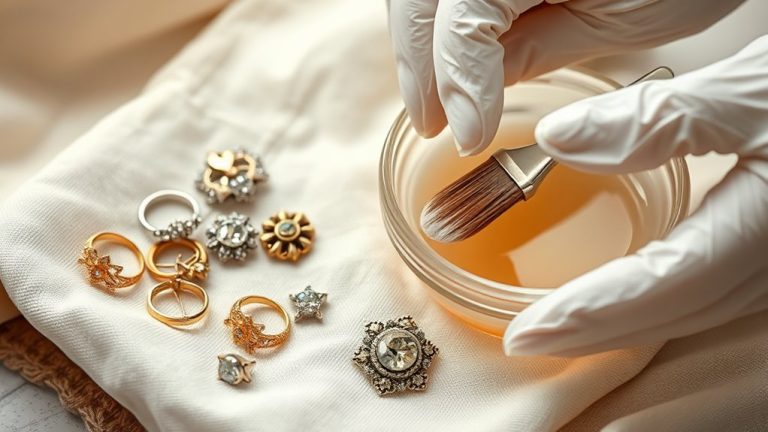
To keep your gold jewelry shining brilliantly, you’ll want to clean it regularly with mild soap and warm water. This helps remove oils and dirt that dull its luster.
Proper care also means storing your pieces, including plated jewelry, separately in soft pouches or jewelry boxes. This prevents scratches and helps maintain their tarnish-resistant qualities.
Avoid exposing your gold to harsh chemicals like chlorine, perfumes, and cleaners. These can weaken the metal and reduce its shine.
For durable brilliance, it’s best to remove your jewelry before swimming or engaging in strenuous activities.
Periodic professional polishing or applying a protective coating can further enhance jewelry maintenance. This helps preserve its bright appearance over time.
Following these best practices guarantees your gold remains as radiant and durable as when you first wore it.
Frequently Asked Questions
What Karat Gold Won’t Fade?
You won’t see fading in 24k gold since it’s pure and resistant to tarnish.
Higher karat gold, like 18k, holds its shine better than lower karats.
This is because lower karats contain more metals that may cause discoloration.
Does 14K or 18K Gold Tarnish Easier?
You’ll find 14K gold shows its character sooner, while 18K gold holds its glow longer.
Because 18K has more pure gold, it resists tarnish better.
This means your jewelry will keep shining with less fuss over time.
Does 23K Gold-Plated Tarnish?
Yes, 23k gold-plated jewelry does tarnish because the thin gold layer wears off over time.
You’ll want to avoid water and chemicals to keep it looking good longer.
But it’s more prone to fading than solid gold.
What Type of Gold Does Not Turn Green?
You won’t see green stains from pure 24k gold or high-karat gold like 18k because they’re non-reactive and contain fewer alloys.
Lower-karat gold often causes green discoloration due to mixed metals.
Conclusion
If you want jewelry that truly stands the test of time, pure gold and platinum are your best friends—they resist tarnish like a knight’s armor.
While gold alloys and plating might falter, choosing quality pieces like 18k gold or gold-filled options keeps your shine alive.
Remember, just like a garden needs care, your jewelry thrives with regular maintenance.
So, treasure wisely and let your gold glow forever.
In conclusion, if you’re looking for gold jewelry that doesn’t tarnish over time, opt for pure gold or platinum. Quality pieces like 18k gold and gold-filled options are excellent choices that maintain their luster.
Just don’t forget to care for your jewelry regularly to keep it looking its best. With the right selection and maintenance, your gold jewelry can shine brilliantly for years to come!