What Does 925 Stamped on Jewelry Mean?
When you come across “925” stamped on your jewelry, it indicates that the piece is crafted from sterling silver.
This means it contains 92.5% pure silver combined with 7.5% alloy metals, such as copper, which enhance its strength and durability.
This marking ensures that your jewelry isn’t merely silver-plated but consists of solid sterling silver, providing you with better quality and longevity.
Additionally, the “925” stamp helps you trust the authenticity and value of your piece.
If you’re curious about how to identify genuine sterling silver items or how to properly care for them, there’s plenty more to learn!
Understanding the 925 Stamp on Jewelry
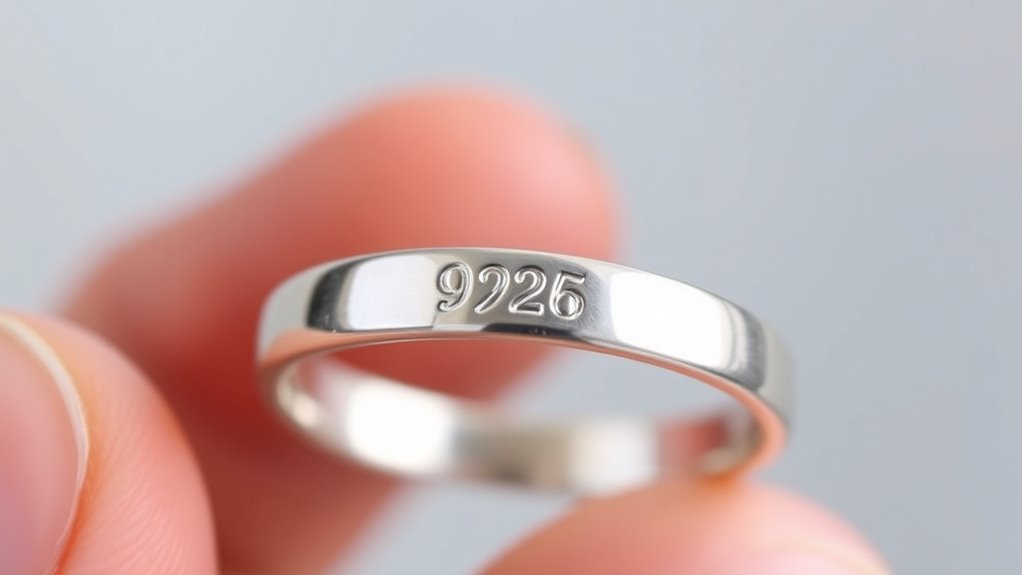
When you see a 925 stamp on jewelry, it signifies the piece is made of sterling silver with 92.5% metal purity.
This mark confirms the jewelry isn’t just silver-plated but crafted from solid sterling silver.
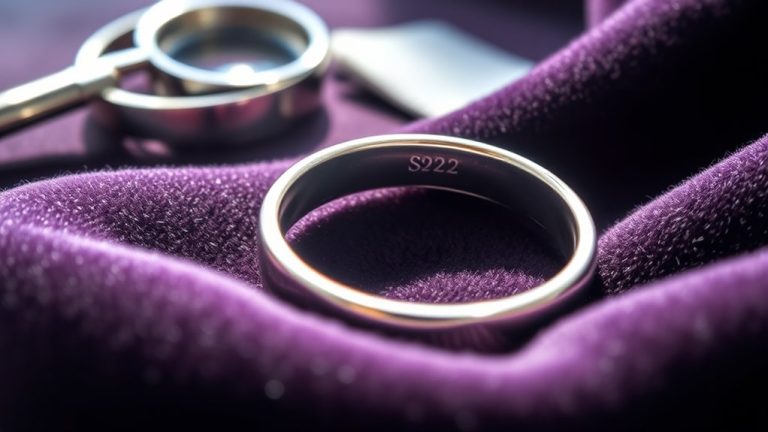
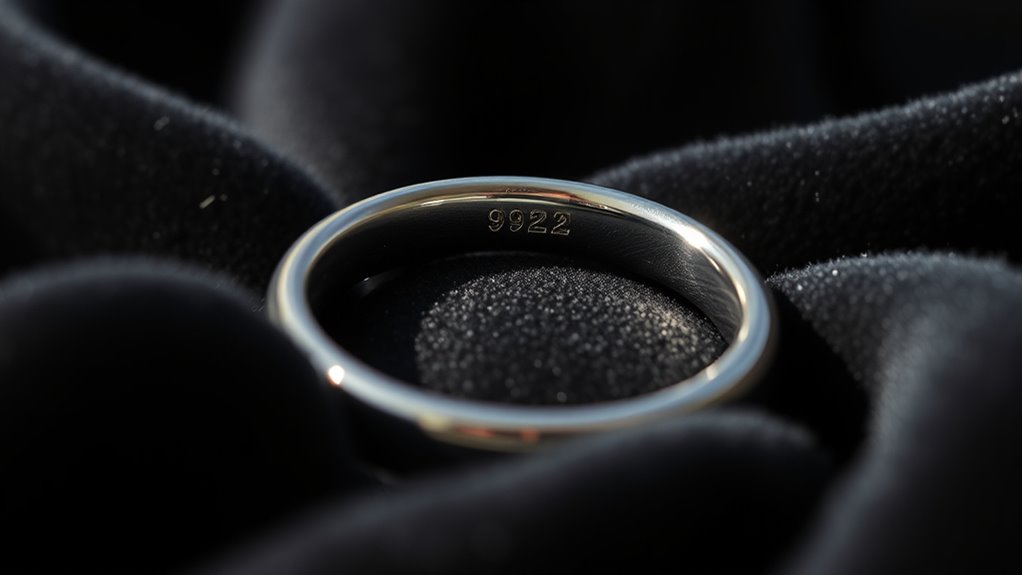
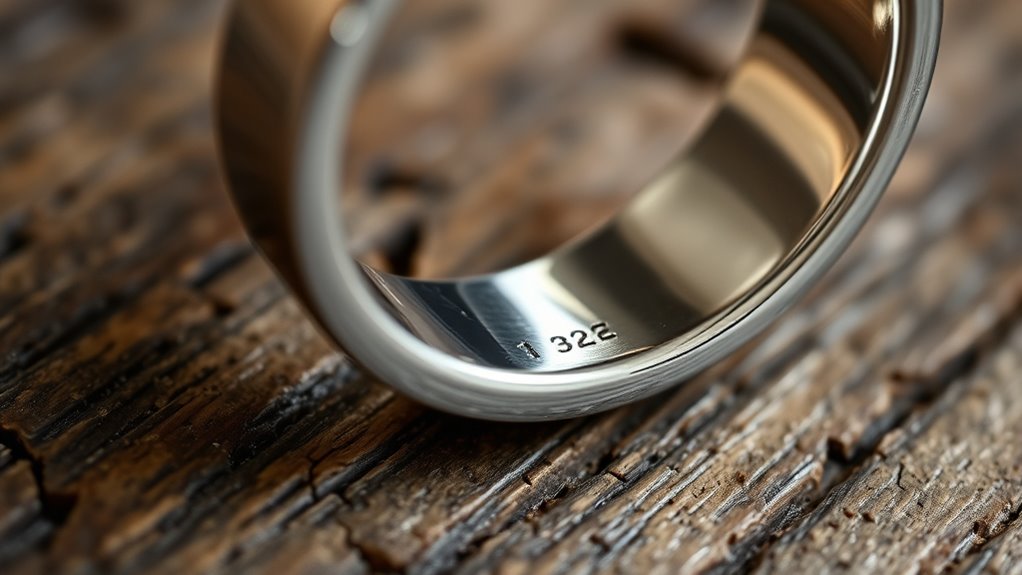
Typically, you’ll find the 925 stamp inside rings, on necklace clasps, or on earring backs—places that help verify authenticity.
Look for the 925 stamp inside rings, on necklace clasps, or earring backs to verify authenticity.
The hallmark is recognized worldwide and regulated to ensure consistent metal purity across all sterling silver items.
When examining your jewelry, look for a clear, evenly spaced 925 stamp; this detail helps you confirm the piece’s genuine sterling silver composition and avoid counterfeit or lower-quality metals.
Understanding this mark lets you appreciate the quality behind your silver jewelry.
Composition and Purity of Sterling Silver
Recognizing the 925 stamp as a mark of sterling silver leads to understanding its specific makeup.
Sterling silver consists of 92.5% pure silver, with the remaining 7.5% usually made up of other metals, primarily copper.
This 7.5% alloy enhances the metal’s strength and durability.
You see, pure silver alone, with nearly 100% purity, is too soft for everyday jewelry.
By combining 92.5% silver with 7.5% copper or similar metals, sterling silver maintains a bright shine and resists tarnishing.
This makes it ideal for regular wear.
This precise composition guarantees consistent quality across pieces stamped 925.
So, when you see this mark, you know the jewelry balances high purity with practical durability.
It offers both beauty and resilience in your sterling silver items.
Differences Between Sterling Silver and Pure Silver
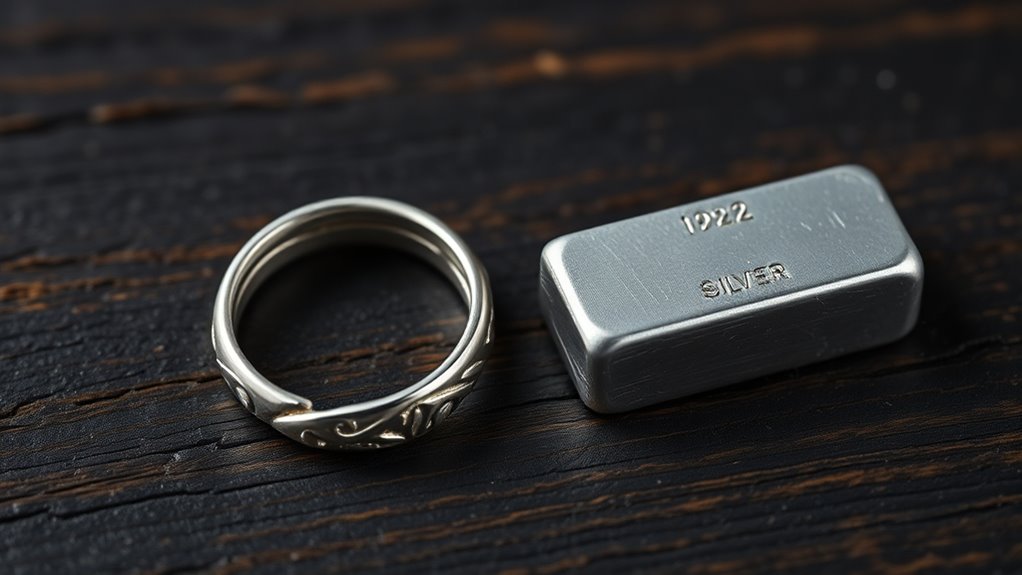
Although both pure silver and sterling silver share a common base, their differences in composition considerably affect their durability and suitability for jewelry.
Pure silver contains 99.9% silver, making it very soft and prone to scratching and bending.
This softness limits its use in everyday jewelry despite its initial resistance to tarnish.
On the other hand, sterling silver, marked as 925 in jewelry markings, is an alloy with 92.5% silver and 7.5% other metals like copper.
This blend makes sterling silver much harder and more resilient, ideal for durable jewelry pieces.
While pure silver’s delicacy restricts its practicality, sterling silver’s strength and ability to develop a polishable patina make it the preferred choice for most jewelry you wear regularly.
Importance of the 925 Mark in Jewelry Quality
When you see the 925 stamp on a piece of jewelry, it guarantees that the item contains 92.5% pure silver, meeting strict international standards for quality and authenticity.
This mark confirms the jewelry is made of sterling silver, ensuring durability and a higher resale value compared to silver-plated or lower-quality alloys.
The 925 stamp acts as a trusted symbol, helping you distinguish genuine sterling pieces from imitations or substandard metals.
By choosing jewelry with this hallmark, you’re assured of its composition and craftsmanship.
In short, the 925 stamp plays a vital role in maintaining the integrity of sterling silver jewelry.
It gives you confidence in the quality and authenticity of your purchase every time.
How to Identify Genuine 925 Sterling Silver Pieces
If you want to guarantee your jewelry is genuine 925 sterling silver, start by carefully inspecting the piece for the “925” stamp.
You’ll typically find this stamp in discreet spots like inside a ring band or on a clasp. This hallmark confirms the metal contains 92.5% pure silver.
To identify authentic sterling silver, follow these steps:
- Examine the hallmark closely. Make sure the “925” is clear, evenly spaced, and sharply engraved. You want to avoid any blurry or uneven marks.
- Look for additional hallmarks, such as maker’s marks or country stamps, that can help verify authenticity.
- Perform a magnet test. Remember, sterling silver is non-magnetic, so if your piece sticks strongly to a magnet, it’s likely not genuine.
For extra assurance, consider professional tests like acid or XRF analysis, especially if the hallmark seems questionable.
It’s always better to be safe than sorry when it comes to your jewelry!
Common Locations of the 925 Stamp on Jewelry
You’ll usually find the 925 stamp in specific spots like the inside of rings, clasps on necklaces, or the back of earrings.
Using a magnifying glass or jeweler’s loupe can help you spot these small marks more easily.
Knowing where to look guarantees you can verify the authenticity of your sterling silver pieces with confidence.
Typical Stamp Placement
Where exactly can you find the 925 stamp on your jewelry?
The stamp’s location varies depending on the piece, but it’s always placed discreetly to keep the jewelry’s look intact while confirming its authenticity.
Here are typical mark locations to check:
- Inside the band of rings – this is the most common and easiest place to spot the 925 stamp.
- Near the clasp or hook of necklaces and bracelets – look closely as the mark is tiny.
- On the backs or posts of earrings – often a subtle spot for the stamp without disrupting design.
Tools for Detection
Finding the 925 stamp on your jewelry often requires a keen eye and the right tools.
Since the mark is usually tiny and placed in less visible spots, using a magnifying glass or jeweler’s loupe helps you spot it clearly.
Look inside ring bands near the base, on necklace clasps or extension chains, and on the backs or hooks of earrings.
Pendant bails or loops may also carry the stamp, especially on finer pieces.
These tools make it easier to verify authenticity by revealing the discreet 925 hallmark that confirms your jewelry is sterling silver.
Without a magnifying glass or loupe, you might miss this essential stamp hidden under settings or inside small components.
Authenticity Verification Spots
Although the 925 stamp can be tiny and easy to overlook, knowing where to check on your jewelry makes authenticity verification much simpler.
When you want to confirm jewelry authenticity, focus on these common spots where the sterling silver 925 stamp appears:
- Inside the band of rings, usually near the shank or inner surface.
- On necklaces and bracelets, look closely at the clasp or clasp hinge.
- For earrings, check the back post or hinge area where the 925 mark is often engraved.
You might need a magnifying glass or jeweler’s loupe to spot this small, crisp stamp.
Durability and Care Tips for 925 Silver Jewelry
Because 925 silver jewelry can tarnish and scratch over time, it’s important to handle it with care to maintain its durability and shine.
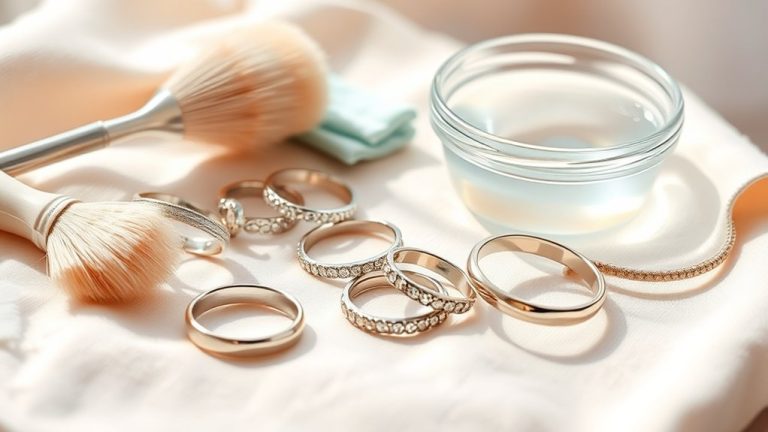
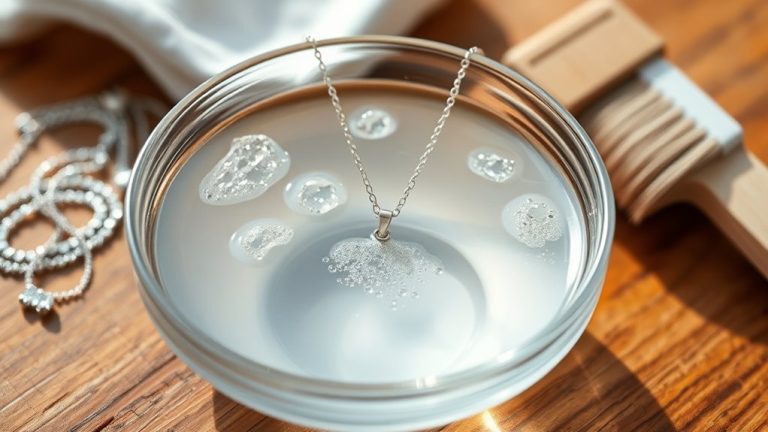
Sterling silver needs regular cleaning with mild soap and a soft cloth to gently remove tarnish.
Polishing with a silver cloth can restore brightness without damaging the surface.
To slow tarnishing, avoid contact with lotions, perfumes, and water.
Storing your pieces in airtight pouches or anti-tarnish cloths helps protect them from moisture and sulfur compounds.
Also, remember to remove jewelry before swimming or exercising to prevent corrosion and scratches.
| Care Tip | Reason | Recommended Action |
|---|---|---|
| Cleaning | Removes tarnish | Use mild soap & soft cloth |
| Polishing | Restores shine | Silver polishing cloth |
| Storage | Prevents tarnish | Airtight pouch/anti-tarnish |
| Avoid Chemicals | Prevents damage | Keep away from lotions, etc. |
The Role of Alloy Metals in Sterling Silver
When you wear sterling silver jewelry, you’re benefiting from more than just pure silver; alloy metals like copper and zinc play a crucial role in making the piece stronger and more durable.
Sterling silver contains 92.5% pure silver and 7.5% alloy metals, which boost its durability and resistance to damage.
Here’s how alloy metals impact sterling silver:
- Enhanced Hardness – Copper strengthens the silver, preventing bending or scratching.
- Improved Tarnish Resistance – Alloy metals help reduce tarnishing, keeping your jewelry looking fresh.
- Maintained Appearance – They add durability without compromising the silver’s classic shine.
Understanding the role of alloy metals helps you appreciate why 925 stamped sterling silver is both beautiful and built to last.
Comparing 925 Sterling Silver With Silver-Plated Alternatives
When you choose 925 sterling silver, you’re getting a solid piece made of 92.5% pure silver.
This is quite different from silver-plated jewelry, which only has a thin silver layer over base metals.
Sterling silver lasts longer and holds its value better because it’s durable and authentic.
On the other hand, plated pieces tend to tarnish quickly.
Understanding these differences helps you pick jewelry that matches your expectations for quality and longevity.
Composition Differences Explained
Although both 925 sterling silver and silver-plated jewelry may look similar at first glance, their compositions differ markedly.
Understanding this can help you make informed choices.
The 925 stamp on sterling silver confirms it contains 92.5% pure silver mixed with 7.5% other metals like copper.
This mix gives it strength without sacrificing beauty.
Silver-plated pieces, however, only have a thin silver layer over base metals and usually lack the 925 stamp.
Here’s a quick breakdown:
- Sterling silver is a solid alloy with a consistent composition.
- Silver-plated jewelry has just a surface layer, not a solid blend.
- The stamp on sterling silver guarantees authenticity, unlike silver-plated marks such as “EP.”
Knowing the composition helps you spot genuine sterling silver instantly.
Durability and Longevity
Three key factors set 925 sterling silver apart from silver-plated jewelry: durability, longevity, and maintenance.
When you choose sterling silver, you get a metal that’s 92.5% pure silver, mixed with an alloy like copper to boost strength.
This composition enhances durability, letting your jewelry resist bending, scratching, or breaking.
Silver-plated pieces, on the other hand, have only a thin silver layer that wears off quickly, exposing the base metal beneath.
This makes them prone to tarnishing and damage over time.
Sterling silver maintains its appearance longer and withstands daily wear and cleaning without losing its integrity.
Plus, you can polish sterling silver repeatedly to restore its shine.
Meanwhile, silver-plated jewelry often degrades with each cleaning, requiring re-coating or replacement sooner.
Value and Authenticity
Because the 925 stamp guarantees that jewelry contains 92.5% pure silver, it assures you of its authenticity and superior quality compared to silver-plated alternatives.
When you choose sterling silver marked 925, you’re investing in genuine value and long-lasting beauty. Here’s why:
- Authenticity: The 925 stamp confirms the piece is made of sterling silver, not just coated with a thin silver layer like silver-plated jewelry.
- Durability: Sterling silver resists tarnishing better and withstands daily wear, unlike silver-plated items that wear off quickly.
- Value: Genuine 925 sterling silver holds resale value, while silver-plated pieces often lose worth over time.
Understanding these differences helps you make smarter choices.
This way, you can ensure your jewelry remains both beautiful and valuable.
Frequently Asked Questions
Is 925 Stamped Jewelry Worth Anything?
Yes, your 925 stamped jewelry holds value because it’s genuine sterling silver.
Its worth depends on weight, craftsmanship, and silver prices.
You can get it appraised to understand its true market value and resale potential.
Is 925 Silver Good Quality?
Yes, 925 silver is good quality.
You’ll get durable, authentic sterling silver jewelry that’s strong enough for everyday wear.
Just remember to clean and care for it properly to keep its shine and prevent tarnishing.
Does Fake Silver Have a 925 Stamp?
Of course, fake silver loves slapping on a 925 stamp—because nothing says “genuine” like a cleverly forged mark.
But don’t be fooled; you’ll want to check quality beyond the stamp to avoid disappointment.
Do They Put Real Diamonds in 925?
Yes, they do put real diamonds in 925 silver jewelry.
But remember, the 925 stamp only confirms silver purity.
You should always check for diamond certification to verify authenticity and quality.
The stamp doesn’t guarantee gemstones.
Conclusion
Think of the 925 stamp on your jewelry like a trusted seal.
It assures you that your piece is made of genuine sterling silver—92.5% pure silver mixed with durable alloys.
This mark not only guarantees quality, but it also helps you distinguish real silver from plated alternatives.
By recognizing and caring for your 925 jewelry properly, you can keep its shine and value lasting.
Just like a timeless treasure passed down through generations, your 925 pieces deserve attention and love.
In conclusion, the 925 stamp is your assurance of quality sterling silver.
Understanding its significance will help you appreciate the value of your jewelry and maintain its beauty.
So, take the time to care for your 925 jewelry, and enjoy its lasting elegance for years to come!