How to Clean Antique Jewelry With 10 Essential Steps
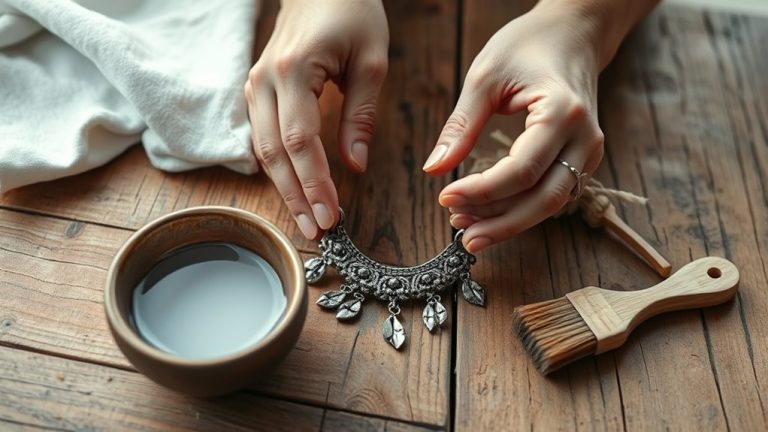
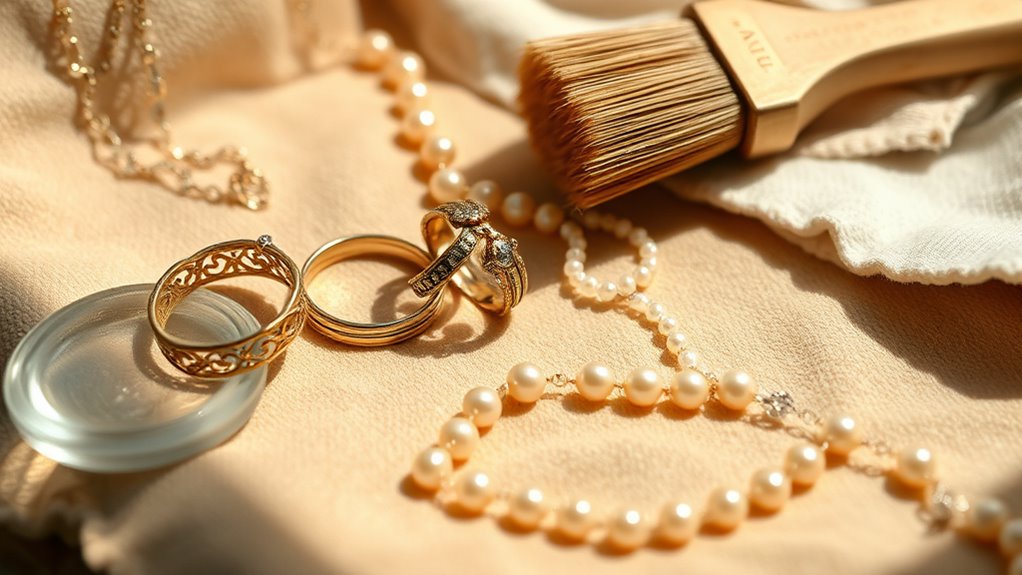
To clean your antique jewelry, it’s important to follow some essential steps to ensure your treasured pieces remain in pristine condition.
First, carefully inspect your jewelry for any loose stones or signs of damage. This initial check helps you avoid further issues during cleaning.
Next, gently remove dust using a soft brush.
Identifying the metal and gemstones is crucial as it determines the right cleaning solution. For gold or platinum pieces, a mixture of mild soap and warm water works wonders.
If your jewelry is silver, baking soda is an excellent choice.
Always steer clear of harsh chemicals, as they can cause more harm than good.
After cleaning, make sure to dry your jewelry thoroughly to prevent tarnish or moisture damage.
Proper polishing can keep your pieces shiny and protected.
Keep going to uncover all the essential steps for caring for your antique jewelry!
Inspect and Prepare Your Antique Jewelry
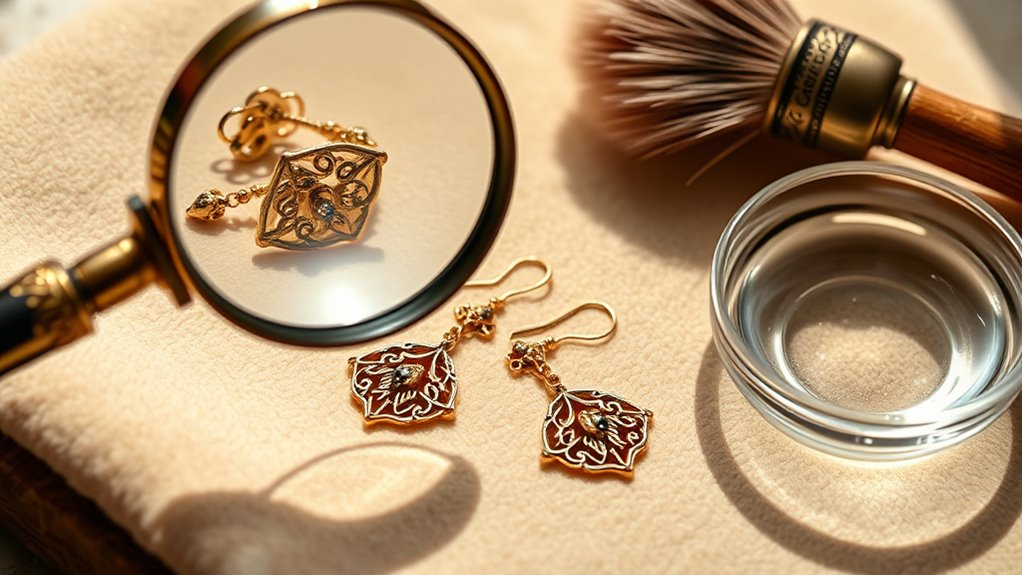
Before you start cleaning, carefully inspect your antique jewelry with a magnifying glass to spot any loose stones, corrosion, or damage.
Begin by closely examining your antique jewelry for loose stones, corrosion, or any signs of damage.
You need to prepare your piece by identifying the metal type—whether it’s gold, silver, or platinum—as this affects which cleaning methods you can safely utilize.
Take note of the gemstones embedded in your jewelry, as some require gentler care.
Look closely for any fragile settings or delicate craftsmanship that could be harmed during cleaning.
Checking for hallmarks or stamps will help confirm the metal type and purity, guiding your approach.
Remove Dust and Residue With a Soft Brush
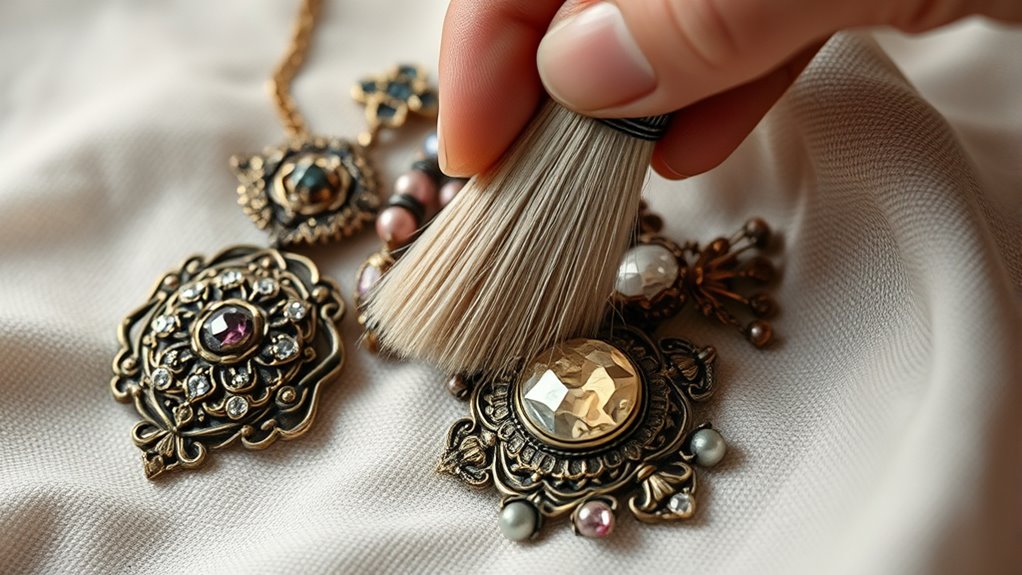
When you start cleaning your antique jewelry, gently removing dust and residue with a soft-bristled brush is essential to prevent scratches and damage.
Use gentle cleaning techniques and delicate handling to protect the piece’s finish. A soft-bristled brush, such as a toothbrush, is perfect for dust removal, especially when dealing with intricate designs where dust and debris can hide.
Work in a well-lit area so you can spot any unseen debris. If needed, use a magnifying glass to thoroughly clean tiny crevices.
Always remove visible dust before applying any liquids to avoid trapping dirt inside.
This careful approach to jewelry care guarantees your antique pieces stay beautiful and intact without risking harm during cleaning.
Identify Metal and Gemstone Types
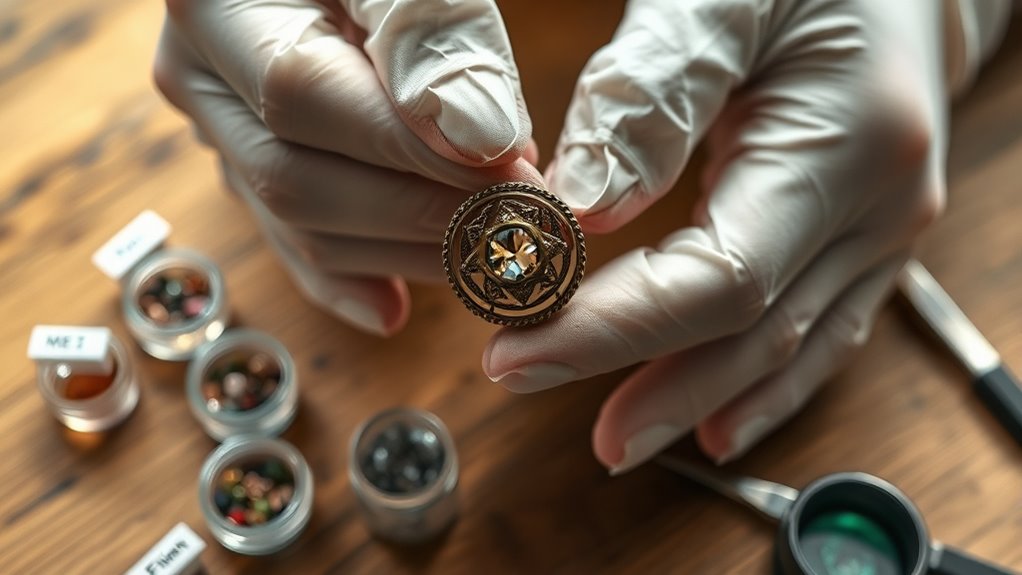
How can you be sure what metals and gemstones make up your antique jewelry?
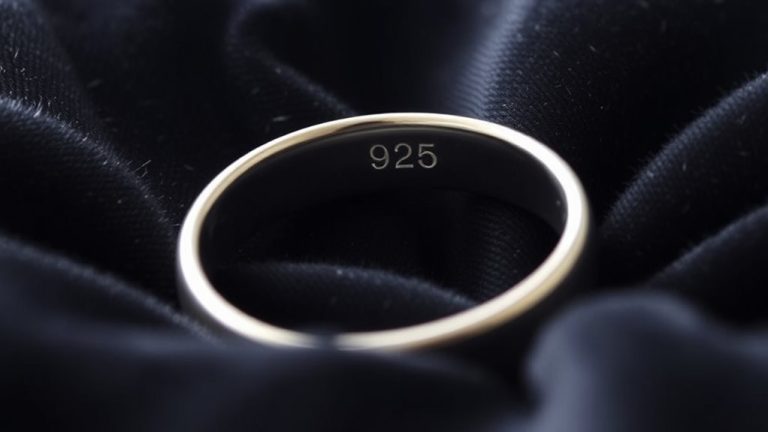
Start by examining metal stamps or hallmarks like “925” for sterling silver or “14K” for gold.
Begin by checking for metal stamps such as 925 for silver or 14K for gold.
Use a magnifying glass to spot these tiny markings clearly.
Observe surface wear, color, and hue to differentiate between gold, silver, and platinum.
Pay attention to tarnish and patina, which reveal the metal’s age and composition.
For gemstone identification, closely inspect the stones’ color and clarity, but avoid guessing if you’re unsure.
If you can’t confidently identify the metal or gemstones, consult a professional jeweler.
Proper identification is essential before cleaning to prevent damage and preserve your jewelry’s value and beauty.
Select Appropriate Cleaning Solutions
Knowing the metals and gemstones in your antique jewelry helps you pick the right cleaning solutions.
Depending on the metal type, you might use ammonia and water for gold and platinum, or a diluted baking soda solution for silver.
Always choose gentle cleaning agents, especially for precious stones. Harsh chemicals like bleach or strong household cleaners can cause damage.
Porous or soft stones like opals and pearls require extra care. It’s best to use mild soaps or specialized cleaners that are free from acids and abrasives.
Soapy water is often a safe choice for many pieces, but always test your cleaning solution on a small, hidden spot first.
If you’re unsure, seek professional cleaning to protect your valuable items and preserve their beauty over time.
Clean Gold Antique Jewelry Safely
Since gold is a soft metal, you should handle your antique gold jewelry gently to maintain its luster and avoid scratches.
Start your cleaning routine by wiping the piece with a soft cloth after each wear to remove oils and dirt.
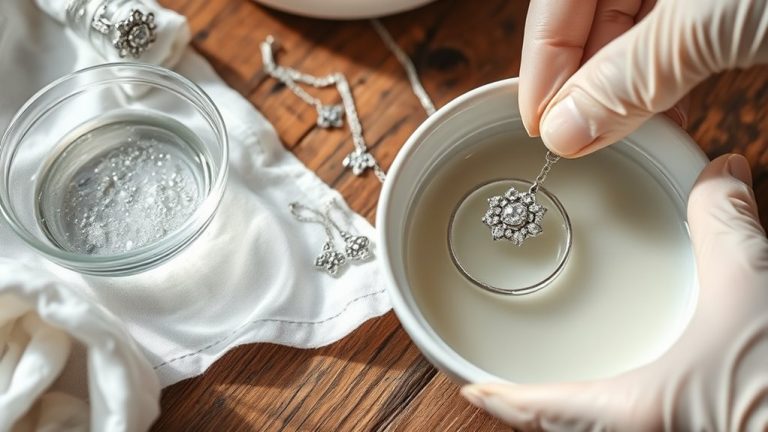
For a deeper clean, soak your jewelry in warm water mixed with a few drops of mild soap for up to 15 minutes.
Use a soft toothbrush to gently clean crevices, but avoid harsh chemicals or abrasive tools that could damage the surface.
Rinse thoroughly with lukewarm water and dry immediately with a soft cloth to prevent water spots.
Finish by using a jewelry polishing cloth to restore shine, ensuring a gentle cleaning process that keeps your gold looking its best.
Clean Platinum Antique Jewelry Gently
When cleaning your platinum antique jewelry, use a soft-bristled toothbrush with mild soap to avoid damage.
Be sure to skip harsh chemicals like bleach or ammonia, as they can harm the metal’s surface.
Rinse thoroughly and dry with a soft cloth to keep your piece looking its best.
Gentle Cleaning Methods
Although platinum is a durable metal, you’ll want to clean your antique jewelry gently to preserve its shine and avoid damage.
Start by dipping a soft-bristle brush into lukewarm water mixed with mild soap for gentle cleaning.
Carefully scrub your piece, focusing on removing dirt and tarnish without applying pressure that could scratch delicate metals.
Rinse thoroughly with lukewarm water to wash away soap residue, then dry immediately with a soft, lint-free cloth to prevent water spots and further tarnish.
Avoid abrasive materials or harsh chemicals, as these can damage your platinum jewelry.
For heavily tarnished or delicate pieces, consider seeking professional cleaning or using specialized platinum solutions recommended by jewelers to maintain your jewelry’s beauty and integrity.
Avoid Harsh Chemicals
Cleaning your platinum antique jewelry with care means steering clear of harsh chemicals that can damage both the metal and any delicate gemstones.
You should avoid cleaning solutions containing bleach or ammonia, as these harsh chemicals can cause chemical damage to your precious pieces.
Instead, opt for gentle cleaning using a mild soap and warm water solution.
Never submerge delicate jewelry with intricate settings in strong agents to prevent damage.
Gently scrub the platinum with a soft toothbrush or cloth, then rinse thoroughly with lukewarm water.
Dry with a lint-free cloth to avoid residue buildup.
To maintain your jewelry’s beauty and avoid damage, schedule professional cleaning and inspections periodically.
This approach preserves the integrity of your antique collection while ensuring safe, effective care.
Clean Silver Antique Jewelry Carefully
When cleaning silver antique jewelry, start by identifying its silver marks to guarantee proper care.
Use gentle methods like a soft cloth or mild soap solution to avoid damaging delicate details.
To keep your pieces shining, store them properly to prevent tarnish buildup over time.
Identifying Silver Marks
Since silver jewelry often carries small hallmarks like “925” or “800,” it’s important to examine your piece closely.
Use a magnifying glass or jeweler’s loupe to find these marks.
Silver marks indicating sterling silver or antique silver typically show metal content, helping you identify authentic pieces.
Inspect jewelry thoroughly, focusing on inconspicuous areas like clasps, backs, or inner bands.
These spots are where hallmarks and maker’s marks are usually stamped to avoid wear from cleaning.
Some antique silver includes assay office stamps alongside metal content marks, giving extra verification.
If the silver marks are faded or unclear, consider a chemical test or professional appraisal to confirm authenticity.
It’s a smart step before proceeding with cleaning.
Recognizing these details ensures you treat your silver jewelry properly, preserving its value and condition.
Gentle Cleaning Methods
Although silver antique jewelry requires careful handling, you can gently restore its shine using simple methods.
Use a soft cloth or silver polishing cloth for tarnish removal without scratching.
For deeper cleaning, soak your delicate pieces briefly in warm water with mild soap, then softly brush with a soft toothbrush.
Avoid abrasive cleaners or harsh chemicals to preserve the patina that gives antiques their character.
Always rinse thoroughly with lukewarm water and pat dry immediately with a soft cloth.
If needed, test a jewelry cleaner on a small area first.
| Step | Action |
|---|---|
| Use soft cloth | Remove surface tarnish gently |
| Soak briefly | Warm water with mild soap |
| Brush softly | Soft toothbrush for crevices |
| Avoid harsh agents | No bleach, ammonia, or toothpaste |
| Dry thoroughly | Pat dry with soft cloth immediately |
Preventing Tarnish Buildup
Keeping your silver antique jewelry looking its best means more than just occasional gentle cleaning.
Tarnish buildup occurs when silver reacts with sulfur compounds in the air, forming silver sulfide, which darkens your pieces.
For effective tarnish prevention, store your silver in anti-tarnish storage options like pouches or airtight containers with silica gel packets to limit exposure to moisture and air.
Regular gentle polishing with a soft cloth helps remove surface tarnish and maintain shine without damaging delicate finishes.
Avoid harsh chemicals or abrasive cleaners, as they can harm your antique silver.
Also, keep your jewelry away from cosmetics, lotions, and household chemicals, which accelerate tarnish buildup.
Consistent silver jewelry care ensures your treasured pieces stay beautiful and tarnish-free longer.
Clean Antique Jewelry With Gemstones
When you clean antique jewelry with gemstones, you need to handle the settings gently to avoid damaging the stones.
Follow this cleaning process to keep your precious stones in pristine condition:
Follow these steps to maintain the beauty and integrity of your precious gemstone jewelry.
- Use a soft brush, like a soft-bristled toothbrush, dipped in a mild soap solution diluted in warm water to gently clean around the gemstones.
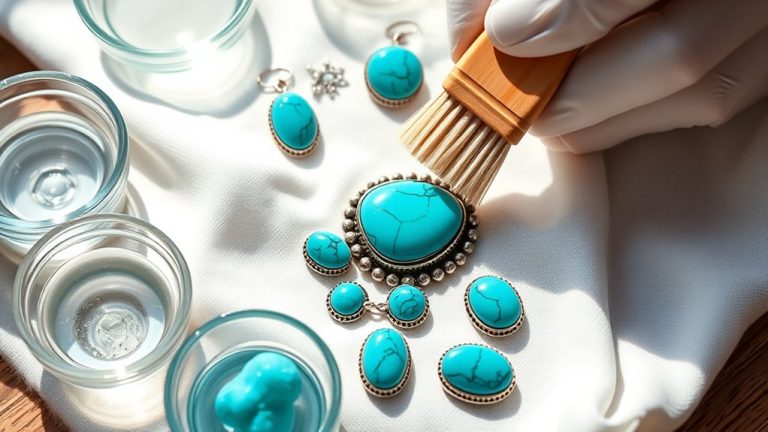
- Avoid soaking porous stones such as opals, turquoise, or pearls, as they can absorb liquids and get damaged.
- Rinse thoroughly with lukewarm water to remove all soap residue, then pat dry with a soft, lint-free cloth.
- For intricate areas, carefully use a cotton swab dipped in the soap solution to remove dirt without harming the gemstone settings.
This method guarantees your antique jewelry and gemstones stay beautiful and secure.
Dry Jewelry Thoroughly to Prevent Damage
After cleaning, turn your jewelry upside down for at least 15 minutes to let gravity drain away moisture.
Then, gently pat dry with a soft, lint-free cloth, making sure to reach all crevices and settings.
Taking these steps helps prevent tarnish and protects delicate parts from damage.
Gravity Drain Method
Although cleaning your antique jewelry removes dirt and grime, you still need to dry it thoroughly to prevent damage.
The gravity drain method is a simple yet effective drying technique that helps protect your valuable pieces.
Here’s how to use gravity drain for ideal jewelry care:
1. Flip your jewelry upside down right after cleaning to let gravity pull out residual moisture.
2. Leave it draining in a clean, dry space for at least 15 minutes to ensure thorough drying.
This position prevents water from pooling in delicate parts or crevices, reducing tarnish prevention risks.
3. Thorough drying with gravity drain minimizes corrosion and moisture-related damage.
Using this method preserves the metal’s integrity and keeps your antique jewelry looking its best.
Happy caring for your treasures!
Moisture Removal Techniques
To protect your antique jewelry from damage, you need to dry it thoroughly using effective moisture removal techniques.
After cleaning, hold your piece upside down for at least 15 minutes. This lets gravity drain residual moisture from settings and crevices.
Next, gently pat your jewelry with a soft, lint-free cloth to absorb any remaining dampness.
Avoid heat sources or direct sunlight, as excessive humidity or high temperatures can harm delicate materials.
For intricate designs, use a gentle air blower or compressed air to remove moisture from hard-to-reach areas.
Regularly inspect your jewelry for signs of moisture and re-dry as needed before storing.
Proper drying prevents tarnish and corrosion and maintains your antique’s beauty by eliminating all traces of moisture.
Polish Your Antique Jewelry for Lasting Shine
When you want to keep your antique jewelry shining beautifully, using a soft, lint-free polishing cloth designed for jewelry is essential.
This helps restore shine without damaging delicate surfaces.
Follow these steps for effective jewelry care:
- Use a polishing cloth to gently buff your antique jewelry in a circular motion, applying minimal pressure.
- Avoid abrasive materials like paper towels that can scratch or harm the patina.
- Regularly polish your pieces after cleaning to prevent tarnish buildup and maintain their luster.
- For heavily tarnished or intricate designs, consider specialized polishing paste or seek professional polishing services.
Taking these simple steps will help your cherished pieces maintain their beauty for years to come!
Frequently Asked Questions
What Is the Best Way to Clean Antique Jewelry?
You should gently clean antique jewelry with a soft brush and mild soap solution, avoiding harsh chemicals.
Always inspect for damage first, and if unsure, consult a professional jeweler to preserve its value and beauty safely.
Can Dawn Dish Soap Clean Jewelry?
Yes, you can use Dawn dish soap to clean jewelry.
Just mix a few drops with warm water, soak your piece briefly, and gently brush it.
Then, rinse and dry to keep it sparkling without damage.
How to Clean Jewelry With Essential Oils?
You dilute essential oils like lemon or tea tree with water.
Then, dip a soft cloth in the mix and gently wipe your jewelry.
Always test a small area first,
then rinse with plain water to avoid damage.
What Is the Best Homemade Cleaner for Jewelry?
Think of mild dish soap in warm water as a gentle river washing away grime.
You’ll find it’s the best homemade cleaner, softly lifting dirt without harming your jewelry’s delicate sparkle or finish.
It’s a simple yet effective solution that keeps your treasures shining brightly!
Conclusion
Now that you’ve carefully cleaned your antique jewelry, you might think the job’s done—but here’s the secret: how you care for it next truly decides its future sparkle.
Will you store it properly, avoiding moisture and harsh conditions?
Will you handle it gently, preserving its delicate beauty?
The choice is yours.
Follow these steps, and your treasured pieces won’t just shine—they’ll tell their story for generations to come.
In conclusion, proper care and maintenance of your antique jewelry is essential for preserving its beauty and value.
By storing it in a safe environment, handling it with care, and regularly cleaning it, you can ensure that your jewelry remains in pristine condition.
Remember, each piece has a history, and with the right attention, it can continue to sparkle and share its story for many years. So take the time to nurture your antique jewelry; it deserves it!