Can You Wear Jewelry in an MRI?
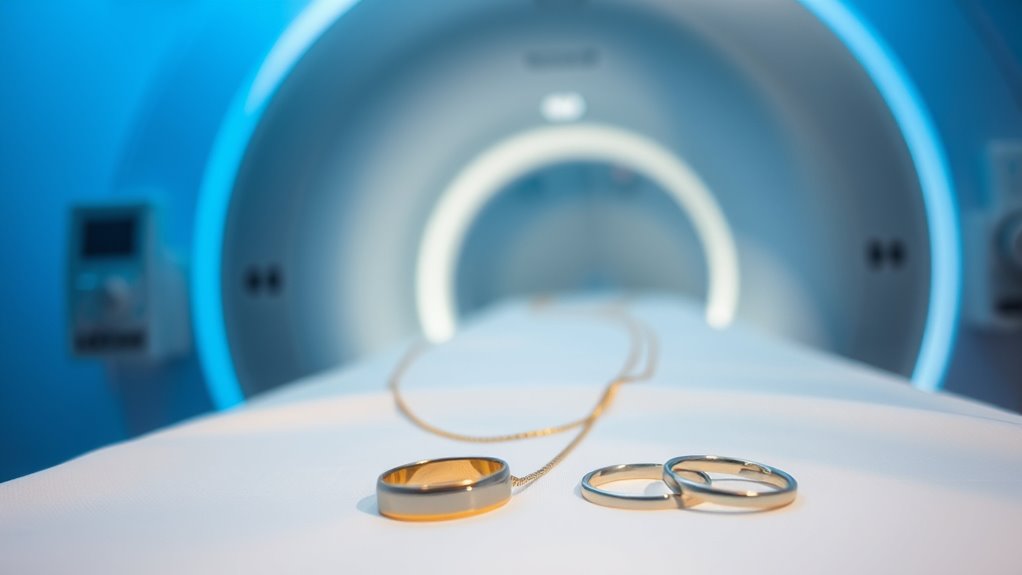
You shouldn’t wear jewelry in an MRI because metal can be pulled by the powerful magnets, causing injury or discomfort.
Metals like iron are especially risky, and even nonferromagnetic jewelry can heat up or distort your scan results.
It’s safest to remove all jewelry and piercings before your appointment.
If you have permanent piercings, tell the staff so they can manage any risks.
Keep your belongings metal-free to guarantee a smooth, safe scan.
Discover how to prepare for your MRI safely.
Risks of Wearing Jewelry During an MRI

Why should you remove your jewelry before an MRI?
During magnetic resonance imaging, any metal on your body, including body piercing jewelry, can pose serious risks.
Metals like iron or nickel may be attracted to the strong magnetic field, causing the jewelry to move suddenly and potentially injure you.
Metals such as iron or nickel can be pulled by MRI magnets, risking sudden movement and injury.
Conductive materials in your jewelry can also heat up due to radiofrequency energy, leading to burns.
Beyond safety, wearing jewelry can distort the MRI images. This makes it harder for doctors to get accurate results.
In rare cases, metal jewelry might even interfere with the MRI machine’s operation, risking equipment damage.
To keep yourself safe and ensure clear imaging, always remove all jewelry—including body piercings—before your magnetic resonance imaging appointment.
Types of Metals and Their Impact on MRI Safety

Although some metals are safer than others during an MRI, you still need to be cautious about what you wear or have implanted.
The metal type affects your body’s safety and the scan quality.
Ferromagnetic metals like iron can cause dangerous attraction and heating, while nonferromagnetic metals such as gold are usually safer but may still cause image issues.
Conductive metals risk heating and burns. To make sure you avoid harm, understand your jewelry or implants’ metal type.
| Metal Type | MRI Safety Impact |
|---|---|
| Ferromagnetic | Unsafe, strong attraction, heating |
| Nonferromagnetic | Safer, possible image interference |
| Conductive | Risk of heating and burns |
| Diamagnetic | Low risk, generally safe |
| Paramagnetic | Low risk, caution needed |
Recommended Practices for Jewelry Removal Before MRI

Because metal jewelry can pose serious risks during an MRI, you should always remove all jewelry before your scan.
Jewelry removal is a quick and simple step that helps prevent magnetic attraction and heating hazards.
Removing jewelry quickly prevents magnetic pulls and heat dangers during an MRI scan.
Metallic jewelry, including body piercings, can distort MRI images, so taking it off guarantees clearer results.
If you can’t remove some jewelry, inform the MRI staff so they can stabilize it with tape or insulating materials to reduce movement and heat buildup.
Always double-check for hidden metallic pieces like earrings or necklaces before entering the MRI room.
Prioritizing jewelry removal not only protects you from injury but also improves the quality of your MRI, making the process safer and more effective.
Handling Permanent or Non-Removable Body Piercings
Handling permanent or non-removable body piercings during an MRI can be challenging, but it’s essential for your safety.
Body piercings made of ferromagnetic metals can move or heat up due to radio waves, posing risks.
If removal isn’t possible, follow these steps:
- Inform MRI staff about your piercings so they can assess risks.
- Stabilize piercings with tape or insulating materials to reduce movement and heating.
- Use alternative spacers like catheters if temporary removal is needed to prevent tract closure.
- After the MRI, reinsert jewelry carefully using the original removal method to avoid damage or discomfort.
Always communicate openly with MRI technicians to ensure your piercings don’t interfere with the scan or your safety.
Preparing Yourself and Your Belongings for an MRI Scan
Before your MRI scan, you’ll need to remove all jewelry and body piercings to avoid safety hazards and image distortion.
Store valuables like watches, rings, and necklaces safely or leave them at home.
Wear loose, metal-free clothing or a hospital gown to prevent metal interference.
Also, avoid makeup, lotions, or powders that might contain metal particles.
Always inform the technologist about any metal implants or body jewelry you can’t remove.
| What to Remove | Why |
|---|---|
| Watches | Metal can interfere |
| Rings | Safety hazard |
| Necklaces | Image distortion |
| Earrings | Magnetic attraction |
| Body piercings | Risk of burns or injuries |
Preparing properly guarantees a safe, smooth MRI experience without compromising image quality.
Frequently Asked Questions
What if You Can’t Remove Jewelry for MRI?
If you can’t remove jewelry for an MRI, tell the technologist right away.
They’ll stabilize it with tape or special materials and monitor you closely.
Precautions will be taken to prevent heating, movement, or image distortion during the scan.
What Jewelry Is Safe for MRI?
Think of MRI as a magnetic dance—you can wear non-metallic, medical-grade titanium, or precious metals like gold without stepping on toes.
Just avoid ferromagnetic metals, and always check with your MRI guide before the show begins.
What Happens if You Leave Jewelry on During an MRI?
If you leave jewelry on during an MRI, it can heat up, cause burns, move dangerously, or distort images.
You might get injured, and the scan could need repeating. This can waste time and risk your safety.
What Happens if You Accidentally Wear Metal in an MRI?
Around 15% of MRI scans get delayed due to metal.
If you accidentally wear metal, the scan pauses, they remove it, and repeat imaging.
You risk burns, injury, or distorted results, so always double-check before entering.
Conclusion
You shouldn’t wear jewelry during an MRI because metal can interfere with the machine and pose safety risks.
Imagine Sarah, who forgot her nose ring before a scan—it caused discomfort and delayed her procedure.
To avoid this, always remove all jewelry, including body piercings if possible, before your MRI.
Preparing ahead keeps you safe and guarantees smooth imaging.
Remember, your safety and clear results depend on following these simple steps.
In conclusion, wearing jewelry during an MRI can lead to complications and inaccurate results.
To ensure a seamless experience, be sure to remove all metal items, including body piercings, before your appointment.
Being proactive about your jewelry will not only protect you but will also help medical professionals obtain the best possible imaging results.
So, take a moment to prepare, and you’ll be on your way to a safe and effective MRI experience!