How Does Tarnished Copper Jewelry Look?
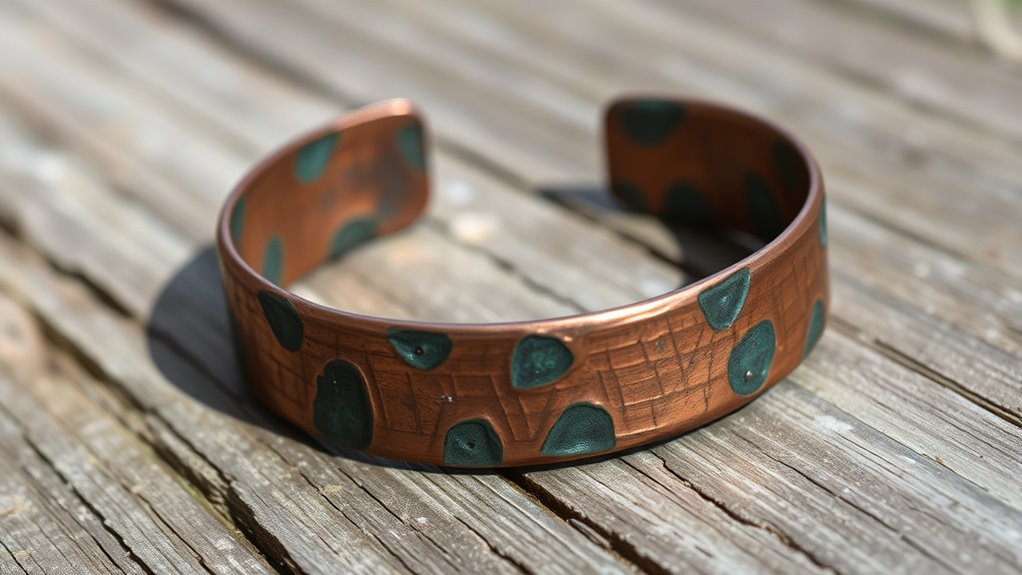
When your copper jewelry tarnishes, it transforms from shiny and warm to deep browns, blacks, and greenish hues. This shift creates a unique vintage look that many people adore.
You’ll notice uneven discoloration and a matte finish, with some spots developing a bluish or green patina. This occurs due to natural chemical reactions with air, moisture, and even your skin.
The tarnish adds rustic character and depth to each piece, making your jewelry truly one-of-a-kind.
If you want to discover how the environment and wear influence these changes, keep exploring further!
Characteristics of Tarnished Copper Jewelry
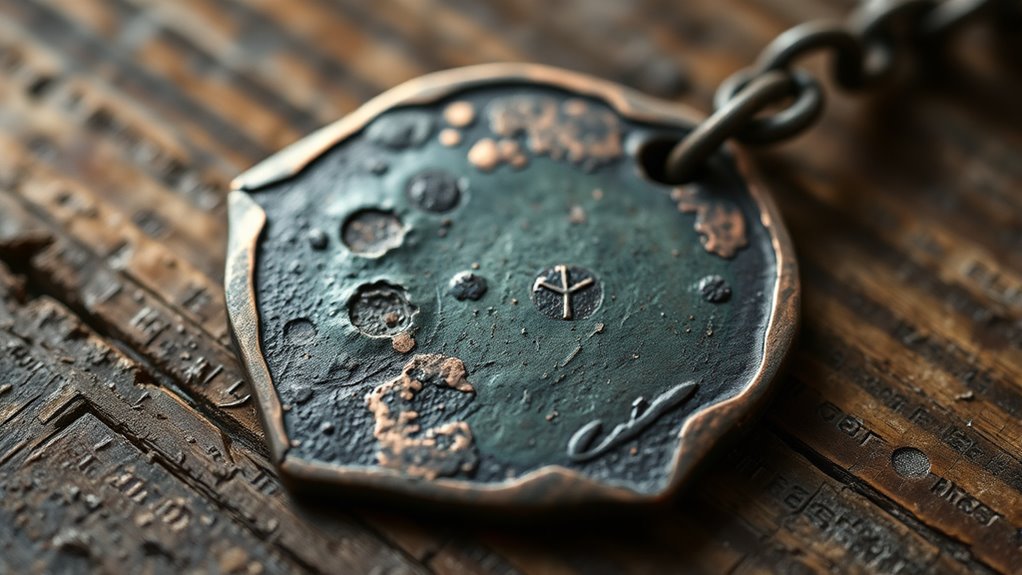
Although copper jewelry initially shines with a bright, polished look, it quickly develops a tarnished surface when exposed to air and moisture.
You’ll notice copper tarnish forming as oxidation takes hold, creating a dark or dull patina that ranges from reddish-brown to blackish hues.
This aging effect leads to uneven discoloration and a matte finish in tarnished areas, contrasting with the original shine.
If your jewelry spends time outdoors or in humid places, you might spot greenish spots caused by copper sulfide.
These variations depend on environmental exposure and the piece’s original finish, giving each item a unique, aged appearance.
Understanding these characteristics helps you appreciate how tarnish transforms copper jewelry over time.
Chemical Processes Behind Tarnish Formation
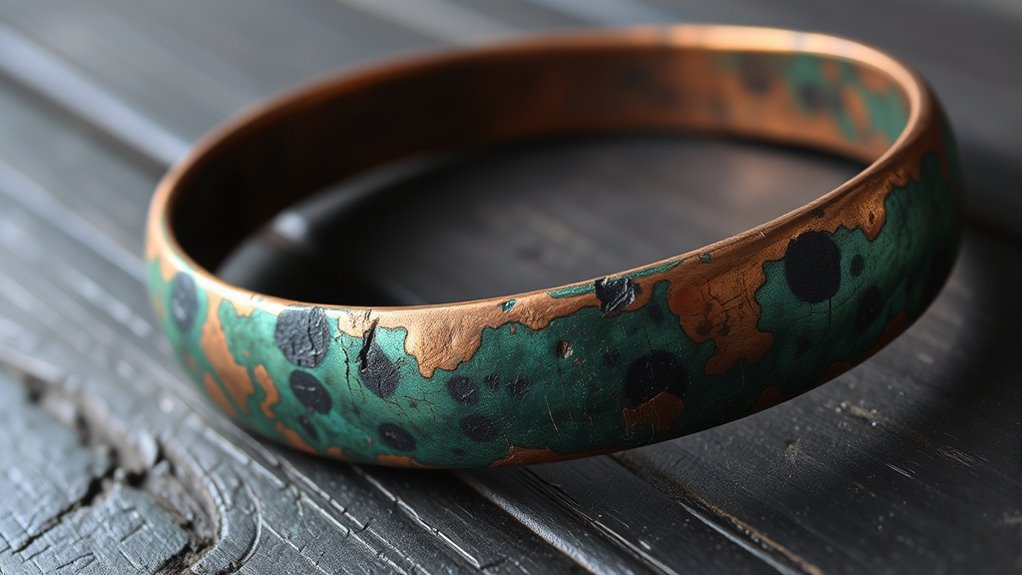
When you expose copper jewelry to air and moisture, chemical reactions quickly start altering its surface.
Oxidation initiates surface oxidation, forming copper oxide that creates a dark or reddish-brown layer.
Sulfur compounds in the environment react with copper, producing copper sulfide, which leads to the bluish-green patina.
This chemical process of tarnish formation is a thin, reversible layer that changes your jewelry’s look without harming the metal.
Here’s what happens during tarnish formation:
- Oxygen exposure triggers oxidation, darkening the copper jewelry.
- Sulfur compounds react to form copper sulfide, adding a patina.
- Moisture and acids speed up chemical reactions, accelerating tarnish.
Understanding these processes helps you appreciate how your copper jewelry naturally evolves over time.
Visual Effects of Patina on Copper Pieces
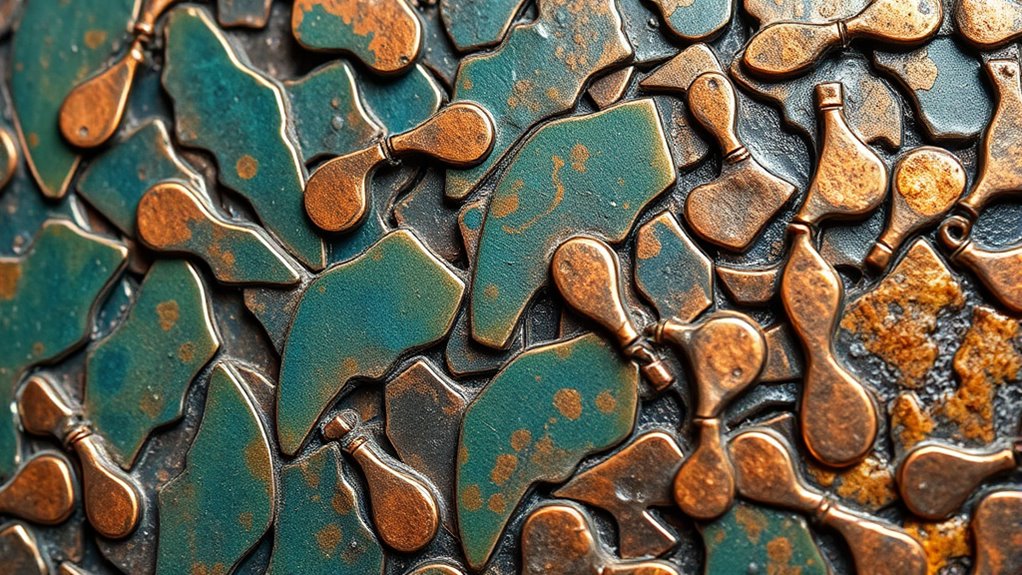
As copper jewelry reacts with its environment, it develops a rich palette of colors.
These can range from deep browns to vibrant greens and subtle bluish hues.
This patina results from oxidation and gradual color changes, giving each piece a unique vintage appearance.
You’ll notice green and bluish hues forming unevenly, with surface texture varying from smooth to rough.
Tarnish highlights aging and environmental exposure, often creating streaks or spots that enhance character.
| Color Range | Surface Texture | Visual Impact |
|---|---|---|
| Deep Browns | Matte or textured | Rustic, aged look |
| Vibrant Greens | Uneven, spotty | Natural, organic feel |
| Subtle Bluish Hues | Smooth or swirling | Unique, artistic vibe |
This evolving surface invites you to appreciate copper’s natural beauty.
Influence of Environment and Wear on Tarnish Appearance
Since copper jewelry interacts closely with its surroundings, the environment and your daily wear play a crucial role in shaping its tarnish appearance.
Exposure to humidity and air moisture speeds up oxidation, giving your jewelry a darker or greenish hue.
Environmental pollutants like sulfur compounds intensify tarnish, sometimes creating bluish-green tones.
Your skin chemistry and physical contact add to uneven discoloration, while wear and tear dull polished areas, revealing a matte patina.
Consider these influences on your copper jewelry’s tarnish:
- Humidity and moisture promote faster oxidation and greenish patina formation.
- Environmental pollutants deepen tarnish with bluish-green hues.
- Skin chemistry and physical contact cause uneven tarnish and matte spots.
Understanding these factors helps you anticipate how your copper jewelry ages.
Embracing Tarnish as a Design Element
Though tarnish might seem undesirable at first, you can embrace it as a unique design element that adds depth and character to copper jewelry.
The natural patina formed through oxidation creates unique surface textures and color variations, enhancing the vintage appeal and artistic value of each handcrafted piece.
Jewelers often highlight this aged aesthetic to produce striking visual effects, turning tarnish into a mark of authenticity and history.
By appreciating these evolving hues, you celebrate the jewelry’s individuality and timeless charm.
| Aspect | Effect on Jewelry | Visual Outcome |
|---|---|---|
| Tarnish | Adds depth | Rich, layered appearance |
| Patina | Creates color variations | Bluish-green to deep brown |
| Oxidation | Develops texture | Unique tactile feel |
| Handcrafted Detail | Enhances artistic value | Distinctive aged aesthetic |
| Vintage Appeal | Evokes history | Timeless, meaningful look |
Frequently Asked Questions
Does Copper Jewelry Tarnish?
Yes, copper jewelry does tarnish over time.
You’ll notice it develops a dull, sometimes greenish or dark patina due to oxidation, especially in humid conditions.
This natural change gives your jewelry a unique, vintage character you’ll appreciate.
How Can You Tell if Jewelry Is Copper?
You can spot copper jewelry miles away by its fiery reddish-orange glow—it’s like wearing a tiny sunset!
If it darkens to green or bluish spots over time, that’s a dead giveaway it’s copper.
How to Clean Tarnished Copper Jewelry?
You can clean tarnished copper jewelry by soaking it in lemon juice and salt.
Then, scrub gently with a soft brush to remove the tarnish.
Alternatively, you can use a baking soda paste for the same effect.
After cleaning, rinse the jewelry thoroughly and dry it completely.
Finally, store it in a dry, airtight container to keep it looking great!
What Color Does Copper Turn When It Tarnishes?
When copper tarnishes, it usually turns dark brown or black.
Sometimes, you’ll notice bluish-green hues called verdigris or reddish-orange tones in early tarnish stages.
The exact color depends on moisture, air, and sulfur exposure.
Conclusion
You might think tarnished copper jewelry just looks old or neglected, but ironically, that same tarnish gives each piece a unique story and character you can’t find in shiny, new metals.
As you wear it, the changing patina reflects your environment and lifestyle, turning accidental chemistry into intentional art.
So, instead of hiding the tarnish, you can actually embrace it—making your jewelry not just an accessory, but a living expression of time and experience.
Tarnished copper jewelry can be a beautiful reminder of your journey, showcasing the beauty of imperfection.
Each piece tells a story, transforming over time and adding depth to your personal style.
In conclusion, rather than viewing tarnish as something negative, consider it a badge of honor that highlights your unique experiences.
Tarnished copper jewelry is not just an accessory; it’s a vibrant narrative, a reflection of you. Embrace its charm and let it shine in its own special way!