Can You Shower With Gold Jewelry?
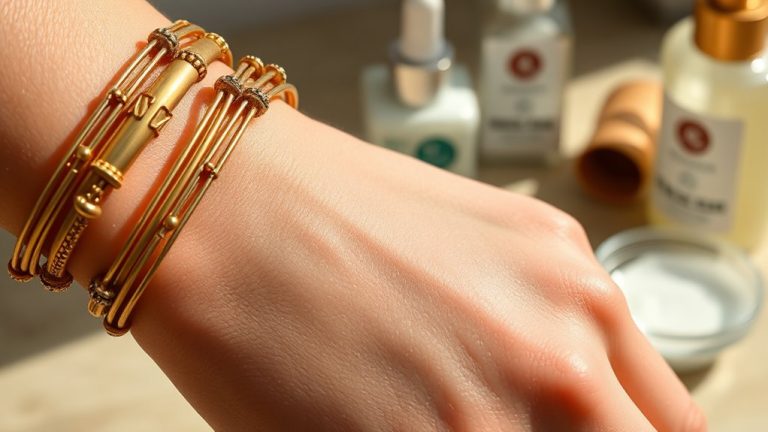
Can you shower with gold jewelry? The answer is yes, particularly if your gold piece is 14K or higher. Solid gold is quite resistant to water and can handle a shower without significant issues.
However, it’s important to note that if your jewelry is gold-plated or features stones, it’s best to remove it before taking a shower. This will help avoid any potential damage or discoloration.
White gold can be a bit trickier. Its rhodium plating might wear off with frequent exposure to water, while yellow gold is generally more durable and holds up better.
By following simple care steps afterward, you can keep your jewelry looking fantastic. To learn more about how to protect your gold pieces, keep exploring these helpful tips!
Understanding Gold Jewelry and Water Exposure
Although gold is known for its resistance to water, not all gold jewelry reacts the same when exposed to moisture.
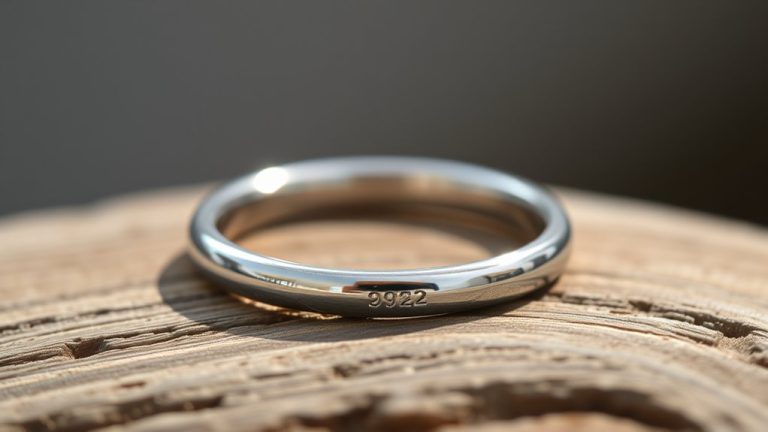
Solid gold pieces, especially those 14K and higher, offer good water resistance due to their higher gold content and stable gold alloys.
Solid gold jewelry, particularly 14K and above, resists water well thanks to its rich gold content and durable alloys.
Pure gold (24K), while soft, provides maximum resistance and minimal tarnishing.
However, lower karat jewelry or gold plating can be more vulnerable.
Gold plating, in particular, wears down with water exposure, leading to dullness and potential tarnish.
Since gold alloys often contain metals like copper or silver, these can react with water and cause discoloration over time.
To protect your jewelry, practicing regular jewelry maintenance and understanding tarnish prevention are essential.
Knowing these differences helps you manage water exposure wisely and keep your gold shining.
The Dos of Wearing Gold in the Shower
When you wear gold jewelry in the shower, choosing high-quality pieces like 14K or 18K solid gold can help protect your investment from water damage and tarnish.
These types of gold are more water resistant, making them better suited for occasional exposure.
Always remove your jewelry with gemstones before showering to shield them from water and chemicals that can damage stones or settings.
To maintain your gold’s shine, clean your gold jewelry regularly using mild soap and warm water.
After showering, dry and store your gold jewelry in a dry, soft pouch or jewelry box to prevent scratches and moisture exposure.
The Don’ts of Wearing Gold in the Shower
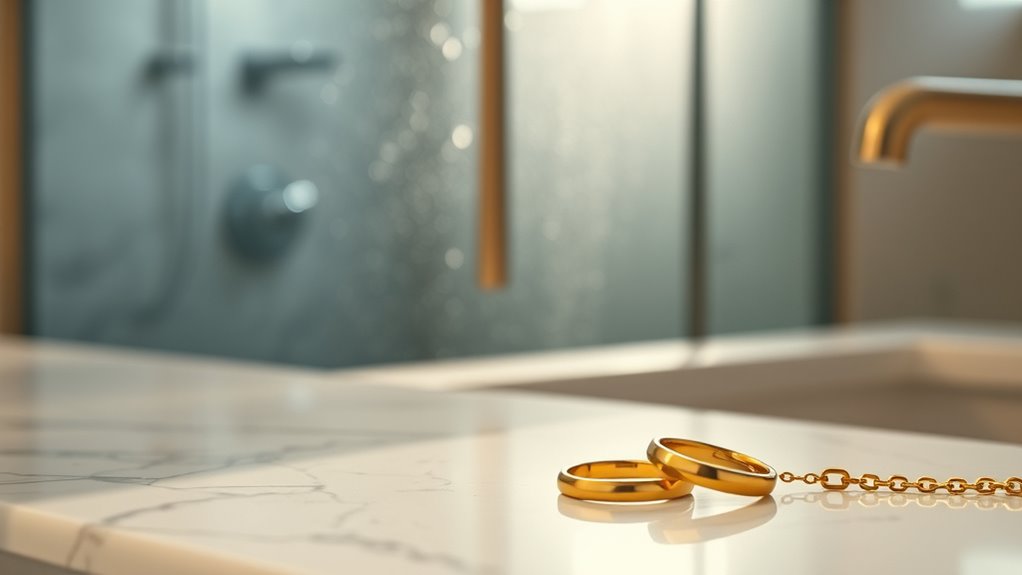
Since water and chemicals can quickly damage your gold jewelry, you should avoid wearing gold-plated pieces or any jewelry with gemstones in the shower.
Gold-plated jewelry has a thin layer of gold coating that water exposure can wear off fast, leading to visible damage.
Showering with jewelry that has loose stones is risky; water and harsh chemicals may worsen their settings or cause the stones to fall out.
Also, don’t wear damaged jewelry or pieces with scratches or cracks in the shower, as water can seep in and cause further water damage.
Harsh chemicals like chlorine accelerate tarnishing and weaken your gold.
Comparing White Gold and Yellow Gold in Water
Understanding how different types of gold react to water helps you make better choices about wearing your jewelry in the shower.
Both white gold and yellow gold offer good water resistance and durability, but their alloys affect corrosion resistance and appearance.
White gold is alloyed with silver and palladium and usually features rhodium plating, which enhances its shine.
However, this plating can wear off with frequent water exposure.
This fading requires maintenance like re-plating to prevent tarnishing and dullness.
On the other hand, yellow gold is alloyed with copper and zinc, which allows it to maintain its natural color longer without plating.
This makes it more resistant to water-related discoloration.
When considering jewelry care, remember that white gold demands more upkeep due to its plating.
In contrast, yellow gold handles water better and requires less frequent maintenance.
Caring for Gold Jewelry After Showering
Although gold jewelry can withstand water exposure, you should always rinse it with plain water after showering to remove soap residue and oils that dull its shine.
Rinse gold jewelry with plain water after showering to remove soap and oils that reduce its shine.
After rinsing, gently wipe your gold jewelry with a soft, lint-free cloth to prevent water spots and tarnish formation.
To clean gold jewelry thoroughly, use mild soap and warm water regularly. This helps maintain luster and removes dirt buildup.
Avoid harsh chemicals or chlorine during showers, as they can damage the finish.
Once clean, store your gold pieces in a dry, airtight container or jewelry box. This prevents moisture exposure and further tarnishing.
Taking these simple steps will help you protect your gold jewelry, maintain its brilliance, and prevent tarnishing over time.
Frequently Asked Questions
Can You Wear Gold Jewellery in the Shower?
You can wear solid gold jewelry in the shower, but avoid gold-plated or delicate gemstone pieces.
Keep in mind that frequent water exposure might dull its shine or loosen settings.
Can I Wear 14K Gold Everyday?
You can wear 14K gold every day—it’s like carrying a small sun that never fades.
Its durability and strength mean it withstands daily life, shining brightly as long as you care for it properly.
Can I Take Gold in the Shower?
You can wear solid 14K gold in the shower, but avoid gold-plated pieces.
Water and soaps might dull your jewelry’s shine over time.
Does Gold Get Damaged in a Shower?
Gold doesn’t mind a shower visit, but you should know it might lose some sparkle over time.
If you want your pieces dazzling, avoid soaps and rough water,
and care for them gently after.
Conclusion
Wearing gold jewelry in the shower is like dancing with fire—sparkling but risky.
While some pieces can handle a splash, constant water exposure can dull their shine or cause damage.
Treat your gold like a treasured secret: wear it wisely, avoid harsh soaps, and always give it a gentle rinse and polish afterward.
By caring for your gold thoughtfully, you’ll keep its glow as timeless as your own reflection.
In conclusion, it’s best to avoid showering with gold jewelry to maintain its luster and prevent damage.
Though a little water may not harm every piece, prolonged exposure can lead to dullness and wear.
So, keep your gold jewelry safe and sparkling by taking it off before you shower.
With proper care, your gold will shine brightly just like you, ensuring that your cherished pieces last for years to come.