5 Tips to See If Jewelry Is Real
You can tell if your jewelry is real by first checking for authentic hallmarks like “14K” or “925” stamps.
Then, try the magnet test—precious metals aren’t magnetic, so if your piece sticks, it’s likely fake.
Feel its weight; genuine metals are heavier and well-crafted with smooth edges.
Quick home tests like the ceramic scratch test help too.
Also, examine any stones or pearls for natural imperfections.
Keep exploring to uncover more detailed ways to verify authenticity.
Check for Authentic Hallmarks and Metal Stamps

When you’re checking if jewelry is real, look closely for authentic hallmarks and metal stamps.
These engraved markings reveal the metal purity and help confirm authenticity. Gold pieces often display karat values like 14K or numbers such as 585, 750, or 916, indicating specific metal content.
Silver jewelry usually carries “925,” “Sterling,” or “Ster” stamps, showing 92.5% silver. Platinum is marked with “PLAT,” “950,” or “900” to denote purity levels.
If you spot worn or suspicious stamp markings, proceed with metal testing for accurate metal identification.
Keep in mind, the absence of hallmarks doesn’t always mean the jewelry is fake. However, clear and precise metal stamps are a strong sign of genuine metal content.
Perform the Magnet Test for Metal Verification

Although precious metals like gold, silver, and platinum don’t attract magnets, performing a simple magnet test can help you spot fake or plated jewelry quickly.
To do this metal verification, bring a strong magnet close to various parts of the jewelry, such as the clasp of a necklace or the chain itself.
If you notice magnetic attraction, the piece likely contains base metals or is plated jewelry rather than genuine gold and silver.
Keep in mind, some fake jewelry may be non-magnetic, so this test isn’t foolproof.
However, a strong magnetic pull is a clear red flag.
Since precious metals are generally non-magnetic, no attraction usually indicates authenticity.
But always combine the magnet test with other checks for the best results.
Assess the Weight and Craftsmanship of the Jewelry

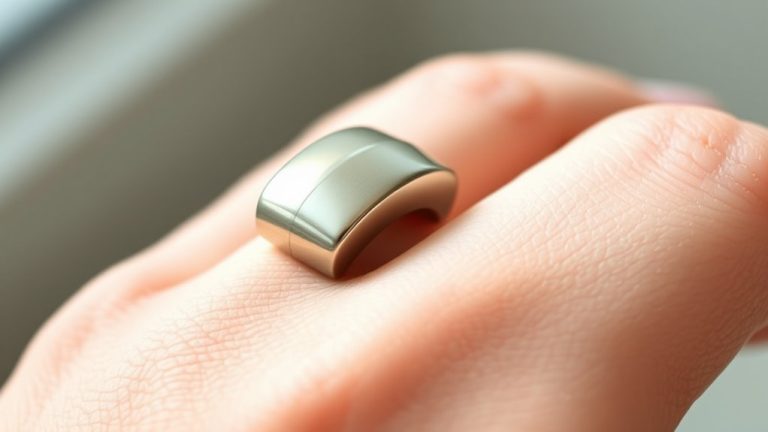
Since genuine precious metals like gold and silver are denser, you’ll notice they feel heavier and more substantial than fake or plated pieces.
Pay close attention to the weight; authentic jewelry usually has a solid, dense feel, while imitations often seem lightweight or hollow.
Authentic jewelry feels solid and dense, unlike imitations that often feel lightweight or hollow.
Next, examine the craftsmanship carefully. Quality pieces showcase smooth, even edges, a flawless finish, and secure settings for stones or embellishments.
Look for any irregularities or rough spots, as these often indicate poor workmanship typical of fake jewelry.
Authentic items reflect precise, consistent craftsmanship, reinforcing their value and durability.
Conduct Simple Home Tests for Precious Metals
If you want to quickly check whether your jewelry is made from precious metals, you can perform several simple tests at home without special equipment.
These home tests help you identify fake jewelry by focusing on key indicators like metal purity, weight, and reactions.
- Use a strong magnet: precious metals such as gold, silver, and platinum aren’t magnetic, so if your piece is attracted, it’s likely fake jewelry.
- Try the ceramic scratch test: rub the jewelry on unglazed ceramic; real gold leaves a gold streak, while fakes leave a black mark.
- Look for hallmarks or stamps like “14K,” “.925,” or “PLAT” that indicate metal purity and watch for discoloration or skin irritation after wearing.
These quick steps help you distinguish genuine precious metals from imitators effectively.
Examine Gemstones and Pearls for Authenticity
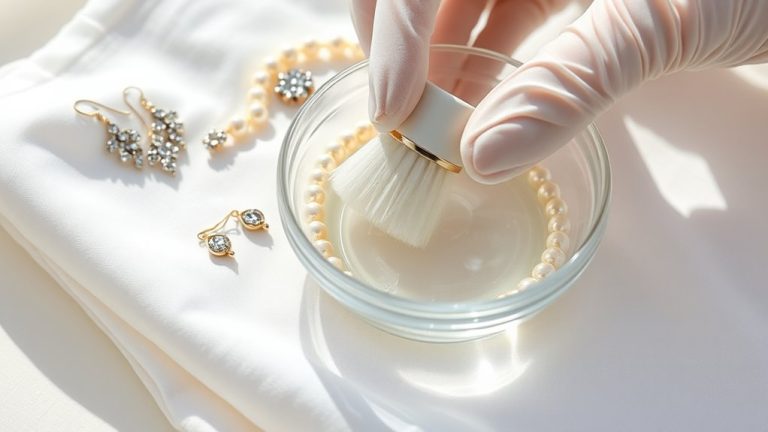
When you examine gemstones and pearls closely, you’ll notice key signs that reveal their authenticity.
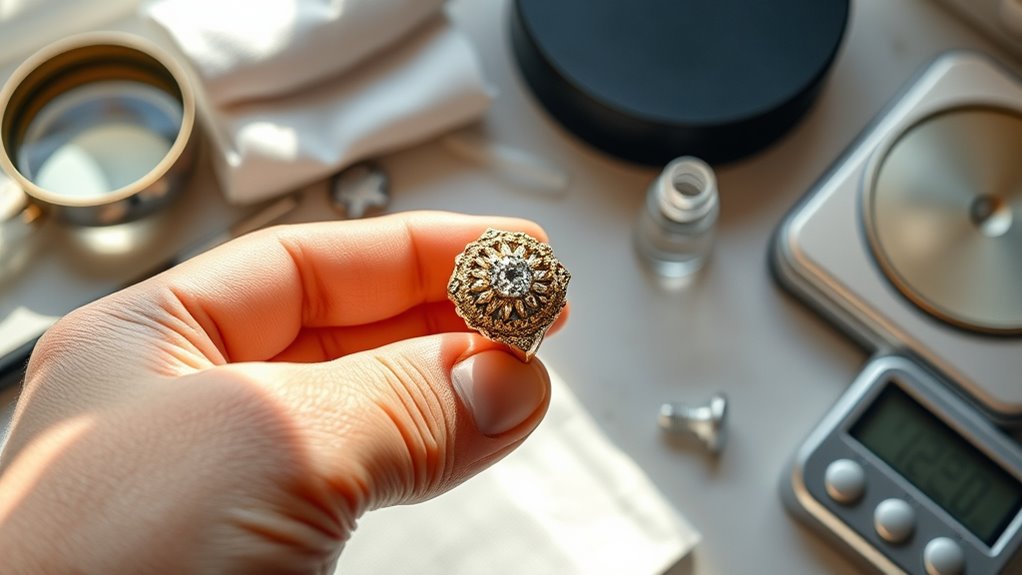
Use a magnifying glass to spot natural inclusions and internal imperfections in genuine gemstones—these natural flaws differentiate them from flawless synthetic stones.
Look for color zoning, which often appears in natural colored gemstones but rarely in lab-created ones.
For pearls, gently rub them against your teeth; real pearls feel gritty due to their natural texture, while fake pearls feel smooth.
Real pearls tend to be heavier for their size and are usually drilled individually with secure settings.
Checking these details helps you distinguish real pearls and genuine gemstones from fakes, ensuring you understand the true authenticity of your jewelry.
Frequently Asked Questions
How to Tell if Jewelry Is Real at Home?
You can check jewelry at home by looking for stamps, testing with a magnet, doing a ceramic scratch test, feeling its weight, and seeing if it irritates your skin.
These simple steps help you spot real pieces easily.
How to Test Jewelry for Authenticity?
You can’t rely on looks alone; test authenticity by using a magnet—real gold won’t stick.
Then scratch on ceramic to see the streak color.
Check for stamps, breathe on diamonds, and consider professional appraisal for certainty.
How Do I Know if My Jewellery Is Real?
You can know your jewelry’s real by checking for official stamps like “14K” or “925.”
These stamps indicate the purity of the metal used.
Testing its weight can also help; genuine metals often feel heavier than their fake counterparts.
Another quick test is to use a magnet; if it’s non-magnetic, that’s a good sign.
Lastly, inspect the craftsmanship for precise details and quality finishing.
Good quality jewelry will have smooth edges and intricate designs.
Does Real Jewelry Sink or Float?
Don’t judge a book by its cover; real jewelry usually sinks because of its density.
You’ll notice it quickly drops in water, unlike lighter fake pieces that tend to float or hover near the surface.
Conclusion
Now that you know these simple yet effective tips, you won’t be sailing blindly when checking if jewelry is real.
Trust your eyes, hands, and a few clever tests to reveal the true worth beneath the sparkle.
Remember, genuine pieces carry stories in their hallmarks, weight, and craftsmanship—like a whispered secret only careful inspection can uncover.
With these skills, you’ll confidently separate treasures from mere trinkets every time.
In conclusion, being able to identify real jewelry is essential for any enthusiast or buyer.
With the right tests and a keen eye, you can discern authenticity with ease.
So, whether it’s for personal use or investment, these tips will empower you to make informed decisions and ensure you get the value you deserve.