7 Tips to Spot Fake Jewelry Like a Pro
To spot fake jewelry like a pro, you need to have a keen eye and a little bit of knowledge about what to look for. Start by researching the brand’s signatures and hallmarks closely.
Check stamps and logos under magnification for crisp precision.
Next, assess the craftsmanship of the piece for smooth finishes and well-set gemstones.
Testing the metal weight is another crucial step. You can also use a magnet to help confirm authenticity.
Always remember to verify certification and buy from reputable sellers who offer guarantees.
Keep in mind that underpriced deals often spell trouble.
By mastering these steps, you’ll be well on your way to confidently identifying genuine pieces and uncovering deeper expert insights.
Research the Brand and Designer Details

Before you buy jewelry, you should research the brand and designer details to verify authenticity.
Start by familiarizing yourself with the brand’s history and signature motifs. These unique design elements help boost brand recognition and make spotting fakes easier.
Understanding a brand’s history and signature motifs is key to identifying authentic jewelry.
Pay attention to hallmark or stamp details, but don’t rely solely on them. Understanding the typical materials and craftsmanship techniques is just as vital.
Keep track of manufacturing locations and timelines. This ensures the piece matches the brand’s production history.
Recognizing signature patterns and unique features, like Cartier’s panther motif, strengthens your ability to judge authenticity.
Inspect Hallmarks, Logos, and Stamps

Start by verifying the brand stamp matches the official logo in font, size, and placement.
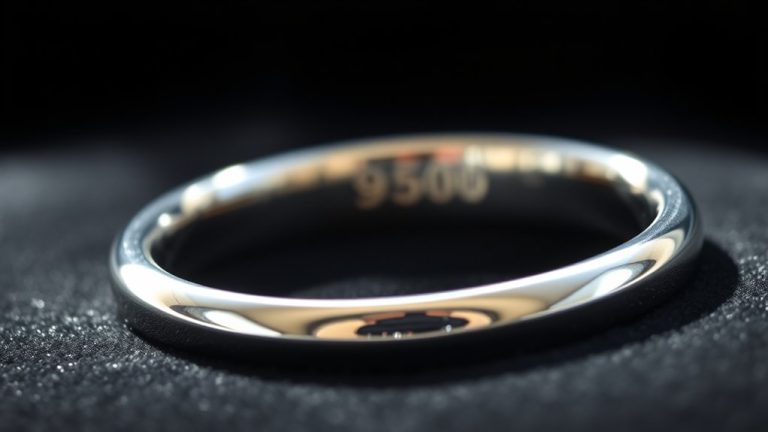
Next, check for metal purity marks like 925 or 750 to confirm the material’s authenticity.
Use a magnifying glass to inspect the engraving quality—uneven lines or misspellings are red flags.
Verify Brand Stamp Accuracy
How can you be sure a piece of jewelry is genuine? Start by verifying the brand stamp accuracy.
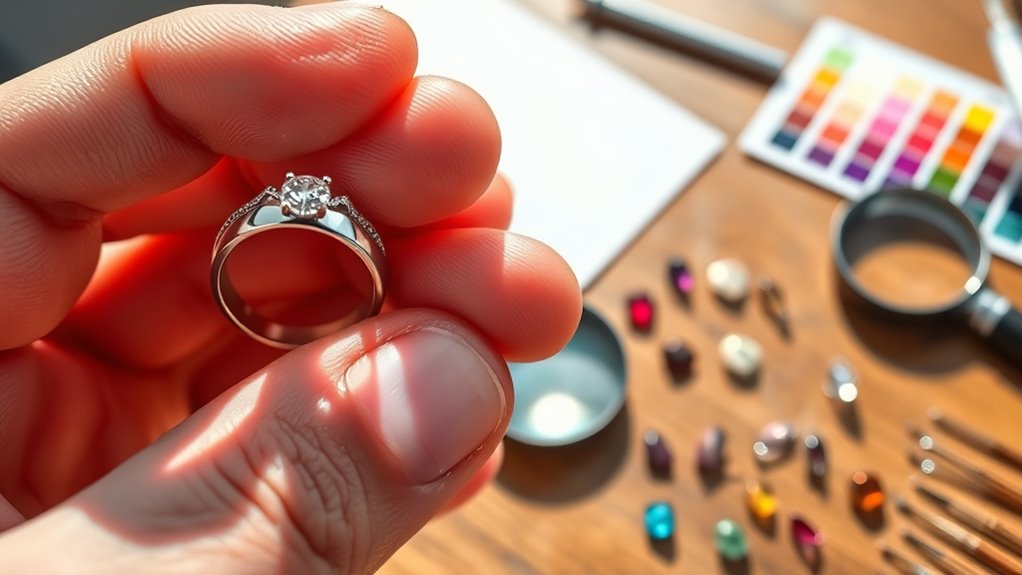
Use a magnifying glass or jeweler’s loupe to inspect the hallmark and engraving closely. Authentic pieces have clear, precise engravings, while fake ones often show poorly done or misspelled stamps.
Check that the stamp matches the official logo in font, size, and placement exactly as found on authentic jewelry. Confirm the hallmark’s details against official brand records or documentation to guarantee authenticity.
Pay attention to country of origin stamps too; they should align with the brand’s known manufacturing locations.
Check Metal Purity Marks
When you inspect jewelry, it’s really important to pay close attention to metal purity marks.
These marks help confirm authenticity.
Genuine pieces display clear hallmarks indicating the purity of the metal, like 925 for sterling silver or 750 for 18k gold.
You should also verify that brand stamps and logos match official designs perfectly.
Counterfeits often have misspelled or poorly engraved marks, so be on the lookout.
Using a magnifying glass can help you spot smudging or uneven engraving, which can reveal fakes.
Authentic jewelry usually carries multiple precise stamps, including country of origin or manufacturer info, aligned with industry standards.
| What to Look For | Why It Matters |
|---|---|
| Clear hallmarks | Confirm metal content |
| Accurate brand stamps | Ensure genuine brand identity |
| Multiple marks | Verify consistency and authenticity |
| Proper placement | Avoid suspicious or fake pieces |
| No smudging or fading | Indicates quality craftsmanship |
Inspect Engraving Quality
After checking metal purity marks, take a closer look at the engraving quality on hallmarks, logos, and stamps.
Authentic jewelry features crisp, precise engraving with consistent font, size, and placement.
Use a magnifying glass or jeweler’s loupe to examine these details closely.
Genuine pieces show deep, clear marks, while fake items often display faint or uneven laser markings.
Verify that hallmarks and logos match official brand standards.
Counterfeit jewelry may have misspellings or distorted symbols.
Be cautious, as some fakes try to mimic hallmark styles.
So, cross-reference with official brand or assay office databases.
Spotting poor engraving quality and inconsistent hallmarks can help you confidently avoid counterfeit jewelry.
This way, you can ensure your pieces are truly authentic.
Evaluate Craftsmanship and Finishing

Because authentic jewelry reflects expert craftsmanship, you should carefully examine its finishing details.
Look for smooth, polished surfaces free of rough edges or visible seams, which indicate precise workmanship.
Check that the design is symmetrical and that all components align evenly—this attention to detail is a hallmark of quality pieces.
Inspect gemstone settings closely; uniform prongs with consistent spacing show expert craftsmanship.
On the flip side, loose or uneven settings raise red flags.
Genuine jewelry boasts a lustrous finish without scratches, discoloration, or pitting, reflecting superior finishing techniques.
Be wary of misaligned clasps, uneven metalwork, or visible soldering marks, as these signs point to poor craftsmanship and inferior finishing.
Assess Weight and Material Authenticity
You can tell a lot about jewelry by feeling its weight—real gold and silver usually weigh more than fakes made from cheap metals.
Try using a magnet, since authentic pieces won’t be attracted to it, unlike many counterfeits.
Also, check the material closely for consistent color and finish, as genuine metals don’t tarnish or discolor easily.
Weight Comparison Techniques
When you compare the weight of jewelry to similar authentic pieces, you’ll quickly notice that genuine gold and silver feel heavier and more substantial than fakes made from lightweight metals.
To effectively use weight comparison techniques, follow these steps:
- Weigh the jewelry precisely using a scale and compare it to standard weights for that metal and size.
- Examine if the piece feels dense; authentic items are solid, while fakes often use hollow or thin plating, making them lighter.
- Remember, genuine precious metals are non-magnetic, so although a magnet test is useful, focus on weight to assess material authenticity first.
Magnet Test Importance
Three key reasons make the magnet test an essential step in spotting fake jewelry: it’s quick, cost-effective, and reveals whether a piece contains magnetic metals like iron or nickel that genuine gold and silver lack.
When you hold a strong magnet near your jewelry, genuine gold and silver won’t respond since they’re non-magnetic.
If the piece sticks, it likely contains cheaper, magnetic metals, signaling counterfeit jewelry or plating.
Keep in mind, a negative magnet test doesn’t guarantee authenticity, so you’ll need further checks.
Use a strong neodymium magnet carefully to avoid damaging delicate items.
The magnet test helps you quickly assess material authenticity and avoid costly mistakes when buying jewelry, making it a must-have skill in your spotting toolkit.
Material Consistency Checks
Although it may seem subtle, evaluating the weight and material consistency of jewelry reveals a lot about its authenticity.
Real gold and silver are dense, giving them a solid, heavy feel compared to lighter, fake pieces made from base metals or alloys.
To assess material authenticity, keep these tips in mind:
- Compare weight: Genuine pieces feel heavier than similarly sized fakes.
- Inspect surface: Look for discoloration, tarnishing, or uneven textures indicating poor metal composition.
- Test composition: Conduct a magnet test; real gold and silver are non-magnetic, while many fakes are attracted to magnets.
Examine Gemstone Quality and Settings
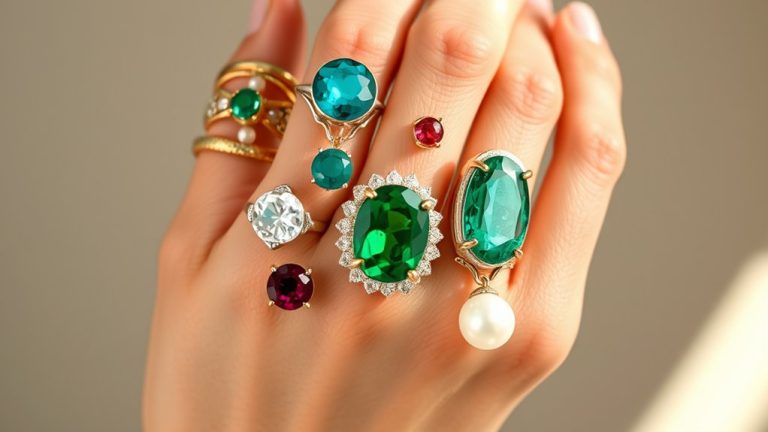
Since gemstones are the centerpiece of many jewelry pieces, examining their quality and settings can reveal a lot about authenticity.
When you examine gemstone quality, look for consistent color, good transparency, and natural inclusions—these are signs of genuine stones.
Fake gems often show uneven color and unnatural clarity.
Pay close attention to the settings; authentic jewelry has well-crafted, even prongs that securely hold the stone.
Poorly finished facets or dull surfaces usually indicate counterfeit items.
Real gemstones are precisely cut to enhance brilliance, unlike imitations.
While certification helps confirm authenticity, you can still spot fakes by checking the craftsmanship and gemstone quality.
Verify Documentation and Certificates
How can you be sure that your jewelry is truly authentic?
Start by verifying its documentation and certificates. Genuine pieces usually come with certificates of authenticity from trusted labs like GIA, AGS, or IGI.
When checking these documents, focus on three key steps:
- Confirm the certificate includes detailed information on the gemstone’s cut, color, clarity, carat weight, and treatment history.
- Verify official seals, signatures, and serial numbers match the jewelry piece.
- Check the issuing authority’s credibility to ensure stringent grading standards.
Keep these certificates safe and consider periodic appraisal for high-value items to maintain confidence in their authenticity.
Proper documentation is your best defense against fake jewelry.
Consider Seller Reputation and Pricing
When buying jewelry, you should prioritize sellers with solid reputations and positive reviews to avoid fakes.
Check the seller reputation by researching customer feedback, ratings, and their history in the industry.
Avoid unknown or unverified online marketplaces and opt for authorized stores or certified jewelers known for authentic merchandise.
Pay close attention to pricing—if a deal seems too good to be true, and falls far below the market value, it’s likely a counterfeit or low-quality item.
Also, verify if the seller provides authenticity certificates or guarantees, as these documents help confirm the item’s legitimacy.
Frequently Asked Questions
How to Spot Fake Jewelry?
You can spot fake jewelry by checking for misspelled logos.
Feeling if it’s too light can also be a giveaway.
Using a magnifying glass for bubbles or rough edges is a great method, too.
And don’t forget to test with fog or water.
Always inspect stone settings closely for flaws.
This will help you determine the authenticity of the jewelry.
How to Test Jewelry to See if It’s Real?
Over 80% of jewelry sold online is fake.
You can test yours by using a jeweler’s loupe to check for stamps.
Doing the fog test is another simple method.
Or, you can use a diamond tester to confirm authenticity quickly and easily.
Does Rubbing Alcohol Make Jewelry Shine?
Yes, rubbing alcohol can make your jewelry shine by removing dirt and oils quickly.
Just be careful using it on delicate stones or coatings. Overuse might damage them, even if it cleans silver or gold-plated pieces well.
How to Check the Quality of Imitation Jewellery?
Did you know 70% of imitation jewelry fails quality tests?
To verify yours, examine craftsmanship closely.
Look for hallmarks, test weight, use a magnet, and inspect stones with a magnifying glass to guarantee authenticity and durability.
Conclusion
If you’ve ever wondered whether that sparkling piece is truly genuine, you’re not alone.
Spotting fake jewelry is easier than you think when you know what to look for.
By researching brands, checking hallmarks, and trusting your eyes on craftsmanship, you’ll catch counterfeit pieces before they catch you.
Funny how a little knowledge can save you from costly mistakes, isn’t it?
Now, you’re ready to shop smart and shine confidently!
Remember, being informed is your best defense against fake jewelry.
Stay vigilant, keep these tips in mind, and you can enjoy your shopping experience without the worry of being duped.
With practice, you’ll become a pro at identifying genuine pieces, ensuring that every purchase is a worthy investment.
So go ahead, embrace your newfound expertise and let your jewelry collection reflect your style with confidence!