Does Gold Dipped Jewelry Tarnish and How to Prevent It
Yes, gold dipped jewelry can tarnish because its thin gold layer wears off, exposing the base metal to air and moisture.
To prevent tarnish, it’s essential to avoid water, chemicals, and excessive friction.
Store your pieces in airtight containers or soft pouches with anti-tarnish strips.
Gently clean them with mild soap and water, then dry thoroughly.
Taking these steps helps maintain their shine and durability.
Explore how your daily habits and care routines can further protect your jewelry.
By being mindful of how and where you wear your gold dipped pieces, you can significantly extend their lifespan.
So, let’s dive into some practical tips to keep your beautiful jewelry looking its best!
Understanding Tarnish and Its Causes

Although gold dipped jewelry looks stunning at first, it can tarnish over time because the thin gold layer wears off, exposing the base metal underneath.
Tarnish happens due to oxidation, a chemical reaction when metals meet air, moisture, and other elements.
Since the gold layer is thin, it doesn’t fully protect the base metal beneath, which reacts and discolors.
The thin gold layer leaves the base metal vulnerable, causing it to react and discolor over time.
Factors like water, sweat, perfumes, and lotions speed up this process by breaking down the gold layer or reacting with the base metal.
Understanding this helps you improve jewelry care by avoiding harsh chemicals and limiting exposure to moisture.
The Composition of Gold Dipped Jewelry

When you wear gold dipped jewelry, you’re actually wearing a thin layer of gold coated over a base metal like brass or copper.
This gold layer is extremely thin—usually less than 0.5 microns thick—so it’s much more delicate than other gold jewelry types.
Understanding this composition helps explain why gold dipped pieces can tarnish or wear down with regular use.
Definition of Gold Dipped
Since gold dipped jewelry features a very thin layer of gold, usually less than 0.5 microns thick, you can expect it to have a base metal core like brass, copper, or stainless steel.
This thin layer of gold is applied through electroplating, where an electric current deposits gold onto the base metal’s surface.
Because the gold layer is so thin, gold dipped jewelry is more prone to tarnishing compared to thicker gold-plated pieces.
To prevent tarnishing, you’ll want to handle your jewelry with care and avoid exposure to chemicals or moisture.
| Aspect | Description |
|---|---|
| Gold Layer | Thin, <0.5 microns |
| Base Metal | Brass, copper, or stainless steel |
| Application Method | Electroplating |
Base Metals Used
Because the base metal forms the core of gold dipped jewelry, it plays an essential role in the piece’s durability and how quickly it may tarnish.
Common base metals include copper, brass, and sometimes nickel.
Copper is popular but can cause skin discoloration and reacts quickly when exposed to moisture and air. This increases the risk of tarnishing.
Brass offers better durability but still may tarnish over time, especially if the gold layer wears thin.
The quality of the base metal directly affects how long your jewelry stays looking fresh.
If the gold coating wears off due to daily wear, the underlying metal will react, causing discoloration and tarnish.
Choosing pieces with sturdy base metals helps you enjoy your gold dipped jewelry longer without frequent maintenance.
Gold Layer Thickness
Although gold dipped jewelry features a beautiful golden appearance, the gold layer itself is usually very thin—often less than 0.5 microns thick.
This makes it more vulnerable to wear and tarnish than thicker gold coatings. The thin gold layer is applied through electroplating, affecting its wear resistance and overall durability.
Compared to gold-plated jewelry with thicker layers, gold dipped pieces tend to tarnish faster due to this minimal gold layer thickness.
Key points to contemplate include that gold dipped jewelry typically has less than 0.5 microns of gold.
Thicker layers, ranging from 2.5 to 5 microns, offer improved durability.
Additionally, gold purity (10K, 14K, 18K) influences tarnishing resistance.
Wear resistance depends largely on gold layer thickness and care.
Understanding this helps you better maintain your jewelry’s shine.
Factors That Influence Tarnishing in Gold Dipped Pieces

When you wear gold dipped jewelry, several factors can speed up tarnishing by wearing away the thin gold layer and exposing the base metal underneath.
Oxidation happens when the base metal reacts with air and moisture, leading to discoloration.
The thickness of gold plays a key role; thinner layers wear off more easily.
Exposure to water, especially chlorinated or salt water, accelerates tarnishing by breaking down the protective gold layer.
Here’s a quick look at some influencing factors:
| Factor | Effect on Tarnishing |
|---|---|
| Thickness of Gold | Thicker layers resist tarnishing |
| Exposure to Water | Speeds up oxidation and corrosion |
| Contact & Friction | Wears away gold layer faster |
Understanding these helps you protect your jewelry better.
Daily Habits That Can Accelerate Tarnish
You might not realize it, but everyday habits like sweating, applying lotions, and frequent friction can speed up tarnish on your gold dipped jewelry.
Moisture and chemicals wear down the thin gold layer faster than you’d expect.
Paying attention to how you wear and care for your pieces can make a big difference in keeping them shiny.
Exposure to Moisture
Since moisture speeds up the oxidation of the base metals beneath the gold layer, your gold dipped jewelry can tarnish much faster if it stays wet.
Daily contact with water, sweat, or humid air accelerates tarnish formation by promoting oxidation.
Even humidity alone can intensify these chemical reactions, weakening the gold layer over time.
To protect your pieces, avoid exposing them to moisture and keep them dry.
Here are key moisture-related habits to watch out for:
- Wearing jewelry while washing hands or showering
- Exercising without removing your pieces, leading to sweat exposure
- Storing jewelry in damp or humid environments
- Applying lotions, perfumes, or sprays when wearing jewelry
Minimizing moisture contact preserves your gold dipped jewelry’s shine longer.
Contact With Chemicals
Although gold dipped jewelry looks delicate, everyday contact with chemicals can quickly wear down its protective layer.
When you expose your jewelry to perfumes, lotions, or hair sprays, the chemicals in these products can break down the gold coating, speeding up tarnish.
Household cleaners, chlorine, and salt water also cause a reaction that discolors gold dipped jewelry faster.
Sweat contains acids and salts that react with the base metals beneath the gold layer, promoting tarnish development.
To protect your jewelry, avoid direct exposure to these substances and remove it before applying beauty products or cleaning.
Being mindful of chemical contact helps maintain the jewelry’s shine and prolongs its life, keeping your gold dipped pieces looking their best.
Friction and Wear
When daily habits cause constant rubbing or friction, your gold dipped jewelry wears down faster, exposing the base metal beneath.
This wear accelerates tarnish as the protective gold layer thins or disappears.
Micro-scratches from everyday activities create abrasion points, further breaking down the coating.
You might not notice, but friction from your clothing, hair, or other jewelry adds up, speeding up the damage.
To protect your pieces, watch for these common causes of wear:
- Frequent contact with rough surfaces like bags or textured fabrics
- Repeated friction from typing or handling objects
- Wearing jewelry during exercise or manual labor
- Skin oils and lotions combined with constant abrasion
Minimizing these will help maintain your gold layer and prevent premature tarnish.
Effective Storage Solutions to Prevent Tarnishing
To keep your gold dipped jewelry looking its best, store it in airtight containers or jewelry boxes with anti-tarnish strips or silica gel to absorb moisture.
Using soft pouches or separate compartments helps prevent chemical reactions and scratching.
Avoiding moisture and chemicals during storage is key to protecting your pieces.
| Storage Solutions | Benefits |
|---|---|
| Airtight Containers | Blocks moisture |
| Anti-Tarnish Strips | Neutralizes tarnish agents |
| Soft Pouches | Prevents scratches |
| Separate Compartments | Stops chemical reactions |
| Silica Gel Packs | Absorbs humidity |
Cleaning Techniques for Gold Dipped Jewelry
Since gold dipped jewelry has a delicate coating, you should clean it gently to preserve its shine.
Proper cleaning prevents tarnish and keeps your pieces looking fresh.
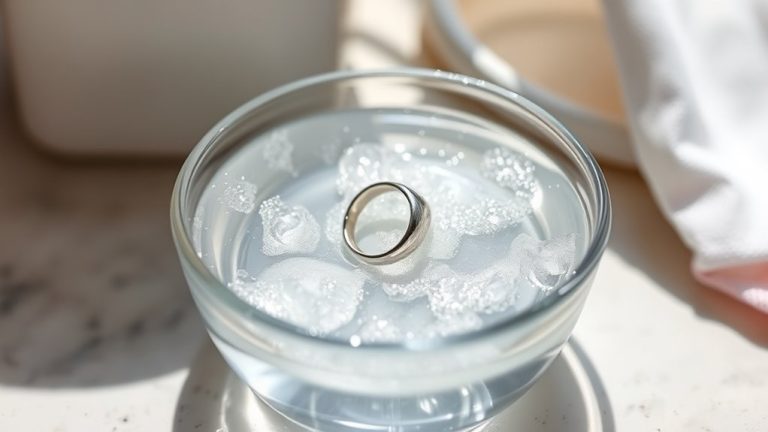
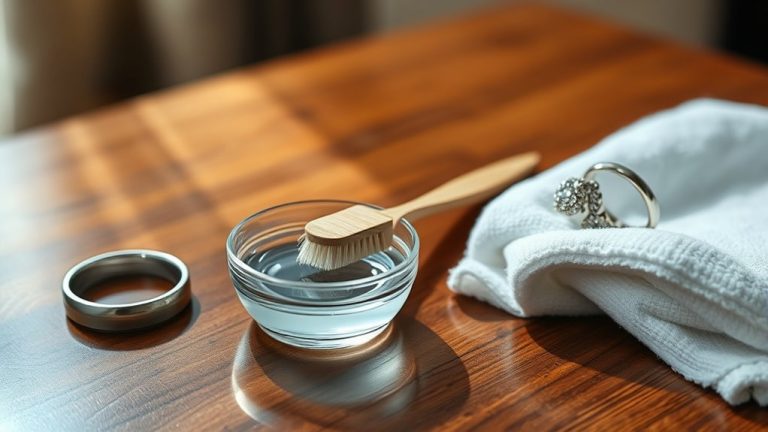
Use warm water mixed with mild soap to soak your jewelry briefly, then rinse and pat dry carefully.
Avoid harsh or abrasive cleaners, which can damage the thin gold layer.
After cleaning, always store your jewelry separately to avoid scratches and moisture exposure.
Wipe with a soft, lint-free cloth after each wear.
Soak in warm water with mild soap for deeper cleaning.
Avoid abrasive materials and ultrasonic cleaners.
Store pieces individually in soft pouches or a jewelry box.
How to Protect Gold Dipped Jewelry From Chemicals and Moisture
Cleaning your gold dipped jewelry regularly helps maintain its shine, but protecting it from chemicals and moisture plays an even bigger role in preventing tarnish.
Regular cleaning keeps gold dipped jewelry shiny, but shielding it from moisture and chemicals is essential to prevent tarnish.
To care for your gold dipped jewelry, avoid wearing it while swimming, showering, or in humid environments, as moisture accelerates tarnishing.
Also, apply perfumes, lotions, and cleaning products before putting on your pieces since these chemicals can quickly wear down the gold layer.
When not in use, store your jewelry in airtight, anti-tarnish containers or pouches to minimize exposure to air and moisture.
By following these simple steps, you can effectively prevent tarnishing and keep your gold dipped jewelry looking beautiful for longer.
Proper care is key to preserving its delicate finish and ensuring it lasts.
When to Seek Professional Jewelry Care
If your gold dipped jewelry shows heavy tarnish or damage that regular cleaning can’t fix, it’s time to seek professional care.
Professionals have the tools and expertise to handle tough tarnishing and restore your piece safely.
Don’t delay jewelry repair when you notice deep scratches or dents that diminish its look.
Also, if gemstones feel loose or the setting looks compromised, expert attention is vital to avoid further damage.
Some intricate designs or enameling require specialized cleaning methods only professionals provide.
Regular visits for professional care help maintain your jewelry’s shine and value over time.
Consider professional care when you encounter:
- Severe tarnishing resistant to home cleaning
- Deep scratches or noticeable dents
- Loose gemstones or damaged settings
- Complex designs needing specialized cleaning
Frequently Asked Questions
How to Prevent Tarnish on Gold-Plated Jewelry?
You can prevent tarnish on gold-plated jewelry by storing it in a dry, airtight container.
Avoiding water and chemicals is also essential.
Cleaning it gently with a soft cloth helps maintain its shine.
Additionally, be sure to remove it before swimming, bathing, or applying beauty products.
Taking these simple steps can keep your jewelry looking beautiful for a long time!
Does Gold Dipped Jewelry Tarnish Easily?
Yes, gold dipped jewelry tarnishes easily since its thin gold layer wears off quickly.
You can slow tarnish by avoiding water, chemicals, and sweat.
Storing it properly and cleaning gently can help keep it looking fresh longer.
How Long Will Gold-Plated Jewelry Last?
Gold-plated jewelry can last between 6 months to 2 years, depending on the plating thickness and how often you wear it.
To make it last longer, avoid water and chemicals, and store it properly when not in use.
Taking these simple steps can really help preserve the beauty of your gold-plated pieces!
How to Store Gold-Plated and Keep It From Tarnishing?
You should store gold-plated jewelry in a dry, airtight container with anti-tarnish strips.
Keep pieces separate to prevent scratching and damage.
Avoid humidity, as it can lead to tarnishing over time.
Wrapping them in soft cloths can also help protect them.
Don’t forget to clean them regularly to prevent tarnishing and maintain their shine!
Conclusion
Gold dipped jewelry can tarnish over time, but with the right care, you can keep its shine glowing like a hidden treasure.
Treat your pieces gently—avoid harsh chemicals and moisture. Store them like precious gems, and clean them carefully.
Think of your jewelry as a delicate bloom; with a little love and attention, it’ll stay radiant and beautiful.
When in doubt, let a professional be your jewelry’s guardian angel.
In conclusion, gold dipped jewelry does have the potential to tarnish, but you can easily prevent this with proper maintenance.
By keeping your pieces away from harsh chemicals, moisture, and storing them correctly, you can prolong their beauty.
Remember, a little love goes a long way in preserving the shine of your jewelry, so treat them as the treasures they are!