
Why Can’t You Wear Jewelry in Surgery?
You can’t wear jewelry in surgery because it raises infection risks by harboring bacteria and can interfere with surgical tools and imaging equipment.
Your jewelry might cause electrical burns or disrupt scans, making surgery less safe and effective.
Rings and bracelets can also restrict blood flow, especially if swelling occurs.
Medical staff require removal to protect you and ensure a smooth procedure.
Keep going to understand how these risks impact your safety and care.
Infection Risks Associated With Jewelry During Surgery

Although you might not realize it, wearing jewelry during surgery considerably raises the risk of infection.
Jewelry can harbor bacteria and other pathogens, making it a hidden source of contamination. These microorganisms can easily transfer to the surgical site, increasing the chance of post-surgical infection.
Jewelry can harbor bacteria that transfer to surgery sites, raising infection risks.
Furthermore, metals or materials in jewelry interfere with sterilization procedures, compromising the sterile environment essential for safe surgery.
Jewelry also traps bacteria physically, making it harder for medical staff to disinfect your skin thoroughly.
In some cases, jewelry may shed particles or even break, further contaminating the surgical area.
Impact of Jewelry on Surgical Procedures and Equipment
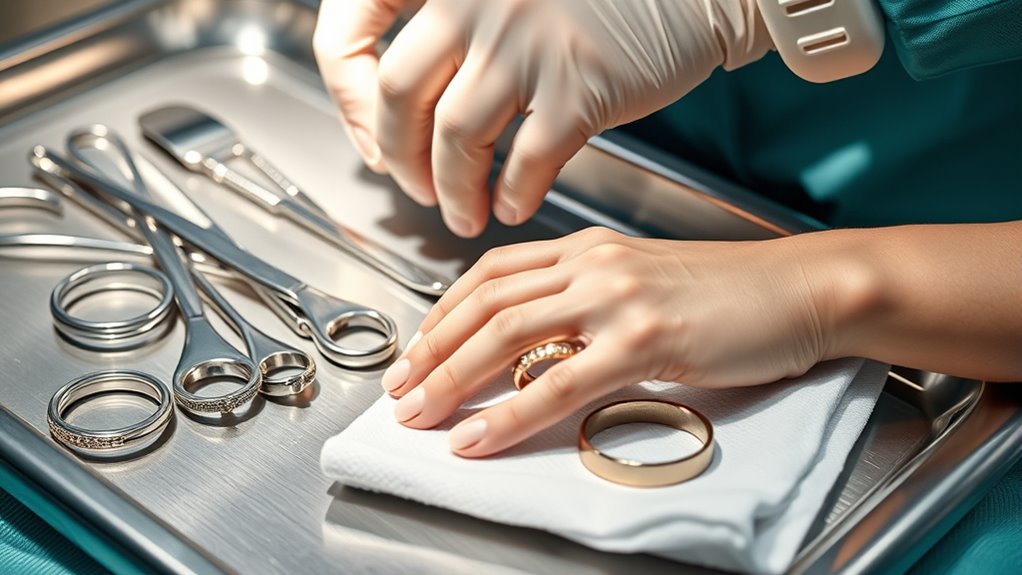
When you wear jewelry during surgery, it can interfere with the operation of surgical equipment and imaging devices. This poses risks to both the procedure and your safety.
Metal jewelry, especially, can conduct electricity during electrocautery. This increases the chance of burns or electrical arcs on your skin.
Not only does this interference endanger you, but it can also disrupt the precise function of electrocautery devices that surgeons rely on to control bleeding.
Furthermore, jewelry compromises the sterility of the surgical field by harboring bacteria, which raises infection risks.
Removing all metal jewelry ensures that surgical tools work safely and effectively. It also helps maintain a sterile environment, which is critical for your protection.
For these reasons, hospitals strictly prohibit wearing jewelry in the operating room.
Effects of Jewelry on Imaging Studies and Diagnostic Accuracy
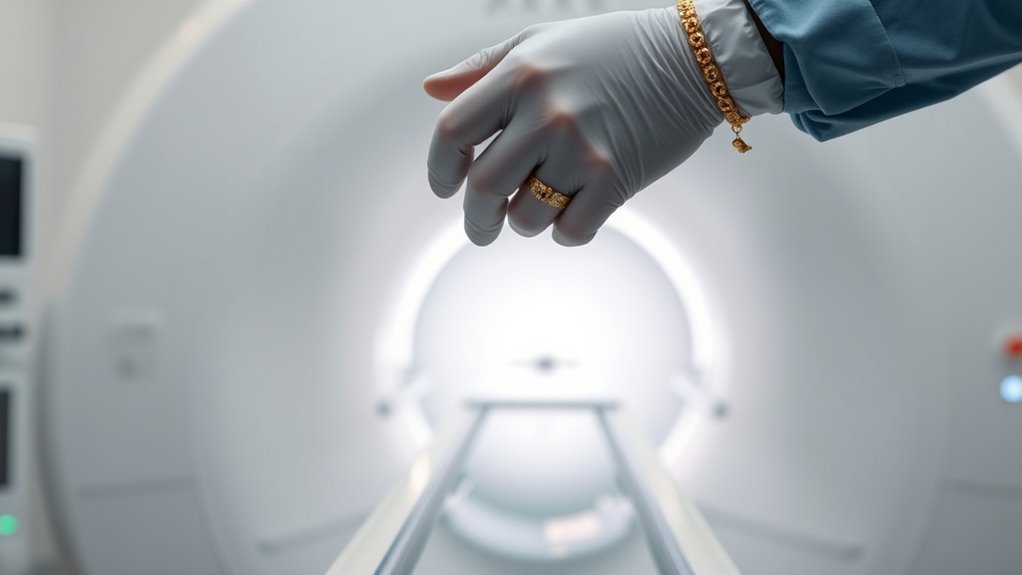
Since jewelry, especially metal pieces, can cause artifacts and distortions in imaging studies like X-rays, MRIs, and CT scans, it’s important to remove them before your procedure.
Jewelry can create imaging artifacts that obscure critical anatomical structures, making it harder for radiologists to interpret images accurately.
Jewelry can cause imaging artifacts that hide key structures, complicating accurate interpretation by radiologists.
Small items like earrings or nose rings may block or interfere with imaging equipment, resulting in incomplete or misleading results.
Metallic objects can also generate electrical artifacts during MRI scans, further compromising image quality and safety.
By removing your jewelry prior to imaging, you help ensure clear visualization of internal tissues and improve diagnostic accuracy.
This simple step prevents misdiagnosis caused by artifacts or obstructions, allowing your healthcare team to make the best-informed decisions about your care.
Circulatory Issues Related to Wearing Jewelry in Surgery
You need to be aware that wearing jewelry during surgery can restrict blood flow, especially if swelling occurs.
Tight rings or bracelets may cut off circulation, increasing the risk of tissue damage or nerve injury.
To prevent these complications, it’s best to remove all jewelry before the procedure.
Jewelry Restricts Blood Flow
Although jewelry may seem harmless, wearing rings or bracelets during surgery can seriously restrict blood flow by compressing blood vessels.
When circulation is impeded, the affected area doesn’t receive enough oxygen and nutrients, which can delay healing and increase complications.
Jewelry acts like a tight barrier, especially if swelling occurs, further blocking blood flow.
This restriction raises the risk of tissue damage or necrosis.
You might not notice this during surgery, but the consequences can be severe afterward.
Removing jewelry beforehand guarantees that your circulation remains unobstructed, helping your body heal properly and preventing complications linked to poor blood flow.
Swelling Risks With Jewelry
When swelling occurs during surgery, tight jewelry like rings or bracelets can squeeze your blood vessels and block circulation.
This pressure can impair blood flow, increasing the risk of tissue damage or even necrosis.
Swelling causes your limbs to expand, making jewelry constrict more tightly than usual.
If circulation gets restricted, it complicates recovery and raises the chances of blood clots or tissue death.
Because of these risks, removing jewelry before surgery is essential to prevent circulation problems caused by intraoperative or postoperative swelling.
Leaving jewelry on puts you at unnecessary risk, as it can obstruct blood flow when your body reacts to surgery.
Taking it off ensures your circulation remains unobstructed, helping protect your tissues throughout the procedure.
Preventing Circulatory Complications
Swelling during surgery can tighten jewelry against your skin, increasing the chance of blood flow obstruction.
When swelling occurs, tight rings or bracelets might restrict circulation, leading to serious circulatory complications.
If jewelry isn’t removed beforehand, it can become embedded or difficult to take off, making it harder to assess and manage blood flow effectively during and after surgery.
To prevent these issues, removal of all jewelry prior to surgery is essential.
This simple step guarantees unobstructed circulation, reduces the risk of tissue damage, and allows medical staff to monitor your circulatory status without hindrance.
Safety Protocols and Recommendations for Jewelry Removal
Since jewelry can interfere with surgical equipment and pose infection risks, medical safety protocols require you to remove all jewelry before surgery.
Jewelry must be removed before surgery to prevent equipment interference and reduce infection risk.
This jewelry removal is vital for surgical safety, as metal objects can cause electrical burns during electrocautery and compromise sterility in the operating room.
Leading health organizations like RACS and WHO mandate no jewelry be worn in the operating room to prevent these dangers.
Before your procedure, the surgical team will ensure you’ve taken off all items, as it’s a standard step on preoperative checklists designed to minimize infection and complications.
Alternatives and Special Considerations for Jewelry During Surgery
If you can’t remove your jewelry before surgery, medical staff might use tape or silicone covers to keep it secure and clean.
You might also be allowed to wear non-metallic pieces, like silicone rings, with the surgical team’s approval.
These alternatives help minimize risks when removal isn’t possible, but surgeons still prefer complete removal whenever they can.
Jewelry Removal Options
How should you handle your jewelry when preparing for surgery?
Jewelry removal is essential to avoid interference with surgical equipment, reduce infection risks, and prevent injury at the piercing site.
Here’s what you should do:
- Remove all accessible jewelry before entering the operating room, especially from common piercing sites like ears, nose, and tongue.
- If removal isn’t possible, inform your surgical team so they can apply safe alternatives or follow special protocols.
- Understand that certain piercings, such as genital or tongue, must be removed due to airway management and anesthesia risks.
Always consult with your surgical team beforehand to make certain your jewelry is handled safely.
This minimizes complications and ensures a smooth procedure.
Taping and Alternatives
Although removing jewelry before surgery is ideal, taping can serve as a temporary alternative when removal isn’t possible or could cause harm.
Medical-grade tape secures jewelry like wedding rings or earrings during surgical procedures. However, it doesn’t fully eliminate risks such as electrical conduction or burns.
If you have sensitive skin or adhesive allergies, removal remains the safest choice.
Healthcare guidelines emphasize jewelry removal to reduce infection and fire hazards, with taping as a last resort.
Here’s a quick look at taping versus removal during surgery:
| Method | Pros | Cons |
|---|---|---|
| Removal | Eliminates risks | May be difficult or harmful |
| Taping | Temporary, convenient | Doesn’t prevent all risks |
| No Action | None | High infection and safety risk |
Frequently Asked Questions
Why Can’t You Wear Jewelry During Surgery?
You can’t wear jewelry during surgery because it can cause electrical burns, interfere with imaging, harbor bacteria, and get in the way of the procedure.
Removing it keeps you safe and helps the surgery go smoothly.
Can I Wear My Permanent Jewelry During Surgery?
You can’t wear your permanent jewelry during surgery; it’s better safe than sorry.
Removing it prevents infection risks and electrical burns, ensuring your safety.
Always take it off well before the procedure to avoid complications.
Do Surgeons Have to Take off Jewelry?
Yes, surgeons have to take off jewelry before surgery.
You’ll want to remove it to avoid interference, reduce infection risks, and prevent accidents with equipment.
Hospitals enforce this to keep everyone safe during procedures.
Conclusion
Think of surgery as a delicate dance where every move matters.
Jewelry can trip you up, risking infection, interfering with instruments, or clouding crucial images.
Wearing rings or earrings in the OR is like carrying hidden weights that disrupt your body’s harmony and the surgical team’s precision.
To keep the rhythm smooth and safe, it’s best to remove all jewelry beforehand.
By doing so, you protect yourself and help guarantee a successful, complication-free procedure.
In conclusion, avoiding jewelry during surgery is essential for both your safety and the effectiveness of the surgical process.
Removing items like rings and earrings reduces the risk of infection and interference with surgical instruments.
So, remember to leave your jewelry at home for a smoother and safer surgical experience!