10 Tips on Wire Jewelry That Works Best With Circular Beads
To make your wire jewelry shine with circular beads, it’s important to choose the right materials and techniques. Start with 22-24 gauge wire, which offers the perfect balance of strength and flexibility for your designs.
When selecting your wire, consider the hardness as well—half-hard wire provides the support you need, while dead-soft wire is perfect for creating delicate bends.
Opt for materials like sterling silver or copper, as they beautifully complement a variety of bead colors.
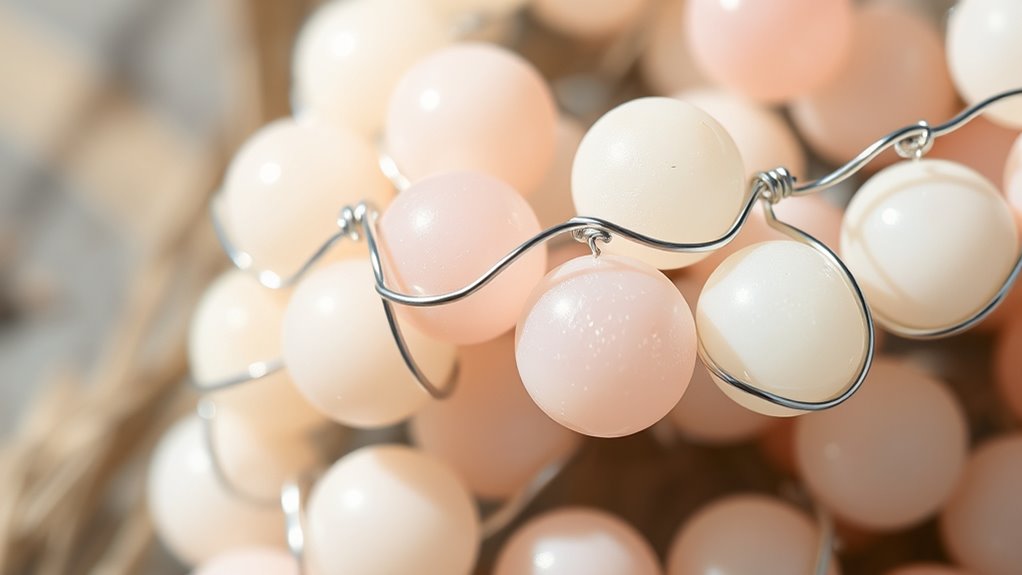
To secure your beads, make sure to wrap them tightly with neat wraps.
Don’t forget to explore spiral techniques for added flair in your pieces.
And when it comes to hardware, pick options that are both sturdy and stylish.
Keep these tips in mind, and you’ll be on your way to crafting stunning, balanced pieces that truly stand out!
Selecting the Right Wire Gauge for Circular Beads
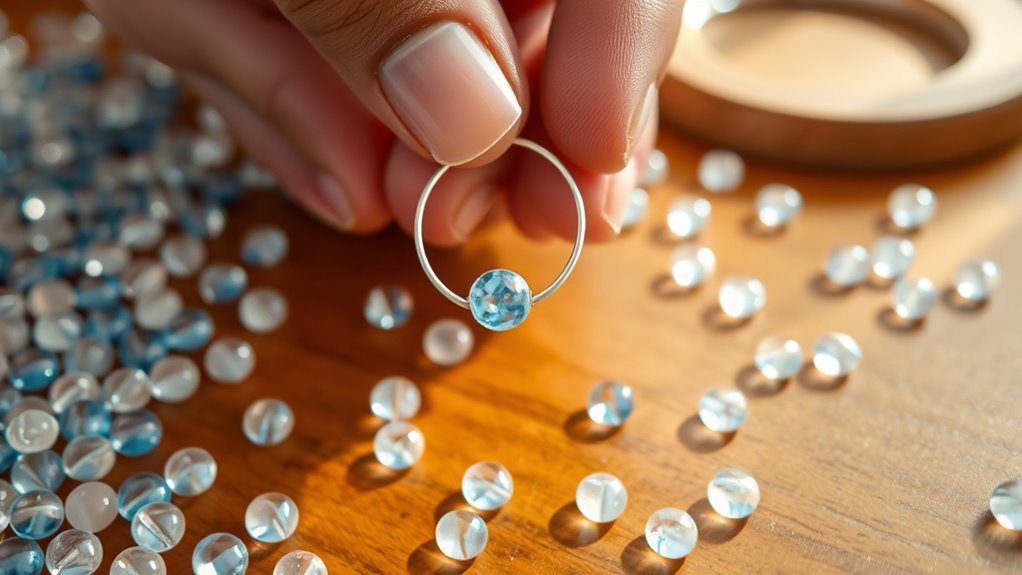
When selecting wire for circular beads, you’ll want to choose a gauge that balances flexibility with strength.
For most jewelry projects, a 22-24 gauge wire works well, especially when working with circular beads like sterling silver ones.
A 22-24 gauge wire is ideal for most jewelry projects using circular beads like sterling silver.
This gauge is flexible enough to thread through bead holes smoothly without stressing the bead walls, but strong enough to hold the beads securely.
If your beads are delicate or smaller, thinner gauges like 26-28 may be suitable.
Just keep in mind that they might not support heavier circular beads.
For larger or heavier beads, consider a thicker wire such as 20 gauge for added durability.
Always measure your bead holes carefully and test the wire gauge before finalizing your design.
This will help ensure a perfect fit and lasting structure!
Choosing Wire Materials to Enhance Your Design
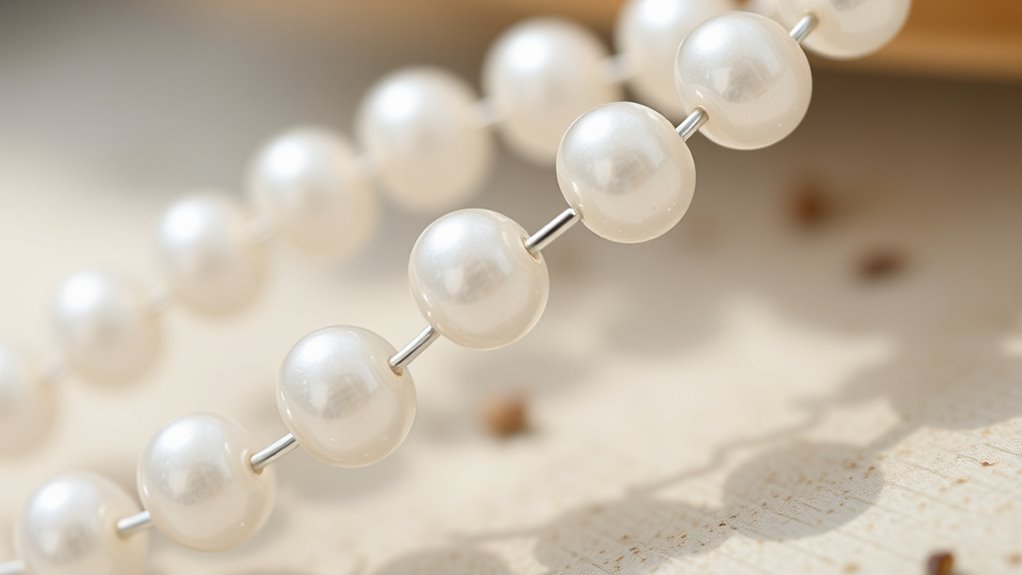
When choosing wire materials, consider how flexibility and strength affect your design’s structure and ease of shaping.
Match the wire’s color and finish to your beads to create a cohesive look.
Also, think about durability and how much maintenance your piece will need over time.
Material Flexibility and Strength
Although selecting wire for your jewelry might seem straightforward, balancing flexibility and strength is essential to enhancing your design.
Understanding how different wire types perform helps you pick the best material flexibility and strength for your circular bead projects.
Consider these points:
- Sterling silver and gold-filled wires offer a great balance of flexibility and durability, perfect for intricate designs.
- Copper wire is very flexible and easy to shape but oxidizes quickly, requiring more maintenance.
- Thicker gauges (18-20) provide extra strength, ideal for supporting heavier beads without bending out of shape.
- Softer wires bend easily but hold their form less. Meanwhile, half-hard or full-hard wires retain shape better but need more effort to manipulate.
Choose your wire material wisely to create jewelry that’s both beautiful and long-lasting.
Color and Finish Matching
Since wire color and finish substantially affect your jewelry’s overall look, you’ll want to choose materials that either complement or contrast your beads thoughtfully.
Start by matching wire finishes—bright, matte, or antiqued—to your bead’s surface luster for a harmonious effect. If your beads have a shiny surface, bright wire finishes work well; for matte beads, opt for duller wire finishes.
Consider wire colors, too: metallic hues like gold, silver, or copper can either highlight or subtly enhance the bead’s base color. Don’t overlook transparency and texture—choosing wire colors that don’t clash or blend too much keeps your design balanced.
Finally, align your wire finishes with the style you want, such as antiqued wire for vintage looks or shiny wire for a modern vibe.
Durability and Maintenance
Choosing the right wire material plays a crucial role in your jewelry’s durability and ease of maintenance.
To make your circular bead designs last and stay beautiful, consider these points:
- Use stainless steel wire for excellent strength and minimal upkeep—it resists tarnish and won’t easily bend or break.
- Sterling silver wire looks stunning but needs regular polishing to prevent tarnish buildup.
- Gold-filled wire offers great tarnish resistance, so it requires less maintenance and keeps its shine longer.
- Copper wire oxidizes quickly, creating a patina; you can keep or polish it depending on your style preference.
Also, store your pieces in airtight containers to minimize tarnishing, especially if you use silver or copper.
This choice enhances both durability and ease of care.
Understanding Wire Hardness for Durable Jewelry
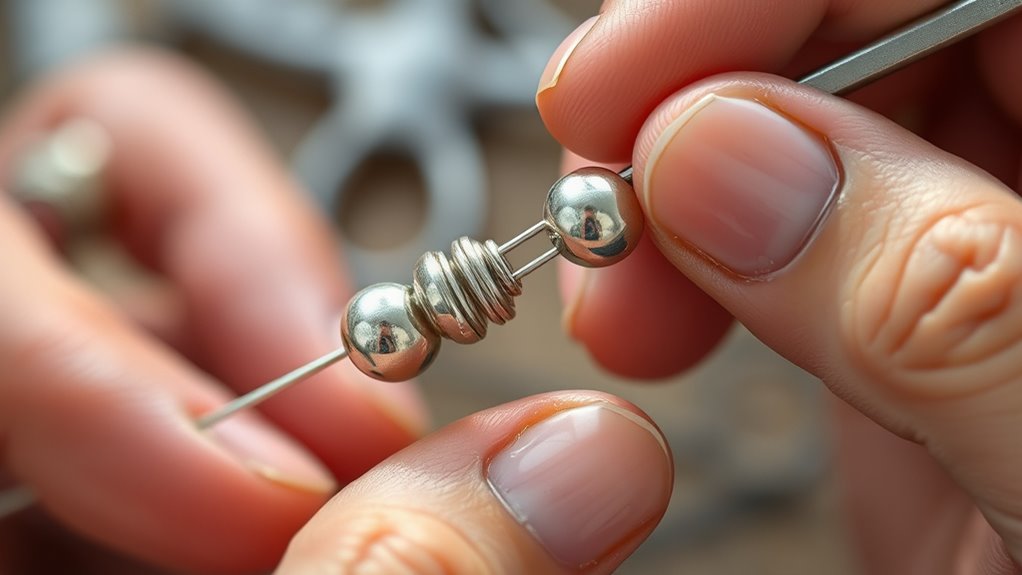
You’ll want to choose the right wire hardness based on your design’s needs—softer wire bends easily but may lose shape.
On the other hand, harder wire holds up better over time.
Matching wire hardness to your beads and style guarantees your jewelry stays durable without being too tough to work with.
Finding that balance helps your pieces keep their form and look great through daily wear.
Soft Vs Hard Wire
When working with wire jewelry, understanding the difference between soft and hard wire can make a big impact on your final piece.
Choosing the right gauge wires and hardness is key. Here’s what you need to know:
- Soft wires, like dead-soft copper, bend easily. This lets you shape intricate designs around circular beads effortlessly.
- On the other hand, hard wires—such as half-hard or full-hard—hold their shape well. This ensures your jewelry stays sturdy over time.
- Softer wires are great for delicate accents, but they can bend out of shape under stress.
- Harder wires offer durability, making them perfect for structural parts, but they do require more effort to manipulate.
Balancing wire hardness with your design complexity guarantees your piece is both beautiful and long-lasting.
Matching Hardness to Design
Although selecting the right wire hardness can seem tricky, matching it to your design’s needs guarantees your jewelry stays durable and attractive.
When working with circular beads, softer wire like dead-soft or full-soft lets you shape smooth, intricate curves easily. This is perfect for delicate wraps.
On the other hand, harder wire—half-hard or full-hard—adds structural stability, helping your wire jewelry keep its form over time.
Consider the weight of your beads and the complexity of your jewelry design. Lightweight, detailed pieces benefit from softer wire, while heavier or more geometric designs require harder wire for support.
Ensuring Shape Retention
Since wire hardness directly affects your jewelry’s durability, choosing the right type guarantees your pieces keep their shape over time.
To guarantee your wire jewelry with circular beads stays intact, focus on these key steps:
- Pick the right wire hardness based on bead size and weight. Softer wires work for delicate beads, while harder wires suit heavier designs.
- Use half-hard or full-hard wire gauges. These provide better shape retention and support.
- Match wire hardness to the design’s stress points. This helps prevent bending or deformation.
- Properly harden or anneal your wire. This boosts rigidity and holds circular shapes firmly.
Techniques for Wrapping Circular Beads Securely
To wrap circular beads securely, you’ll want to start with a 20-22 gauge half-hard wire that provides both strength and flexibility.
Begin by threading the wire through the bead’s hole, then wrap a few tight coils around the wire to anchor the bead firmly in place.
Maintain consistent tension as you coil to avoid slack, which can loosen over time and destabilize your design.
For larger or heavier circular beads, consider doubling the wire or creating a sturdy wrapping base to support the bead’s weight.
Always finish your wraps neatly by trimming excess wire close to the coils.
Tuck the ends behind the bead or into the design to prevent snagging.
This technique guarantees your circular beads stay secure and look polished.
Combining Wire Gauges for Visual Contrast
When you combine thicker wires like 20 or 22 gauge with finer ones such as 24 or 26 gauge, you create a striking visual contrast that enhances your jewelry’s depth and dimension.
Using varied gauges around circular beads lets you balance strength and delicacy perfectly.
Try these tips:
- Use thicker wire for the main frame around circular beads to provide stability.
- Wrap finer wire around the beads for intricate, delicate accents.
- Layer multiple gauges to emphasize the bead as the focal point.
- Create contrast by combining heavier wire wraps with thinner wire spirals or decorative touches.
This mix not only supports larger beads but also adds visual interest, making your wire jewelry stand out beautifully.
Matching Wire Color and Finish to Bead Styles
When choosing wire for your beads, think about how the color and finish work together to create harmony or contrast.
Bright, matte, or antiqued finishes can either highlight or soften a bead’s luster, so pick what complements the style.
You want the wire to enhance your design without stealing the spotlight.
Color Harmony Tips
Although wire color and finish might seem like small details, they play a crucial role in enhancing your beadwork’s overall look.
Achieving color harmony ensures your jewelry looks polished and intentional. Here’s how you can master it:
- Match the wire finish (bright, matte, antiqued) with your bead’s surface luster and style for a cohesive feel.
- Choose metallic wire colors—gold, silver, or copper—that either complement or create a striking contrast with your bead hues.
- Consider the bead’s base color carefully; the right wire can enhance or overpower your design.
- Don’t overlook bead hole color and size—select wire gauge and color that either blend in smoothly or stand out on purpose.
Following these tips helps you create balanced, eye-catching wire jewelry with perfect color harmony every time.
Finish Effects Explained
Paying attention to wire color is just the start; the wire’s finish plays a big role in shaping your jewelry’s final look.
When selecting your chosen wire, match its finish—bright, matte, or antiqued—to your bead’s surface to enhance visual harmony and draw attention to the bead’s natural luster.
Warm-toned beads pair beautifully with gold or copper wire, while silver works best with cool or transparent beads.
For opaque beads, matte or antiqued finishes reduce glare and create a subtle elegance, making jewelry maintenance easier by hiding minor scratches.
Translucent beads, on the other hand, shine brighter with polished wire finishes.
Thoughtfully coordinating wire finish with your bead style ensures your jewelry designs appear cohesive and professionally crafted.
This thoughtful approach not only elevates your work’s appeal but also enhances its longevity.
Contrast Versus Complement
To make your wire jewelry truly stand out, you can either match the wire color and finish to complement your beads or choose contrasting elements that highlight each piece individually.
Here’s how to decide:
- Match the wire finish to the bead surface luster—bright wire pairs well with shiny beads, while matte or antiqued finishes suit opaque, textured beads.
- You can also use contrasting wire colors, like gold wire with silver beads, to make each element pop.
- Don’t forget to coordinate wire color with bead tones: copper enhances warm hues, while silver works best with cool colors.
- Lastly, select wire finishes that fit your style—shiny wires suit modern designs, while distressed finishes bring vintage charm.
Have fun experimenting with these ideas!
Using Spiral Wraps to Add Movement and Interest
When you use spiral wraps in your wire jewelry, you add both movement and visual interest that make your pieces stand out.
Spiral wraps, typically crafted from softer wires like dead-soft copper or sterling silver, let you easily shape around circular beads.
By wrapping the wire around itself or the bead multiple times, you create dynamic, flowing designs that draw the eye.
Using a consistent gauge, such as 20-22 gauge half-hard wire, helps your spirals hold their shape and ensures durability.
Beyond aesthetics, spiral wraps securely hold beads in place while adding texture and a decorative flair.
Incorporating these wraps lets you transform simple circular beads into engaging focal points, enhancing your jewelry’s overall appeal with effortless elegance and movement.
Balancing Weight and Size in Bead and Wire Pairings
Although selecting beads and wire can seem straightforward, balancing their weight and size is essential to creating durable and comfortable wire jewelry.
To get it right, keep these points in mind:
- Use thicker wire gauges (18-20) for larger or heavier beads to ensure strong support and prevent bending.
- Opt for thinner gauges (22-24) with small, lightweight beads to maintain flexibility without bulk.
- Match bead weight to wire strength; don’t pair heavy beads with delicate wire to avoid stress and damage.
- Choose wire hardness wisely—half-hard works well with heavier beads to maintain shape, while dead-soft suits lighter beads for easy manipulation.
Following these tips helps your jewelry stay comfortable, durable, and visually balanced.
Selecting Complementary Hardware for Finishing Touches
Since the hardware completes your wire jewelry, you’ll want to choose clasps and findings that match both the material and style of your wire.
Pick hardware made from the same or compatible materials—like sterling silver with silver-plated or sterling silver pieces—to maintain durability and appearance consistent.
Match the finish of your hardware, whether bright, matte, or antiqued, to the wire for a polished look.
For wire gauges between 20 and 22, opt for sturdy clasps such as lobster or toggle to support the weight of circular beads safely.
Keep hardware minimal for delicate designs and select more decorative connectors for bold pieces.
Finally, verify all hardware fits your wire gauge and bead holes perfectly to avoid stress or damage during wear.
Experimenting With Wire Colors and Textures for Unique Designs
To create truly unique wire jewelry, you’ll want to experiment with different wire colors and textures that highlight your design’s personality.
Playing with contrasts and finishes can transform your pieces into eye-catching art.
Exploring contrasts and finishes turns your jewelry into captivating, standout art pieces that truly shine.
Consider these tips:
- Combine contrasting colors like copper wire with silver beads or gold-filled wire with transparent beads to create striking visual effects.
- Use textured finishes such as antiqued or matte wire alongside smooth circular beads to add depth and dimension.
- Incorporate twisted, hammered, or beaded wire to enhance the tactile quality and overall aesthetic.
- Mix various textures and finishes to build layered designs that showcase your craftsmanship and artistic flair.
Have fun experimenting!
Frequently Asked Questions
How to Make Perfect Circles With Wire?
You make perfect wire circles by wrapping softer wire around a round mandrel, bending gently, then tightening with pliers.
Test the fit often to guarantee smooth, seamless curves without kinks or gaps for a flawless shape.
How to Stop Beads From Sliding on Wire?
Want to keep those beads from sliding around?
Use stopper or crimp beads at the wire ends.
Pick the right wire gauge, apply a bit of jewelry glue inside the holes, or tightly wrap wire around each bead.
How to Wrap Wire Around Beads?
You’ll want to gently wrap soft or half-hard wire snugly around the bead, ensuring it fits without stress.
Secure it tightly but don’t crush the bead, and add decorative loops for both style and stability.
How to Make Wire Jewelry Stronger?
To make your wire jewelry stronger, think of it as armor—choose thicker, harder wire.
Wrap multiple strands tightly, and pick corrosion-resistant metals.
This way, your pieces won’t just shine—they’ll stand the test of time.
Conclusion
Now that you’ve gathered these wire jewelry tips, imagine your circular beads dancing effortlessly on a stage of perfectly chosen wire.
With the right gauge, material, and a touch of creative wrapping, your designs won’t just sparkle—they’ll sing.
Don’t be afraid to mix textures and colors; your jewelry can be a vibrant conversation waiting to happen.
So pick up your tools, and let your creativity flow like a river, shaping beauty bead by bead.
In conclusion, remember that the right wire can elevate your circular bead designs.
Experiment with different gauges and materials to find what works best for your style.
Let your creativity shine as you create stunning pieces that truly reflect your personality.
Embrace the journey of wire jewelry making and enjoy every moment of crafting!