What Is Gold Plated Jewelry and How Do You Identify and Care for It?
Gold plated jewelry is a stylish choice that features a thin layer of gold—typically ranging from 0.5 to 3 microns thick—bonded onto a base metal like brass or silver.
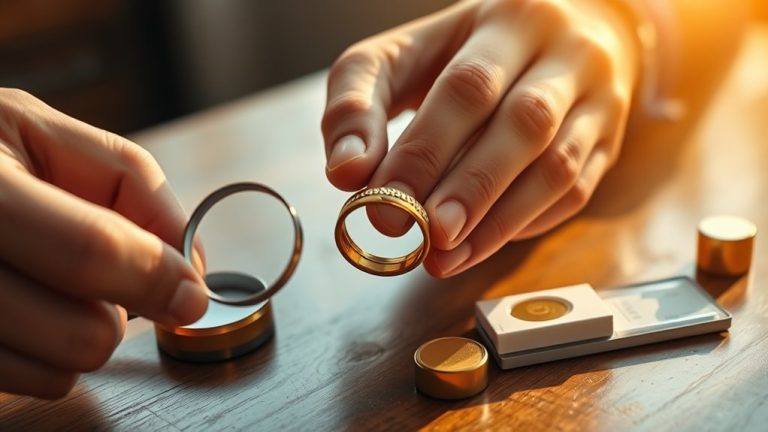
Identifying gold plated jewelry is fairly straightforward. Look for markings such as “GP” or pay attention to any fading where the gold may wear off over time.
To keep your gold plated pieces looking their best, store them away from moisture.
Cleaning should be done gently using a soft cloth, and it’s important to avoid harsh chemicals that could damage the finish.
If you’re curious about how gold plating compares to other coatings or want to learn the best care tips, there’s so much more to explore!
Understanding Gold Plated Jewelry
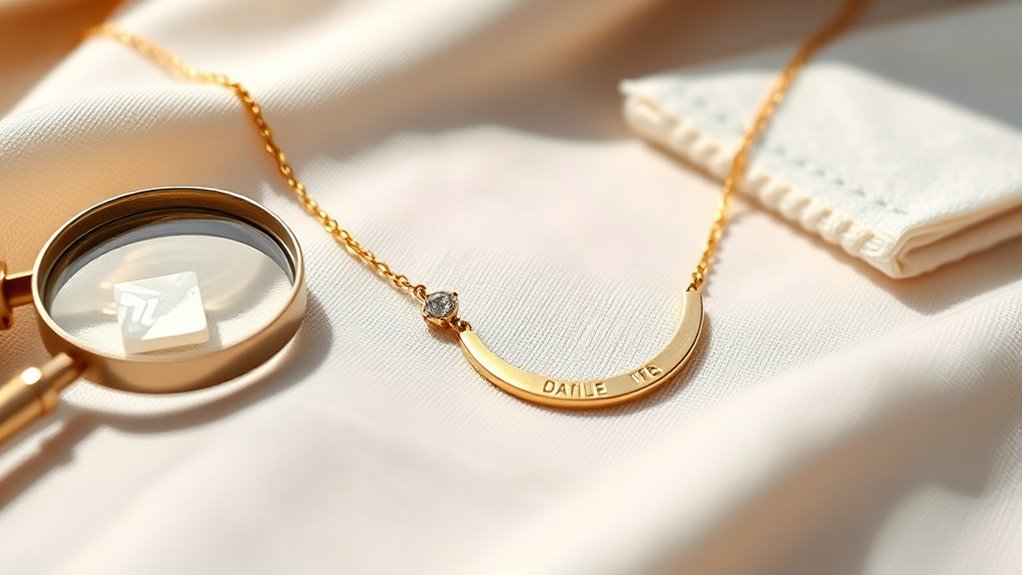
How does gold plated jewelry achieve its rich, golden look without the hefty price tag?
By applying a thin layer of gold over a base metal, such as brass or silver. This gold layer, typically 0.5 to 3 microns thick, is bonded through electroplating, which uses an electric current to deposit 14K or higher karat gold onto the core metal.
A thin 0.5 to 3 micron gold layer is electroplated onto base metals like brass or silver for rich gold plating.
When identifying gold plated jewelry, look for markings like “GP,” “G.P.,” or “gold plated.”
Also, check for a shiny surface signaling the gold layer.
Keep in mind, the gold layer can wear off over time due to water, chemicals, and friction.
Proper care is essential to maintain wear resistance and prolong the jewelry’s golden appearance.
How Gold Plating Is Made
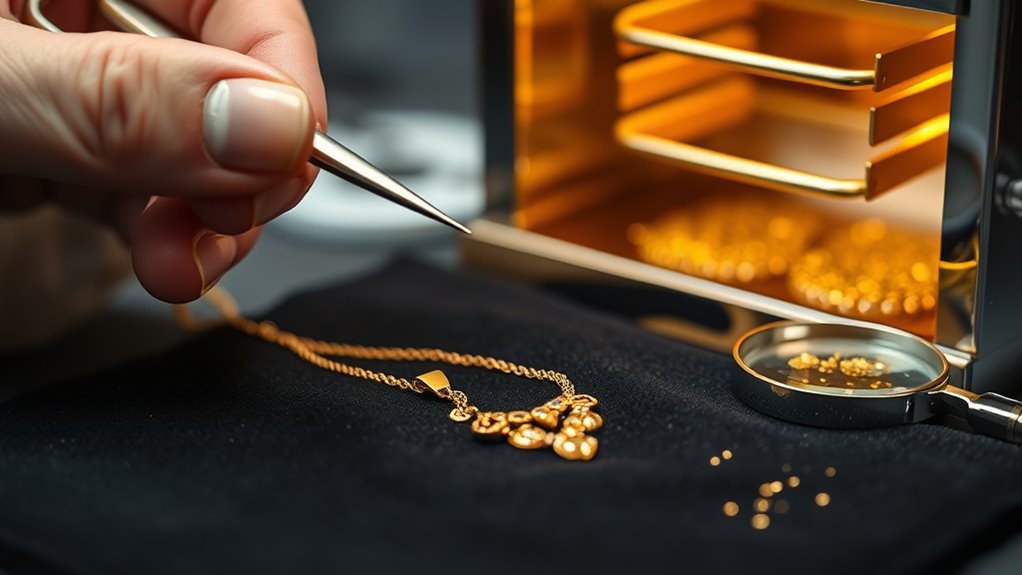
You create gold plating through an electroplating process that deposits a thin gold layer onto a base metal.
By submerging the jewelry in a gold ion solution and applying an electric current, the gold bonds securely to the surface.
The type of base metal and thickness of the gold layer play key roles in the final quality and durability.
Electroplating Process Explained
Ever wondered what gives gold plated jewelry its rich, gleaming surface?
It’s all thanks to electroplating, a process where a thin gold layer is deposited onto the jewelry’s base metal. You start by immersing the piece in an electrolyte solution containing gold ions.
When an electrical current passes through, it triggers a controlled transfer of these gold ions onto the metal, forming that stunning gold finish.
The thickness of this gold layer varies, usually between 0.5 to 3 microns, depending on factors like current strength and plating time.
Sometimes, barrier metals like palladium are used underneath to prevent tarnishing and improve durability.
Base Metals and Layers
The stunning gold finish you see on plated jewelry starts with the choice of base metals and the layers applied.
Typically, base metals like brass, copper, or silver serve as the core metal, providing strength and structure.
The underlying metal is submerged in a gold-containing solution, where a voltage causes gold ions to deposit, forming a thin gold layer on the surface.
Plating thickness usually ranges from 0.5 to 3 microns, directly impacting the gold coating’s durability.
Sometimes, a protective barrier such as palladium is applied before the gold layer to enhance longevity and prevent corrosion.
The thicker the gold layer, the longer your jewelry will maintain its rich appearance.
Identifying Real Gold Plated Jewelry
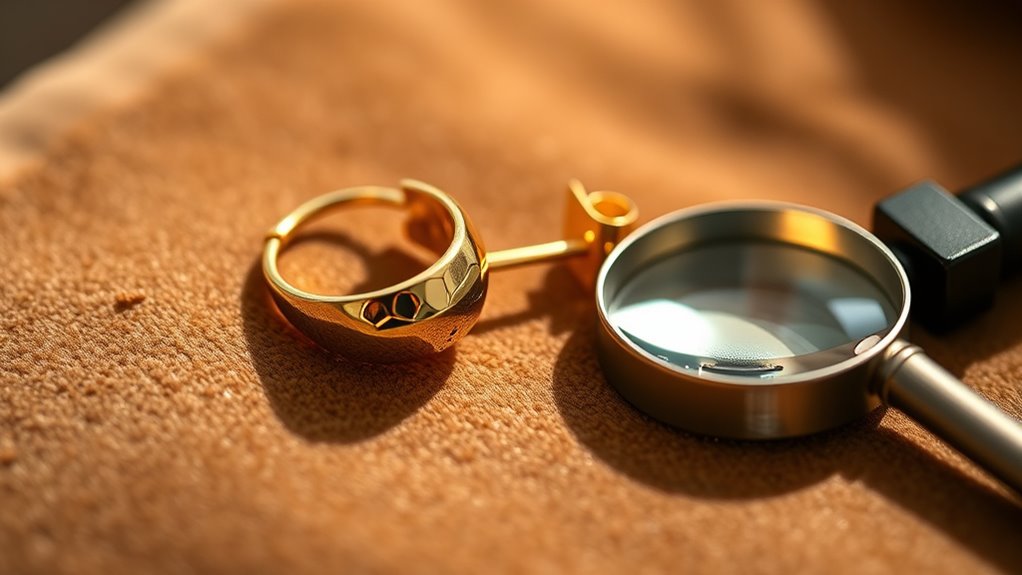
Although gold plated jewelry looks similar to solid gold, you can spot the difference by checking for specific markings like “GP,” “HGE,” or “RGP.”
These markings indicate a thin gold layer over another metal.
Such markings reveal a delicate gold coating atop a different metal base.
This layer of gold plating is usually very thin, often less than 3 microns, revealing the base metal underneath with wear.
To identify real gold plated jewelry, watch for these signs:
- Markings such as “GP,” “G.P.,” “HGE,” or “RGP.”
- A thin thickness of the gold layer, typically 0.5–1 micron.
- Visible base metal showing through discoloration or scratches.
- Color fading or changes over time due to wear.
- A slightly yellow or gold hue, but less vibrant than solid gold.
These clues help you distinguish gold plated pieces from solid gold at a glance.
Differences Between 14K, 18K, and 24K Gold Plating
When choosing gold plated jewelry, you’ll notice that the karat of the gold layer markedly impacts its look and durability.
14K gold plated pieces contain about 58.3% gold alloy. This makes them practical for everyday wear thanks to their balance of strength and affordability.
If you want a richer, deeper gold color, 18K gold plated jewelry, with roughly 75% gold alloy, offers a vibrant appearance while maintaining good durability.
On the other hand, 24K gold plated items use nearly pure gold (99.9%), giving a luxurious look but sacrificing durability.
This karat gold is softer and more prone to wear over time.
Common Uses and Styles of Gold Plated Jewelry
Where can you find gold plated jewelry shining its brightest?
You’ll see it in trendy necklaces, rings, and earrings that offer affordable luxury through a thin layer of gold plating.
This versatile finish allows various styles of gold plated jewelry to stand out, from delicate minimalist designs perfect for daily wear to bold statement jewelry that catches every eye.
Gold plating also enhances layered jewelry looks, giving you rich, golden tones without the high price.
It’s popular in fashion collections and vintage-inspired pieces alike.
Gold plated jewelry lets you enjoy the elegance of gold with added variety.
- Trendy rings and earrings
- Layered jewelry combinations
- Statement jewelry pieces
- Minimalist designs for everyday use
- Vintage or antique-style jewelry
Factors Affecting the Durability of Gold Plated Jewelry
Since gold plated jewelry relies on a thin layer of gold over a base metal, its durability depends heavily on several key factors.
First, the thickness of the gold layer, usually between 0.5 to 3 microns, directly influences layer durability—the thicker the plating, the longer it resists wearing off.
You should avoid frequent friction and scratching, as they quickly wear down the gold and expose the base metal underneath.
Exposure to water, moisture, and chemicals accelerates tarnishing and plating loss. So, proper storage in a dry, cool place is essential.
Additionally, while cleaning is important, you need to be gentle and avoid harsh agents to preserve the gold layer.
Best Practices for Cleaning Gold Plated Jewelry
Taking care of your gold plated jewelry means paying close attention to how you clean it.
Since the thin gold layer can easily wear off, proper maintenance is essential to prolong its shine.
Use a soft cloth or a jewelry polishing cloth to gently remove surface dirt without damaging the plating.
Avoid harsh chemicals that can strip the gold layer.
When deeper cleaning is needed, soak your piece in a mild cleaning solution of soap and warm water.
Then, rinse and dry thoroughly with a soft cloth.
Always store separately to prevent scratches and minimize exposure to moisture.
- Use a soft cloth for gentle wiping
- Avoid harsh chemicals and abrasive cleaners
- Soak in mild cleaning solution for deeper cleaning
- Dry thoroughly with a soft cloth after rinsing
- Store separately in a soft pouch or box
Tips to Prevent Tarnishing and Wear
Although gold plated jewelry offers a beautiful look at an affordable price, it requires mindful care to keep it from tarnishing and wearing down.
To prevent tarnish, avoid wearing your gold plated pieces in water, sweat, or humid environments. Always remove your jewelry before showering, swimming, or exercising to minimize exposure to moisture and chemicals.
Store separately in a dry, cool place like a jewelry box or soft pouch to prevent scratches and tarnishing.
Keep your pieces away from perfumes, lotions, and hairsprays, as these can weaken the gold layer.
To maintain shine, regularly clean gold plated jewelry with a soft, dry cloth—avoid abrasive cleaners.
Proper Storage Methods for Gold Plated Pieces
Keeping your gold plated jewelry in good condition doesn’t stop at cleaning and careful use—it also depends on how you store it.
Proper storage offers essential protection against tarnishing and damage. To keep your pieces looking their best, follow these storage tips:
Proper storage is key to preventing tarnish and damage, keeping your gold plated jewelry looking its best.
- Use a soft, airtight pouch or a jewelry box lined with fabric to prevent scratches and reduce exposure to air.
- Store each piece separately to avoid tangling and scratching.
Keeping jewelry away from humidity and direct sunlight is crucial since these factors accelerate tarnishing.
Add anti-tarnish strips or silica gel packets to absorb moisture inside storage containers.
And remember to remove your jewelry before sleeping, showering, or sweating to maintain its finish.
With these care practices, you’ll effectively protect your gold plated pieces and extend their lifespan.
Comparing Gold Plated Jewelry With Other Gold Coatings
When you choose gold plated jewelry, it’s helpful to understand how it compares with other gold coatings like gold filled and gold vermeil.
Gold plated jewelry features a thin layer of gold, typically 0.5 to 3 microns thick, applied over a base metal like brass using electroplating.
In contrast, gold filled jewelry has a much thicker gold layer—at least 5% by weight—bonded through heat and pressure. This makes it more durable and resistant to tarnishing.
Gold vermeil combines a sterling silver base with a gold layer at least 2.5 microns thick, offering better longevity than standard plating.
While gold plated pieces are more affordable, gold filled and gold vermeil jewelry provide superior durability and tarnishing resistance.
Frequently Asked Questions
How to Identify Gold-Plated Jewelry?
You can identify gold-plated jewelry by checking for markings like “GP” or “Gold plated.”
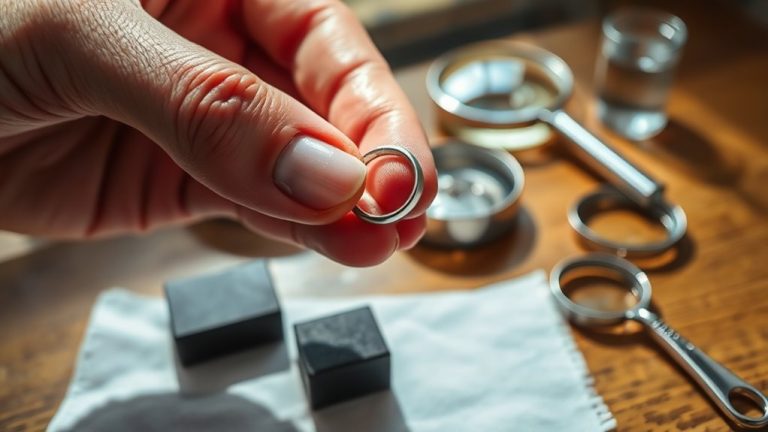
Using a magnet to test base metal attraction is also helpful.
If you observe any wear revealing a different metal underneath, that’s a sign it might be gold-plated.
Consider a professional appraisal too!
Will a Magnet Stick to Something That’s Gold-Plated?
No, a magnet usually won’t stick to gold-plated items since gold itself isn’t magnetic.
If your magnet does stick strongly, it likely means the base metal beneath the plating is ferromagnetic, not genuine gold.
How Long Does Gold-Plated Jewelry Last?
Gold-plated jewelry usually lasts 1 to 3 years with regular wear.
You’ll find thicker layers, like vermeil, last longer.
To keep yours shining, avoid water and chemicals.
Also, remember to store it carefully when not worn.
How Do You Care for Gold-Plated Jewelry?
You should avoid water, lotions, and perfumes on your gold-plated jewelry.
Store it separately and remove it before activities.
Cleaning is easy—just use a damp cloth and mild soap.
This keeps the plating looking fresh and lasting longer.
Conclusion
Now that you know what gold plated jewelry is and how to care for it, you’re ready to keep your pieces shining like a royal treasure from the Renaissance!
Remember, gentle cleaning, proper storage, and avoiding harsh chemicals will extend your jewelry’s life.
Whether you’re rocking 14K or 24K plating, treating your gold plated items with care guarantees they stay stunning and tarnish-free.
So, go ahead—shine bright and enjoy your timeless accessories!
In conclusion, understanding gold plated jewelry and its care is essential for maintaining its beauty.
With simple practices like gentle cleaning and safe storage, you can ensure your pieces remain radiant.
So, embrace your gold plated treasures, and let them elevate your style while lasting for years to come!