How to Identify Bakelite Jewelry Step by Step
To identify Bakelite jewelry, you’ll want to look for its distinctive characteristics. Bakelite is known for its rich, warm colors and smooth, hard surface, which should be free of mold lines.
First, feel the weight of the piece; it should feel heavier and denser than modern plastics.
Next, give it a gentle tap. Bakelite produces a deep “clunk” sound, unlike the lighter “clink” of other materials.
Another handy trick is to warm or rub the jewelry to detect a sharp, formaldehyde-like smell. If you’re unsure, you can use a dampened Formula 409 swab to check for a yellowish stain.
Lastly, keep an eye out for signs of age, such as patina or tiny chips.
If you want to dive deeper, there’s a wealth of information available about this classic material!
Understanding Bakelite and Its History
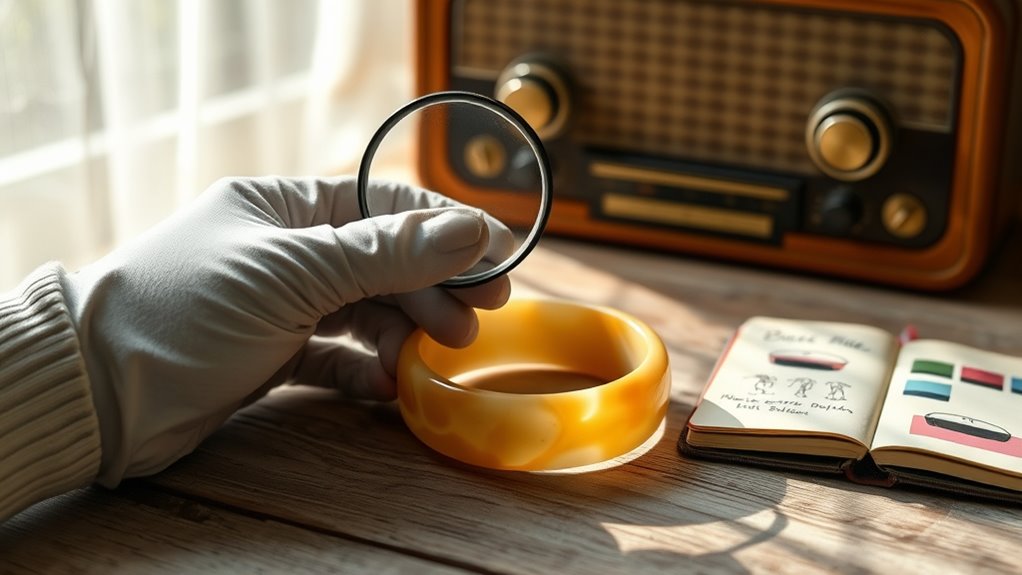
Although you might not realize it, Bakelite holds a special place in history as the first fully synthetic plastic, invented in 1907 by Leo Baekeland.
Bakelite, invented in 1907 by Leo Baekeland, was the world’s first fully synthetic plastic.
This phenol-formaldehyde resin quickly became popular for making durable, affordable items like jewelry, buttons, and household goods.
When you handle vintage Bakelite, you might notice its distinctive phenolic smell—a subtle, chemical scent unique to this material.
Bakelite’s ability to be molded and colored in rich, warm tones made it a favorite during the Art Deco era.
While newer plastics eventually replaced it in the 1950s, authentic vintage Bakelite pieces remain highly collectible today.
Understanding its origins and characteristics, including that signature smell, helps you appreciate the historical value behind the jewelry you’re examining.
Visual Characteristics of Authentic Bakelite
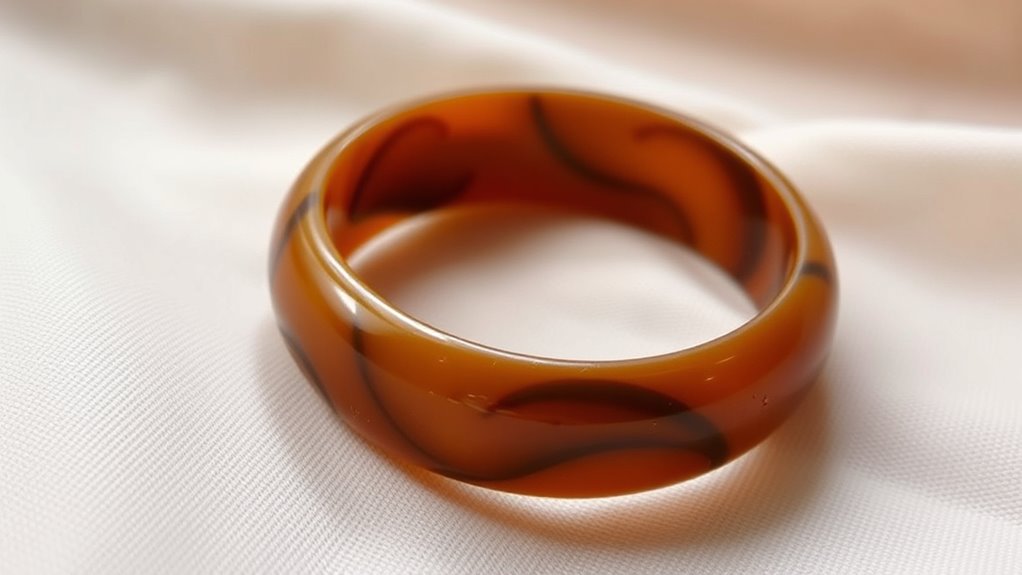
When you examine Bakelite jewelry closely, you’ll notice its warm, rich colors like butterscotch, caramel, and deep cherry reds.
Often, these pieces feature marbled or mottled patterns that set them apart from other plastics.
These visual characteristics are key indicators of Bakelite authenticity.
Genuine Bakelite has a smooth, hard surface that might show fine scratches or a slight patina.
These signs of age enhance its charm.
Unlike many plastics, authentic Bakelite usually lacks mold seams or manufacturing lines.
Over time, its colors mellow and deepen, giving it a distinctive, vintage look.
You might also spot tiny chips, crazing, or slight discoloration, all adding to its authentic visual appeal.
Paying attention to these details helps you confidently identify true Bakelite jewelry.
The Weight Test for Bakelite Jewelry
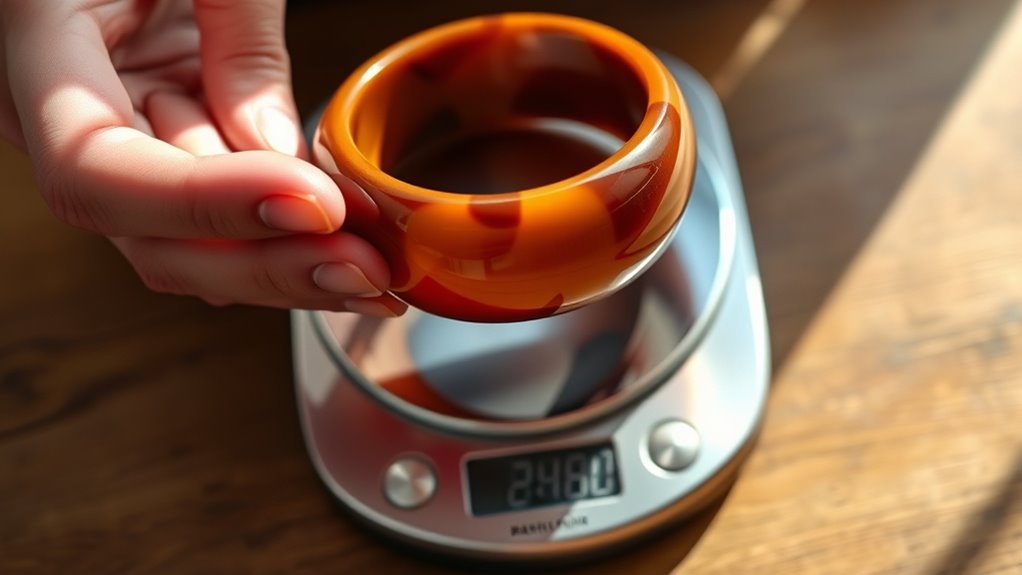
To start the weight test, hold your Bakelite piece next to a similar-sized plastic item and feel which one is heavier.
Bakelite’s dense composition gives it a solid, substantial weight that you can notice immediately.
Comparing Weight Differences
Because Bakelite jewelry tends to weigh noticeably more than similar-sized plastic pieces, you can use a simple weight comparison to help identify it.
Hold the suspected Bakelite item alongside a plastic piece of similar size and feel the weight difference.
Bakelite usually weighs at least 10-20% more, giving it a solid, substantial heft that’s easy to notice.
This weight test is a straightforward comparison tool but isn’t foolproof—some modern Bakelite reproductions may be lighter.
So, while weight provides a valuable clue, you shouldn’t rely on it alone.
Combine this test with other methods like visual inspection or smell to increase your accuracy in identifying genuine Bakelite jewelry.
Handheld Feel Assessment
A key way to assess whether your jewelry is Bakelite is by feeling its weight in your hand.
Bakelite pieces typically feel heavier than modern plastics of similar size because of their higher density.
When you hold a suspected Bakelite item, compare its weight and feel to a known plastic piece like celluloid or lucite.
The substantial density of Bakelite, a phenolic resin, gives it a solid, almost substantial feel that lighter plastics lack.
If the piece feels hollow or insubstantial, it’s less likely to be Bakelite.
While weight alone isn’t conclusive, this handheld feel assessment provides a valuable clue.
Combining this tactile test with other identification methods will increase your confidence in recognizing authentic Bakelite jewelry.
Weight Versus Size
When you compare the weight of your jewelry piece to another of similar size, you’ll notice Bakelite usually feels noticeably heavier than modern plastics like celluloid or lucite.
This weight difference results from Bakelite’s higher density, as it’s a dense, thermosetting plastic. Typically, Bakelite weighs about 15-20% more than comparable plastic pieces.
To use this test, hold your piece and do a direct weight comparison with a known non-Bakelite item of similar size.
If your piece feels distinctly heavier, that’s a strong sign it may be Bakelite.
Keep in mind, though, that weight alone isn’t conclusive. Combine this comparison with other identification methods to accurately determine if your jewelry is genuine Bakelite.
Performing the Tapping Sound Test
Tap your Bakelite pieces gently with a small metal object and listen for a deep, solid “clunk” sound.
Compare this to the lighter, tinny taps you’d hear from modern plastics.
This difference in sound helps you recognize Bakelite’s unique density and composition.
Recognizing the Clunk
Although it might seem simple, performing the tapping sound test can quickly reveal whether your jewelry is Bakelite.
When you tap two suspected Bakelite pieces together, listen closely for a distinctive deep, solid clunk.
This sound is heavier and more resonant than the lighter, higher-pitched clink you’d hear from plastics like celluloid.
The tapping sound Bakelite produces is unique—almost like a firm, hollow thud—making it easier to recognize if you’re familiar with the material.
To get the best results, compare the sound with known Bakelite items if possible.
Comparing Plastic Sounds
How can you tell Bakelite apart from other plastics just by sound? The tapping sound test is a simple yet effective method.
When you gently tap two suspected Bakelite pieces together, listen closely for a deep, resonant “clunk” that’s distinct from the lighter “clink” of plastics like lucite or celluloid.
To make a confident identification, perform a sound comparison with known Bakelite items. Here’s how to proceed:
- Tap the pieces gently and focus on the quality of the sound.
- Compare the tapping sound against several confirmed Bakelite references.
- Notice that modern plastics produce a higher-pitched, less substantial noise.
This tapping sound comparison helps you distinguish Bakelite’s solid, heavy sound from other plastics quickly and accurately.
Detecting Bakelite Through the Smell Test
When you rub or gently heat a Bakelite item, it releases a distinctive chemical odor similar to formaldehyde or phenol.
To perform the smell test, vigorously rub the piece with a soft cloth or your fingers to generate enough heat without damaging delicate finishes or wood elements.
If you detect a strong, sharp chemical odor, it’s a good sign the item is genuine Bakelite.
Other plastics usually emit a fruity scent or no smell at all during this heat test.
Be careful not to overheat or apply excessive force, as this could harm your jewelry.
With practice, you’ll quickly learn to recognize Bakelite’s unique smell, making the heat test an effective and straightforward way to identify this classic material.
Using Simichrome Polish to Identify Bakelite
Besides the smell test, you can use Simichrome polish to help identify Bakelite jewelry.
This chemical testing method is straightforward and effective for spotting authentic Bakelite. Here’s how to use Simichrome polish:
- Apply a small amount of simichrome polish to a soft cloth and gently rub a hidden part of the jewelry.
- Check the cloth for a yellow or tobacco-brown stain, which suggests the piece is likely Bakelite.
Keep in mind that lacquered or black Bakelite might not stain, so it’s a good idea to use additional testing methods for confirmation.
After testing, make sure to clean the polished area with a soft cloth to remove any residue and protect the jewelry’s surface.
Combining simichrome polish with other testing methods gives you the best chance of accurately identifying authentic Bakelite.
Applying Formula 409 Cleaner for Verification
Although Formula 409 cleaner isn’t a traditional method, you can use it effectively to verify Bakelite jewelry by dampening a cotton swab with the cleaner and gently rubbing it on a hidden spot.
If it’s Bakelite, the swab will show a yellow or brownish stain. Avoid lacquered or black Bakelite, as they may not react—test uncoated areas instead.
After testing, rinse thoroughly to remove any chemical residue.
Use this alongside other tests like the hot water smell or Simichrome polish for accurate results.
| Step | Action | Result |
|---|---|---|
| 1 | Dampen swab with Formula 409 | Ready to test |
| 2 | Rub on hidden spot | Possible color stain appears |
| 3 | Check for yellow/brown stain | Indicates Bakelite presence |
| 4 | Rinse jewelry thoroughly | Removes chemical residue |
Observing Signs of Age and Wear on Bakelite
When you examine Bakelite jewelry, pay close attention to its surface patina and any scratches that show its age.
Check the edges for tiny chips or wear, which often reveal long-term use.
These signs help you spot genuine vintage pieces with natural character.
Surface Patina and Scratches
If you examine Bakelite jewelry closely, you’ll notice a subtle, uneven patina that develops over decades, giving the surface a slightly matte or dull look.
This surface patina is a key aging sign that differentiates genuine vintage pieces from newer imitations. Alongside this, fine scratches and tiny chips often appear, especially in spots handled frequently.
Pay attention to these details:
- Fine scratches that create a soft texture rather than deep gouges.
- Surface crazing—small interconnected lines indicating age, not damage.
- Areas where polish has worn off, showing gentle discoloration.
These characteristics reveal the jewelry’s history and authenticity.
When you spot this combination of surface patina and subtle wear, you’re likely looking at true vintage Bakelite, not a modern replica.
Edge Chips and Wear
You’ll often spot edge chips on Bakelite jewelry as tiny, smooth fractures along the edges, revealing its age and use.
These chips serve as a clear sign of genuine vintage Bakelite, distinguishing it from newer or imitation plastics.
When you examine pieces closely, especially with a jeweler’s loupe, you’ll notice wear patterns concentrated on high-contact areas like edges, corners, and backs.
Over time, frequent handling causes these spots to develop subtle dullness or patina, enhancing the authentic look.
Fine scratches and small chips accumulate naturally, reflecting long-term use.
Paying attention to edge chips and wear patterns helps you confidently identify real vintage Bakelite, ensuring the piece’s history and craftsmanship shine through.
Comparing Bakelite With Other Early Plastics
Although Bakelite shares its era with other early plastics, you can distinguish it by its weight, sound, and texture.
Bakelite stands apart from other early plastics through its unique weight, sound, and texture.
For identification, focus on these key differences:
- Bakelite is heavier and produces a deeper, more solid “clunk” when tapped. This is unlike lighter early plastics like celluloid or lucite, which sound more muted.
- It emits a distinctive formaldehyde smell when heated. In contrast, other plastics often smell waxy or chemical.
- Visually, Bakelite shows a rich, mottled or marbled appearance with vibrant colors and a hard surface that develops a vintage patina. This is different from the more uniform hues and mold seams found in other early plastics.
Best Practices for Confirming Bakelite Authenticity
When confirming Bakelite authenticity, rely on multiple tests instead of just one to avoid misleading results.
Start with the hot water smell test: warm the piece gently and check for a distinctive chemical odor, like formaldehyde.
Next, apply a small amount of polish on a cotton cloth—Simichrome polish works well—to see if it produces a slight yellow residue, a sign of genuine Bakelite.
Also, observe the weight and sound; authentic Bakelite feels heavier and gives a deep “clunk” when tapped.
Look for surface signs like patina, fine scratches, or tiny chips, which indicate age and authenticity.
Be cautious if the color seems too uniform or the piece fails these tests, as it may be a fake.
Combining these steps will help you confidently confirm authenticity.
Frequently Asked Questions
How Can You Tell if a Piece of Jewelry Is Bakelite?
You can tell if jewelry is Bakelite by tapping it for a deep clunk.
Also, you should smell for a chemical odor after rubbing it.
Check for age signs like patina, and test discreet spots with polish for yellow or brown stains.
What Is the 409 Test for Bakelite?
The 409 test for Bakelite is your magic trick: dab some Formula 409, and if your jewelry leaves a yellow or brown stain, congratulations—you’ve got authentic Bakelite, not just fancy plastic pretending to be vintage gold!
Just a little test can reveal the truth.
If it doesn’t stain, well, you might want to keep looking for that true vintage gem!
What Is a Simichrome Test?
A Simichrome test uses a polish that, when rubbed on Bakelite, stains the cloth deep brown or caramel.
You’ll see this color change only with genuine Bakelite, helping you identify it reliably.
Can You Use Brasso to Test for Bakelite?
You shouldn’t use Brasso to test for Bakelite.
It can damage the surface, leave misleading residues, and dull the patina.
Instead, rely on safer, specific tests like Simichrome or the baking soda method for accurate results.
Conclusion
So, after all those tests—tapping, sniffing, and even using kitchen cleaner—you’ll probably still wonder if your jewelry is truly Bakelite.
It’s ironic that something made to last decades can leave you guessing with just a few simple tricks.
But hey, if you enjoy detective work as much as collecting vintage pieces, these steps are your best friends.
Just remember: sometimes, the mystery is part of the charm.
In conclusion, identifying Bakelite jewelry can be a fun and rewarding experience.
By using simple testing methods like tapping, smelling, and cleaning, you can uncover the truth behind your vintage treasures.
Though it may take a bit of detective work, the thrill of discovering authentic Bakelite is part of what makes collecting so enjoyable.
Embrace the mystery, and let your passion for Bakelite shine through!