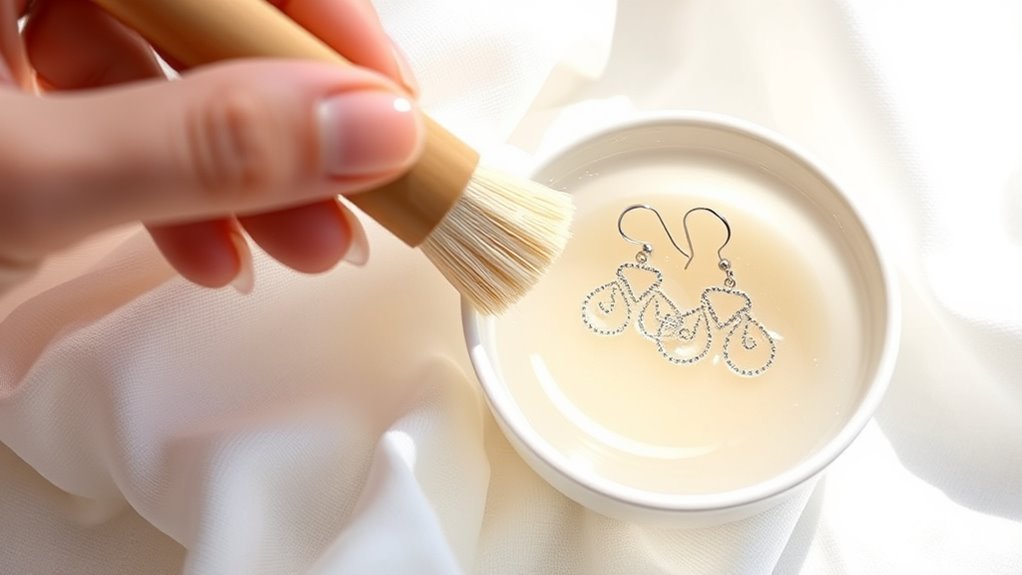
How to Get Tarnish Off Jewelry Step by Step
To get tarnish off your jewelry, you can easily follow a simple and effective method. Start by lining a glass dish with aluminum foil.
Next, place your tarnished pieces on the foil.
Sprinkle baking soda evenly over the jewelry, and then pour boiling water to fully cover everything.
Let it soak for 10-15 minutes. This process activates a gentle reaction that removes tarnish without scratching your precious pieces.
Once the time is up, rinse the jewelry with lukewarm water.
Make sure to dry it with a soft cloth and polish to restore its shine.
This safe, eco-friendly method not only cleans but also protects your jewelry’s finish and longevity.
By following these steps, you can keep your jewelry sparkling longer and looking as good as new!
Quick Steps to Remove Tarnish From Jewelry
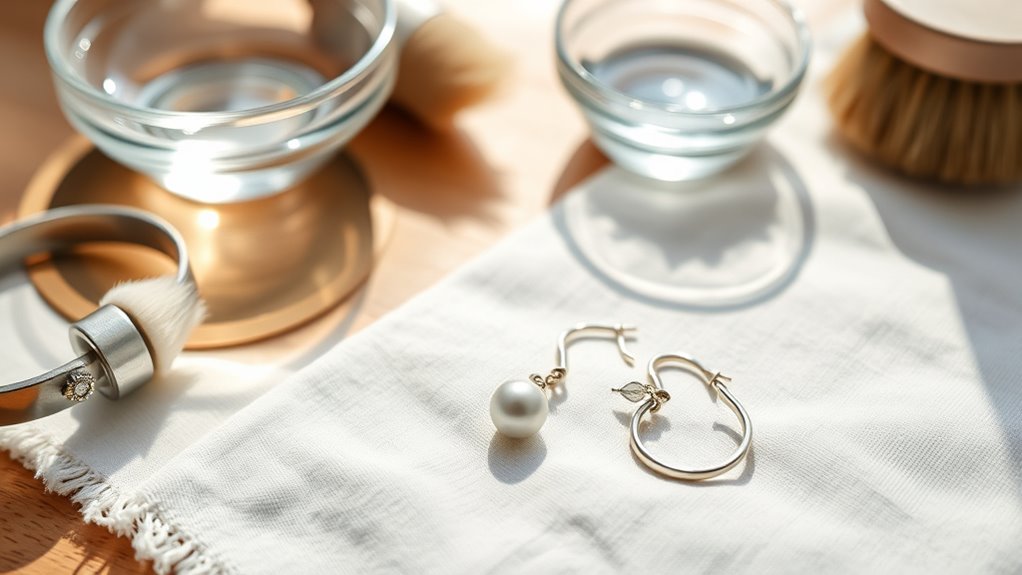
If you want to quickly remove tarnish from your jewelry, start by lining a glass dish with shiny aluminum foil and placing your pieces on top.
Next, sprinkle about two tablespoons of baking soda evenly over the jewelry.
Then, pour boiling water over the jewelry until it’s fully submerged.
This activates the cleaning reaction between the baking soda, aluminum foil, and tarnish.
Let your jewelry soak for 10 to 15 minutes, giving the tarnish time to transfer to the foil.
After soaking, rinse the jewelry with lukewarm water to remove any residue.
Finally, dry your pieces thoroughly with a soft cloth and buff them to restore their shine.
This simple method uses common household items to get your jewelry looking bright again fast.
Materials Needed for Cleaning Jewelry at Home
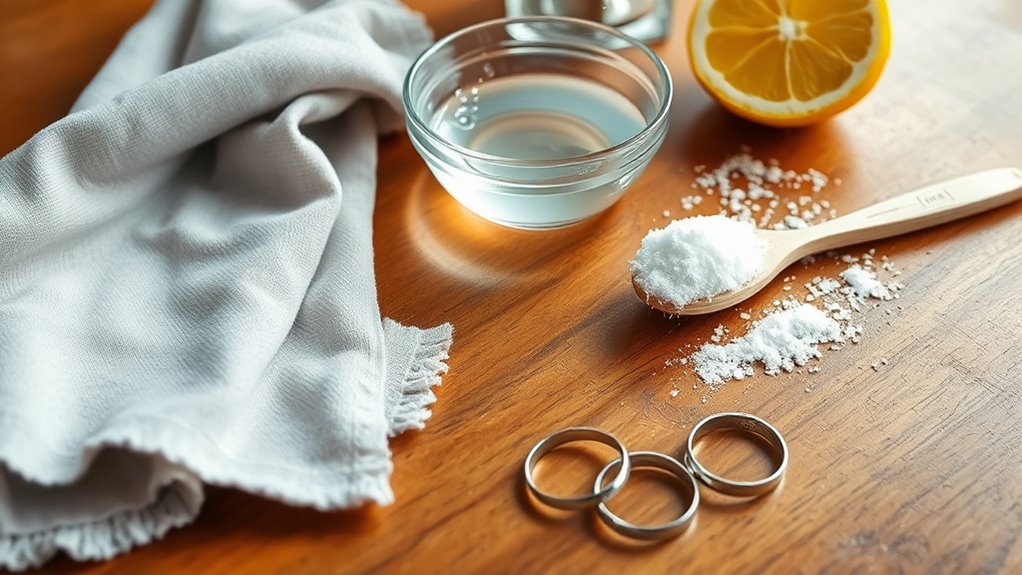
To clean your jewelry effectively at home, you’ll need a few key supplies like baking soda, aluminum foil, and boiling water.
Choosing soft cloths or microfiber towels is important to avoid scratching while drying and polishing.
Using safe cleaning ingredients and tools guarantees your jewelry stays shiny without damage.
Essential Cleaning Supplies
Gathering a few simple supplies will make removing tarnish from your jewelry quick and effective.
To tackle tarnish removal, you’ll need aluminum foil to create a reactive surface.
Baking soda acts as a natural cleanser, while hot water activates the cleaning process.
Finally, a soft cloth helps you dry and polish your jewelry after cleaning.
| Supply | Purpose | Tips |
|---|---|---|
| Aluminum foil | Creates tarnish removal surface | Line dish or use small pieces |
| Baking soda | Natural chemical cleanser | Use about 2 tablespoons per item |
| Hot water | Activates tarnish removal | Use boiling or very hot water |
| Soft cloth | Drying and polishing | Choose lint-free or microfiber |
| Glass dish | Holds jewelry and solution | Optional but helpful |
Choosing Soft Cloths
After preparing your cleaning solution with aluminum foil, baking soda, and hot water, you’ll want to choose the right cloth to finish the job.
Always use a soft, lint-free cloth like microfiber or cotton flannel to avoid scratching your delicate jewelry.
Avoid abrasive materials such as steel wool or rough towels—they can damage surfaces.
For best results, pick a polishing cloth specifically designed for jewelry; these remove tarnish gently without harming the metal finish.
Before you start, make sure the cloth is clean and free of debris to prevent transferring dirt onto your pieces.
Gently buff your jewelry in circular motions with the soft cloth to clean and polish, restoring its shine while protecting the finish.
This careful choice ensures your jewelry looks brilliant without risk of damage.
Safe Cleaning Ingredients
A few safe and effective ingredients can help you remove tarnish from your jewelry right at home.
Baking soda, aluminum foil, and boiling water are popular cleaning ingredients for homemade solutions that target tarnish removal without harsh chemicals.
For gentle cleaning, mild dish soap mixed with warm water works well on lightly tarnished pieces.
Always use soft cloths or microfiber polishing cloths to dry and polish your jewelry, ensuring you don’t scratch delicate surfaces.
Avoid abrasive materials or strong chemicals that can damage your jewelry’s finish.
While commercial jewelry cleaning solutions exist, they’re best reserved for specific metals and stones.
Using these safe cleaning ingredients supports careful jewelry care and keeps your pieces shining beautifully without risk.
Preparing the Cleaning Solution With Baking Soda and Aluminum Foil
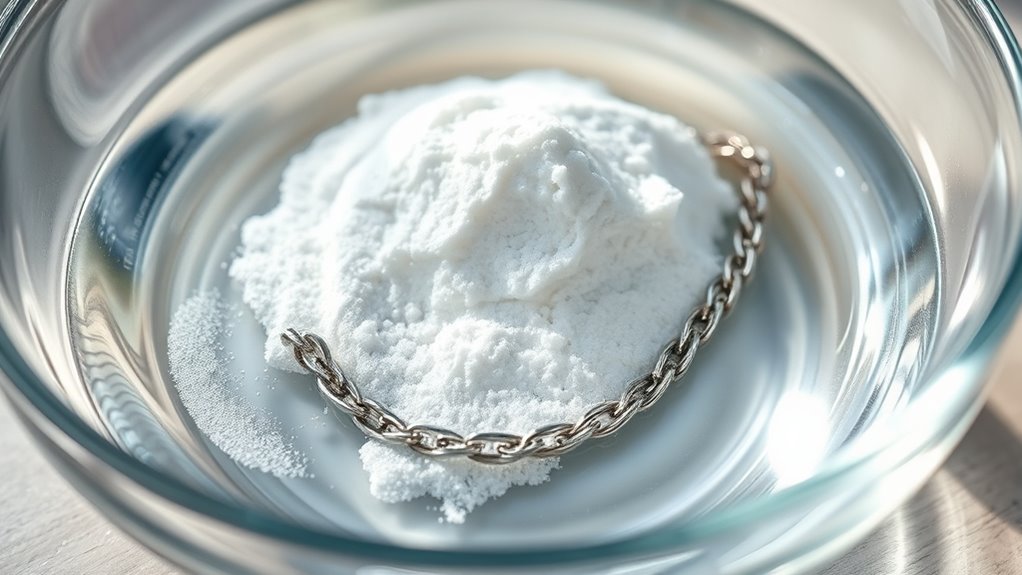
When you line a shallow glass dish with aluminum foil shiny side up, you create the perfect surface for the tarnish removal process.
Make sure the foil fully covers the dish to maximize contact with the tarnished jewelry.
Ensure the foil completely lines the dish for optimal contact with your tarnished jewelry.
Place your pieces directly on the foil without overlapping to ensure even cleaning.
Next, sprinkle about 2 tablespoons of baking soda evenly over the jewelry and foil.
Pour boiling water into the dish, submerging the jewelry completely.
This activates a chemical reaction between the aluminum foil and baking soda, which transfers tarnish from your jewelry to the foil.
The solution is now ready for soaking, setting the stage for effective tarnish removal in the next step.
How to Soak and Clean Tarnished Jewelry Effectively
Once you’ve prepared your baking soda and aluminum foil solution, let your tarnished jewelry soak for 10 to 15 minutes to allow the chemical reaction to work its magic.
Lay your pieces on shiny side-up aluminum foil in a shallow dish, making sure they don’t touch. Sprinkle about 2 tablespoons of baking soda over them, then carefully pour boiling water to fully submerge the jewelry.
This process helps remove tarnish by transferring it from your jewelry to the aluminum foil, effectively restoring shine. Soaking and cleaning this way is a simple, chemical-free method to clean tarnished jewelry without harsh scrubbing.
After soaking, your jewelry will be ready for rinsing and drying, making it look bright and refreshed.
Rinsing and Drying Your Jewelry Properly
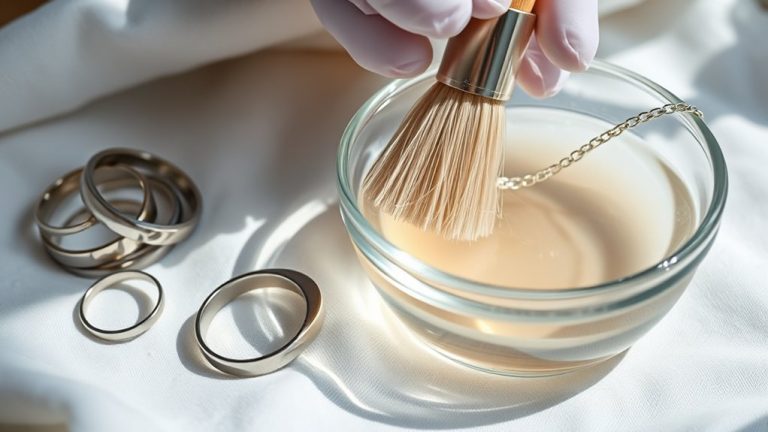
After soaking your jewelry, you’ll want to rinse it thoroughly with lukewarm water to wash away any leftover cleaning solution or loosened tarnish particles.
Be sure to use gentle water pressure to avoid dislodging delicate stones or settings.
Use gentle water pressure during rinsing to protect delicate stones and settings from damage.
Once rinsed, gently pat your jewelry dry with a soft, lint-free cloth—never use abrasive materials that could scratch its surface.
Pay close attention to crevices and settings, blotting carefully to remove all water.
You can also use a gentle airflow to help dry hard-to-reach areas.
Finally, allow your jewelry to air-dry completely before storing or wearing it to prevent moisture-related tarnish or corrosion.
Regularly check for any lingering dampness and pat again if needed to keep your jewelry looking its best.
Polishing Techniques to Restore Jewelry Shine
Although cleaning removes tarnish and dirt, polishing your jewelry is essential to restore its original shine and brilliance.
Using effective polishing techniques helps you bring back that dazzling look while preventing tarnish buildup. Here’s how to do it right:
- Use a soft polishing cloth, like a jewelry or microfiber cloth, to gently buff your pieces without scratching.
- For stubborn tarnish, apply a small amount of jewelry polish to the cloth and rub in circular motions.
- Avoid abrasive materials or rough pads that can damage delicate finishes.
- After polishing, wipe with a clean, dry cloth to remove residue and enhance shine.
Regularly polishing your jewelry not only restores shine but also helps prevent tarnish.
This way, you can keep your treasures looking new longer!
Why This Method Safely Removes Tarnish
Because this method relies on a natural chemical reaction between aluminum foil and baking soda, it safely lifts tarnish from your jewelry without harsh scrubbing or chemicals.
This natural reaction between aluminum foil and baking soda gently removes tarnish without harsh scrubbing or chemicals.
The aluminum foil acts as a catalyst, transferring tarnish from your metal pieces onto its surface through this reaction.
By using boiling water, the process activates efficiently, dissolving tarnish residues without damaging delicate metals like silver, gold, or copper.
This approach guarantees gentle cleaning that preserves your jewelry’s integrity, avoiding scratches or abrasions common with abrasive methods.
As a result, tarnish removal happens effectively while restoring your jewelry shine naturally.
You get a safe, eco-friendly way to refresh your pieces without risking harsh chemical exposure or surface damage.
Tips for Maintaining Jewelry’s Shine Longer
To keep your jewelry shining longer, you should store it properly and handle it with care.
Proper jewelry maintenance helps prevent tarnish and extends the life of your pieces.
Here are four tips to maintain your jewelry’s shine:
- Store clean silver in airtight containers or anti-tarnish pouches to slow oxidation.
- Regularly polish jewelry with a soft cloth to remove tarnish buildup and enhance shine.
- Avoid moisture, perfumes, and harsh chemicals that accelerate tarnish formation.
- Wear your jewelry often; natural skin oils help prevent tarnish buildup.
Additionally, consider applying a clear protective coating to delicate pieces.
Following these steps guarantees effective tarnish removal and keeps your jewelry looking brilliant longer.
Frequently Asked Questions
How to Remove Tarnish From Jewelry at Home?
You can remove tarnish by placing your jewelry on aluminum foil,
sprinkling baking soda over it, pouring boiling water to soak,
then rinsing and drying it.
This restores shine quickly using simple household items.
How to Get Tarnish off Permanent Jewelry?
You’ll want to soak your permanent jewelry in warm water with gentle detergent or baking soda.
Then gently polish with a soft cloth.
Avoid abrasive tools to protect the links.
Also, consider using commercial cleaners, but be sure to follow the instructions carefully.
What Household Items Remove Tarnish?
Did you know over 70% of people use household items to clean tarnish?
You can remove tarnish with baking soda, lemon juice, vinegar, toothpaste, salt, or even ketchup—simple, effective, and probably already in your kitchen!
Can Tarnishing Be Reversed?
Yes, you can reverse tarnishing by cleaning your jewelry with baking soda, aluminum foil, or a polishing cloth.
For severe cases, you might need professional restoration to bring back your jewelry’s original shine safely.
Conclusion
So, grab your baking soda, aluminum foil, and a sprinkle of patience—you’re about to turn your tarnished jewelry from “ancient artifact” back to “sparkly masterpiece.”
Just soak, rinse, and polish like a pro, and watch those grimy layers vanish faster than your willpower at a dessert buffet.
With a little care, your jewelry won’t just shine; it’ll practically blind everyone in the room.
Tarnish doesn’t stand a chance against your newfound cleaning superpowers!
In conclusion, using simple household items like baking soda and aluminum foil can transform your tarnished jewelry into a dazzling accessory once again.
By following these easy steps and taking the time to clean your jewelry, you can ensure it retains its shine and beauty.
So, embrace your cleaning skills and enjoy wearing your sparkling treasures without the worry of tarnish bringing them down!