How to Clean Vintage Jewelry With a Step-By-Step Guide
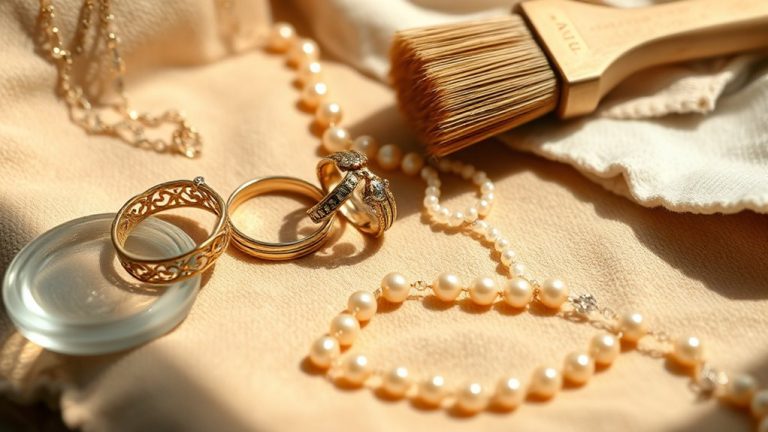
To clean vintage jewelry effectively, it’s essential to first identify the materials used in the piece.
Once you know what you’re working with, gather the necessary supplies: a soft cloth, mild soap, lukewarm water, and a soft toothbrush.
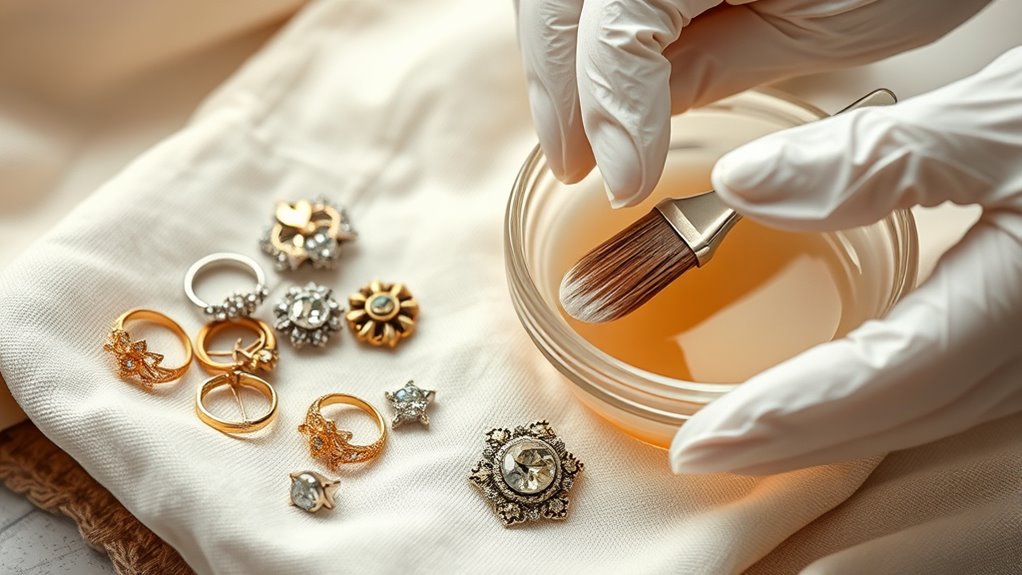
Gently brush or wipe the jewelry with the soapy water, being careful to avoid harsh chemicals and hot water.
After cleaning, rinse the piece thoroughly and dry it completely.
Remember to polish carefully to preserve its beautiful patina.
If appropriate, apply a protective sealant to the metals to enhance their longevity.
When storing your vintage jewelry, keep pieces separate in a cool, dry place.
Always handle and clean your jewelry gently to maintain its charm.
Explore further to master care techniques that will help extend the beauty of your vintage pieces!
Understanding the Importance of Gentle Cleaning
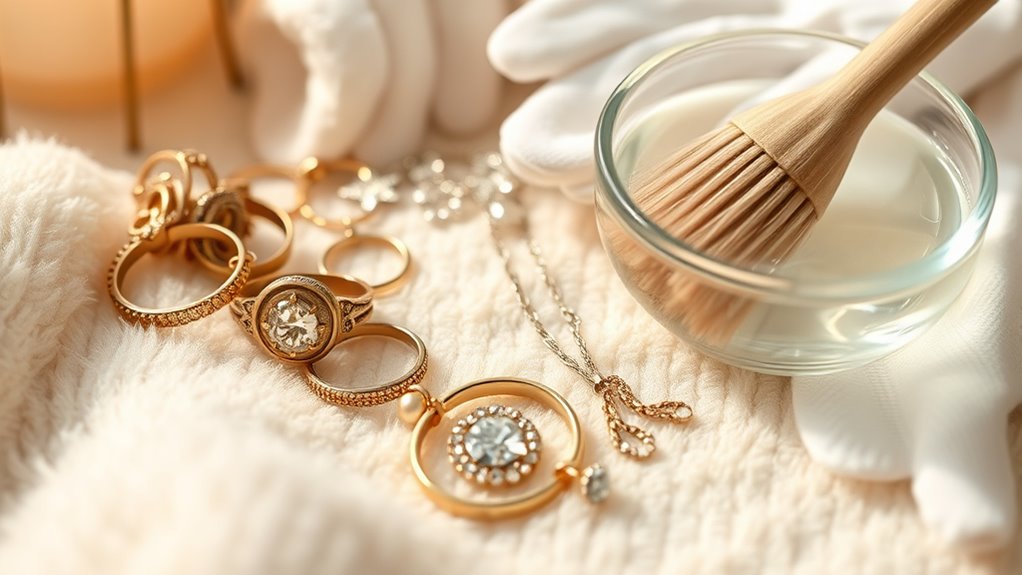
Because vintage jewelry often contains delicate materials and intricate designs, you need to clean it gently to avoid damage.
Gentle cleaning is essential to preserve the beauty and integrity of your pieces. Using a soft cloth helps you carefully remove dirt and oils without causing scratches, especially on precious metals.
Using a soft cloth gently removes dirt and oils, protecting your vintage jewelry from scratches.
Avoid harsh chemicals as they can erode patinas, dull finishes, or weaken fragile settings. Instead, opt for mild soap solutions or simply wipe your jewelry with a damp soft cloth.
This approach prevents scratches and keeps components secure, ensuring your vintage jewelry lasts. By treating each piece with care and patience, you maintain its historical value and stunning appearance for years to come.
Identifying Jewelry Materials and Components
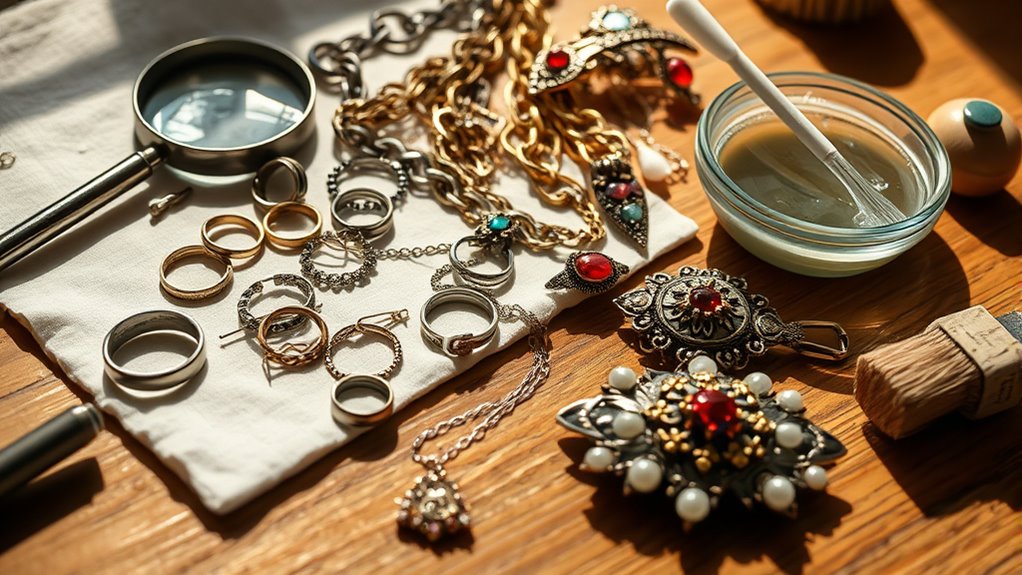
When you identify the materials and components of your vintage jewelry, you can choose the safest cleaning methods.
Start by examining the metals—gold, silver, or platinum—since each reacts differently to cleaning agents.
Next, look closely at the gemstones and organic components like pearls or coral, which often need gentle care.
Pay special attention to settings, clasps, and mountings, as these parts can be delicate or layered.
Some pieces feature enamel or patinas that harsh chemicals can damage.
If you’re unsure, take clear photos or consult a jewelry expert to accurately determine the materials.
Understanding these details helps prevent damage and ensures you use the right cleaning techniques tailored to each material and component in your vintage collection.
Gathering Essential Cleaning Supplies
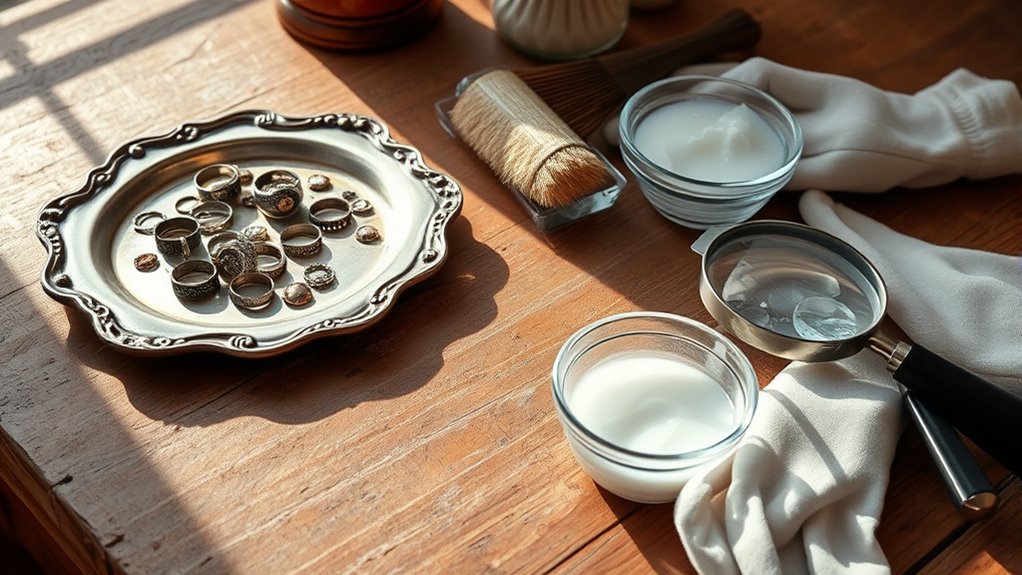
Before you begin cleaning your vintage jewelry, gather all the essential supplies to guarantee a safe and effective process.
Use a soft cloth, mild soap, and other cleaning supplies designed for gentle cleaning. Avoid harsh chemicals or rough tools that could damage delicate pieces.
Here’s a quick guide to your essential cleaning supplies:
| Item | Purpose | Tip |
|---|---|---|
| Soft cloth | Wiping and drying | Choose lint-free for best results |
| Mild soap | Gentle cleaning solution | Use soap suitable for vintage jewelry |
| Soft-bristled toothbrush | Cleaning hard-to-reach areas | Use gently to avoid scratching |
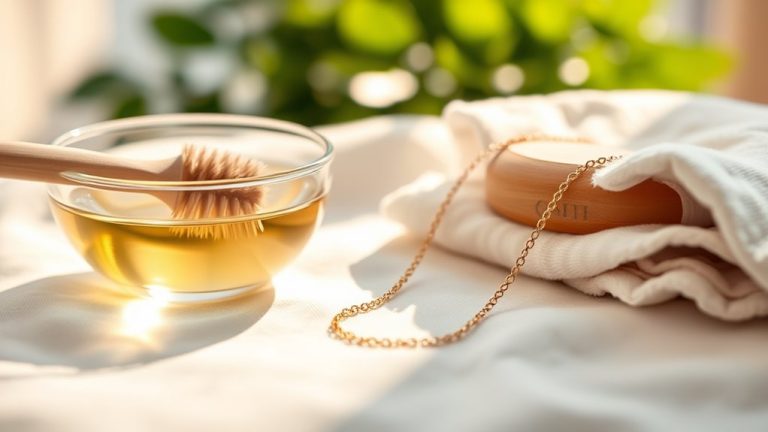
Also, have lukewarm water and a shallow bowl for soaking ready.
Don’t forget a magnifying glass to inspect your pieces before cleaning.
Preparing a Safe Cleaning Solution
You’ll want to start by choosing a mild, pH-balanced soap like dish soap or baby shampoo mixed with lukewarm water.
Avoid hot water and harsh chemicals, as they can damage delicate materials and cause discoloration.
Always mix a gentle solution and test it on a small spot before cleaning the entire piece.
Choosing Mild Ingredients
Although vintage jewelry requires gentle care, you can clean it effectively by choosing mild, pH-neutral ingredients like gentle dish soap and lukewarm water.
Using the right mild ingredients ensures gentle cleaning without damaging delicate materials.
Here’s how to prepare your safe cleaning solution:
- Mix a few drops of gentle dish soap into a small bowl of lukewarm water.
- Avoid hot water, which can harm glued stones and enamels.
- Steer clear of harsh chemicals like bleach or ammonia.
- Test the solution on a hidden area of your jewelry first to spot any adverse reactions.
Avoiding Harmful Chemicals
A safe cleaning solution starts with knowing your vintage jewelry’s materials to prevent damage.
Avoid harsh chemicals like bleach or ammonia. They can ruin delicate components and cause damaging finishes.
Skip abrasive powders such as baking soda or salt scrubs, especially on fragile or porous stones.
Also, stay away from professional cleaners containing strong chemicals that can strip patinas.
Instead, opt for mild soap and lukewarm water to ensure safe cleaning. Always test any solution on a hidden spot first.
| What to Avoid | Why Avoid It | Safe Alternative |
|---|---|---|
| Harsh chemicals | Damage delicate materials | Mild soap and lukewarm water |
| Abrasive powders | Scratch and erode surfaces | Soft cloth or soft brush |
| Professional cleaners | Strip patinas, damage finishes | Homemade gentle solutions |
Mixing Proper Water Temperature
Knowing which cleaning solutions are safe is only part of caring for vintage jewelry. You also need to pay attention to the water temperature when preparing your cleaning mixture.
Using the right water temperature guarantees gentle cleaning without causing damage. Follow these steps:
- Use lukewarm water, ideally between 98-105°F (37-40°C), to avoid thermal shock.
- Avoid hot water since it can harm sensitive materials like pearls, enamel, or glued-in stones.
- Test the water temperature with your wrist or elbow to make sure it feels comfortably warm.
- For delicate vintage pieces, opt for cooler water to prevent warping or damage.
Mix a small amount of mild dish soap into this water for a safe, effective cleaning solution every time.
Step-By-Step Cleaning Process for Vintage Jewelry
Before you start cleaning your vintage jewelry, carefully check for loose stones, damage, and the materials involved.
Begin by mixing warm water with a mild soap to create a gentle cleaning solution.
Dip a soft cloth or brush into the solution and gently clean the jewelry’s surface, avoiding harsh chemicals that can harm delicate materials.
For intricate areas, use a soft toothbrush or Q-tip carefully to prevent dislodging any components.
Once cleaned, rinse the piece thoroughly with lukewarm water to remove soap residue.
Dry it completely using a lint-free soft cloth to avoid scratches.
Regularly inspect your vintage jewelry for any issues, and if you notice damage or the piece is especially valuable, don’t hesitate to seek professional help to preserve its charm and integrity.
Special Care for Different Types of Gemstones
Since different gemstones have unique properties, you’ll need to tailor your cleaning methods to protect them properly.
Understanding gemstone sensitivity is key to effective gemstone care. Here’s how to approach delicate cleaning for various stones:
Understanding gemstone sensitivity is essential for choosing the right cleaning method and preserving their natural beauty.
1. Porous gemstones like opals and turquoise require gentle cleaning with a damp cloth.
Never soak them to avoid damage.
2. Pearls need to be wiped softly with a damp cloth after wear.
Make sure to steer clear of harsh chemicals or ultrasonic methods.
3. Hard gemstones such as diamonds and sapphires can handle mild soap and water.
But they still require gentle cleaning to prevent scratches.
4. Enamel or painted gemstones must be cleaned carefully with soft cloths.
Avoid abrasives that can chip their surfaces.
Always research each gemstone’s specific needs to maintain their beauty safely.
Polishing and Restoring Metal Surfaces
After caring for your gemstones, turn your attention to the metal surfaces that frame them.
To restore your vintage jewelry’s shine, apply a small amount of Flitz Precious Metals Polishing Creme onto a soft, lint-free cloth.
Gently polish the metal surfaces using circular motions, focusing on areas with tarnish or dullness.
Don’t press too hard—you want to loosen tarnish without damaging the metal.
Let the polish sit briefly, then buff the surface until you achieve a high shine.
For an extra smooth finish, use a clean microfiber cloth to buff the piece after polishing.
Applying Protective Treatments to Jewelry
You can protect your vintage jewelry by applying a sealant that shields metals like silver and gold from tarnish and moisture.
To get the best results, lightly wipe the sealant on, let it set briefly, then buff with a microfiber cloth for a smooth finish.
Regularly using protective treatments helps maintain shine longer and reduces how often you need to clean or polish.
It’s a simple step that goes a long way in preserving the beauty of your cherished pieces!
Benefits of Sealants
While vintage jewelry carries timeless beauty, applying a protective sealant like Flitz Ceramic Sealant can shield it from moisture, dirt, and pollutants that cause tarnish and damage.
Sealants offer essential benefits for the preservation and protection of your cherished pieces. Here’s why you should consider using them:
- They create a barrier that prevents tarnish and oxidation, reducing frequent cleaning needs.
- Sealants preserve the original patina, maintaining the jewelry’s antique charm.
- They provide lasting protection against environmental pollutants and dirt.
- Regular use extends the longevity of your vintage treasures, keeping them bright and well-preserved.
Application Techniques
When applying protective treatments to vintage jewelry, ensuring the piece is clean and dry sets the stage for the best results.
Start by using proper application techniques: apply a thin, even layer of sealant, like Flitz Ceramic Sealant, to metal surfaces with a soft cloth or applicator pad.
This promotes strong adhesion and effective protection.
After applying the sealant, let it set for about one minute before buffing gently with a microfiber cloth.
Buffing smooths the coating and enhances the jewelry’s shine.
However, avoid using sealants on porous or delicate materials such as pearls or enamel unless the manufacturer specifies otherwise.
Following these steps ensures your vintage jewelry receives an even, durable protective layer, preserving its beauty without compromising delicate finishes.
Longevity and Maintenance
Although applying a protective sealant like Flitz Ceramic Sealant shields your vintage jewelry from tarnish and environmental damage, maintaining that protection requires regular care.
To ensure longevity and proper maintenance of your pieces, follow these steps:
- Thoroughly clean and dry your vintage jewelry before applying any protective sealant.
- Use a soft cloth to evenly spread the sealant, avoiding excess buildup that dulls the finish.
- Reapply the protective sealant periodically according to product instructions to sustain its barrier.
- Stick to gentle cleaning methods with a soft cloth and avoid abrasive or chemical cleaners that can damage the sealant.
For delicate or valuable items, always seek professional care to preserve both their beauty and integrity.
Best Practices for Storing and Maintaining Vintage Pieces
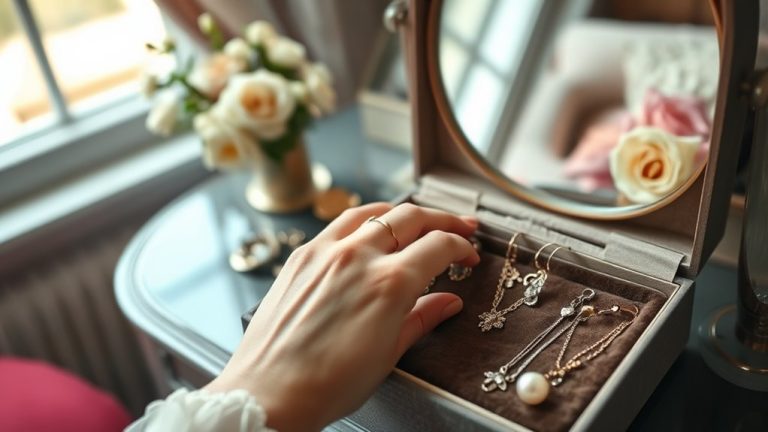
To keep your vintage jewelry looking its best, you should store each piece separately in soft, padded pouches or lined boxes. This helps prevent scratches and tangling, which can really damage those delicate pieces.
Proper storage is key in the maintenance of your collection.
Proper storage is essential to preserving the beauty and longevity of your vintage jewelry collection.
Avoid exposing your jewelry to direct sunlight, heat, humidity, or chemicals like perfume and hairspray. These can cause damage over time.
Incorporate anti-tarnish strips or silica gel packs in your storage to reduce metal tarnishing.
When handling your jewelry, make sure to use clean hands to prevent dirt transfer.
It’s also a good idea to regularly inspect for loose stones or wear.
Limit cleaning to once or twice a year, and always dry your pieces thoroughly before storing them again.
Following these best practices will help prevent damage and keep your vintage jewelry beautiful for years to come.
Frequently Asked Questions
What Is the Best Way to Clean Vintage Jewelry?
The best way to clean vintage jewelry is to gently use warm water with mild dish soap.
Softly brush or wipe it, making sure to avoid harsh chemicals.
It’s important to dry the pieces thoroughly.
If you have delicate or intricate pieces, it’s best to consult a professional to prevent any damage.
Taking these steps will help keep your vintage jewelry looking beautiful!
Can Dawn Dish Soap Clean Jewelry?
Absolutely, Dawn dish soap can clean jewelry like a gentle breeze clears leaves.
Just soak your pieces in warm, soapy water, brush gently, and rinse.
Avoid using it on delicate stones like pearls or opals.
What Should You Not Clean Jewelry With?
You shouldn’t clean jewelry with bleach, ammonia, acetone, abrasive powders, rough cloths, baking soda, or ultrasonic cleaners.
These substances can be too harsh and may damage your precious items.
Also, avoid soaking porous stones like pearls or turquoise, as these methods can damage or loosen them.
Taking care of your jewelry means knowing the right ways to maintain its beauty!
Can You Use Dawn Dish Soap to Clean 925 Silver?
You can absolutely use Dawn dish soap to clean 925 silver.
Just mix it with warm water, soak your jewelry briefly, then gently scrub and rinse.
Avoid pearls or delicate stones, and dry it thoroughly afterward.
Conclusion
Think of cleaning vintage jewelry like tending a delicate garden—you wouldn’t rush the roses or drown the daisies.
Each gentle step you take preserves its unique beauty and history, much like how a careful gardener nurtures every bloom.
Remember, even a small scratch can dim its sparkle forever.
By treating your pieces with patience and care, you’re not just cleaning jewelry; you’re keeping a treasured story alive for generations to come.
In conclusion, cleaning vintage jewelry requires a thoughtful approach.
Take your time and handle each piece with love, as you would with a cherished heirloom.
With the right techniques, you ensure these beautiful artifacts continue to shine brightly and tell their stories for years to come.
So, embrace the process of cleaning vintage jewelry to safeguard its history and beauty for future generations to enjoy.