How Much Does Custom Jewelry Cost
Custom jewelry costs typically range from $1,150 to $5,700.
This price range depends on various factors, including materials, design complexity, and craftsmanship.
For instance, choosing precious metals like gold or platinum and incorporating gemstones can significantly raise the price.
On the other hand, opting for simpler designs or alternative materials can help lower costs.
Labor, the technology used during production, and the level of customization also play crucial roles in determining the total price.
If you’re looking to create a unique piece without breaking the bank, understanding these factors is essential.
This knowledge will help you plan your budget effectively and find the right designer for your custom jewelry piece.
What Defines Custom Jewelry
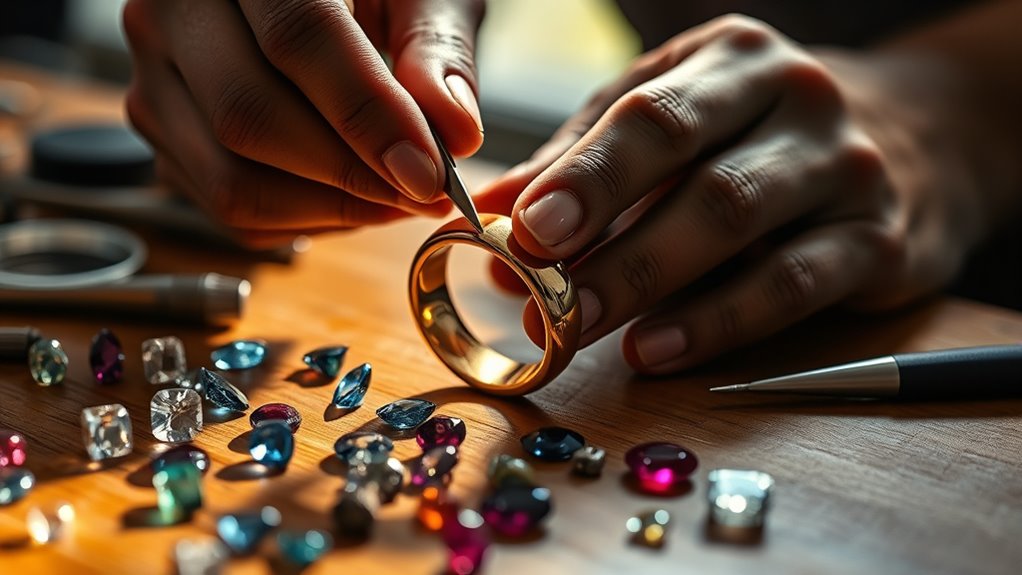
Although many jewelry pieces look beautiful, custom jewelry stands out because it’s uniquely designed through a collaborative process between you and a jeweler.
Custom jewelry shines by being uniquely crafted through a collaborative journey between you and your jeweler.
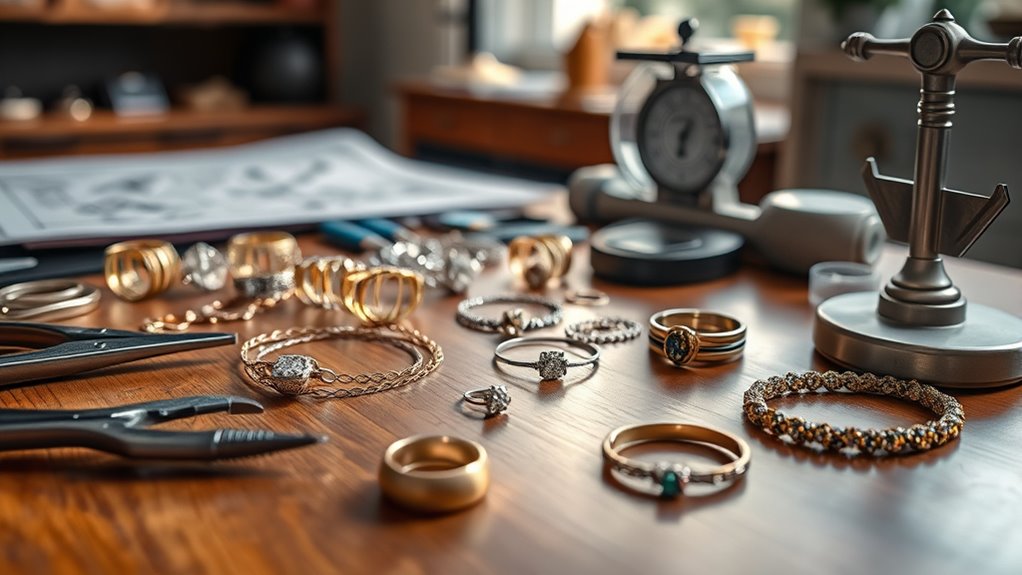
You’ll engage in an interactive design process, starting with consultations and sketches, often enhanced by 3D modeling. This ensures your vision is captured perfectly.
Custom design allows you to select specific precious metals and materials used, tailoring the piece to your style and meaning.
The complexity of the design can vary widely, from simple elegance to intricate craftsmanship, depending on your preferences.
Unlike mass-produced items, custom jewelry gives you full control over every detail.
This results in a one-of-a-kind creation that reflects your personality and story, making it truly exclusive and meaningful.
Key Factors That Influence Cost
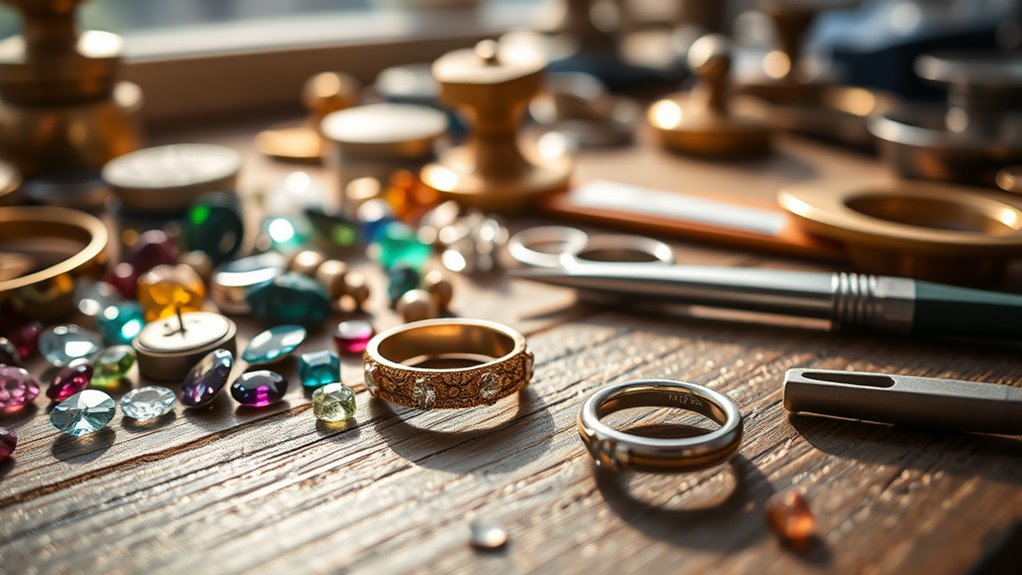
When you decide to create custom jewelry, several key factors will shape the overall cost.
Your choice of materials like gold and platinum substantially affects jewelry pricing.
Design complexity, including intricate details or personalized touches, adds to labor expenses.
The type of jewelry you choose—ring, necklace, or bracelet—also influences cost due to varying craftsmanship needs.
Additionally, the jeweler’s skill level and use of technology like 3D CAD modeling can increase the price.
| Factor | Description | Impact on Cost |
|---|---|---|
| Materials | Gold, platinum, gemstones | High |
| Design Complexity | Intricate or personalized designs | Medium to High |
| Type of Jewelry | Ring, necklace, bracelet | Variable |
| Jeweler & Technology | Experience and 3D modeling | Medium |
Typical Price Ranges for Custom Pieces
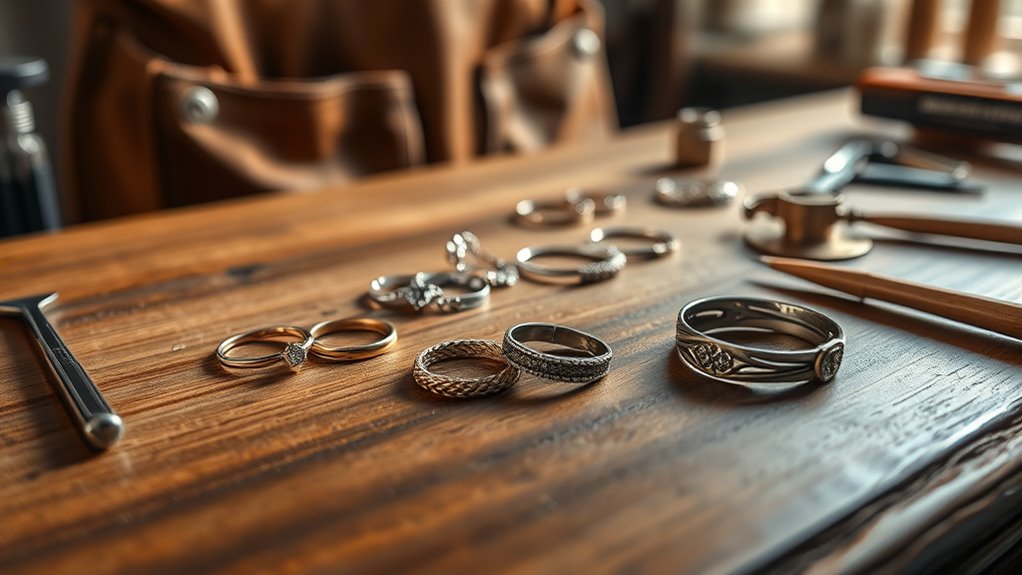
When you’re considering custom rings, prices usually range from around $1,150 to $5,700 depending on materials and design.
So, it really varies based on what you’re looking for!
Necklaces crafted with 18K gold and gemstones typically cost between $2,700 and $5,600.
That’s a wide range, but it all comes down to the specifics of the piece!
Bracelets featuring emeralds and rubies in 18K gold often fall between $2,000 and $3,900.
Again, the final price will depend on the details you choose!
Rings Price Estimates
How much should you expect to pay for a custom ring?
Custom jewelry costs vary considerably based on design, materials, and craftsmanship.
Simple custom rings crafted with 14K gold and a small diamond typically range from $1,150 to $2,200.
If you want more intricate designs using 18K gold and larger or higher-quality precious gemstones, prices can jump to $3,000–$10,000 or more.
Engagement rings featuring a one-carat diamond with personalized details usually cost between $2,650 and $5,700.
The price increases with added complexities like unique settings, engraved details, or rare stones.
Keep in mind, some jewelers may charge extra for custom sketches or design revisions.
Understanding these factors helps you budget wisely when investing in custom rings.
Necklaces Cost Breakdown
Wondering what you’ll pay for a custom necklace?
Typically, custom necklaces range from $2,700 to $5,600, with the cost of custom pieces influenced heavily by materials and design complexity.
If you opt for high-karat gold or platinum, expect prices to rise, especially when paired with larger or rare gemstones.
Your jewelry designer may add intricate details or personalized engravings, which can increase costs by several hundred dollars.
Choosing lab-created or synthetic stones can help you save money while keeping a similar look to natural gems.
Keep in mind, some designers include fees for consultations and 3D modeling in the final price, while others charge separately.
Understanding these factors will help you navigate costs and design a custom necklace that fits your budget.
Bracelets Pricing Guide
Curious about what a custom bracelet might cost?
When exploring custom jewelry, bracelet pricing typically ranges from $2,000 to $3,900.
The cost depends heavily on metal types, gems, and design complexity.
Simple bracelets with minimal embellishments start around $2,000, using metals like sterling silver or lower karat gold.
Opting for high-quality metals such as 18K gold or platinum increases prices, especially when paired with larger or numerous natural gemstones.
Intricate designs, including hand engraving or detailed gem settings, can add several hundred dollars.
If you want to save, choosing lab-created or semi-precious stones instead of natural sapphires or emeralds substantially lowers costs.
Understanding these factors helps you make informed choices for your ideal custom bracelet.
Materials and Their Impact on Pricing
When choosing metals for your custom jewelry, you’ll notice prices vary between gold, platinum, and silver based on purity and market shifts.
The quality of gemstones also plays a big role, with factors like cut and clarity directly affecting cost.
Keeping an eye on material market fluctuations can help you make smarter budget decisions.
Metal Types Comparison
Although the cost of custom jewelry depends on various factors, the type of metal you choose plays a major role in determining the price.
Different metal types like gold, platinum, silver, and titanium vary widely in market value and durability.
Gold’s cost rises with purity—18K or 24K gold is pricier than 9K or 14K due to higher gold content.
Platinum’s price aligns closely with 18K gold, but its density makes it heavier and more costly overall.
On the other hand, silver offers a budget-friendly option, but it requires more upkeep and isn’t as durable.
Your choice affects not only the cost but also the jewelry’s color and hypoallergenic qualities.
Understanding these metal types helps you balance budget with style and longevity when customizing your piece.
Gemstone Quality Influence
Because gemstone quality considerably influences the overall price of custom jewelry, you’ll want to understand how factors like type, size, and certification affect cost.
The Four C’s—color, clarity, cut, and carat weight—play an essential role in determining gemstone quality.
Diamonds often cost between $1,500 and $20,000 per carat, while sapphires range from $50 to $10,000.
Larger stones increase the price due to material needs and rarity, so the size of gemstones directly impacts cost.
Choosing certified gemstones guarantees authenticity and superior grading, which adds to the price but offers peace of mind.
Alternatively, synthetic gemstones provide a budget-friendly option, mimicking natural stones without the hefty price tag.
Understanding these details helps you balance quality and cost when customizing your jewelry.
Material Market Fluctuations
Beyond gemstone quality, the cost of custom jewelry also depends heavily on the fluctuating prices of precious metals like gold, platinum, and silver.
These market fluctuations stem from international commodity markets and can cause the gold price and other metals to rise or fall unexpectedly.
For example, 24-karat gold costs more than 14 or 18-karat options due to its higher purity.
Economic factors and supply chain issues in the metal market also impact pricing.
When precious metals become more expensive, jewelers often adjust their base prices to reflect these changes, affecting your custom jewelry cost.
Even gemstone prices may shift indirectly as overall jewelry pricing responds to metal market trends.
Design Complexity and Labor Considerations
When you choose a design with intricate details, expect the labor costs to rise since skilled artisans spend more hours crafting each element.
Design complexity directly impacts labor costs because elaborate patterns often require advanced techniques like detailed engraving, setting multiple stones, or CAD modeling.
These intricate designs demand exceptional craftsmanship, increasing the time and skill needed for completion.
Additionally, highly detailed pieces may require multiple revisions and prototypes to perfect the final look, further adding to labor expenses.
On the other hand, simpler, minimalist designs typically reduce labor time and costs, making them more affordable.
Understanding how design complexity influences craftsmanship and labor costs helps you make informed decisions when creating custom jewelry that fits your budget.
How to Find the Right Custom Jewelry Designer
Finding the right custom jewelry designer takes research and careful consideration to guarantee your vision comes to life beautifully.
Start by exploring designers’ portfolios to verify their style matches your desires.
Schedule a consultation to discuss ideas and assess their creativity and communication.
Don’t forget to check their credentials and ask about their design process, including revisions and timelines.
Recommendations from trusted sources can also guide you.
| Step | What to Look For | Why It Matters |
|---|---|---|
| Portfolio Review | Style, craftsmanship | Ensures alignment with your vision |
| Consultation | Communication, creativity | Builds trust and clarity |
| Credential Check | Certifications, reputation | Confirms professionalism |
| Process Inquiry | Material sourcing, revisions | Guarantees transparency |
This approach helps you choose a reliable designer for your custom jewelry.
Budgeting and Hidden Expenses to Anticipate
After selecting the right custom jewelry designer, you’ll need to plan your budget carefully to avoid surprises.
During your initial consultation, ask about potential hidden costs like shipping fees, insurance, taxes, and import duties, especially if materials come from abroad.
Design modifications after the initial agreement can quickly increase the final price, so clarify how revisions are charged.
Additional expenses may also arise from gemstone certification, custom engraving, or special packaging.
Properly accounting for these fees upfront helps you set a realistic budget and prevents unexpected overruns.
Ways to Save on Custom Jewelry Without Sacrificing Quality
Although custom jewelry often comes with a premium price, you can save considerably without compromising quality by making smart choices in materials and design.
To create custom jewelry that fits your budget, consider opting for lab-grown diamonds or synthetic gemstones. These options can substantially impact the final cost, being 50-70% less expensive than natural stones of similar type and quality.
Choosing simpler, minimalist designs also helps reduce labor and material expenses, further lowering costs.
Using alternative metals like sterling silver or gold-filled options can cut costs without sacrificing durability.
You might even repurpose old jewelry or limit customizations, such as engravings and multiple gemstone settings, to keep your design straightforward.
These strategies help you create custom jewelry that balances quality and affordability effectively.
Frequently Asked Questions
How Much Does It Cost to Get Custom Made Jewelry?
You’ll pay anywhere from about $1,150 to over $20,000 for custom jewelry, depending on materials, design complexity, and craftsmanship.
Expect design fees and multiple revisions, especially for intricate or personalized pieces.
It’s important to keep in mind that the final cost can vary widely based on what you choose.
How Much Does It Cost to Get Jewellery Made?
Picture a shimmering ring crafted just for you—it usually costs between $1,000 and $5,700.
You’ll pay more for rare stones, intricate designs, and special touches.
What Is the 3 Month Salary Rule?
The 3-month salary rule suggests you spend about three months’ gross income on an engagement ring.
It’s a traditional guideline, but you should prioritize your budget and financial comfort over strict adherence to this rule.
Ultimately, what matters most is finding a ring that feels right for you and your partner.
Is Custom Jewelry More Expensive?
Yes, custom jewelry usually costs more—but you’re paying for something truly unique.
The craftsmanship, personalized design, and exclusive materials all add up, making it pricier yet far more meaningful than mass-produced pieces.
Conclusion
Custom jewelry is like crafting your own treasure map—it leads to a unique piece that reflects your style and story.
While costs vary based on materials, design, and labor, knowing what influences price helps you navigate wisely.
By choosing the right designer and budgeting smartly, you can avoid hidden expenses without sacrificing quality.
With a little planning, your custom piece will shine as brightly as the journey it represents.
When considering custom jewelry, remember that the final price tag can depend on many factors.
Materials like gold, silver, and precious stones can significantly impact costs, as can the complexity of the design and the expertise of the jeweler.
Take your time, do your research, and communicate your vision clearly to ensure you get a piece that not only fits your budget but also tells your unique story.
In conclusion, understanding the factors that influence custom jewelry prices helps you make informed decisions.
With a little planning and communication, you can create a beautiful piece that resonates with your personal style.
By budgeting wisely and choosing the right designer, your custom jewelry can truly shine without breaking the bank.