What Does Stainless Steel Jewelry Rust From?
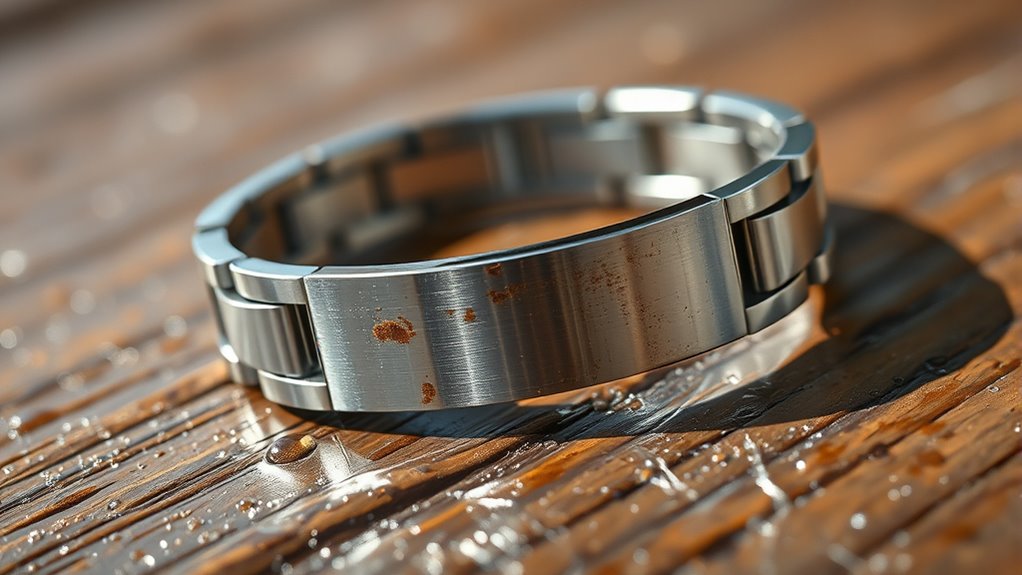
You might be surprised, but stainless steel jewelry can rust when its protective chromium oxide layer gets damaged.
This layer can wear down due to various factors such as moisture, sweat, and harsh chemicals like bleach.
Even scratches can compromise that shield, making your jewelry vulnerable.
Environmental factors like humidity and your skin’s natural oils can speed up corrosion, too.
Using abrasive cleaners or exposing your jewelry to chlorinated water can also lead to rusting.
If you want to keep your jewelry looking great longer, understanding these causes helps you protect it better.
By taking a few precautions, you can maintain the shine and integrity of your stainless steel pieces for years to come.
Composition and Protective Layer of Stainless Steel
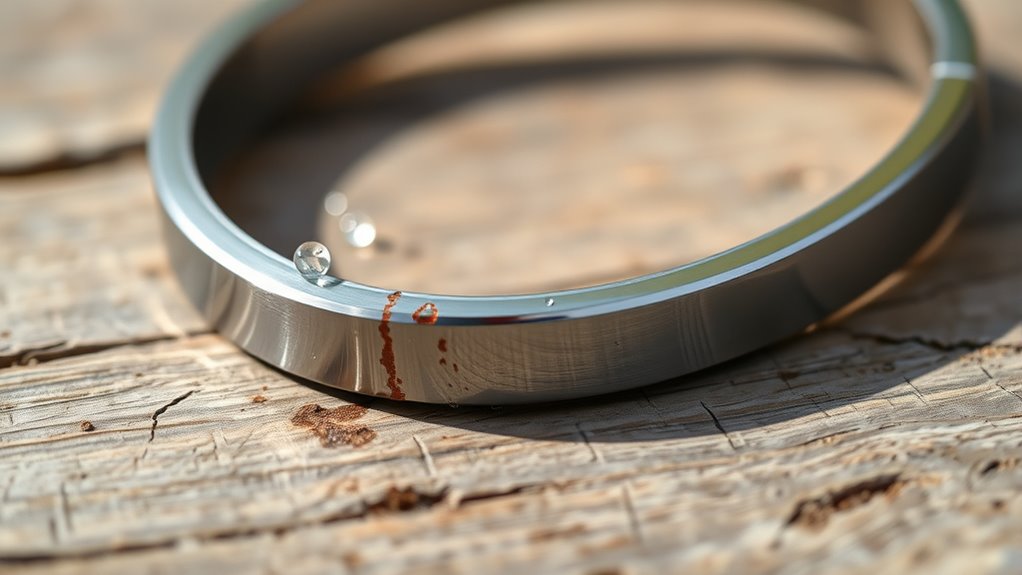
Although stainless steel contains iron, its resistance to rust comes from the chromium it holds, which forms a thin, protective oxide layer.
This oxide layer acts as a shield, preventing rust and corrosion from reaching the underlying metal.
When you wear or handle stainless steel jewelry, you benefit from this self-healing protective layer that regenerates if scratched or damaged.
Stainless steel is an alloy mainly made of iron, chromium, nickel, and sometimes molybdenum, all combining to enhance durability.
Keep in mind, lower-quality stainless steel alloys may have less chromium or impurities, which weakens the oxide layer and reduces protection.
Common Causes of Rust Formation
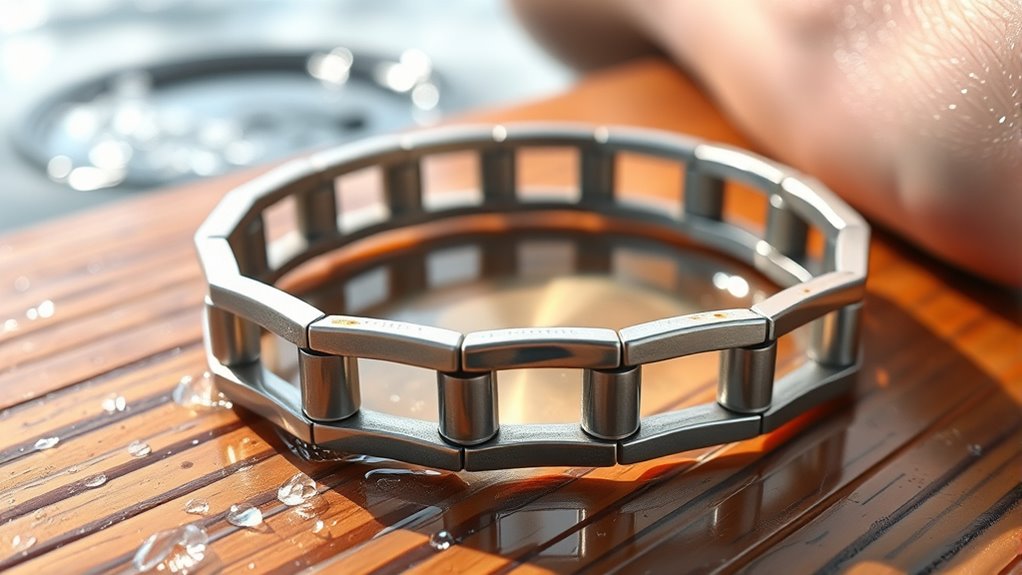
If the protective chromium oxide layer on your stainless steel jewelry gets damaged, rust can start to form.
Harsh chemicals like chlorine or bleach break down this protective layer, exposing the metal beneath to oxidation.
Low alloy quality, especially with insufficient chromium content, makes your jewelry more vulnerable to rust formation.
Physical abrasions and scratches create entry points where moisture and oxygen can settle, accelerating corrosion.
Additionally, dirt, oils, and product buildup trap moisture on the surface, further promoting rust.
To prevent rust formation, it’s essential to avoid exposing your jewelry to harsh chemicals, clean it regularly, and handle it carefully to minimize abrasions.
Maintaining the integrity of the protective layer is key to keeping your stainless steel jewelry rust-free.
Impact of Environmental Factors on Rusting
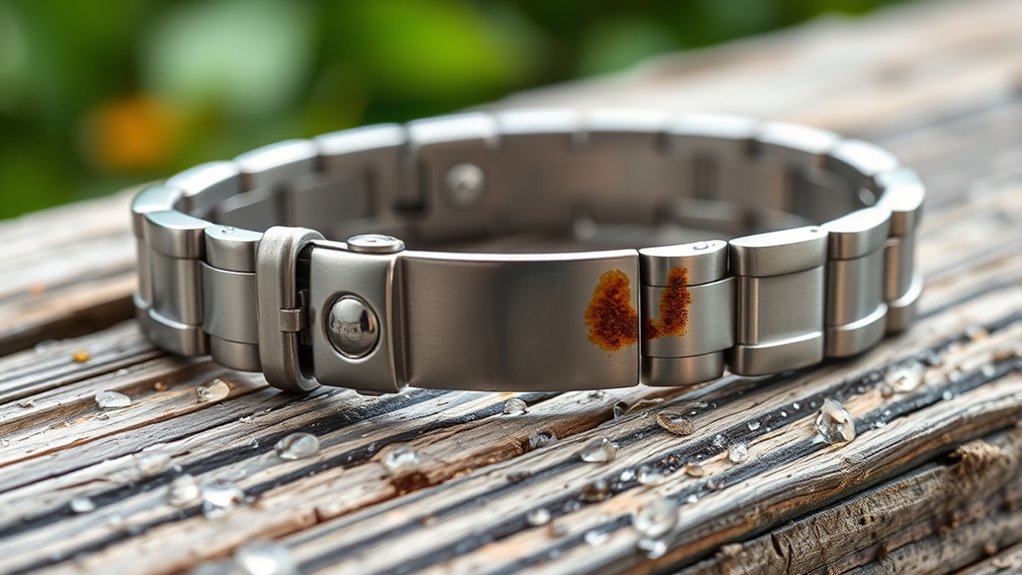
You’ll notice that humidity and moisture play a big role in rusting by weakening the protective layer on your stainless steel jewelry.
Chemicals like bleach or chlorinated water speed up corrosion, making rust more likely to form.
Understanding how these environmental factors affect your jewelry helps you protect it better.
Humidity and Moisture
When humidity levels rise, stainless steel jewelry faces a greater risk of rust because moisture exposure increases substantially.
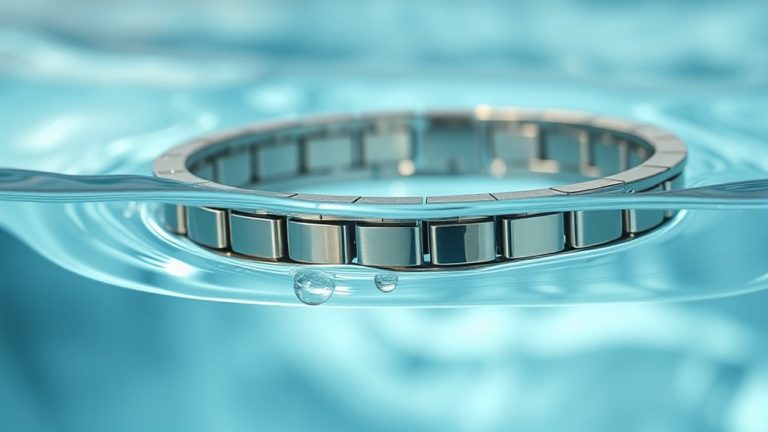
High humidity encourages condensation on your jewelry, leaving water droplets that promote oxidation if not wiped off quickly.
Prolonged water exposure, especially in humid environments, can weaken the protective layer—the chromium oxide coating—that normally guards against rust and corrosion.
This protective layer can be compromised by constant moisture, allowing rust to form more easily.
Additionally, humid air often contains ions that penetrate this barrier, accelerating corrosion over time.
To keep your stainless steel jewelry looking its best, you’ll want to dry it thoroughly after exposure to moisture.
Also, store it in a low-humidity environment.
Taking these steps helps maintain that essential protective layer and prevents rust from taking hold.
Chemical Exposure Effects
Although stainless steel is known for its resistance to rust, exposure to harsh chemicals like bleach, chlorine, and cleaning agents can damage its protective chromium oxide layer. This damage makes your jewelry vulnerable to corrosion.
Chemical damage from substances such as ammonia or industrial cleaners can strip away this protective layer, accelerating rust formation.
Environmental factors like saltwater, high humidity, and pollution increase oxidation, further promoting corrosion.
Even acidic substances from your skin oils, sweat, or cosmetics weaken the chromium barrier, making rust more likely.
To keep your stainless steel jewelry looking its best, avoid prolonged contact with harsh chemicals.
Also, make sure to rinse it thoroughly after exposure to salty or polluted environments.
Protecting the integrity of the protective layer is key to preventing oxidation and rust formation over time.
Role of Skin Chemistry and Body Fluids
Because your skin’s pH and body fluids interact directly with stainless steel jewelry, they play a crucial role in its potential to rust.
Your skin pH varies, and if it’s more acidic, it can speed up corrosion by breaking down the jewelry’s protective layer.
Body oils and sweat, which contain salts and acids, also contribute by dulling the surface or causing tarnish over time.
Sweat, in particular, can wear down the chromium oxide coating, exposing the metal underneath to rust.
Frequent contact with these body fluids increases the risk of discoloration and corrosion.
Understanding how your skin chemistry affects stainless steel helps you take steps to protect your jewelry and keep it looking its best for longer.
Effects of Cleaning Agents and Chemicals
You might not realize that harsh chemicals like bleach or chlorine can damage your stainless steel jewelry’s protective layer, making it prone to rust.
Avoid abrasive cleaners and rough scrubbing, which can scratch the surface and weaken its defense.
Instead, stick to mild soap and water to keep your jewelry safe and shiny.
Harsh Chemicals Impact
When you expose stainless steel jewelry to harsh chemicals like bleach or chlorine, you risk stripping away its protective chromium oxide layer.
This leads to rust. Harsh chemicals and strong cleaning agents wear down this protective layer, making your jewelry vulnerable to corrosion.
Chlorine and saltwater accelerate this process by penetrating the steel’s surface and damaging the alloy.
Using abrasive cleaning products can cause micro-scratches, further weakening the protective barrier and increasing rust susceptibility.
Frequent contact with substances like perfumes, lotions, and hairsprays also reacts with the metal, causing deterioration over time.
Without proper care, prolonged exposure to these harsh chemicals compromises your stainless steel jewelry’s integrity.
This ultimately leads to quicker corrosion and rust formation.
Safe Cleaning Practices
Although stainless steel jewelry resists rust better than many metals, improper cleaning can still damage its protective layer.
To keep your pieces in top shape, avoid harsh chemicals like bleach or chlorine. These can weaken the protective layer of chromium and lead to corrosion.
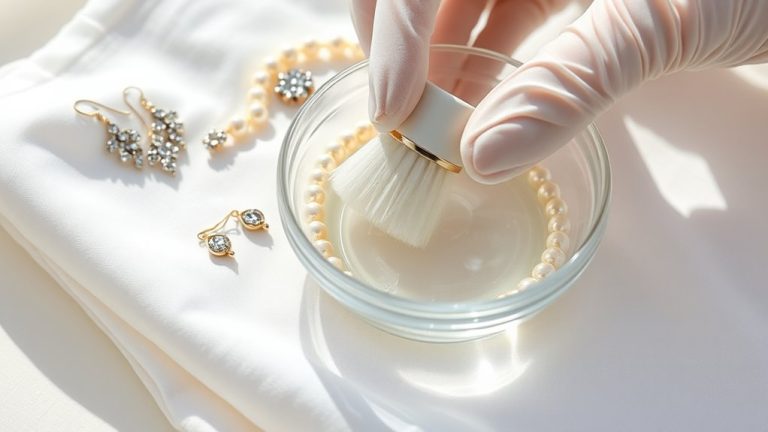
Instead, use gentle cleaning methods such as mild soap and water.
Steer clear of abrasive cleaners or scrubbing pads, as they can scratch the surface. This creates entry points for moisture and contaminants that cause rust.
After cleaning, always rinse thoroughly and dry your jewelry completely to prevent moisture buildup.
Preventive Measures to Avoid Rusting
Since stainless steel jewelry’s protective chromium oxide layer can be damaged by harsh chemicals and abrasive cleaning, you should handle it with care to prevent rust.
For effective rust prevention, avoid exposure to chlorinated or saltwater and harsh cleaning agents like bleach, as these accelerate corrosion.
Use gentle cleaning methods regularly to remove skin acids, body oils, and sweat that weaken the protective layer over time.
Also, be mindful of storage conditions; keep your jewelry in a dry, well-ventilated place to minimize moisture buildup.
Avoid wearing your stainless steel jewelry in high humidity or when it contacts other metals, as this can promote rust due to increased exposure to water and moisture.
These steps help maintain the integrity of your jewelry’s protective layer and prevent rust formation.
Frequently Asked Questions
Why Is My Stainless Steel Jewelry Rusting?
Your stainless steel jewelry’s rusting because its protective layer got damaged, maybe from scratches, harsh chemicals, or low-quality metal.
To keep it shiny and rust-free longer, avoid chlorine, bleach, and saltwater.
Taking these precautions can help maintain the quality of your jewelry.
How Long Does It Take for Stainless Steel Jewelry to Rust?
It depends, but stainless steel jewelry usually takes months or even years to rust.
You’ll notice rust faster if you expose it to harsh chemicals, saltwater, or don’t clean it regularly.
Keep it dry and clean!
Can I Shower With My Stainless Steel Jewelry?
Can you shower with your stainless steel jewelry?
Absolutely, you can!
Just avoid harsh chemicals like chlorine.
Rinse it well afterward and dry it thoroughly to keep it looking great and rust-free for a long time.
What to Avoid With Stainless Steel Jewelry?
You should avoid harsh chemicals, saltwater, and abrasive materials with stainless steel jewelry.
Don’t wear it during rough activities or store it in humid places.
Also, skip harsh cleaners and abrasive tools to keep it looking great.
Conclusion
You shouldn’t overlook stainless steel’s protective layer, but you should watch out for scratches and harsh chemicals.
Environmental factors can also play a significant role in the longevity of your jewelry.
Additionally, you need to consider your skin’s chemistry and body fluids.
Cleaning your jewelry carefully is essential, and proper storage can make a big difference.
By understanding these causes and taking simple preventive measures, you’ll keep your stainless steel jewelry shining bright.
With a little attention, you can prevent rust and ensure it looks its best for years to come.
Remember, keeping an eye out for scratches, avoiding harsh chemicals, and minding your skin’s chemistry are key.
Protecting your jewelry will help maintain its rust-free shine and beauty over time.