Does Hydrogen Peroxide Clean Jewelry?
You can use hydrogen peroxide to clean your jewelry because it lifts dirt and kills bacteria with its bubbling, oxidizing action.
It’s effective at removing grime and disinfecting surfaces. However, you should be cautious since it can discolor or damage some metals and delicate gemstones like pearls or opals.
To avoid issues, limit exposure and test first.
If you want to understand how it affects different materials and explore safer cleaning options, keep exploring these important details.
What Is Hydrogen Peroxide?
What makes hydrogen peroxide so useful?
You’ll find it’s a versatile chemical widely used for its disinfectant and bleaching properties.
Hydrogen peroxide works as a powerful oxidizer, meaning it can break down bacteria, viruses, and fungi through oxidation.
Hydrogen peroxide breaks down harmful microbes by powerful oxidation, making it an effective disinfectant.
This ability makes it an effective disinfectant, especially in cleaning and sterilization tasks.
When hydrogen peroxide comes into contact with organic material, it decomposes into harmless water and oxygen, which helps it clean without leaving toxic residues.
You can buy it in various concentrations, typically 3% for household use, including cleaning jewelry, and stronger forms for industrial purposes.
Its dual role as a disinfectant and bleaching agent is what makes hydrogen peroxide a go-to chemical for many everyday applications.
How Hydrogen Peroxide Works
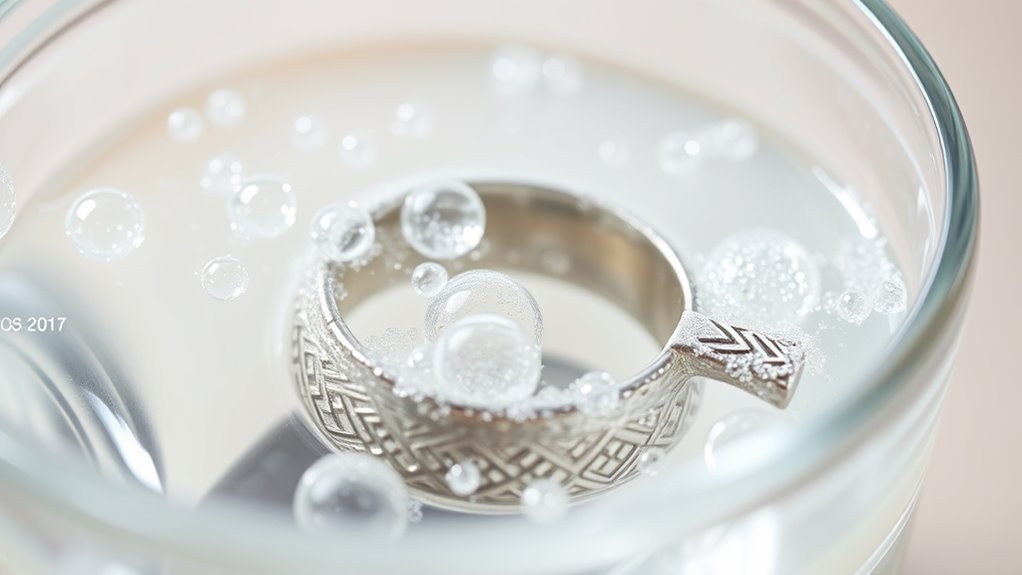
How exactly does hydrogen peroxide clean and disinfect your jewelry?
When it comes in contact with organic residues, it breaks down into water and oxygen.
This reaction releases oxygen gas, causing bubbling that lifts debris and grime from your jewelry’s surface.
Its powerful oxidation process disrupts the cellular structure of bacteria and viruses, effectively sterilizing your pieces.
Here’s how hydrogen peroxide works on your jewelry:
- Releases oxygen gas creating a bubbling action.
- Lifts dirt, grime, and organic residues physically.
- Oxidizes contaminants for thorough cleaning.
- Breaks down microbial cell walls for sterilization.
- Removes embedded debris through chemical and physical action.
Can Hydrogen Peroxide Clean Jewelry Effectively?
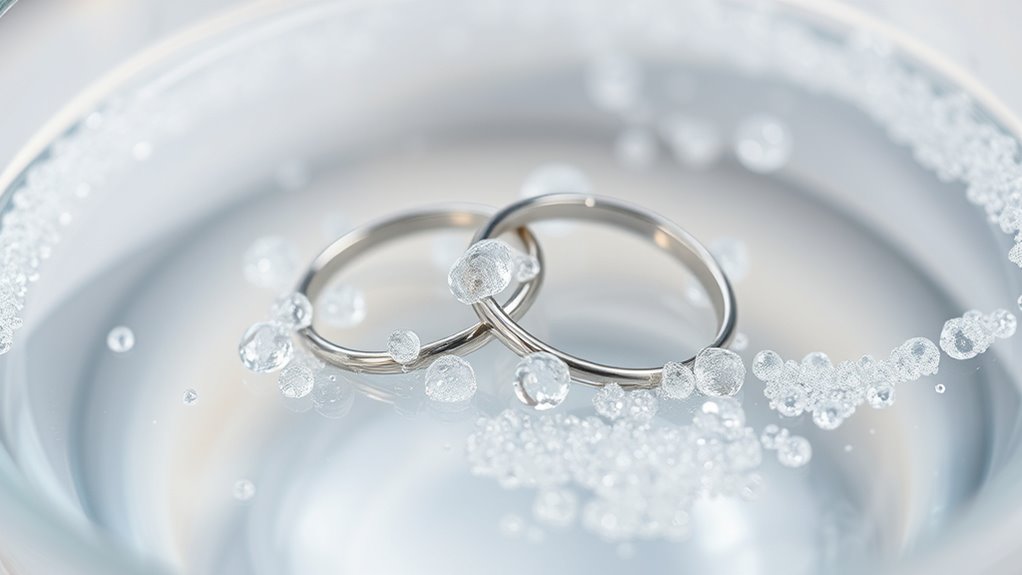
You might be wondering if hydrogen peroxide can truly clean your jewelry well.
It works by breaking down organic dirt and killing bacteria,
but it’s not safe for all stones or metals.
Before you use it, you should know the risks and limitations to avoid damage.
Cleaning Mechanism Explained
Wondering if hydrogen peroxide can effectively clean your jewelry?
It works as a strong oxidizer, breaking down organic dirt and bacteria.
Its bubbling action helps lift grime and disinfect your pieces by killing germs on contact.
However, you should know it can react with metal and alloys, leading to discoloration or surface damage.
Here’s how hydrogen peroxide cleans jewelry:
- Acts as an oxidizer to remove organic buildup.
- Bubbles to lift dirt and kill germs, disinfecting thoroughly.
- Can cause discoloration on certain metals.
- May damage delicate gemstones or finishes.
- Not specially formulated for routine jewelry cleaning.
Risks and Limitations
Although hydrogen peroxide can clean some surfaces effectively, it poses significant risks when used on jewelry.
You should be cautious because hydrogen peroxide can cause jewelry damage, especially to delicate gemstones like pearls, opals, and emeralds. This can lead to discoloration or fading.
Its oxidizing nature may also compromise gemstone safety by weakening or pitting metal settings.
If your jewelry contains alloy metals, such as copper or silver mixed with gold, hydrogen peroxide can trigger metal corrosion, damaging the piece’s appearance and structure.
Additionally, prolonged or undiluted use increases these risks.
These cleaning limitations mean hydrogen peroxide isn’t suitable for most jewelry types.
To protect your valuable pieces, it’s best to avoid hydrogen peroxide and opt for specialized jewelry cleaners designed to maintain both gemstone safety and metal integrity.
Effects of Hydrogen Peroxide on Different Jewelry Materials
When hydrogen peroxide comes into contact with your jewelry, it can cause a range of effects depending on the materials involved.
Different jewelry materials react uniquely, so understanding these reactions is essential for gemstone safety and preserving your pieces. For example, gold alloy compositions influence how your jewelry responds to hydrogen peroxide.
Knowing how various metals and gems react helps protect your jewelry from hydrogen peroxide damage.
Porous gemstones like pearls and opals may discolor or fade.
Gold alloys containing copper or silver can oxidize or develop surface spots.
On the other hand, pure 24K gold remains inert, but 14K or 18K alloys might show changes.
Also, silver and other soft metals are prone to tarnishing and pitting.
Keep in mind that repeated exposure may weaken or dull metal surfaces over time.
Always consider your jewelry materials before using hydrogen peroxide to avoid unwanted damage.
Risks of Using Hydrogen Peroxide on Jewelry
Understanding how hydrogen peroxide interacts with various jewelry materials highlights the potential risks you face when using it for cleaning or maintenance.
Hydrogen peroxide can cause jewelry damage, especially to porous gemstones like pearls, opals, and turquoise. This can lead to discoloration and surface harm.
It may also contribute to metal corrosion by weakening settings, increasing the chance of prongs loosening or breaking.
Prolonged or undiluted exposure can pit or etch delicate metals, and tarnish alloys containing copper or zinc.
These effects compromise your jewelry’s structural integrity and appearance.
To protect your pieces, prioritize jewelry safety by avoiding careless use of hydrogen peroxide.
Without proper dilution and precautions, you risk irreversible damage that diminishes both the value and beauty of your treasured items.
Safe Alternatives to Hydrogen Peroxide for Cleaning Jewelry
You can safely clean your jewelry using a mild soap solution and a soft brush to avoid damage.
Ultrasonic cleaners offer another effective option by gently removing dirt with low-frequency vibrations.
For the best care, consider professional jewelry services that provide thorough cleaning and inspection without harsh chemicals.
Mild Soap Solutions
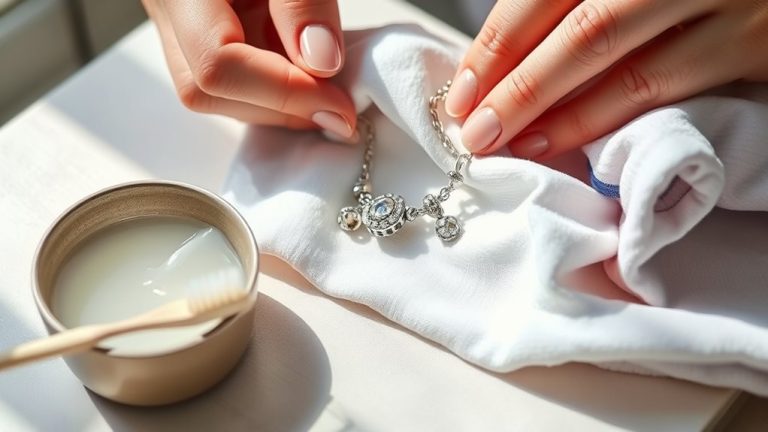
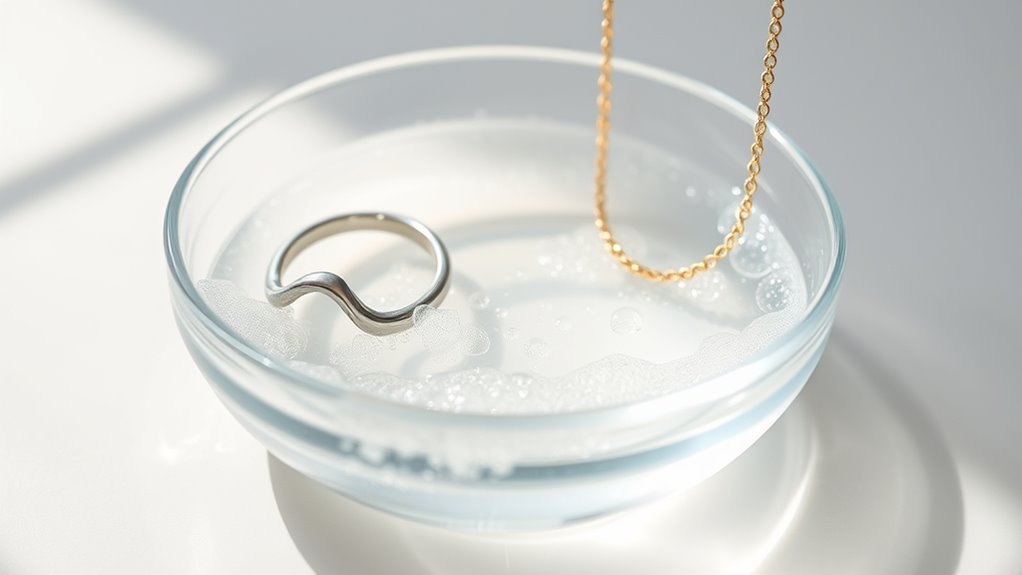
A mild soap solution offers a gentle and effective way to clean your jewelry without risking damage.
By mixing warm water with a small amount of mild soap, you create a safe cleaning solution that removes dirt and oils without harming delicate stones or metal finishes.
Soaking your pieces for 20-40 minutes loosens grime, making it easier to clean with a soft toothbrush.
After brushing, rinse thoroughly with clean water and dry your jewelry completely to avoid residue buildup.
- Use warm water and mild soap for safe cleaning
- Soak jewelry to loosen dirt gently
- Brush with a soft toothbrush to reach crevices
- Rinse thoroughly to remove soap residue
- Dry completely to maintain shine and integrity
Ultrasonic Cleaners Usage
While hydrogen peroxide can sometimes damage delicate gemstones and metals, ultrasonic cleaners offer a safer, chemical-free way to restore your jewelry’s sparkle.
These devices use high-frequency sound waves to create tiny bubbles that gently lift dirt from your pieces without harsh chemicals.
Ultrasonic cleaners are safe for most jewelry types, including gold, silver, and diamonds, as long as you follow the manufacturer’s instructions.
Many models feature adjustable settings, so you can customize the cleaning process based on your jewelry’s material and size.
Using ultrasonic cleaners regularly not only enhances the shine but also supports proper maintenance, keeping your jewelry looking its best without risking damage.
If you want an effective, gentle alternative to hydrogen peroxide for cleaning jewelry, ultrasonic cleaners are an excellent choice.
Professional Jewelry Services
If ultrasonic cleaners provide a gentle at-home option, professional jewelry services take cleaning a step further with advanced techniques that guarantee both safety and shine.
These services use ultrasonic cleaners paired with specialized solutions, ensuring gemstone safety and metal surface protection without relying on harsh chemicals like hydrogen peroxide.
You’ll also benefit from expert inspections that catch loose stones or damage early.
Plus, jewelers offer polishing and rhodium plating to restore your jewelry’s luster professionally.
Regular professional cleaning every 6-12 months keeps your pieces looking their best and extends their lifespan.
- Ultrasonic cleaners use high-frequency sound waves with safe solutions.
- Inspections ensure gemstone security and prevent damage.
- Polishing restores shine without harming metal or stones.
- Rhodium plating protects and enhances jewelry finish.
- Avoid harsh chemicals by choosing professional cleaning services.
Best Practices When Using Hydrogen Peroxide on Jewelry
Since hydrogen peroxide can be strong on jewelry, you should always dilute it with water before use to protect the surface.
Dilute hydrogen peroxide with water before cleaning jewelry to safeguard its surface and maintain its shine.
When cleaning jewelry, limit the soak time to just a few minutes to avoid the risks of peroxide weakening metal settings or harming gemstones.
Always test on a small, hidden area first, especially with precious jewelry, to spot any discoloration or damage.
Avoid using undiluted peroxide on delicate stones like pearls or opals, as it can cause serious harm.
After soaking jewelry, rinse thoroughly with clean water and dry carefully to remove any residual chemicals.
Professional Jewelry Cleaning Options
When you want a deep clean that’s safe for all types of jewelry, professional services use ultrasonic cleaning and steam treatments to remove dirt and restore shine effectively.
Jewelers rely on specialized cleaning solutions and equipment designed to protect delicate gemstones and metals. Regular professional jewelry cleaning every 6-12 months helps eliminate grime and prevents damage from daily wear.
Besides cleaning, jewelers often offer polishing, stone tightening, and repairs to maintain your pieces. Many stores even provide walk-in cleaning for quick, convenient care.
- Ultrasonic cleaning penetrates tiny crevices for thorough dirt removal.
- Steam treatments lift grime without harsh chemicals.
- Jewelers use safe, tailored cleaning solutions.
- Additional services preserve jewelry integrity.
- Walk-in options allow hassle-free maintenance.
Frequently Asked Questions
What Is the Best Solution to Clean Jewelry?
You should clean jewelry with mild soap and warm water for most pieces.
For delicate gemstones, use specialized cleaners.
Avoid harsh chemicals like hydrogen peroxide to prevent damage or discoloration over time.
Conclusion
Hydrogen peroxide can give your jewelry a decent clean, but it’s not always the best tool in the box.
While it works well on some materials, it might cause more harm than good on delicate pieces.
To avoid any headaches, consider safer alternatives or professional cleaning.
When it comes to keeping your jewelry sparkling, don’t put all your eggs in one basket—choose the method that suits your treasures best!
In conclusion, while hydrogen peroxide may be effective for cleaning certain types of jewelry, it’s essential to tread carefully with delicate pieces.
Explore other cleaning methods or seek professional help to ensure your jewelry stays in top shape.
Remember, the right cleaning technique can keep your favorite pieces dazzling without risking damage!