Do Ultrasonic Jewelry Cleaners Work and How to Use Them
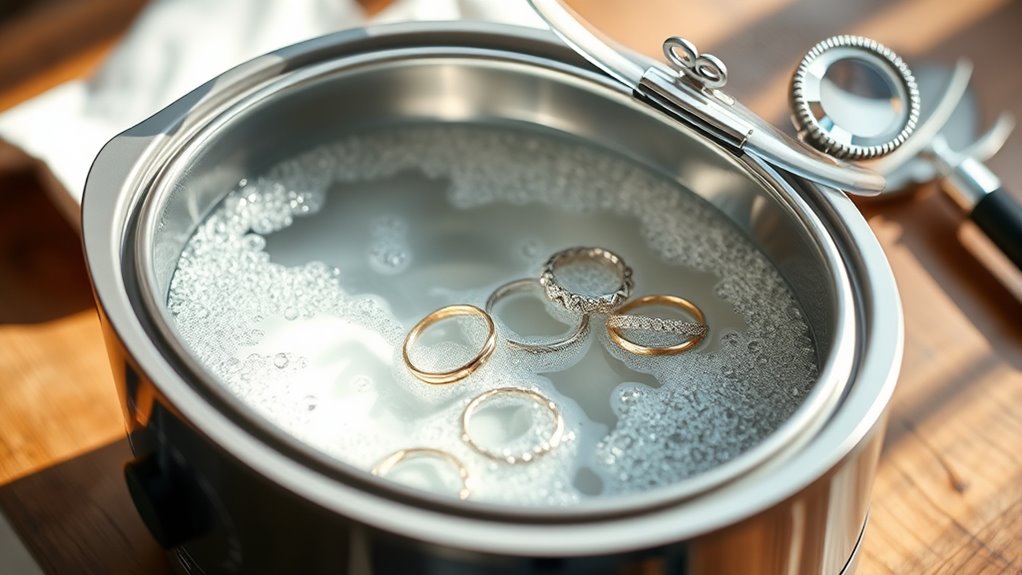
Yes, ultrasonic jewelry cleaners work by using high-frequency sound waves to create tiny bubbles that efficiently remove dirt from hard-to-reach places without the need for scrubbing.
To use one, start by filling the tank with water and a mild detergent.
Next, place your jewelry in the basket, making sure not to overcrowd it.
Run a cycle for about 3 to 5 minutes, then rinse and dry your pieces carefully.
These cleaners are particularly effective on sturdy metals and gemstones but can potentially damage delicate stones.
So, it’s essential to be cautious and know what materials you’re cleaning.
Keep reading to discover how to clean your jewelry safely and achieve the best results!
Understanding Ultrasonic Jewelry Cleaning Technology
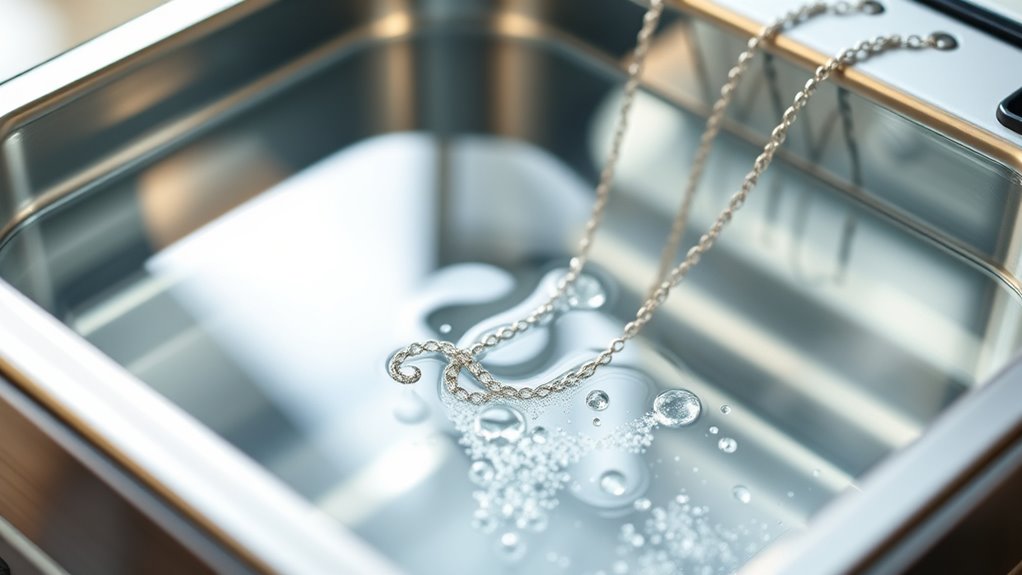
Although it may seem like magic, ultrasonic jewelry cleaners work by using high-frequency sound waves to create tiny cavitation bubbles in water or cleaning solutions.
When you place your jewelry inside the cleaner’s tank, these microbubbles form and collapse rapidly, thanks to ultrasonic vibrations.
This cavitation process generates powerful pressure that dislodges dirt, grime, and microscopic debris from your jewelry’s surfaces and intricate settings.
You’ll find that ultrasonic cleaning reaches areas manual scrubbing often misses, providing a deep yet gentle clean.
By submerging your jewelry in the metal-lined well and activating the device, you harness this advanced technology to restore sparkle and brilliance efficiently.
The ultrasonic method is both effective and safe for many types of jewelry.
Mechanism Behind Ultrasonic Jewelry Cleaners
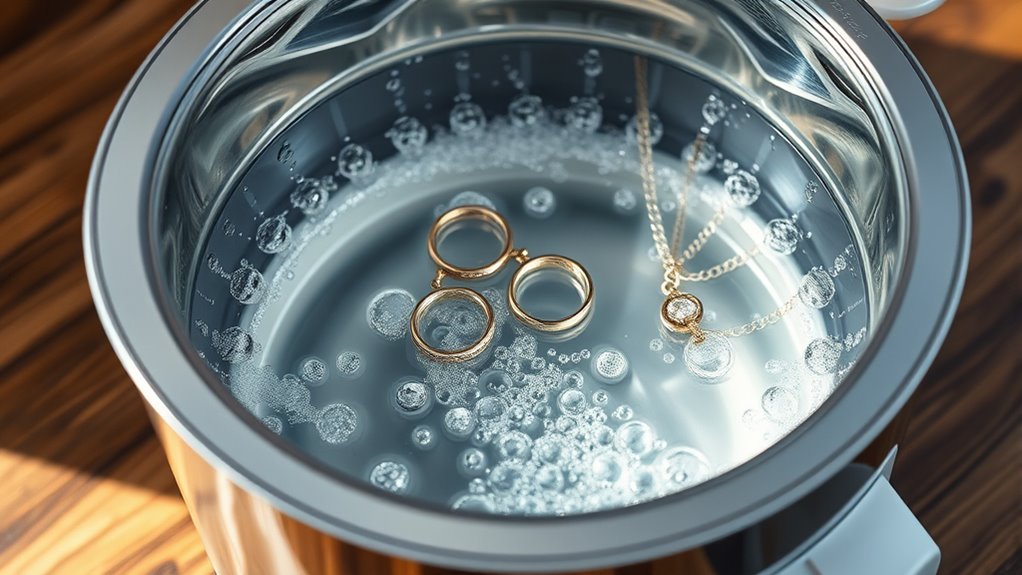
When you turn on an ultrasonic jewelry cleaner, it sends high-frequency sound waves—usually between 20 kHz and 400 kHz—through the water or cleaning solution.
These sound waves cause cavitation, creating microscopic bubbles that rapidly form and collapse.
Sound waves trigger cavitation, forming tiny bubbles that quickly burst to clean jewelry thoroughly.
This process produces localized pressure and heat, which dislodges dirt, oils, and grime from hard-to-reach areas on your jewelry.
The microscopic bubbles penetrate intricate designs, settings, and engravings without damaging the piece.
Ultrasonic cleaning relies on these bubbles’ energy to lift away debris, even from surface scratches and embedded grime.
Using the right cleaning solutions enhances this effect, ensuring your jewelry comes out spotless without the need for manual scrubbing.
Understanding this mechanism helps you appreciate how ultrasonic cleaners efficiently restore your jewelry’s shine.
Types of Jewelry Suitable for Ultrasonic Cleaning
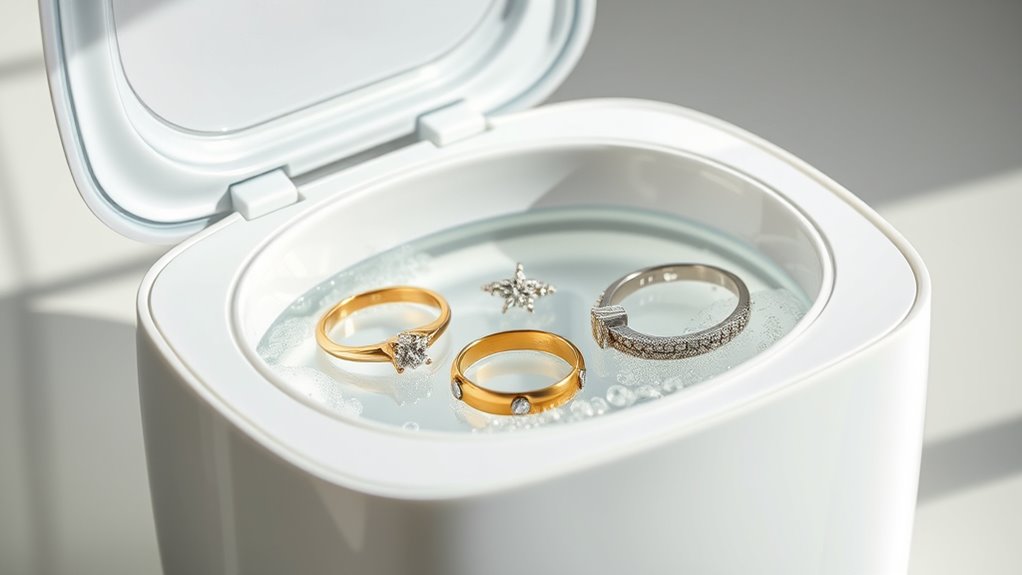
The powerful cavitation process in ultrasonic cleaners works best on certain types of jewelry that can handle its intensity without damage.
You’ll find that pieces made from durable metals like gold, platinum, and sterling silver clean effectively with ultrasonic technology.
Hard gemstones such as diamonds, sapphires, and topaz also respond well to this method, leaving them sparkling.
However, avoid using ultrasonic cleaners on porous stones like pearls, opals, and emeralds, as they can be damaged.
Jewelry settings play a vital role too; solid, well-secured settings without organic materials typically withstand ultrasonic cleaning safely.
Before you start, always check the material compatibility of your jewelry to guarantee it’s safe to clean ultrasonically and avoid any unexpected damage to your treasured pieces.
Jewelry at Risk From Ultrasonic Cleaning
Because ultrasonic cleaning relies on intense vibrations, certain jewelry types can’t handle the process and risk damage.
You should avoid using ultrasonic cleaners on porous gemstones like opals, pearls, and turquoise, as they can crack or discolor.
Soft gemstones and organic materials such as coral and amber also absorb liquids, leading to damage or discoloration.
Jewelry with fragile settings may experience loosening or breakage from the pressure of ultrasonic waves.
Additionally, pieces with glued stones or fracture-filled diamonds are vulnerable, as the cleaning can cause adhesives to fail or gemstone fillings to deteriorate.
To protect your jewelry, be cautious with delicate or porous items and consider alternative cleaning methods to prevent irreversible damage.
Step-by-Step Guide to Using an Ultrasonic Jewelry Cleaner
Knowing which jewelry can safely undergo ultrasonic cleaning helps you avoid damage before you start.
Begin by filling your ultrasonic cleaner with water, then add a small amount of mild detergent or a cleaning solution designed for jewelry cleaning.
Place your jewelry in the cleaning basket, ensuring the pieces don’t touch to prevent scratches.
For delicate pieces, set the cleaning cycle between 3 to 5 minutes to avoid overexposure.
Turn on the machine and let it work on removing dirt effectively.
Once done, carefully remove your jewelry with plastic tweezers or tongs.
Rinse each piece thoroughly with clean water, then dry them with a soft microfiber cloth.
Finally, inspect your jewelry to ensure all dirt has been removed and your items look refreshed.
Choosing the Right Ultrasonic Jewelry Cleaner for Your Needs
You’ll want to pick an ultrasonic cleaner that fits your jewelry comfortably, so check the size and capacity before buying.
Look for features like adjustable timers and suitable cleaning frequencies to match your jewelry’s needs.
Also, make sure the cleaner supports the types of jewelry you own to avoid any damage during the cleaning process.
Size and Capacity
Choosing the right size and capacity for your ultrasonic jewelry cleaner guarantees efficient cleaning without overcrowding.
Ultrasonic cleaners vary in size, from compact models that hold a few small jewelry pieces to larger units designed for multiple items.
The capacity, usually measured in liters or quarts, typically ranges from 0.3 to 1.5 liters for home use.
When selecting your cleaner, consider the size of your jewelry collection and your cleaning needs.
If you clean often or have many pieces, a larger capacity ultrasonic cleaner will save time by handling more items at once.
For occasional use or smaller collections, a compact model fits better and saves space.
Always check the cleaner’s dimensions and maximum load capacity to ensure your jewelry fits comfortably during cleaning.
Cleaning Features
Once you’ve picked the right size and capacity for your ultrasonic jewelry cleaner, focus on the features that make it effective.
The cleaning features determine how well your jewelry gets restored without damage. Look for an ultrasonic cleaner that offers:
- A stainless steel tank for durability and resistance to cleaning solutions.
- Adjustable timer settings, usually from 3 to 10 minutes, so you can tailor cleaning time to your pieces’ delicacy.
- Heating functions to boost cleaning power, especially for stubborn dirt and grime.
- A frequency range of 20-40 kHz to safely and efficiently clean most jewelry types.
These features ensure you get ideal results while protecting your jewelry.
Choosing the right combination makes your ultrasonic cleaner both powerful and gentle.
Jewelry Compatibility
Because ultrasonic jewelry cleaners work best with certain materials, you should verify your pieces are compatible before use.
Focus on jewelry materials that handle ultrasonic waves well—hard, non-porous metals like gold, platinum, and sterling silver are ideal.
For gemstone safety, stick to durable stones such as diamonds, amethysts, and sapphires.
Avoid porous stones like opals, pearls, or emeralds, as they can be damaged by ultrasonic vibrations.
Check metal compatibility and always review the manufacturer guidelines to confirm your cleaner suits your jewelry.
Be cautious with delicate settings or glued components, as ultrasonic waves might loosen them.
Also, consider the cleaner’s size and power to fit your collection.
Make sure it can accommodate larger or multiple pieces simultaneously for efficient cleaning.
Benefits of Using Ultrasonic Jewelry Cleaners
Although traditional cleaning methods can be time-consuming and less effective, ultrasonic jewelry cleaners use high-frequency sound waves to remove dirt and grime from even the most intricate settings quickly and thoroughly.
Ultrasonic cleaners swiftly remove grime from intricate jewelry with high-frequency sound waves for a deep, effective clean.
You’ll appreciate the benefits of ultrasonic cleaning as it offers a deep clean that’s gentle yet powerful. It restores jewelry’s brilliance and extends its lifespan while saving you time.
Here are key advantages you’ll enjoy:
- Achieves a thorough cleaning by lifting debris from hard-to-reach areas through cavitation.
- Provides professional-quality results in just minutes.
- Protects metals and gemstones from scratches during cleaning.
- Saves time compared to manual scrubbing without sacrificing effectiveness.
Using an ultrasonic cleaner ensures your jewelry looks spotless with minimal effort.
Comparing Ultrasonic Cleaning to Traditional Methods
When you compare ultrasonic cleaning to traditional methods, you’ll notice it cleans jewelry more thoroughly and much faster.
Ultrasonic cleaners use high-frequency sound waves to reach intricate settings and engravings that traditional cleaning with brushes or cloths often misses.
While traditional cleaning requires more manual effort and sometimes disassembly, ultrasonic cleaners let you clean multiple pieces simultaneously with minimal handling.
The process typically takes just 2 to 10 minutes, saving you time and effort compared to longer manual scrubbing.
This efficiency and effectiveness explain why professional jewellery experts prefer ultrasonic cleaners to restore shine and remove dirt deeply.
If you want a reliable, quick, and all-encompassing jewelry cleaning method, ultrasonic cleaners clearly outperform traditional cleaning methods.
How Often Should You Use an Ultrasonic Jewelry Cleaner?
If you want to keep your jewelry looking its best, you should use an ultrasonic cleaner regularly but not too often.
How often you use an ultrasonic cleaner depends on the type and condition of your jewelry.
To help you decide, consider these guidelines:
- Use ultrasonic jewelry cleaners every 2 to 4 weeks for everyday pieces.
- Clean high-value or delicate jewelry once every 2 to 3 months to avoid damage.
- Increase cleaning frequency to weekly if your jewelry is heavily soiled.
- Always inspect your jewelry after cleaning and adjust how often you clean based on its condition.
Knowing how the cleaner works and following these tips will help you maintain clean jewelry without risking wear or loosening stones.
Tips to Maximize the Effectiveness and Safety of Ultrasonic Cleaning
To get the best results, make sure your jewelry is safe for ultrasonic cleaning—avoid delicate stones like pearls or emeralds.
Use a mild detergent designed for ultrasonic cleaners and limit cleaning time to 3 to 5 minutes to prevent damage.
Always rinse your pieces with lukewarm water afterward and check for any loose stones before you start.
Proper Jewelry Selection
Selecting the right jewelry is key to getting the best results from ultrasonic cleaning.
To protect your pieces and maximize cleaning efficiency, focus on these essentials:
- Choose jewelry crafted from durable metals like solid gold, platinum, or sterling silver.
- Avoid porous gemstones such as emeralds, opals, pearls, or turquoise that can be damaged by ultrasonic waves.
- Conduct a thorough jewelry inspection to ensure no loose stones or fragile settings could be compromised during cleaning.
- Skip pieces with enamel, gemstone fillings, or oil treatments, as these can discolor or dislodge due to ultrasonic vibrations.
Cleaning Procedure Tips
While ultrasonic cleaners can make your jewelry sparkle like new, you’ll get the best results by following proper cleaning procedures.
Always adhere to the manufacturer’s guidelines for water levels and cleaning cycles to avoid damage or overuse. Use only mild, jewelry-safe cleaning solutions to prevent chemical corrosion.
Before cleaning, check that stones are secure to avoid losing any pieces during the process. Don’t overcrowd your ultrasonic jewelry cleaners; cleaning a few items at a time allows thorough cavitation and better results.
After the cleaning cycle, rinse your jewelry well to remove any leftover solution.
Finally, dry your pieces carefully with a soft cloth to prevent water spots and maintain their shine. Following these tips guarantees safe, effective ultrasonic cleaning every time.
Frequently Asked Questions
How Effective Are Ultrasonic Jewelry Cleaners?
Ultrasonic jewelry cleaners work really well, especially on hard metals and stones.
You’ll see grime vanish quickly, even in tiny crevices.
Just avoid using them on delicate gems, or you might damage your jewelry.
What Liquid Do You Put in a Sonic Jewelry Cleaner?
You should use distilled or deionized water mixed with a few drops of mild dish soap or a specialized jewelry cleaner.
Avoid harsh chemicals to protect your jewelry from damage.
Always follow your cleaner’s instructions.
How Long Should I Leave My Jewelry in an Ultrasonic Cleaner?
You should leave your jewelry in an ultrasonic cleaner for about 3 to 5 minutes—
think of it like a quick telegram from the 1800s.
It’s enough to clean without risking damage, especially for delicate stones.
What Not to Put in Ultrasonic Jewelry Cleaner?
You shouldn’t put porous gemstones like opals, pearls, turquoise, emeralds, or jewelry with delicate materials such as coral or amber in ultrasonic cleaners.
These materials can crack, discolor, or loosen.
Additionally, avoid items with glued settings, fracture-filled diamonds, or enamel.
These delicate pieces require special care that ultrasonic cleaning just can’t provide.
Conclusion
Ultrasonic jewelry cleaners are like tiny sonic wizards, blasting away dirt and grime with ease.
When used correctly, they can bring back your jewelry’s sparkle without damaging delicate pieces.
Just remember to check what types of jewelry are safe for ultrasonic cleaning and follow the steps carefully.
By doing so, you’ll keep your treasures shining bright and looking their best.
This makes your cleaning routine quick, effective, and worry-free every time.
In conclusion, ultrasonic jewelry cleaners are an efficient way to maintain the brilliance of your jewelry.
With proper usage and awareness of safe materials, you can ensure that your pieces remain in excellent condition.
So, embrace this method and enjoy the sparkling results it brings to your collection!