How You Can Safely Clean Jewelry With Peroxide
You can safely clean your jewelry with hydrogen peroxide, which is a great option for revitalizing your favorite pieces.
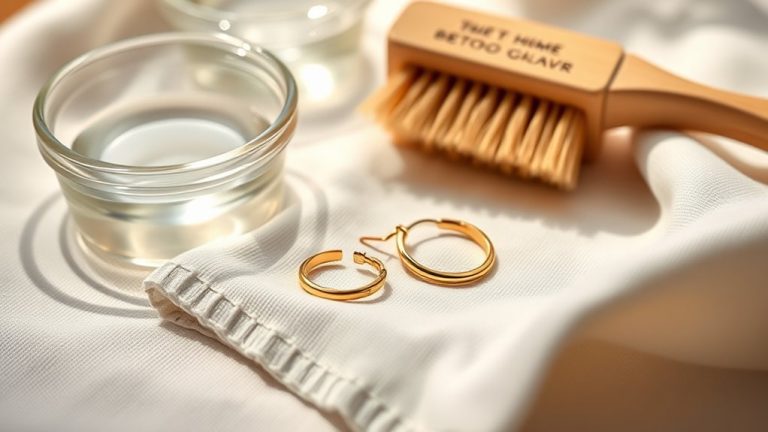
To start, dilute a 3% hydrogen peroxide solution with water—using equal parts for most jewelry items. For delicate stones, like opals or emeralds, it’s wise to use more water to avoid any potential damage.
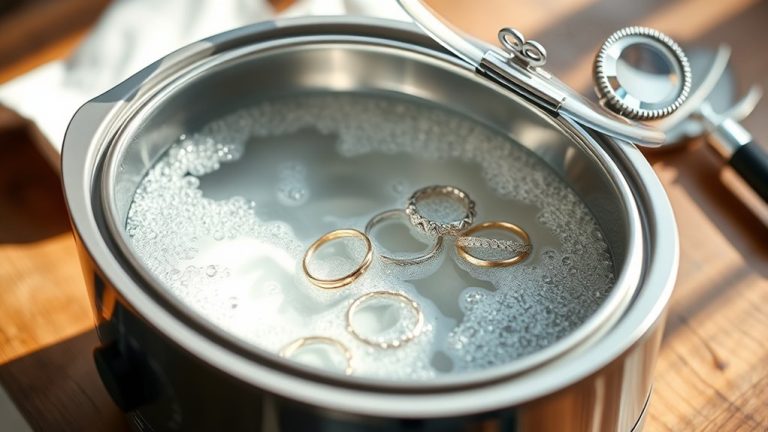
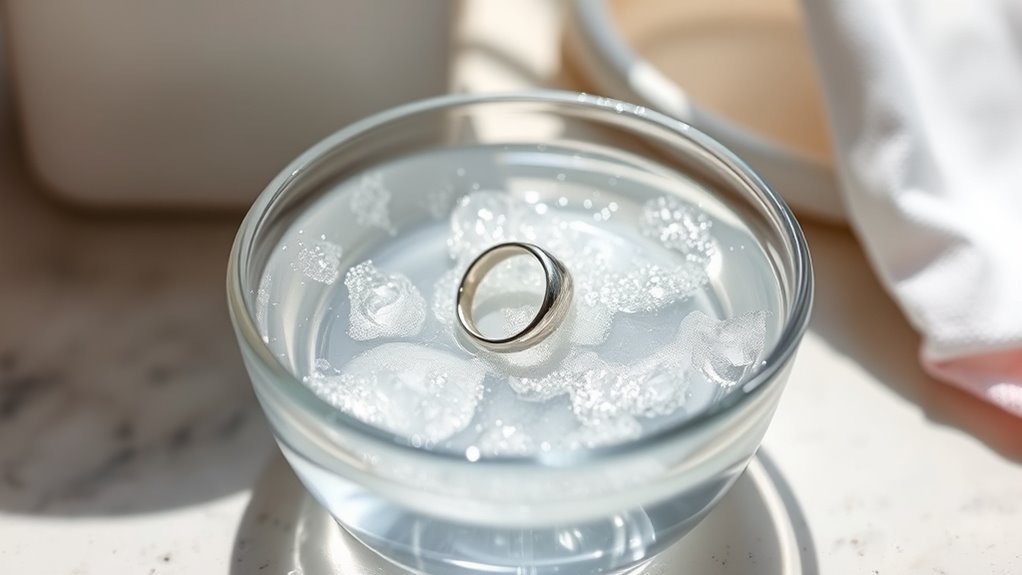
Soak your jewelry for about 5-10 minutes, allowing the solution to break down grime and tarnish.
After soaking, gently brush your jewelry with a soft toothbrush to remove any remaining dirt, and then rinse thoroughly to wash away the solution.
However, be cautious! Avoid using peroxide on porous or soft gems such as pearls or turquoise, as it can cause damage.
Lastly, always dry your jewelry completely to prevent tarnish.
If you’re looking to learn more about handling different materials and ensuring their longevity, keep exploring the best practices for jewelry care!
What Is Hydrogen Peroxide and How Does It Work
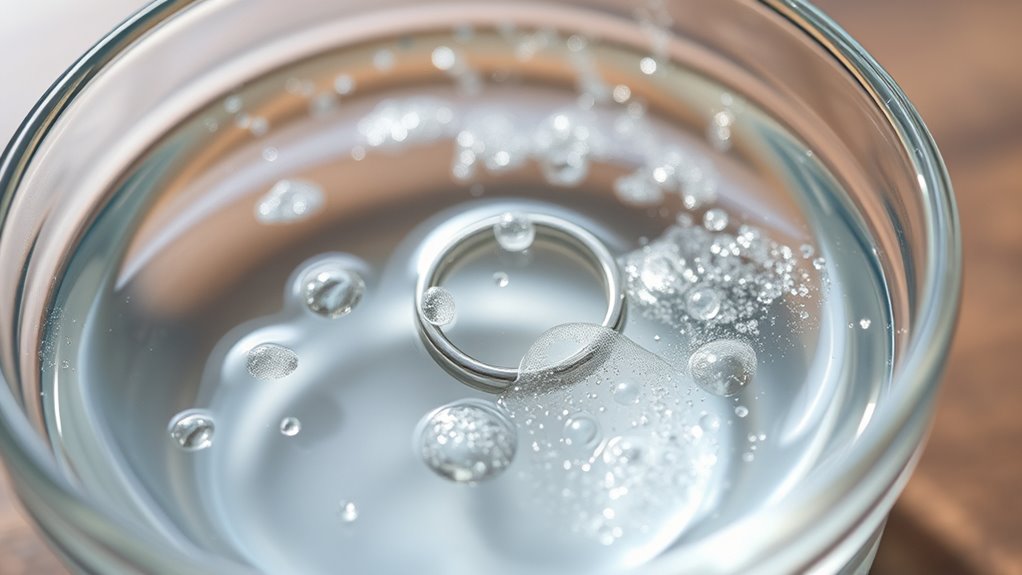
Hydrogen peroxide (H₂O₂) is a mild antiseptic that breaks down into water and oxygen when it comes into contact with organic material.
You’ll notice bubbles forming during this decomposition, which help lift dirt, grime, and bacteria from surfaces.
As a powerful oxidizer, hydrogen peroxide disrupts the cellular components of pathogens, giving it strong disinfectant properties.
When you use it for cleaning, the bubbles physically lift debris and organic residues, making the process more effective.
The reactive oxygen species released during decomposition kill bacteria and other microorganisms, ensuring thorough sterilization.
Understanding how hydrogen peroxide works lets you use it confidently as a safe and efficient cleaning agent for your jewelry and other delicate items.
Jewelry Types Compatible With Hydrogen Peroxide
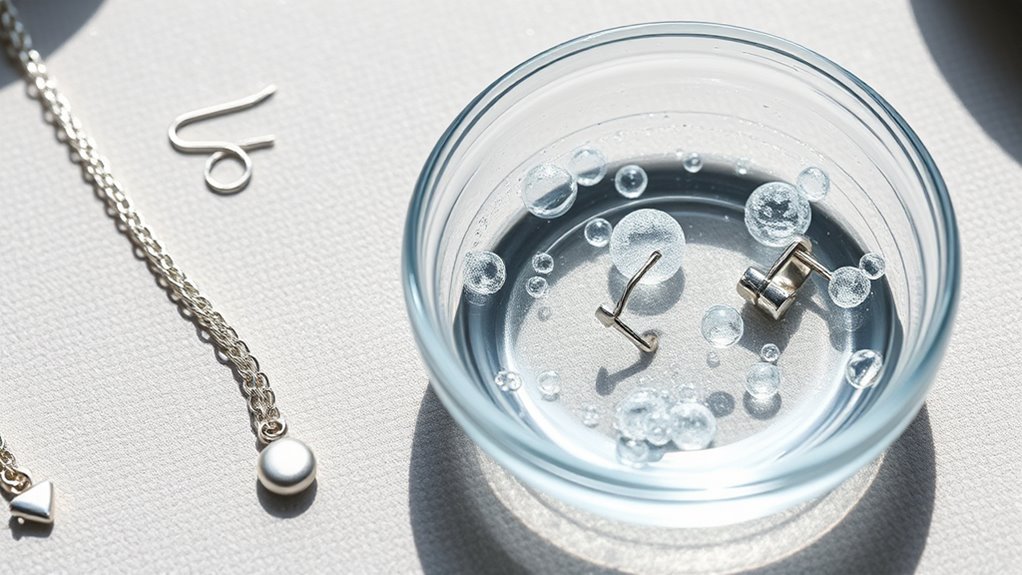
You can safely clean solid gold, platinum, and stainless steel jewelry with hydrogen peroxide, along with hard gemstones like diamonds, sapphires, and rubies.
However, avoid using peroxide on soft or porous stones such as pearls, opals, and turquoise to prevent damage.
Also, be cautious with pieces that have glued or delicate settings, since peroxide might weaken their durability.
Suitable Metals and Stones
Although not all jewelry responds well to peroxide, you can safely clean pieces made from durable metals like gold, platinum, silver, and stainless steel.
Hard gemstones such as diamonds, sapphires, and rubies also tolerate peroxide without damage.
However, avoid soft or porous stones like pearls and opals, as peroxide may cause discoloration.
Jewelry with oxidized finishes may lose their appearance, so proceed cautiously.
When in doubt, seek professional cleaning.
| Jewelry Material | Peroxide Safety |
|---|---|
| Gold, Platinum, Silver | Safe for cleaning |
| Stainless Steel | Safe for cleaning |
| Diamonds, Sapphires | Safe for cleaning |
| Pearls, Opals | Avoid due to discoloration |
Always check your jewelry’s specifics before using peroxide.
Avoid Soft Gemstones
Since soft gemstones like pearls, opals, turquoise, and emeralds absorb hydrogen peroxide, you should avoid using it to clean jewelry containing these stones.
These porous stones can suffer from hydrogen peroxide damage, including discoloration, cracking, or fading.
Because peroxide’s oxidizing properties can weaken delicate surfaces and coatings, it poses a risk to your precious jewelry’s appearance and integrity.
To guarantee gemstone safety, opt for gentle cleaning solutions specifically designed for soft gemstones.
Always verify the type of gemstone before applying any cleaning method to prevent irreversible harm.
Durability Considerations
When cleaning jewelry with hydrogen peroxide, understanding the durability of your pieces is crucial to avoid damage.
You want to pick the right items to ensure safe cleaning solutions without risking harm.
Here’s what to consider:
- Precious metals like solid gold and platinum paired with hard gemstones (diamonds) typically tolerate brief peroxide exposure well due to their durability.
- Avoid porous gemstones such as pearls, opals, turquoise, and emeralds because peroxide can penetrate and cause damage.
- Be cautious with metals prone to metal tarnish or corrosion, like brass and copper, which degrade over time when exposed to peroxide.
Always verify your jewelry’s materials before cleaning to minimize damage risk and maintain its longevity.
Potential Effects of Hydrogen Peroxide on Different Jewelry Materials
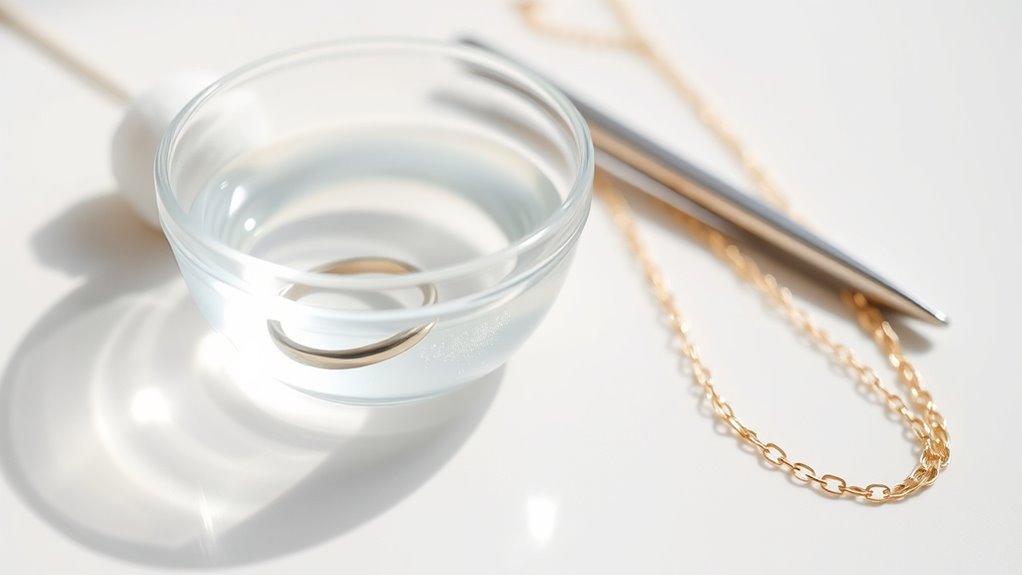
If you use hydrogen peroxide to clean your jewelry, you should know it can affect materials differently.
Porous gemstones like pearls, opals, turquoise, and emeralds may discolor or fade with peroxide exposure.
Porous stones such as pearls and opals risk discoloration or fading when cleaned with hydrogen peroxide.
Metal tarnish can occur, especially on softer or coated metals, dulling their appearance.
Delicate jewelry, including vintage or costume pieces with soft materials such as amber or coral, faces a high damage risk and should avoid peroxide altogether.
On the other hand, durable metals like platinum, gold, and stainless steel usually withstand peroxide well, making cleaning jewelry safer on these metals.
Just a heads up—repeated peroxide use can weaken prongs and solder joints, increasing the chance of stone loss.
Preparing Hydrogen Peroxide Solution for Jewelry Cleaning
Before you start cleaning, make sure to dilute hydrogen peroxide with an equal amount of water to create a safe solution.
Always choose a clean, non-metal container for mixing, and test the mixture on a small area of your jewelry first.
Taking these precautions helps protect your pieces and guarantees effective cleaning.
Dilution Ratios Explained
Since using hydrogen peroxide directly on jewelry can cause damage, you’ll need to dilute it properly before cleaning.
Understanding dilution ratios is key to safe and effective jewelry cleaning. Here’s how to mix your solution:
For general cleaning, mix equal parts 3% hydrogen peroxide and water to get a 1.5% solution.
For delicate or porous gemstones, use one part hydrogen peroxide to two parts water, resulting in a gentler 1% concentration.
Always label your diluted solution and prepare only what you need to avoid degradation and misuse.
Following these simple cleaning hacks ensures you protect your jewelry while maintaining its shine.
Selecting Appropriate Peroxide
When selecting hydrogen peroxide for cleaning your jewelry, choose a 3% solution, which is widely available and safe when properly diluted.
This concentration is commonly used as a household disinfectant and works well for jewelry cleaning.
To create a safe solution, always dilute hydrogen peroxide with equal parts distilled water.
Using diluted hydrogen peroxide reduces the risk of discoloration or damage to your jewelry.
Prepare your mixture in a clean, non-reactive container like glass or plastic to avoid unwanted chemical reactions.
Before fully cleaning your piece, test first by applying the diluted solution to a small, hidden area.
This step ensures your jewelry won’t suffer adverse effects, keeping it safe and looking its best during your cleaning process.
Safety Precautions Before Use
Although hydrogen peroxide is effective for cleaning jewelry, it’s important to dilute it with water and wear protective gloves. This helps prevent skin irritation and accidental contact with your eyes.
Taking proper safety precautions ensures your protection and the jewelry’s safety.
Follow these steps when preparing the solution:
- Dilute a 3% hydrogen peroxide solution with an equal amount of water in a clean, non-metallic container. This avoids any unwanted reactions.
- Wear gloves throughout the process. This shields your skin and helps prevent eye contact.
- Test the diluted solution on a small, hidden area of your jewelry first. This way, you can check for any discoloration or damage before full use.
Make only the amount you need to keep the solution effective. Avoid storing it long-term to ensure its quality.
Step-by-Step Guide to Cleaning Jewelry With Peroxide
Before you start cleaning your jewelry with peroxide, make sure to dilute it with an equal amount of water to protect your pieces from damage.
Next, soak your jewelry in this diluted hydrogen peroxide solution for 5-10 minutes.
After soaking, use a soft toothbrush or cloth to gently scrub away dirt, especially in crevices.
Then, rinse your jewelry thoroughly with clean water to remove any residue.
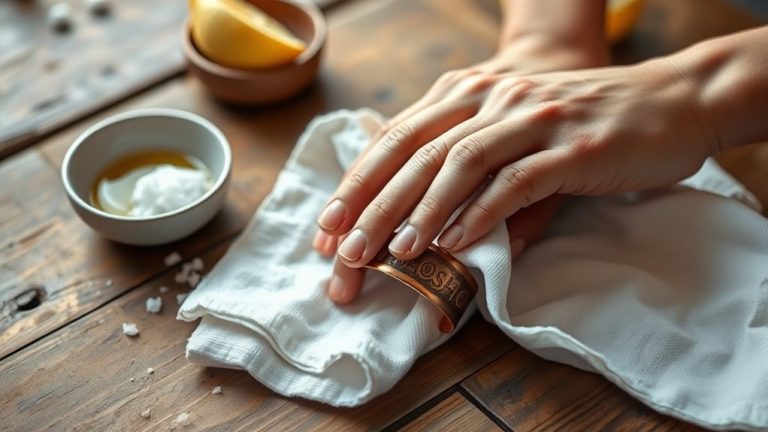
Finally, dry your pieces completely with a soft, lint-free cloth to avoid moisture issues.
| Step | Action |
|---|---|
| 1 | Dilute hydrogen peroxide with water |
| 2 | Soak jewelry for 5-10 minutes |
| 3 | Gently scrub with soft toothbrush/cloth |
| 4 | Rinse thoroughly with clean water |
| 5 | Dry completely with lint-free cloth |
Safer Cleaning Alternatives to Hydrogen Peroxide
Hydrogen peroxide can clean jewelry effectively, but it’s not always the safest choice for every piece.
You might want to try gentler methods that protect your jewelry better. Here are three safer alternatives:
1. Use mild soap and warm water with a soft toothbrush for gentle cleaning.
This method works well for most metals and stones without risking damage.
2. Choose a jewelry cleaner formulated for your specific gemstones and metals.
These solutions ensure effective yet safe cleaning tailored to your pieces.
3. Consider an ultrasonic cleaner, but only for durable jewelry.
It removes grime efficiently but can harm delicate or porous stones, so use it cautiously.
Additionally, a polishing cloth offers a chemical-free way to shine your jewelry.
This reduces reliance on harsher substances like peroxide.
Tips for Maintaining Jewelry After Cleaning
Once you’ve cleaned your jewelry with peroxide, make sure to rinse it thoroughly with clean water to remove any leftover chemicals that could cause damage.
After rinsing, gently dry jewelry using a soft cloth to prevent water spots and tarnish.
It’s important to inspect jewelry regularly for signs of damage or weakening, especially after peroxide cleaning.
Catching issues early helps protect your pieces.
When not wearing your jewelry, store it in a dry, soft pouch or a jewelry box to shield it from scratches and moisture.
Finally, schedule professional cleanings periodically to maintain your jewelry’s shine and ensure any damage from peroxide or daily wear is promptly addressed.
Following these tips will keep your jewelry looking its best for years to come.
Frequently Asked Questions
Is Hydrogen Peroxide Safe for Jewelry?
Hydrogen peroxide can be safe for cleaning durable jewelry like diamonds.
However, you shouldn’t use it on delicate or porous stones.
Always avoid repeated use to prevent metal damage.
And don’t forget to test on a small area first!
Conclusion
Cleaning your jewelry with hydrogen peroxide can be a quick way to restore sparkle.
But you need to be careful with delicate materials like pearls or opals.
Imagine Sarah, who safely cleaned her silver rings by soaking them briefly in a diluted peroxide solution, avoiding damage.
Always test first and follow proper steps to protect your pieces.
If you want gentler options, consider mild soap or specialized jewelry cleaners to keep your treasures shining without risk.
In conclusion, using hydrogen peroxide is an effective method for cleaning jewelry, but always exercise caution.
Delicate materials like pearls and opals require special attention, so it’s wise to test any solution before use.
For a safer alternative, consider mild soaps or jewelry cleaners designed for sensitive pieces.
Keeping your jewelry sparkling doesn’t have to be risky; just follow the right steps!