How to Tell if Costume Jewelry Is Worth Anything
You can tell if costume jewelry is worth anything by checking for hallmarks or maker’s marks inside clasps or backs. These marks indicate metal quality or designer signatures, which can significantly affect value.
Next, inspect the craftsmanship carefully. Look for secure settings and quality finishes that suggest a higher standard of production.
Try simple tests like magnetism or ceramic streaks to spot base metals. This can help you identify whether the piece is made from valuable materials or not.
Also, watch for signs of glued stones or poor construction. These are common indicators of fakes that may not hold any real value.
If you want to know what truly adds value and when to get a professional appraisal, keep exploring these key tips.
You’ll be better equipped to determine the worth of your costume jewelry!
Check for Hallmarks and Maker’s Marks

When you’re evaluating costume jewelry, check inside the piece—on clasps, backs, or posts—for hallmarks or maker’s marks.
These stamps provide vital clues for jewelry identification, revealing metal content or the creator’s signature.
Gold items might show karat marks like 10K or decimal equivalents such as .585, while silver often carries “925” or “sterling.”
Platinum pieces can be labeled “plat” or feature numbers like 950.
Beyond metal content, vintage jewelry often bears unique maker’s marks or brand signatures that confirm authenticity and origin.
Spotting these marks helps you distinguish genuine pieces from replicas, making hallmarks and maker’s marks indispensable tools when evaluating costume jewelry’s worth and provenance.
Always use a magnifying glass to catch these subtle indicators.
Assess the Quality of Materials and Craftsmanship

Although costume jewelry may not use precious metals or gemstones, you can tell a lot about its value by evaluating the quality of materials and craftsmanship.
Start by examining the metalwork. Intricate designs and secure prong settings often indicate better craftsmanship.
Next, check the plating for consistency. Smooth, even plating shows care, while uneven or chipped plating suggests lower quality.
Feel the weight of the piece. Heavier items usually mean higher-quality materials like Bakelite, lucite, or glass rhinestones instead of cheap plastic.
Also, inspect for any markings or signatures. These can confirm the maker and increase worth.
Conduct Basic Jewelry Tests at Home

After checking the materials and craftsmanship, you can perform simple tests at home to further assess your costume jewelry’s authenticity.
These tests help you identify the metal content and overall value quickly.
- Use a magnet: if the piece sticks, it likely contains base metals, not valuable materials.
- Drag the item across unglazed ceramic; a black streak signals fake metal, while gold or beige suggests real gold or quality alloys.
- Apply a drop of vinegar on a hidden spot; bubbling or color change indicates it’s not genuine gold or silver.
These easy tests reveal if your jewelry is costume-grade or truly valuable.
This can save you time and money before seeking professional appraisal.
Recognize Common Signs of Fake or Costume Jewelry
Start by checking for metal markings like stamps or hallmarks that indicate precious metals.
Next, examine the stones and settings—look for glued stones or plastic gems that signal costume pieces.
Finally, use simple physical and chemical tests, such as magnet checks, to spot base metals and fake plating.
Metal Markings Check
When you examine costume jewelry, checking for metal markings is one of the quickest ways to gauge its authenticity.
Look closely inside the clasp, ring shank, or earring post for stamps that indicate metal content. Genuine gold pieces often have karat marks like “14K,” while sterling silver is typically marked “925” or “sterling.”
Beware of fake or costume jewelry that either lacks marks or uses misleading stamps such as “GF” (gold-filled) or “HGP” (gold overlay).
Also, watch for worn or faint marks—they might be erased to hide a fake.
- Authentic stamps include “10K,” “14K,” “18K,” “925,” and “sterling.”
- Absence of metal markings often signals costume jewelry.
- Misleading stamps can imitate genuine gold or sterling silver.
Stone and Setting Quality
Although costume jewelry can look appealing at first glance, you can often spot it by examining the stones and settings closely.
Costume pieces typically use glued stones instead of metal prongs, which may show uneven or rough edges around the stones.
The stones themselves often lack the depth and sparkle of genuine gems, appearing cloudy or inconsistent in color.
In contrast, authentic jewelry features securely set stones held by precise prongs, reflecting higher setting quality.
Look for signs like loose or poorly set stones and visible glue, which indicate costume jewelry.
The setting quality is usually simpler and less meticulous, with uneven bezels compared to fine craftsmanship.
Paying attention to these details helps you recognize fake or costume jewelry quickly.
Physical and Chemical Tests
If you want to quickly determine whether jewelry is genuine or costume, physical and chemical tests offer reliable clues.
Costume jewelry often feels lighter and is made from base metals, which react differently than precious metals like gold jewelry.
Try these simple tests:
- Magnet test: Real gold isn’t magnetic, but base metals in costume pieces will be attracted to a magnet.
- Ceramic scratch test: Rub the piece on unglazed ceramic; real gold leaves a gold streak, while fakes leave black or no marks.
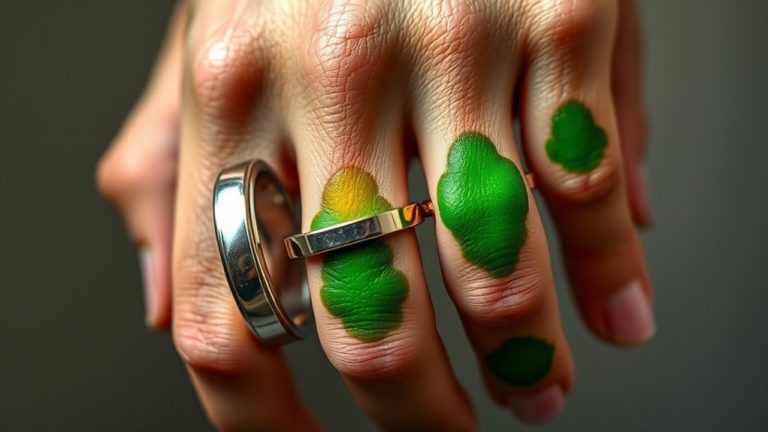
- Check for discoloration: Green corrosion or skin irritation usually signals metal alloys common in costume jewelry.
Using these tests, you can spot fake pieces quickly and avoid overpaying for costume jewelry.
Identify Vintage and Designer Costume Jewelry Brands
Several vintage and designer costume jewelry brands stand out for their distinctive styles and markings, making it easier for you to identify valuable pieces.
Recognizable brands like Trifari, Coro, Monet, Eisenberg, and Napier often feature clear brand signatures or maker’s marks on the back or clasp.
Designer labels such as Miriam Haskell, Schiaparelli, and Givenchy are highly sought after, especially when marked with signatures or tags.
Keep in mind, some vintage costume jewelry pieces may lack signatures but can still be identified by unique design elements or materials.
Brands like Juliana by DeLizza & Elster are prized for intricate rhinestones despite missing maker’s marks.
Learning these brand signatures and characteristics helps you authenticate pieces and gauge their potential worth accurately.
Research Market Values of Similar Pieces
How do you determine the market value of your costume jewelry?
Start by researching market values of similar pieces.
Begin by exploring the market values of pieces similar to your costume jewelry.
Checking sold listings on online marketplaces like eBay and Ruby Lane reveals what collectors are currently paying.
Look for items with recognizable designer marks, as these often command higher prices.
Pay attention to notable sales data to set benchmarks for your piece.
Here’s how to dig deeper:
- Compare recent auction results for specific styles and eras.
- Identify limited edition or rare pieces that influence value.
- Track current trends and demand in the vintage jewelry market.
Understand the Impact of Condition on Value
Because condition plays a crucial role in determining costume jewelry’s value, you should carefully inspect each piece for wear, damage, and cleanliness.
Jewelry in excellent condition with minimal wear or tarnish holds greater value.
On the other hand, chips, cracks, or missing stones considerably reduce it.
Pay close attention to plating—flaking or discoloration lowers worth, whereas well-preserved finishes boost it.
Authentic vintage pieces that maintain their original finish without over-polishing retain more value.
Also, check for corrosion or green discoloration, as their presence signals deterioration.
Avoid pieces with obvious damage or excessive tarnish since repairs are often costly or impossible.
Learn How to Spot Real Gemstones in Costume Jewelry
When you examine costume jewelry closely, you’ll notice that genuine gemstones usually have consistent color and clarity.
This is unlike their plastic or glass counterparts, which often appear uneven.
To spot real stones, look for natural inclusions—tiny imperfections visible under magnification—that plastic gems lack.
Also, check the settings; genuine gemstones are often secured with precise prongs or bezels.
This reflects quality craftsmanship, which is a good sign.
Markings on the metal may indicate authenticity and value as well.
Here are key tips to identify real stones in costume jewelry:
- Use a jeweler’s loupe to spot natural inclusions and clarity.
- Feel the weight; genuine gemstones generally make the piece heavier.
- Inspect metal markings and craftsmanship for signs of authenticity.
These small details can make a big difference in your jewelry hunting!
When and How to Seek Professional Appraisals
If you’re uncertain about the authenticity or value of a vintage or costume jewelry piece, it’s wise to seek a professional appraisal.
Certified appraisers and licensed jewelers use advanced methods like X-ray fluorescence and acid testing to determine metal content and authenticity accurately.
Advanced techniques such as X-ray fluorescence and acid testing reveal jewelry authenticity and metal content.
You should consider professional appraisals if your jewelry has designer signatures, unique markings, or looks rare.
Scheduling a formal appraisal session is especially important for valuable jewelry, estate pieces, or items intended for resale or insurance purposes.
These experts can confirm whether your costume jewelry is merely decorative or holds collectible, historical, or monetary significance.
Frequently Asked Questions
How to Tell if Your Costume Jewelry Is Worth Money?
You can tell if your costume jewelry’s worth money by checking for maker’s marks.
It’s also important to test metal authenticity.
Evaluating craftsmanship is another key factor, along with researching rarity or designer names.
Condition and unique stones can boost value considerably.
What Costume Jewelry Brands Are Worth Money?
If you’re collecting costume jewelry to fund your yacht, focus on brands like Miriam Haskell, Juliana, Trifari, Dior, and Chanel.
Their signed, well-preserved pieces often fetch serious money, unlike your average flea market trinket.
How to Tell if Inherited Jewelry Is Valuable?
You can tell if inherited jewelry’s valuable by checking for maker’s marks,
testing metal quality, and inspecting craftsmanship.
Also, assess any genuine stones or pearls and consider the piece’s age,
condition, and historical significance carefully.
Does a Magnet Stick to Costume Jewelry?
Yes, a magnet can stick to costume jewelry since many use base metals like brass, which are magnetic.
But don’t rely solely on this test; some high-quality pieces have non-magnetic parts.
Conclusion
So, if you’re hoping your glittery flea market find is secretly a billionaire’s long-lost treasure, think again—unless it’s stamped with hallmarks or crafted like a masterpiece.
Sure, you can poke, prod, and Google your heart out, but sometimes even pros can’t tell costume from cashmere.
Still, with a keen eye and a little research, you might just spot a hidden gem.
Or at least avoid paying a king’s ransom for plastic bling!
In conclusion, while most costume jewelry may not hold significant value, there are exceptions.
By being observant and doing your homework, you can differentiate between high-quality pieces and the run-of-the-mill stuff.
Remember, the key is to look for hallmarks, craftsmanship, and unique designs.
With some effort, you might uncover a valuable piece or at least save yourself from overspending on something that’s just for show!