How to Identify Vintage Jewelry Styles for Beginners
You can identify vintage jewelry styles by spotting era-specific design features. Look for Victorian romantic motifs, Art Nouveau’s nature-inspired curves, or Art Deco’s geometric patterns.
Also, check for traditional materials like hallmark-stamped gold, silver, or platinum, as well as natural gemstones.
Take a moment to examine the craftsmanship—hand engraving, soldered joints, and natural patina are indicators of authenticity.
Additionally, verify hallmarks and maker’s marks to help date pieces accurately.
Keep exploring, and you’ll uncover detailed ways to distinguish genuine vintage jewelry from reproductions.
Happy hunting!
Defining Vintage Jewelry and Its Appeal

Although vintage jewelry is defined as pieces at least 20 years old, its true appeal goes beyond age.
When you explore vintage jewelry, you’re diving into a world shaped by distinct eras, each with unique design elements and styles.
These characteristics of vintage pieces reflect the historical context they were created in, offering you a glimpse into past cultures and artistry.
Unlike antique jewelry, which is typically over 100 years old, vintage spans a broader timeframe but still demands authenticity.
Collecting authentic vintage jewelry means appreciating craftsmanship that modern designs often try to replicate.
Key Design Features of Major Vintage Eras

You’ll notice each vintage era has its own distinctive motifs that tell a story, like romantic hearts in Victorian pieces or bold geometric shapes in Art Deco designs.
Signature materials and craftsmanship also set these styles apart, from delicate filigree in Edwardian jewelry to the oversized glamour of Retro gold tones.
Understanding these features helps you spot and appreciate the unique charm of each period.
Distinctive Era Motifs
When you explore vintage jewelry, you’ll notice each era has distinctive motifs that reflect its unique style and cultural influences.
Victorian motifs often showcase romantic motifs like hearts, flowers, and entwined hands, capturing sentimental value.
Art Nouveau motifs stand out with flowing, organic lines and nature-inspired themes such as flowers and insects, emphasizing elegance.
In contrast, Art Deco patterns feature bold geometric designs and symmetrical shapes, using vibrant gemstones to create striking visual impact.
These era-specific symbols help you identify vintage jewelry styles by their characteristic floral patterns, organic lines, or geometric designs.
Recognizing these key motifs lets you appreciate the artistry and history behind each piece, guiding you to spot authentic vintage treasures with confidence.
Signature Materials & Craftsmanship
Each vintage era stands out through its signature materials and craftsmanship, which reveal much about the period’s aesthetic and technology.
When you examine vintage jewelry, look closely at metalwork, use of gemstones, and hallmark details to identify the era.
Victorian pieces showcase delicate gold or silver filigree, romantic motifs, and often use mourning stones like jet and garnet.
Art Nouveau is known for flowing designs, vibrant enamel accents, and nature-inspired motifs crafted with exceptional hand-painting craftsmanship.
Art Deco favors geometric shapes in platinum or white gold, highlighting symmetrical patterns with colorful gemstones such as sapphires and rubies.
Retro jewelry embraces bold, oversized designs in rose or yellow gold, featuring large, eye-catching gemstones that reflect Hollywood glamour.
Recognizing these signature elements helps you appreciate each era’s unique design and craftsmanship.
Identifying Traditional Materials in Vintage Pieces

How can you tell if a vintage jewelry piece uses traditional materials?
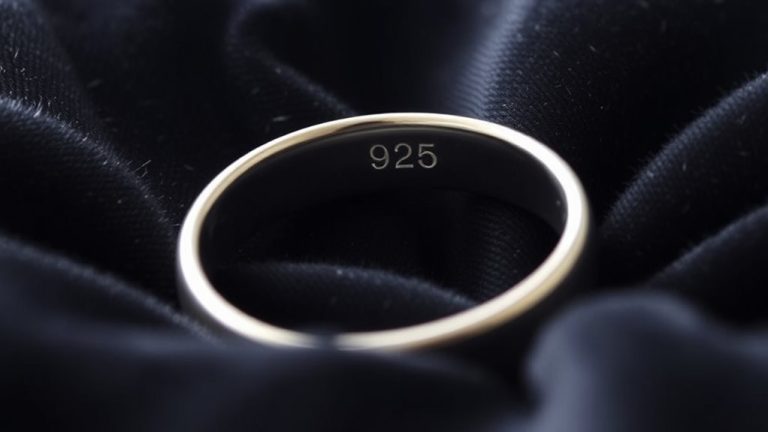
Start by looking for hallmark stamps indicating precious metals like 14K or 18K gold, sterling silver (marked 925), or platinum.
Look for hallmark stamps like 14K, 18K gold, 925 silver, or platinum to identify precious metals.
These markings are key in material identification.
Check the gemstones—vintage pieces often feature old European-cut diamonds, sapphires, rubies, emeralds, or natural pearls set in intricate mountings.
Notice if the piece shows patina or slight oxidation; these are signs of natural aging that confirm authenticity.
Examine the craftsmanship: hand-engraving and filigree work usually accompany genuine materials and add detail to the design.
Recognizing Authentic Craftsmanship and Wear
When you examine vintage jewelry, look closely at hallmarks and maker’s marks to confirm authenticity.
You’ll notice genuine wear like worn prongs and a natural patina that develops over time.
Also, check the construction—handcrafted details and traditional techniques set true vintage pieces apart from modern reproductions.
Hallmarks and Maker’s Marks
Although hallmarks and maker’s marks are often small and tucked away, they hold crucial information about the metal purity, origin, and creator of a piece.
When examining vintage jewelry, you’ll want to look closely for these stamped symbols, usually found inside bands or clasps.
They help with identification by revealing:
- Metal purity, confirming the quality of the piece.
- Country of origin, often indicated by specific assay office marks.
- Signature marks or initials of the maker or craftsman.
- Date clues from hallmark styles that evolved over time.
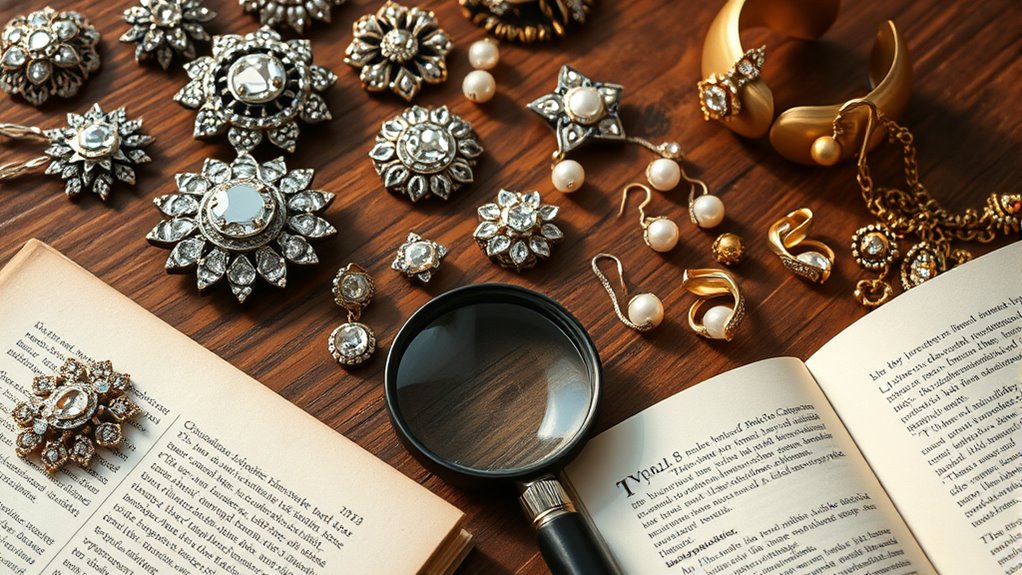
Using a magnifying glass and reference guides can help you authenticate and date your vintage jewelry accurately.
Recognizing these subtle details ensures you’re appreciating genuine craftsmanship and historical value.
Signs of Genuine Wear
After identifying hallmarks and maker’s marks, you’ll want to examine the physical condition of the jewelry itself.
Look for signs of genuine wear like softened edges, slight scratches, and tiny dings that naturally develop over decades.
Authentic vintage pieces often show a warm patina on gold or silver surfaces, a result of true oxidation signaling real age.
Check the settings and prongs; worn or uneven ones indicate the piece has been worn and possibly repaired over time—not freshly made.
You might also notice a subtle fading or soft glow on engraved or textured areas, another clear sign of authentic craftsmanship.
Keep in mind, modern reproductions usually lack these natural signs, appearing overly polished and pristine without the genuine wear that authentic vintage jewelry proudly shows.
Traditional Construction Techniques
Because authentic vintage jewelry showcases traditional craftsmanship, you’ll often find hand-finished details like milgrain edges, hand-engraved patterns, and delicate filigree work that reflect the skill of past artisans.
When examining pieces, pay close attention to construction techniques that reveal genuine handmade origins:
- Subtle tool marks and irregularities show the human touch behind the work.
- Worn prongs, clasps, and findings indicate authentic long-term use.
- A substantial metal weight and dense feel distinguish vintage metals from lighter modern copies.
- Natural patina and oxidation on metal surfaces confirm age and genuine craftsmanship.
Understanding Hallmarks and Maker’s Marks
When you examine vintage jewelry closely, you’ll often find small stamped symbols called hallmarks and maker’s marks that reveal essential details about the piece.
Hallmarks indicate metal purity, origin, and sometimes the year it was made, while maker’s marks identify the manufacturer or designer.
Hallmarks reveal metal quality, origin, and date, while maker’s marks point to the creator behind the piece.
These markings usually appear inside bands or clasps.
To accurately identify and date your jewelry, you’ll need to compare these stamps to hallmark guides or consult an expert familiar with historical symbols.
Since hallmark designs evolved over time and vary by country, understanding these details helps you determine the piece’s origin and authenticity.
Paying attention to these subtle markings is key to revealing the history behind your vintage jewelry.
How to Assess Jewelry Construction for Age
Hallmarks and maker’s marks offer valuable clues, but evaluating how a piece is constructed gives you even more insight into its age.
When assessing vintage jewelry, look closely for hand-finishing signs like uneven prong settings or subtle tool marks.
Traditional construction features such as soldered joints and closed-back settings also indicate authenticity.
Consider these age signs:
- Clasp types like box clasps or screw-backs point to specific eras.
- Patina and wear patterns develop naturally, revealing genuine aging.
- Weight and density hint at solid metal construction typical of older pieces.
- Hand-engraved details show craftsmanship not often found in modern items.
Spotting Reproductions and Modern Imitations
Although vintage jewelry can be mesmerizing, you need to be cautious of reproductions and modern imitations that mimic older styles.
Reproductions often use cast metal and machine-cut stones, giving them a uniform, mass-produced look that lacks the hand-finished charm of true vintage pieces.
Modern imitations may feature synthetic gemstones, which differ in weight and clarity from genuine stones.
Watch for artificial aging and fake patina meant to simulate wear, but these lack the subtle, natural signs of genuine aging.
Also, check the clasps—contemporary clasp styles like lobster clasps or screw-back findings didn’t exist in earlier eras and can reveal a piece’s modern origin.
Tips for Confidently Purchasing Vintage Jewelry
To confidently purchase vintage jewelry, you’ll need to verify hallmarks, maker’s marks, and country stamps using reliable reference guides or databases.
These authentic marks help with age verification and confirm provenance. Always examine the craftsmanship closely—genuine vintage jewelry shows natural wear, unlike overly perfect replicas.
Authentic marks verify age and provenance; genuine vintage pieces reveal natural wear, unlike flawless replicas.
Here are essential tips to guide you:
- Use detailed hallmark guides to identify authentic marks accurately.
- Buy from reputable sellers who provide clear photos and provenance information.
- Scrutinize the piece’s construction and patina for genuine vintage traits.
- Request professional appraisals for high-value items to ensure authenticity.
Following these steps will help you confidently identify and invest in timeless vintage jewelry pieces.
Frequently Asked Questions
How to Identify Vintage Jewelry?
You identify vintage jewelry by spotting era-specific designs, checking hallmark stamps, and examining craftsmanship like filigree or enamel.
It’s also important to note materials like platinum or natural pearls.
Learning distinctive features from different periods helps you recognize authentic pieces confidently.
Is There an App That Can Identify Vintage Jewelry?
You can use apps like GemFind or Jewelry ID to identify vintage jewelry, but don’t anticipate perfection.
While they analyze photos for style clues, combining their insights with expert advice makes sure you truly know your piece’s history.
How Do I Identify a Piece of Jewelry?
You identify jewelry by checking for hallmark stamps,
examining design styles and materials.
Using a magnifier to study details like clasps is also helpful.
Researching motifs can provide additional insight.
Comparing your piece with reference guides helps confirm its style and age.
This way, you can get a clearer picture of what you have!
What Are the Different Jewelry Styles?
You’ll find Georgian’s romance, Victorian’s sentiment, Art Nouveau’s flow, and Art Deco’s boldness.
Each style tells a story through motifs, shapes, and gems.
Conclusion
Now that you’ve got the basics down, spotting vintage jewelry will be a walk in the park.
By recognizing design styles, traditional materials, and authentic craftsmanship, you’ll avoid getting taken for a ride by reproductions.
Keep an eye on hallmarks and construction details to confidently pick pieces with genuine history.
Trust your instincts and enjoy hunting for those timeless treasures.
You’re well on your way to becoming a savvy vintage jewelry enthusiast!
In conclusion, identifying vintage jewelry styles is all about understanding key elements like design, materials, and craftsmanship.
Take the time to learn about hallmarks and construction techniques to ensure authenticity.
With practice and a keen eye, you can confidently curate a collection of genuine vintage pieces that truly resonate with you.
Happy hunting, and may your journey in vintage jewelry be filled with beautiful discoveries!