How to Identify the Only Allowed Jewelry When Preparing Food
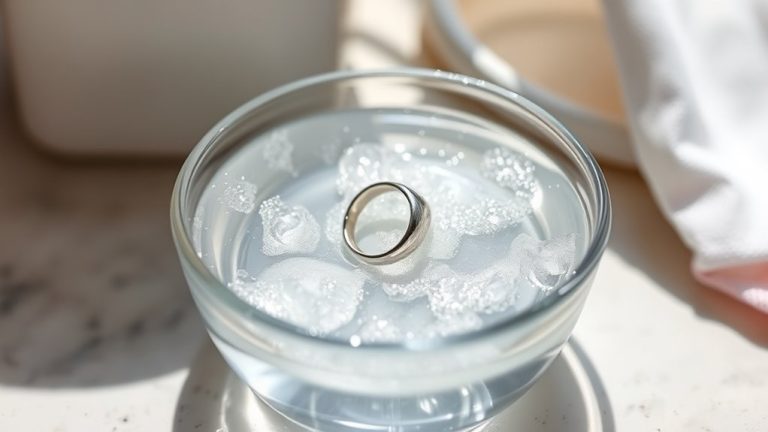
You can identify the only allowed jewelry when preparing food by choosing a plain, simple wedding band made of smooth, non-porous material like stainless steel or silicone.
This type of ring should have no stones, engravings, or textured surfaces.
Plus, it should fit snugly to avoid glove tears or contamination.
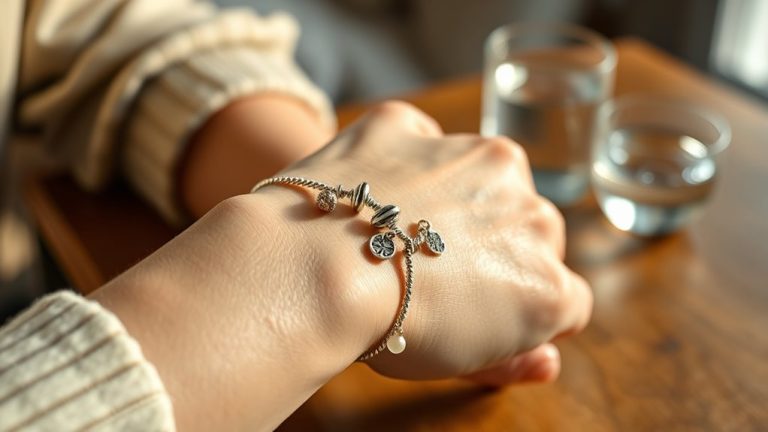
It’s essential to avoid all other jewelry like bracelets, watches, or necklaces since they pose hygiene and safety risks.
Keeping this in mind helps maintain cleanliness and meet food safety standards.
And remember, there’s more to know about managing jewelry and professional appearance safely.
Understanding Jewelry Restrictions in Food Handling

Although jewelry can express personal style, you need to follow strict guidelines when handling food to guarantee safety.
Food workers face jewelry restrictions to prevent food contamination and physical hazards.
Most food safety regulations allow only a plain wedding band without stones or engravings during food handling.
Intricate rings can trap bacteria and food particles, increasing contamination risks.
While minimal jewelry like small stud earrings near the earlobe is sometimes allowed, policies vary by location.
Facial piercings and necklaces are usually discouraged or must be removed to avoid hazards.
Understanding jewelry in food service is essential because local health departments and workplace rules dictate what jewelry is allowed.
Staying informed about these jewelry restrictions helps you maintain compliance and protect food safety.
Types of Jewelry Permitted for Food Handlers

You’ll find that only a plain wedding band without stones or engravings is usually allowed while handling food.
Some workplaces may also permit small, simple stud earrings, but policies can vary widely.
It’s important to know your specific workplace rules to stay compliant and safe.
Permitted Jewelry Types
When handling food, you should wear only jewelry that minimizes contamination and safety risks.
For food safety, the most commonly permitted jewelry includes a plain wedding band without stones, engravings, or grooves. Small, unobtrusive stud earrings close to the earlobe are usually acceptable, depending on local jewelry restrictions.
If you need to wear a medical alert bracelet, make sure it’s smooth, non-porous, and sanitized regularly.
Avoid jewelry in food preparation areas that could harbor bacteria or fall into food, such as bracelets, necklaces, or dangling earrings.
Sticking to appropriate jewelry helps prevent contamination risks and keeps your workspace safe.
Always check your local guidelines for food handler jewelry to ensure compliance with permitted jewelry types and maintain food safety standards.
Wedding Band Specifications
Since maintaining food safety is vital, you should wear only a plain wedding band without stones, engravings, or textured surfaces while handling food.
Your wedding band must be made from non-porous materials like stainless steel, medical-grade plastics, or silicone to guarantee easy sanitation.
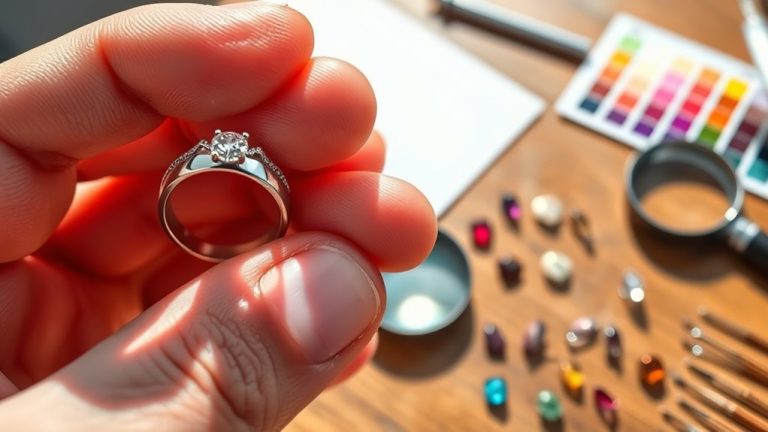
Avoid rings with intricate designs, grooves, or stones, as they can trap dirt and bacteria, increasing contamination risks.
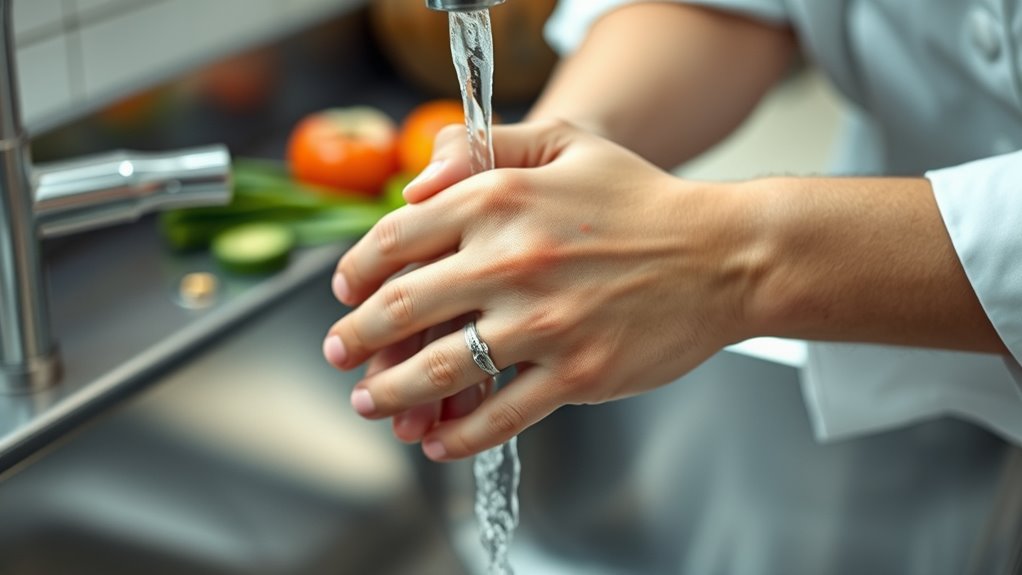
The ring specifications also require your plain wedding ring to fit snugly without sharp edges to prevent glove tears or injury during food prep.
Some regulations allow wearing a wedding band under gloves, but always remove jewelry when gloves aren’t used.
Workplace Jewelry Policies
Although workplace jewelry policies can differ, food handlers generally can wear only a plain, smooth wedding band without any stones or engravings.
These jewelry restrictions aim to support food safety by minimizing contamination risks during food preparation.
You’ll often find that small stud earrings are allowed, but bracelets, watches, and necklaces must be removed according to workplace guidelines.
Employers enforce jewelry removal to comply with food handler regulations and contamination prevention practices.
Here’s a quick overview:
| Jewelry Type | Allowed or Not Allowed |
|---|---|
| Plain wedding band | Allowed |
| Small stud earrings | Sometimes allowed |
| Bracelets | Not allowed |
| Watches | Not allowed |
| Necklaces | Not allowed |
Following these jewelry policies ensures you meet food safety standards and maintain a hygienic food prep environment.
Risks Associated With Wearing Jewelry During Food Preparation

When you wear jewelry while preparing food, it can trap bacteria and food particles, raising the risk of contamination.
Loose pieces might even fall into dishes, creating physical hazards for anyone eating.
Plus, jewelry can tear gloves or interfere with proper handwashing, making it harder to keep things safe and clean.
Contamination Risks
If you wear jewelry like rings, bracelets, or watches while preparing food, you increase the risk of contamination. These items can trap bacteria and food particles.
Jewelry that has stones or intricate designs is especially concerning, as it creates crevices where germs can hide. This makes proper handwashing less effective, elevating the risk of foodborne illness.
Plus, wearing jewelry can cause gloves to tear. When that happens, their protective barrier is compromised, allowing pathogens direct access to food.
And let’s not forget about loose jewelry. Items like earrings or necklaces can fall into food, acting as a contaminant and violating food safety regulations.
To maintain food preparation hygiene, it’s best to avoid wearing jewelry during food handling. This simple step can help reduce contamination risks and ensure compliance with safety standards effectively.
Physical Hazards
Beyond contamination concerns, wearing jewelry during food preparation introduces several physical hazards you need to watch out for.
Jewelry contamination isn’t just about bacteria; it also poses risks to food safety through physical hazards. Here are key risks to consider:
- Jewelry like rings and bracelets can trap food particles and bacteria, increasing the risk of contamination in the food processing environment.
- Intricate designs or stones are harder to clean, harboring pathogens that compromise food handler hygiene.
- Jewelry can fall into food, creating foreign objects that cause choking hazards or are difficult to detect, threatening food contact safety.
- Wearing jewelry may tear gloves or reduce their effectiveness, further increasing contamination risks.
To ensure jewelry safety, avoid wearing anything that compromises food safety during food preparation.
Guidelines for Wearing Jewelry When Using Gloves
Although gloves provide a protective barrier, it’s best to remove jewelry before putting them on. This helps prevent glove perforation and contamination.
Wearing items like rings, bracelets, or watches under gloves can harbor bacteria, which compromises food safety. Food handlers should practice jewelry removal to reduce contamination risks during food prep.
While most jewelry is discouraged, a plain wedding band without stones is often considered acceptable under gloves in some regions.
Medical alert bracelets may be allowed, but they should be covered or worn outside the gloves.
Proper glove use means changing gloves immediately if they become damaged or contaminated, and always removing jewelry beforehand.
Managing Jewelry Policies in Food Service Environments
When managing jewelry policies in food service environments, it’s important to have clear rules that specify which items are allowed and which aren’t.
Most food safety regulations permit only plain, smooth wedding bands as allowable jewelry for food handlers.
To minimize contamination risk and ensure personal hygiene during food preparation, follow these steps:
- Define jewelry restrictions clearly in your food safety policies. Specify that only wedding bands without stones or engravings are permitted for food handlers.
- Communicate and enforce local regulations and workplace-specific rules that may be stricter.
- Provide regular training so staff understand the importance of compliance.
- Supervise and remind employees to remove prohibited items like bracelets, watches, or facial piercings before handling food.
This approach guarantees adherence to jewelry restrictions and supports a safe food environment.
Safe Alternatives to Jewelry for Maintaining Professional Appearance
Keeping jewelry to a minimum in food service helps reduce contamination risks.
But you don’t have to sacrifice a professional appearance.
Instead of simple jewelry that may violate jewelry restrictions, opt for hygienic alternatives like branded uniforms, aprons, and name tags that align with food industry standards.
Hairnets, beard guards, and caps serve as clean accessories promoting personal hygiene and contamination prevention.
Embroidered clothing or logo patches also enhance your professional appearance without adding contamination risks.
And if you’re thinking about watches and bracelets, consider replacing them with appropriate accessories designed for food safety attire.
This way, you can maintain both style and compliance.
By choosing these clean, safe options, you meet food safety guidelines while presenting a polished look.
This balance ensures you stay within regulations and uphold the high standards expected in the food service environment.
Frequently Asked Questions
What Is the Only Allowed Jewelry When Preparing Food?
You can only wear a plain wedding band without stones or engravings while preparing food.
Small stud earrings might be allowed, but it’s best to avoid bracelets, necklaces, or watches.
This helps keep everything sanitary and safe.
What Jewellery Is Acceptable When Working With Food?
You can wear a plain wedding band without stones or engravings.
Possibly small, smooth stud earrings that fit close to your earlobes are also acceptable.
Avoid dangling or intricate pieces to keep food safe and contamination-free.
What Is the Only Acceptable Jewelry According to Servsafe?
You can only wear a plain wedding band without stones or engravings when preparing food according to ServSafe.
Other jewelry must be removed to avoid contamination and maintain proper food safety standards in your workplace.
It’s crucial to adhere to these guidelines to ensure the safety of the food you are handling.
Can You Wear Jewelry While Prepping Food?
Jewelry and food prep don’t mix like oil and water.
You can only wear a plain wedding band without stones or engravings.
Remove everything else to keep things safe, clean, and contamination-free while working.
Conclusion
When you step into the kitchen, picture your hands as tools of care—clean, bare, and ready.
Wearing only the simplest jewelry, like a plain band, keeps your workspace safe and spotless.
This helps to eliminate hidden risks that can compromise food safety.
By following jewelry guidelines, you protect the food and yourself, ensuring every dish shines with professionalism.
Remember, less is more when preparing food.
Your hands should tell a story of hygiene and dedication, not distraction or danger.
In conclusion, wearing minimal jewelry, like a plain band, is essential in a kitchen setting.
It promotes cleanliness and reduces the risk of contamination.
Prioritize food safety and hygiene in your culinary practices, and let your dedication show through your attention to detail.
Your kitchen should be a space of care, free from distractions, where every dish is made with love and professionalism.