10 Easy Steps to Remove Tarnish From Jewelry
You can easily remove tarnish from your jewelry with a few simple steps.
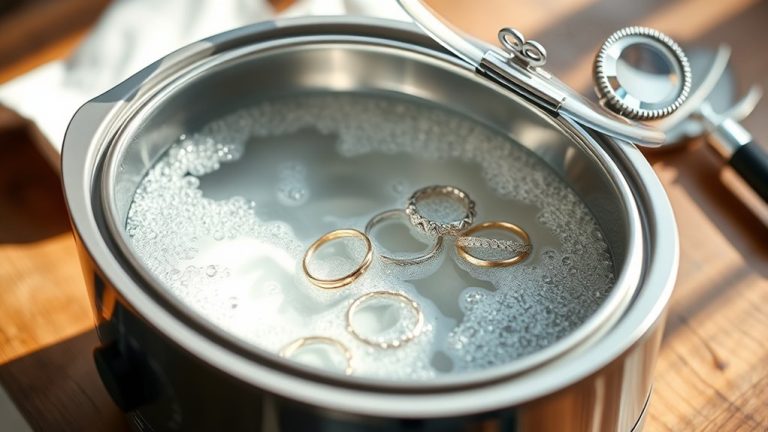
Start by lining a dish with aluminum foil, shiny side up, and lay your pieces flat on it.
Next, sprinkle baking soda over the jewelry, followed by pouring hot water to cover everything.
Let them soak for 10-15 minutes before rinsing with cool water.
Once rinsed, dry gently with a soft cloth, and don’t forget to buff it a bit to restore that beautiful shine.
Following these simple steps regularly keeps your jewelry sparkling, ensuring it always looks its best.
And guess what? There’s even more you can do to maintain its brilliance!
Understand Why Jewelry Tarnishes

Although it may seem frustrating, your silver jewelry tarnishes because it reacts with sulfur and oxygen in the air, forming a dull, dark layer called silver sulfide.
This tarnish is a result of a chemical reaction known as oxidation.
Over time, exposure to pollutants, moisture, and certain chemicals accelerates this process, causing your silver pieces to lose their shine.
Even durable silver and sterling silver aren’t immune to this natural discoloration.
Understanding that tarnishing is a normal chemical reaction—not a flaw—helps set realistic expectations for your jewelry care.
Regular cleaning is essential to remove the oxidation and restore your silver’s brilliance.
Gather Supplies Needed for Cleaning

Before you begin cleaning your tarnished jewelry, gather all the necessary supplies to guarantee a smooth process.
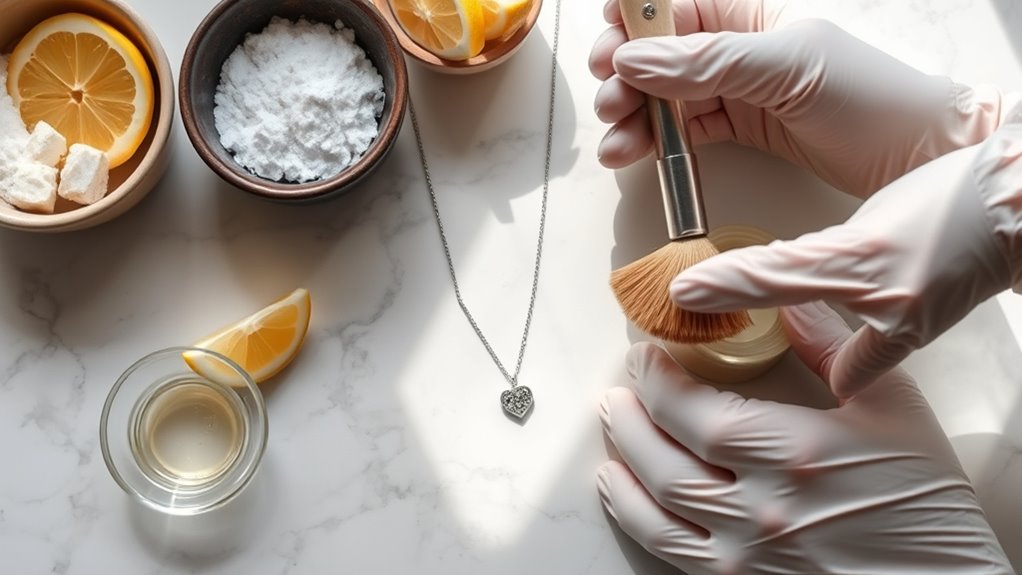
You’ll need aluminum foil, baking soda, and hot water for effective tarnish removal.
Also, have a soft cloth ready to dry and buff your jewelry after cleaning.
Using gloves is wise to protect your skin from hot water.
A glass or ceramic dish will hold the solution during jewelry cleaning.
| Supply | Purpose |
|---|---|
| Aluminum foil | Facilitates chemical reaction |
| Baking soda | Reacts with tarnish |
| Soft cloth | Dries and polishes jewelry |
Having these items on hand will streamline your jewelry cleaning and restore shine efficiently.
Line a Dish With Aluminum Foil

When you line a shallow dish with aluminum foil, place the shiny side facing up to boost the tarnish removal process.
Make sure the foil covers the entire bottom of the dish smoothly, without wrinkles or tears, for even contact during cleaning.
Choose a dish large enough to hold your jewelry without crowding, ensuring each piece can be cleaned effectively.
Before lining the dish, check that the aluminum foil is clean and free from dirt or grease to avoid contaminating your jewelry.
For the best tarnish removal results, use new or freshly cleaned aluminum foil each time.
This helps maximize the chemical reaction needed to restore your jewelry’s shine, making the cleaning process simple and efficient.
Place Jewelry on the Foil Carefully
Place each piece of jewelry carefully on the foil, making certain none overlap or touch to prevent scratches.
To get the best results, line your shallow dish with shiny side-up aluminum foil first.
Then, arrange your jewelry flat on the foil surface. This flat placement ensures each item makes direct contact with the aluminum foil, which is vital for the tarnish removal process to work effectively.
Avoid leaving gaps or loose pieces that could shift and lose contact during cleaning.
Handle your jewelry gently as you place it to prevent bending or dropping, which could cause damage.
Sprinkle Baking Soda Over Jewelry
Once your jewelry rests securely on the foil, sprinkle about 2 tablespoons of baking soda evenly over each piece.
Make sure the baking soda covers all surfaces of your tarnished silver to guarantee effective tarnish removal. Baking soda acts as a gentle abrasive, helping to lift grime without scratching your precious items.
It also initiates a chemical reaction that breaks down tarnish, making your jewelry cleaning more efficient.
Using enough baking soda creates a uniform layer, setting the stage for the next step where hot water will activate this reaction.
Pour Boiling Water to Cover Jewelry
Pour enough boiling water over your jewelry to completely cover each piece in the foil-lined dish.
Using boiling water is essential because its high temperature speeds up the chemical reaction between the baking soda and tarnish, helping to remove tarnish more effectively.
Boiling water accelerates the reaction between baking soda and tarnish for a faster, more effective clean.
Make sure every piece is fully submerged for even jewelry cleaning. This guarantees the soaking process works uniformly, allowing tarnish to transfer from your jewelry to the foil.
Handle the boiling water carefully to avoid burns or spills during this step.
Once you’ve poured the water, the chemical reaction begins immediately, activating the tarnish removal.
After soaking, let your jewelry cool slightly before rinsing and drying to prevent water spots or further tarnish, keeping your pieces shiny and clean.
Let Jewelry Soak to Remove Tarnish
After covering your jewelry with boiling water, let it soak in the baking soda and aluminum foil solution for 10 to 15 minutes.
This soak allows a chemical reaction between the baking soda, aluminum foil, and hot water to transfer tarnish from your jewelry onto the foil.
Make sure your pieces are fully submerged to maximize contact with the solution, enhancing the cleaning jewelry process without any scrubbing.
During soaking, check your jewelry periodically to avoid overexposure, especially if the items are delicate.
This method effectively removes tarnish by breaking it down and pulling it away from the metal.
Rinse Jewelry Thoroughly With Water
To prevent any leftover baking soda or cleaning solution from harming your jewelry, you’ll want to wash it thoroughly with lukewarm or cool water.
Thoroughly rinse jewelry with lukewarm or cool water to remove any leftover baking soda or cleaning solution.
This step removes any residue that could cause tarnish or damage over time.
Avoid hot water, as it can shock delicate gemstones or settings.
Gently hold your jewelry under running water or briefly submerge it in a bowl of clean water to ensure all soap or cleaning agents wash away completely.
Rinsing immediately after cleaning helps prevent water spots and mineral buildup that dull your jewelry’s shine.
After rinsing, carefully pat dry with a soft cloth to avoid scratching or leaving moisture behind.
Proper rinsing keeps your jewelry clean, bright, and protected from future tarnish.
Dry Jewelry With a Soft Cloth
Once you’ve rinsed your jewelry thoroughly, the next step is to dry it carefully with a soft cloth.
Using a dry cloth made of microfiber or cotton designed for jewelry polishing helps remove residual moisture without scratching delicate surfaces.
This step is vital to prevent tarnish and water spots that can dull your jewelry’s shine.
Avoid rough fabrics or paper towels as they may cause micro-scratches.
Focus on drying every crevice and setting to keep your pieces clean and polished.
Here’s how to dry your jewelry effectively:
- Gently pat with a soft cloth to remove moisture.
- Use a jewelry polishing cloth to clean and polish.
- Make sure intricate areas are completely dry to prevent tarnish.
This method keeps your jewelry looking its best while protecting its finish.
Buff Jewelry to Restore Shine
Choose a soft, clean polishing cloth designed specifically for jewelry to guarantee you don’t scratch delicate surfaces.
Use gentle, circular motions with light pressure to bring out a consistent, high-gloss shine.
This technique helps remove any leftover tarnish and keeps your pieces looking their best.
Choosing the Right Cloth
How do you bring back the sparkle in your tarnished jewelry without causing damage?
The key is choosing the right polishing cloth. You want a soft, lint-free cloth designed specifically for jewelry, which lets you gently buff away tarnish without scratching.
Look for one with the right level of abrasiveness, like a microfiber or jewelry cloth, to restore shine effectively.
Keep these tips in mind:
- Use a polishing cloth with gentle abrasiveness to clean without harm.
- Buff in a circular motion, applying light, even pressure.
- Avoid rough fabrics or paper towels that can scratch or leave fibers.
Remember to replace or recondition your cloth regularly to keep it clean and effective for sparkling results every time.
Polishing Techniques for Shine
Although tarnish can dull your jewelry’s shine, you can easily restore its brilliance by buffing it with a soft, clean polishing cloth.
Start by gently rubbing your jewelry in a circular motion using this cloth to lift tarnish and enhance shine.
For extra sparkle, apply a small amount of metal polish or jewelry-specific polish with a soft cloth, then continue to buff until the surface feels smooth and reflective.
Just a heads up—avoid abrasive materials that might scratch your pieces and reduce their luster.
Once polished, wipe the jewelry with a dry, lint-free cloth to remove any residue and boost the shine further.
Regular use of these polishing techniques not only improves tarnish removal but also keeps your jewelry looking radiant over time.
Frequently Asked Questions
How to Remove Tarnish From Jewelry at Home?
You can remove tarnish by lining a bowl with foil, placing jewelry on it,
sprinkling baking soda, pouring boiling water, then rinsing and drying gently.
This quick method restores shine without harsh scrubbing or damage.
How to Remove Tarnish Fast?
Swiftly sparkle your silver by soaking it on shiny foil, sprinkled with baking soda,
then showering with steaming water.
Sit back, soak for minutes, rinse, and rub with a soft cloth.
Tarnish disappears fast!
Is It Better to Clean Jewelry With Alcohol or Peroxide?
You’ll find peroxide better for cleaning jewelry since it brightens and gently removes tarnish.
Alcohol disinfects quickly but may dry out materials.
Always rinse thoroughly and polish afterward to avoid residue or damage.
How to Get Tarnish off Permanent Jewelry?
When you notice tarnish on your permanent jewelry, gently wipe it with a soft cloth dampened in warm, soapy water—
just like morning dew on petals.
Avoid chemicals and scrubbing to keep its shine intact and bond strong.
Conclusion
Now that you’ve gently given your jewelry a little spa day, you’ll notice how it brightens up and feels refreshed.
Tarnish, that sneaky visitor, doesn’t stand a chance when you follow these simple steps.
With just a bit of care and patience, your favorite pieces will sparkle like new, ready to dazzle again.
Keep this easy routine handy, and your jewelry will always look as charming as your smile.
In conclusion, maintaining your jewelry’s sparkle is simple when you follow these easy steps to remove tarnish.
With regular care, your pieces will not only shine brightly but also stay in great condition.
So, keep those tarnish-busting techniques at your fingertips, and let your jewelry continue to dazzle, just like you!