Does Stainless Steel Jewelry Tarnish and How to Keep It Shiny
Stainless steel jewelry is a popular choice for its durability and resistance to tarnish. The secret lies in a chromium oxide layer that acts as a shield against moisture and corrosion.
However, even stainless steel can lose its luster over time due to factors like sweat, acidic skin, pollution, and exposure to harsh chemicals.
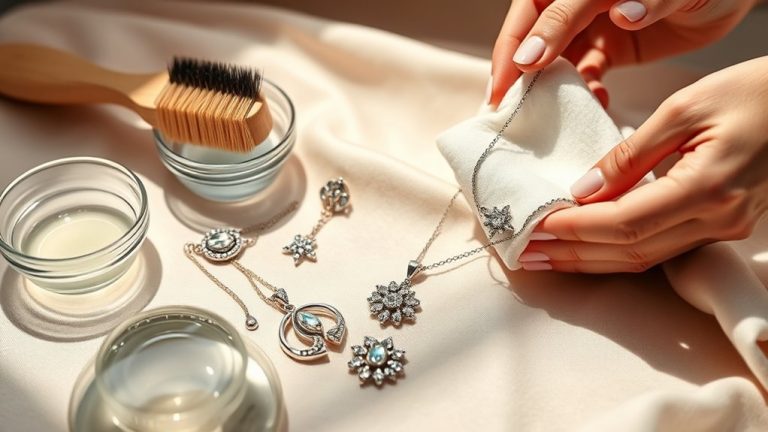
To keep your jewelry looking bright and shiny, it’s essential to follow some simple care tips. Start by gently cleaning your pieces with mild soap and warm water.
Make sure to dry them thoroughly afterward to prevent any moisture from lingering.
Storing your jewelry in a dry place, away from scratches, can also help maintain its sleek appearance.
With just a little effort, you’ll be able to keep your stainless steel jewelry looking its best for years to come!
What Is Stainless Steel and Why Is It Used in Jewelry?

Although stainless steel is often overlooked, it’s a fantastic choice for jewelry because it combines durability with a sleek, shiny look.
When you choose stainless steel jewelry, you get pieces that resist tarnish and maintain their brilliance longer than many other metals. This is thanks to its corrosion resistance, which keeps your jewelry looking fresh even with daily wear.
You’ll appreciate that stainless steel is hypoallergenic, reducing the risk of skin irritation. The secret lies in the chromium oxide layer that naturally forms on the metal’s surface, protecting it from rust and dullness.
This protective layer guarantees your jewelry stays strong and attractive over time, making stainless steel an ideal material for rings, necklaces, and bracelets you can wear every day.
The Protective Role of Chromium in Stainless Steel

Because chromium makes up at least 10.5% of stainless steel, it plays an essential role in keeping your jewelry resistant to rust and tarnish.
This element forms a thin, transparent chromium oxide layer on the surface of the alloy.
This protective layer acts as a barrier against corrosion, preventing moisture and oxygen from damaging the metal beneath.
What’s impressive is that the oxide layer is self-healing; if scratched, it quickly reforms to maintain tarnish resistance.
The higher the chromium content in your stainless steel jewelry, the more durable and long-lasting this protection becomes.
Thanks to chromium’s role, your stainless steel pieces stay shiny and corrosion-free.
This makes them an excellent choice for everyday wear without worrying about tarnishing or rust.
Common Causes of Tarnish on Stainless Steel Jewelry

You’ll notice your stainless steel jewelry can tarnish when exposed to environmental factors like humidity and pollution.
Your skin’s natural oils, sweat, and chemicals from lotions or perfumes also play a big role in breaking down the protective layer.
Understanding these common causes helps you protect your pieces and keep them shining longer.
Environmental Factors
When you wear stainless steel jewelry regularly, environmental factors can quickly dull its shine.
Humidity and moisture in the environment promote tarnish and discoloration.
Pollutants like sulfur compounds and airborne toxins react with the metal, causing corrosion and stains.
Saltwater or chlorinated pools speed this process up if you don’t rinse and dry your jewelry promptly.
| Environmental Factor | Effect on Jewelry |
|---|---|
| Humidity | Dulls shine, discoloration |
| Sulfur compounds | Tarnish, staining |
| Saltwater | Accelerates corrosion |
| Airborne pollutants | Causes discoloration |
| Moisture | Promotes tarnish |
Understanding these factors helps you protect your jewelry and keep it looking shiny and new.
Skin and Chemicals
Environmental factors certainly play a big role in tarnishing stainless steel jewelry, but what’s happening closer to your skin can have an even greater impact.
Your skin’s pH varies, and if it’s more acidic, it can speed up tarnish on your jewelry. Sweat and body oils build up on the metal’s surface, causing dullness and minor corrosion over time.
Cosmetics, lotions, perfumes, and hairsprays contain chemicals that react with stainless steel, accelerating tarnish. Plus, friction from daily wear can wear away the protective chromium oxide layer, exposing the metal to these tarnishing agents.
Humidity and contact with other metals also worsen corrosion, so keeping your jewelry clean and dry helps maintain its shine.
Preventing premature discoloration caused by skin and chemicals can really make a difference!
How Skin Chemistry Affects Stainless Steel Jewelry
Your skin’s pH level plays a big role in how stainless steel jewelry holds up.
More acidic skin speeds up tarnish.
Oils, sweat, and even the lotions or perfumes you use can break down the metal’s protective layer, causing dullness.
Understanding how your skin chemistry interacts with your jewelry helps you keep it looking shiny longer.
Skin Ph Influence
Because skin pH varies from person to person, it plays a key role in how stainless steel jewelry reacts over time.
If your skin pH is more acidic (below 5.5), you might notice oxidation forming on your jewelry’s surface, causing dullness or discoloration.
On the other hand, alkaline skin (above 6.0) tends to reduce the risk of tarnish and staining.
Natural oils and sweat can temporarily shift your skin pH, influencing how the metal interacts with your skin.
To keep your stainless steel jewelry looking its best, regular cleaning is essential.
Proper cleaning removes buildup from oxidation and natural oils, preventing discoloration and maintaining shine regardless of your unique skin chemistry.
Impact of Body Oils
Although stainless steel is known for its durability, the natural oils your body produces can affect its appearance over time.
Body oils and skin oils can leave a film on your stainless steel jewelry, leading to dullness and even tarnish. Here’s what you should know:
- Body oils mix with sweat, creating deposits that dull the jewelry’s shine.
- Acidic skin oils may cause micro-corrosion by breaking down the protective chromium oxide layer.
- Frequent contact with oily skin increases the risk of discoloration and tarnish.
- To prevent buildup and micro-corrosion, clean your jewelry regularly with mild soap and water.
Taking a few simple steps can help keep your jewelry looking its best!
Reaction to Cosmetics
Besides body oils, the chemicals in cosmetics can also affect the appearance of your stainless steel jewelry.
Cosmetics like lotions, perfumes, and makeup contain ingredients that trigger chemical reactions with the metal’s surface. This can cause discoloration and dullness over time.
These chemicals can break down the stainless steel’s protective layer, making it vulnerable to tarnish and corrosion.
If you apply cosmetics before putting on your jewelry, residues may get trapped on the surface. This can accelerate tarnish and reduce shine.
Certain ingredients, such as alcohols and acids, can stain or corrode the metal if they remain in contact too long.
To keep your jewelry looking its best, avoid direct contact with cosmetics.
And remember to wipe it regularly to remove any residues that might cause damage.
The Impact of Cosmetics and Environmental Factors
When you wear stainless steel jewelry regularly, the cosmetics you apply and the environment around you play a big role in how your pieces look over time.
Chemicals in cosmetics like lotions and perfumes can react with the metal, causing discoloration. Environmental pollutants, such as sulfur compounds, also contribute to oxidation, dulling your jewelry’s shine.
Factors to watch include:
- Cosmetics that break down the protective layer on stainless steel.
- Skin pH—acidic skin speeds up corrosion.
- Humidity, which promotes oil and dust buildup, increasing tarnish risk.
- Frequent exposure to pollutants that accelerate surface damage.
Keeping these factors in mind can help you maintain the beauty of your stainless steel jewelry!
Effects of Cleaning Agents on Stainless Steel Surfaces
If you want to keep your stainless steel jewelry looking its best, be careful with the cleaning agents you choose.
Harsh chemicals like bleach, chlorine, and ammonia can break down the protective barrier on your jewelry. This increases tarnish risk and can cause chemical damage.
Abrasive cleaning methods can scratch the surface, leading to discoloration and dullness over time.
To maintain its shine, stick to regular cleaning with mild solutions that won’t harm the metal.
After cleaning, always rinse thoroughly and dry completely to remove residual chemicals that might continue to damage the surface.
Avoiding harsh or abrasive products preserves the chromium oxide layer. This ensures your stainless steel jewelry stays vibrant and tarnish-free for longer.
Best Practices for Cleaning Stainless Steel Jewelry at Home
Although stainless steel is durable, you should clean your jewelry gently at home to keep its shine intact.
To clean stainless steel jewelry effectively, follow these steps:
To clean stainless steel jewelry effectively, use gentle soap, warm water, and a soft cloth for a lasting shine.
- Mix mild soap with warm water and soak the jewelry for 5-10 minutes to loosen dirt.
- Use a soft-bristled toothbrush or soft cloth to gently scrub the piece, moving along the metal’s grain to avoid scratches.
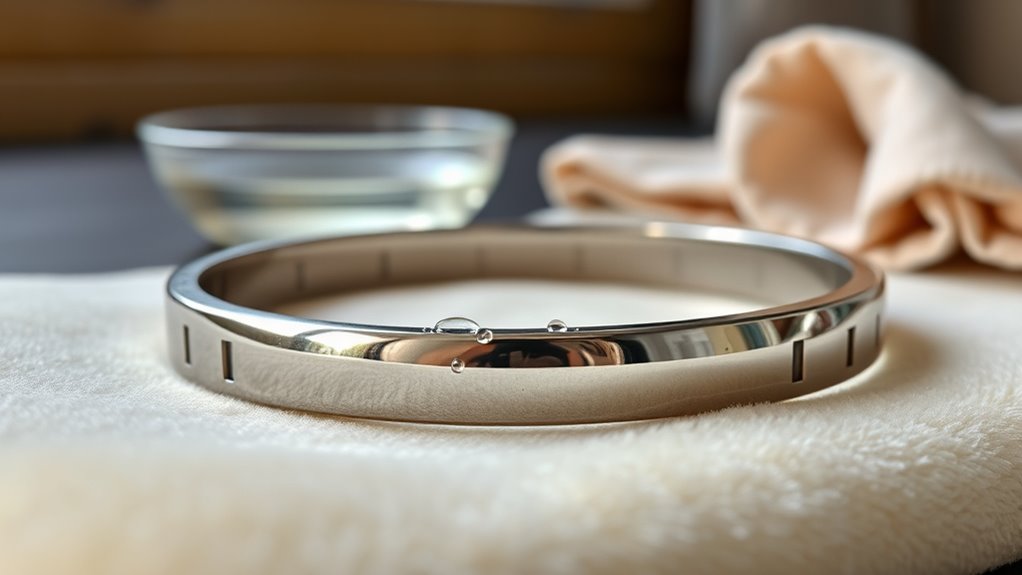
- Rinse thoroughly with warm water to remove all soap residue, preventing water spots.
- Dry completely with a soft, lint-free cloth and polish the jewelry with a clean microfiber cloth to restore its shine.
Taking these simple steps will help your stainless steel jewelry look its best for years to come!
Tips for Proper Storage to Prevent Tarnishing
Keeping your stainless steel jewelry clean is just the first step; how you store it plays a big role in maintaining its shine and preventing tarnish.
Proper storing means keeping your pieces dry and away from moisture.
Use individual pouches or soft-lined jewelry boxes to prevent scratches.
Incorporate anti-tarnish strips or silica gel packets in your storage to absorb humidity and pollutants.
Always dry your jewelry thoroughly before placing it in storage.
Also, keep pieces separate to avoid chemical reactions that reduce the metal’s resistant properties.
| Storage Tip | Reason |
|---|---|
| Cool, dry place | Prevents moisture buildup |
| Individual pouches | Avoids scratches and surface damage |
| Anti-tarnish strips | Absorbs moisture and air pollutants |
| Separate pieces | Prevents metal interactions |
| Dry jewelry before storing | Eliminates residual moisture |
Polishing Techniques to Restore Shine
You’ll want to choose a polish that’s gentle and designed for stainless steel to avoid damaging your jewelry.
Use soft cloths and avoid abrasive materials to keep the surface smooth and scratch-free.
With the right technique, you can easily restore your jewelry’s shine without risking harm.
Choosing the Right Polish
When restoring the shine to your stainless steel jewelry, choosing the right polish makes all the difference.
To achieve a mirror-like shine and effective shine maintenance, follow these steps:
- Use a stainless steel polish or metal polish specifically designed for jewelry to avoid damage.
- Apply polish sparingly and follow the manufacturer’s instructions for best results.
- Always buff with a soft polishing cloth or microfiber cloth to gently restore luster without scratching.
- Avoid abrasive materials like steel wool or scouring pads, which can harm the surface.
Regular polishing every few months keeps your jewelry bright and prevents dullness from everyday wear.
Gentle Polishing Methods
Selecting the right polish sets the stage for effective shine restoration, but how you apply it makes all the difference.
Use a soft microfiber cloth to gently buff your stainless steel jewelry.
Apply a small amount of polishing paste or a non-abrasive metal polish, rubbing in circular motions following the metal’s grain.
This technique helps erase dullness and brings back the shine without scratching.
If tarnish persists, soak your jewelry in a vinegar and water solution for 15-30 minutes before polishing.
Regular maintenance with a clean cloth keeps your pieces mirror-like and dazzling.
| Step | Action |
|---|---|
| Soak | Vinegar and water for stubborn dullness |
| Apply | Polishing paste or non-abrasive polish |
| Buff | Microfiber cloth in circular motions |
Avoiding Abrasive Materials
Although polishing stainless steel jewelry can restore its shine, it’s important to be cautious. Using abrasive materials can cause permanent scratches and damage.
To keep your jewelry looking its best without risking surface damage, follow these guidelines:
- Use a soft microfiber or jewelry polishing cloth to gently polish and buff away dullness.
- Avoid abrasive materials like steel wool, scouring pads, or rough scrub brushes that can create scratches.
- For deeper cleaning, apply a non-abrasive metal polish made specifically for stainless steel. Just be sure to follow the instructions carefully.
- Lastly, refrain from harsh chemicals like bleach or ammonia, as these can dull or discolor the surface.
Daily Care Habits to Maintain Stainless Steel Jewelry Appearance
Since stainless steel jewelry can accumulate oils, sweat, and dirt daily, you should wipe it gently with a soft, lint-free cloth every day to keep its shine intact.
For deeper cleaning stainless steel jewelry, use mild soap mixed with water regularly—this maintains the shine without harming the protective layer.
Avoid harsh chemicals like bleach or chlorine, as they can damage that chromium coating.
When not wearing your pieces, focus on proper storage: keep them in dry, cool compartments or pouches to prevent scratches and moisture exposure.
Also, remove your jewelry before any activity involving water or excessive sweat, such as swimming or showering, to preserve its lustrous look.
These simple daily care habits help your stainless steel jewelry stay bright and beautiful for years.
Frequently Asked Questions
How Do You Keep Stainless Steel Jewelry From Tarnishing?
You keep stainless steel jewelry from tarnishing by storing it in dry, airtight containers.
Cleaning it regularly with mild soap is also important.
Avoid harsh chemicals, and consider using anti-tarnish strips or silica gel packets.
These can help absorb moisture and maintain its shine.
How Can I Make My Stainless Steel Jewelry Shine Again?
You can make your stainless steel jewelry shine again by gently rubbing it with a baking soda paste.
After that, rinse it with warm water and dry it thoroughly.
Finally, buff it with a soft cloth for that extra shine.
If you’re dealing with stubborn tarnish, you can soak the jewelry briefly in vinegar.
This should help restore its luster!
How Do You Make Stainless Steel Jewelry Sparkle?
Oh, just wave a magic wand!
But since you don’t have one, gently scrub with baking soda paste.
Rinse well, then buff with a microfiber cloth.
For extra sparkle, toothpaste works wonders—just don’t forget to rinse!
What Are the Downsides of Stainless Steel Jewelry?
You’ll notice stainless steel can scratch or dull over time, especially if exposed to harsh chemicals or lotions.
Some lower-quality alloys might cause skin reactions or tarnish, so choose high-grade pieces and care for them properly.
Conclusion
You don’t have to worry much about stainless steel jewelry tarnishing if you care for it right.
For example, Sarah noticed her bracelet losing its shine after a few months, but she brought it back to life by regularly cleaning it with mild soap.
Storing it away from moisture also helped maintain its luster.
By following simple daily habits like this, you can keep your stainless steel pieces looking bright and new for years to come.
With just a little effort, your jewelry can remain shiny and ready to wear anytime!
In conclusion, stainless steel jewelry is durable and resistant to tarnishing.
With regular cleaning and proper storage, you can easily maintain its shine.
So, embrace these easy habits and enjoy your stunning stainless steel jewelry for years ahead!