How Can You Tell If Jewelry Is Sterling Silver Simply
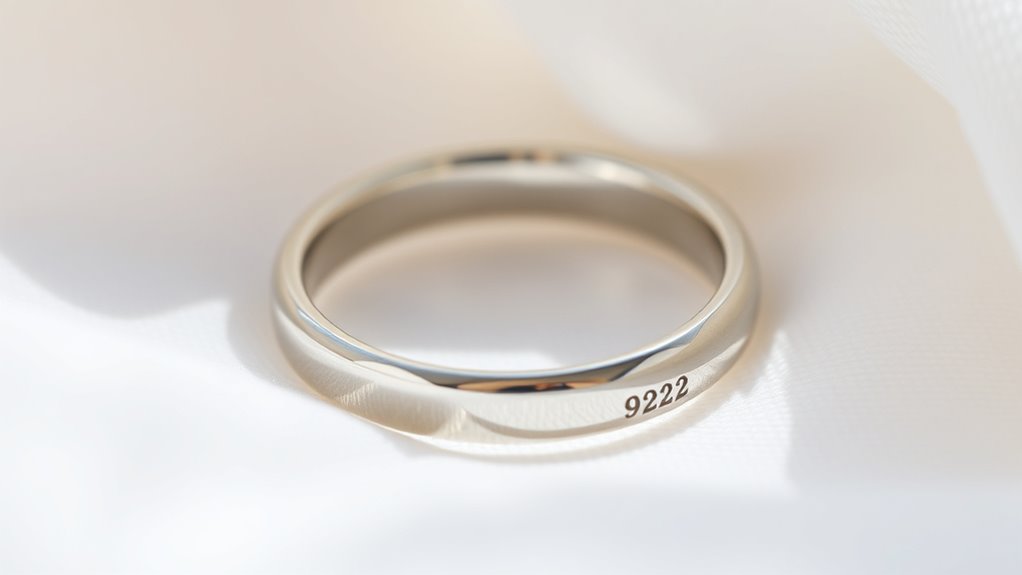
You can easily tell if your jewelry is sterling silver by looking for the “925” hallmark. This marking indicates that the piece is made of 92.5% pure silver, which is the standard for sterling silver.
Another quick test is to check if the jewelry is magnetic. Silver will not stick to a magnet, so this can be a simple way to identify it.
Additionally, take note of any natural tarnish. Genuine silver will show tarnish in crevices, creating a darkened patina, rather than uneven discoloration.
If you’re still unsure about your piece, it’s best to consult with a professional expert who can conduct further tests.
Keep exploring to discover more straightforward methods to verify the authenticity of your silver jewelry!
Understand What Sterling Silver Means

Although sterling silver contains mostly pure silver, it’s actually an alloy made up of 92.5% silver and 7.5% other metals, usually copper.
This specific composition gives sterling silver its strength and durability while maintaining high purity.
When you’re checking jewelry, look for the hallmark or stamp that indicates genuine sterling silver.
Common markings include “925” or “Sterling,” signaling the silver content and authenticity.
These stamps are vital because they confirm the alloy’s purity and help distinguish real sterling silver from imitations.
Genuine sterling silver typically shines brightly and feels solid, though it may develop a natural tarnish over time.
Understanding these key points about sterling silver’s composition and markings helps you confidently identify authentic pieces every time.
Identify the 925 Stamp and Other Hallmarks

When checking for sterling silver, look for common marks like “925,” “.925,” or the word “Sterling” stamped inside rings or near clasps.
Make sure these hallmarks are clear and neatly engraved, as faded or uneven stamps could signal a fake.
Keep in mind that authentic pieces usually have discreet markings, so don’t rely on stamps alone to verify silver.
Common Sterling Marks
Where can you find the hallmark that proves your jewelry is genuine sterling silver?
Look closely for sterling marks like “925,” “.925,” “Sterling,” or “S925” stamped discreetly on your piece. The 925 stamp indicates 92.5% pure silver, the standard for genuine sterling silver.
These hallmarks often appear inside of a ring, on necklace clasps, or earring backs.
Remember, stamped jewelry should have clear, consistent markings; uneven or missing stamps might mean it’s plated or fake.
Here’s a quick guide to common sterling silver stamps:
| Stamp | Meaning | Typical Location |
|---|---|---|
| 925 | 92.5% pure silver | Inside ring, clasps |
| Sterling | Genuine sterling silver | Earring backs, pendants |
| Ster | Abbreviation of sterling | Bracelets, rings |
| S925 | Silver 92.5% purity | Chains, rings |
| .925 | Decimal form of 925 | Various jewelry pieces |
Hallmark Location Tips
Finding the hallmark that proves your jewelry is genuine sterling silver often means knowing exactly where to look.
Typically, the hallmark stamp like “925,” “.925,” or “Sterling” is engraved in discreet locations such as the inner surface of rings, the back or inner surfaces of bracelets and earrings, or on clasps and behind pendants.
These small, clear engravings serve as reliable identification marks.
Sometimes, you might also find additional stamps indicating the country of origin near the 925 mark.
When inspecting, make sure the hallmark is sharp and not faint or scratched, as a clear stamp confirms authenticity.
Perform the Magnet Test on Your Jewelry

Since sterling silver isn’t magnetic, holding a strong magnet near your jewelry can help you spot fakes if the piece sticks.
Keep in mind, though, some parts like clasps might react even if the silver is genuine, so focus on the main body.
Use this quick test as a first step, but combine it with other checks for a sure result.
Silver’s Non-Magnetic Nature
Although sterling silver contains other metals, it’s primarily made of 92.5% pure silver, which isn’t magnetic.
This non-magnetic nature makes the magnet test a simple way to check your jewelry’s authenticity.
When you hold a magnet near sterling silver, it shouldn’t stick or show attraction.
If the magnet clings firmly, the piece likely contains base metals or is plated, not genuine silver.
Keep in mind, small parts like clasps may be magnetic since they’re sometimes made of steel.
So, focus the test on the main body of the jewelry.
Also, if you notice discoloration alongside magnetism, it’s a sign the metal isn’t pure silver.
Using a magnet helps you quickly separate true sterling silver from fakes or plated items.
Magnet Test Limitations
While the magnet test offers a quick way to check your jewelry, it has its limitations and shouldn’t be your only method for verifying authenticity.
Sterling silver is non-magnetic, but some magnetic metals in fake silver can cause slight attraction.
Conversely, some counterfeit pieces may be non-magnetic or falsely stamped as authentic sterling silver.
Use the magnet test as a preliminary check, then combine it with visual inspection and hallmark verification for more reliable results.
| Test Method | What It Detects | Limitation |
|---|---|---|
| Magnet Test | Magnetic attraction | False negatives/positives possible |
| Visual Inspection | Surface detail, wear | Requires experience |
| Hallmark Verification | Authenticity stamps | Can be forged |
Rely on multiple methods to avoid mistaking base metal for genuine silver.
Observe Tarnish Patterns on the Metal
When you examine tarnish on sterling silver, pay close attention to its pattern and texture.
Authentic sterling silver develops natural tarnish through oxidation, creating darkened or blackened areas, especially in crevices.
These tarnish patterns appear even and dull, unlike fake silver, which often shows uneven discoloration or yellowish patches.
When you rub real silver with a white cloth, it frequently leaves black or gray residue, confirming oxidation.
This gradual, consistent tarnish is a strong sign you’re dealing with authentic sterling silver.
If the tarnish can be removed through gentle polishing, revealing a bright, shiny surface beneath, that’s another clue you have real silver.
Being able to identify these subtle differences in tarnish helps you verify genuine sterling silver quickly and reliably.
Conduct the Ice Cube Thermal Conductivity Test
Because sterling silver conducts heat quickly, you can test its authenticity by placing an ice cube on the jewelry and watching how fast it melts.
Since silver has high thermal conductivity, the ice cube should start melting within seconds on genuine sterling silver.
If it melts slowly or remains solid, the metal likely isn’t authentic sterling silver.
Make sure the jewelry is clean and dry to avoid affecting heat transfer.
This test is a simple way to check for authentic sterling silver, but use it alongside other tests for best results.
| Ice Cube Behavior | Heat Transfer Speed | Metal Type |
|---|---|---|
| Melts rapidly | High | Authentic Sterling Silver |
| Melts slowly | Low | Fake or Plated Metal |
| Remains solid | Minimal | Non-Silver Metal |
Check for Signs of Silver Plating Wear
If you notice areas on your jewelry where the silver looks thin, faded, or discolored, these are likely signs of silver plating wearing off and revealing the base metal underneath.
Silver plating wear often appears as peeling or flaking patches, especially on edges and clasps where frequent contact occurs.
You might see discoloration—yellowish or coppery tones—indicating base metal exposure.
Unlike sterling silver, which has a solid composition, plated items have a thin silver layer that can wear through, showing oxidation or tarnish on the underlying metal.
Keep an eye out for these wear signs, as exposed base metal means the piece isn’t solid sterling silver.
Noticing peeling, flaking, or discoloration helps you identify silver-plated jewelry versus genuine sterling silver quickly and accurately.
Seek Professional Verification When Needed
Noticing wear or discoloration on your jewelry might raise doubts about its authenticity, but visual checks alone can’t guarantee accuracy.
When in doubt, seek professional verification to confirm if your piece is truly sterling silver.
Experts like certified gemologists and appraisers provide expert assessment, examining hallmark authenticity and craftsmanship carefully.
They can perform an acid test or advanced jewelry analysis using electronic testers or XRF technology.
For the most precise results, sending your jewelry to accredited testing laboratories guarantees unbiased evaluation of metal composition and silver content.
This step is especially important for high-value or vintage items to avoid costly misidentification.
Trusting professional verification gives you confidence in your jewelry’s authenticity beyond at-home methods, offering reliable, definitive answers.
Frequently Asked Questions
How to Test if Jewelry Is Sterling Silver?
You can test if jewelry is sterling silver by checking for a “925” stamp.
This stamp indicates that the piece contains 92.5% silver, which is the standard for sterling silver.
Additionally, you can use a magnet to see if it’s non-magnetic.
Sterling silver will not be attracted to a magnet, while some other metals might be.
Another method is to rub the jewelry with a white cloth to check for tarnish.
If you notice dark marks on the cloth, it’s a good indication that the item is sterling silver.
Lastly, you can perform an ice cube conductivity test.
Place an ice cube on the jewelry, and if it melts quickly, it’s likely made of sterling silver due to its high thermal conductivity.
How Can You Tell if Something Is Sterling Silver With a Magnet?
You can tell if something is sterling silver with a magnet by knowing 92% of genuine pieces aren’t magnetic.
If your strong magnet sticks, it’s likely not sterling silver.
But remember to test the main body, not just the clasps.
Can You Tell the Difference Between Silver and Sterling Silver?
Yes, you can tell the difference between silver and sterling silver by checking for a “925” stamp.
Testing magnetism is another method; sterling isn’t magnetic.
You can also observe tarnish patterns and notice that sterling has a consistent bright finish compared to pure silver’s softness.
Conclusion
Just like a trusted friend who always shows their true colors, sterling silver reveals itself through simple signs.
Remember when you first noticed the “925” stamp on a necklace and felt confident it was real?
Those small marks, the cool touch during the ice test, or the faint tarnish are like clues in a treasure hunt.
With a little attention, you’ll quickly learn to spot genuine sterling silver every time.
In conclusion, identifying sterling silver is easier than you think.
Look for the “925” stamp, feel the coolness of the metal, and watch for any signs of tarnish.
These signs will help you confidently determine if your jewelry is authentic sterling silver.
So the next time you’re shopping for jewelry, remember these tips to ensure you’re getting the real deal!