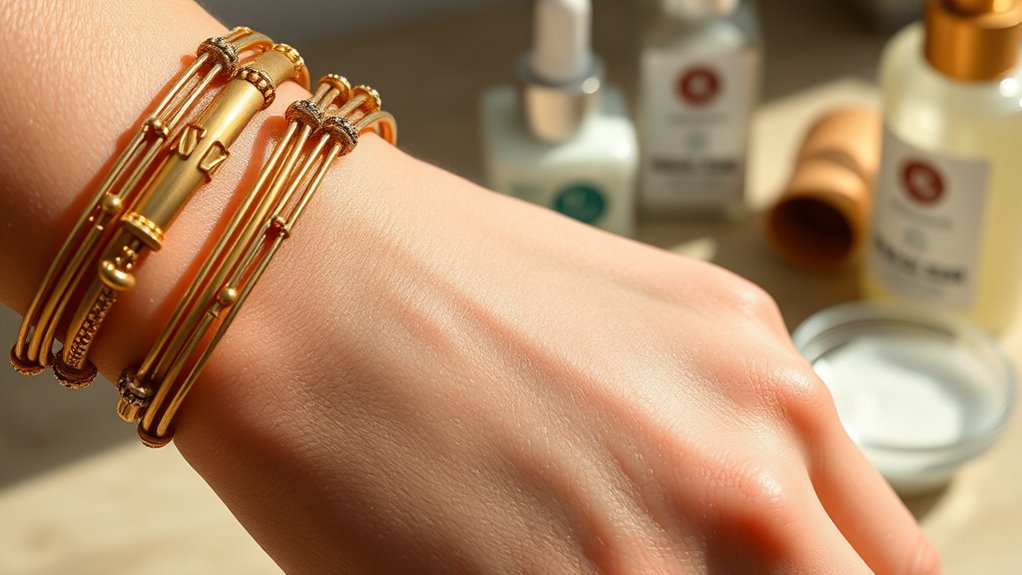
Does Brass Jewelry Turn Skin Green and How to Prevent It
Yes, brass jewelry can turn your skin green because it contains copper, which reacts with moisture, sweat, and acids on your skin.
This reaction forms green copper salts.
While this discoloration isn’t harmful, it can certainly be annoying.
To prevent it, you can apply a clear nail polish barrier on the metal, which creates a protective layer.
Additionally, keeping your jewelry dry and cleaning it regularly can help reduce tarnish and minimize skin reactions.
Want to discover more about why this happens and how to keep your brass jewelry looking great?
What Causes Brass Jewelry to Turn Skin Green

When you wear brass jewelry, the copper in it reacts with your sweat, moisture, and skin acids.
This reaction creates green copper salts that can leave a green stain on your skin.
The reaction forms green copper salts that may leave a green stain on your skin.
This green discoloration happens because the copper undergoes oxidation, forming a patina that transfers from the jewelry to your skin.
Factors like skin acidity and moisture exposure increase the chances of this copper reaction, which causes both jewelry tarnish and skin staining.
The green skin you notice isn’t harmful—it’s just a surface residue of these copper salts.
Lotions, perfumes, and environmental humidity can accelerate this process.
The Chemistry Behind Skin Discoloration From Brass

Although brass jewelry looks beautiful, its copper content reacts chemically with your skin’s moisture and acids, causing the familiar green discoloration.
This green staining results from copper salts formed during the oxidation process. It’s a surface oxidation where copper oxide, chlorides, or sulfates deposit on your skin.
Your skin pH and chemistry influence how quickly this metal reaction happens.
Interestingly, the brass alloy composition also affects the intensity of the copper reaction.
| Component | Reaction Type | Result on Skin |
|---|---|---|
| Copper in Brass | Oxidation | Copper salts (green stains) |
| Skin Moisture | Reacts with metal | Surface oxidation |
| Skin pH | Affects reaction | Increases/decreases staining |
| Environmental Acids | Accelerates | Faster copper reaction |
| Brass Alloy Mix | Composition | Varies oxidation rate |
Factors That Increase the Likelihood of Green Stains

Since your skin’s acidity and moisture directly interact with brass, certain conditions can make green stains more likely to appear.
Higher skin acidity accelerates copper oxidation, triggering metal corrosion that causes green skin stains.
Increased skin acidity speeds up copper oxidation, leading to corrosion and green stains on the skin.
Moisture exposure, such as sweating or humid environments, promotes the formation of copper salts, increasing green discoloration.
Jewelry oxidation speeds up when lotions, perfumes, or skin oils react with brass, intensifying this skin reaction.
Environmental humidity and warm temperatures further enhance these chemical processes.
If you wear brass jewelry without a protective barrier, prolonged contact raises the risk of green marks forming.
Understanding these factors helps you minimize green discoloration by controlling moisture exposure and using coatings or barriers that reduce jewelry oxidation and protect your skin from unwanted green stains.
Is Green Skin From Brass Jewelry Harmful?
If you notice green stains from brass jewelry, don’t worry—it’s harmless copper salts reacting with your skin.
However, if you experience itching or a rash, it might be a sign of skin sensitivity or a nickel allergy, not the green color itself.
Simply removing the jewelry and washing the area can clear up the stain and keep your skin safe.
Safety of Green Stain
Why does your skin turn green when you wear brass jewelry, and should you worry about it?
The green skin results from copper salts formed by oxidation on your skin’s surface—a harmless green stain, not a toxic reaction.
It’s just a harmless residue that you can wash off easily with soap and water.
Brass jewelry safety isn’t compromised by these copper salts, and the green color itself doesn’t signal health risks.
However, metal allergies are a different issue and need attention.
| Cause | Effect | Prevention |
|---|---|---|
| Copper salts | Green skin | Protective coating |
| Oxidation | Harmless residue | Cleaning and care |
| Metal allergies | Itching, rash | Avoid allergens |
| No toxin | No harm | Wash skin regularly |
| Brass jewelry | Green stain | Proper maintenance |
Skin Irritation Risks
Although green skin from brass jewelry can look alarming, it’s usually just a harmless stain caused by copper reacting with your sweat and oils.
This reaction forms copper salts, which create the green discoloration on your skin. For most people, green skin from brass isn’t harmful and doesn’t cause a skin reaction or irritation.
However, if you have copper allergies or increased skin sensitivity, you might experience skin irritation, redness, or itching—signs of an allergy risk.
To minimize these risks, practice proper jewelry care by keeping your brass pieces dry and cleaning them regularly.
This helps reduce copper salts buildup and prevents skin discoloration or irritation. If you notice persistent skin sensitivity or discomfort, it’s best to avoid brass jewelry to protect your skin health.
How to Prevent Brass Jewelry From Turning Your Skin Green
You can stop your brass jewelry from turning your skin green by taking a few simple steps.
Applying protective coatings like clear nail polish creates a barrier against moisture and oils.
Keeping your jewelry clean and dry prevents buildup that causes discoloration.
Also, proper storage in airtight containers and handling your pieces carefully will help maintain their shine.
Plus, it protects your skin from unwanted discoloration too!
Protective Coatings Application
When you apply a thin layer of clear nail polish or a commercial jewelry sealant to the inner surface of your brass jewelry, you create a protective barrier.
This barrier stops copper from reacting with your skin’s oils and moisture.
It acts as an oxidation barrier, preventing metal oxidation and green skin stains.
Before you apply the coating, make sure to clean your jewelry thoroughly.
Allow the layer of lacquer to fully dry to maximize its effectiveness.
To maintain this protective layer and prevent tarnish, reapply every few weeks.
| Coating Type | Benefits |
|---|---|
| Clear Nail Polish | Easy to apply, forms quick barrier |
| Jewelry Sealant | Durable, designed for metals |
| Layer of Lacquer | Long-lasting, prevents oxidation |
Jewelry Hygiene Practices
Applying protective coatings is a great first step, but maintaining good jewelry hygiene plays a big role in keeping your brass pieces from turning your skin green.
To prevent green skin, practice regular brass jewelry care by cleaning brass jewelry with a soft cloth and mild soap to remove dirt and oils that trigger chemical reactions.
Also, avoid prolonged skin contact by removing jewelry before swimming or exercising, which helps with oxidation prevention.
Limiting lotions and perfumes before wearing your pieces also reduces harmful reactions.
Use maintenance tips like drying jewelry thoroughly after cleaning to preserve oxidation barriers.
While storing jewelry is important, focus on hygiene practices that minimize exposure to moisture and residues, ensuring your brass stays bright and your skin stays clear.
Storage and Handling Tips
Although brass jewelry naturally reacts with air and moisture, proper storage and careful handling can considerably reduce green skin stains.
Store your pieces in airtight containers or anti-tarnish bags to prevent oxidation caused by exposure. Always keep your jewelry dry by removing it before showering, swimming, or exercising.
When handling brass jewelry, make sure your hands are clean and dry. Avoid applying lotions or perfumes beforehand, as these can trigger chemical reactions that cause discoloration.
To add extra protection, apply a thin layer of clear nail polish or jewelry sealant on inner surfaces. This creates a protective barrier against skin contact.
Finally, practice regular cleaning using gentle cleaning solutions like lemon juice or baking soda. This will help remove tarnish buildup and maintain your jewelry’s shine with proper storage and care.
Effective Cleaning Methods for Brass Jewelry
Since brass jewelry can tarnish and cause skin discoloration, it’s essential to clean it regularly to maintain its shine and prevent those pesky green stains.
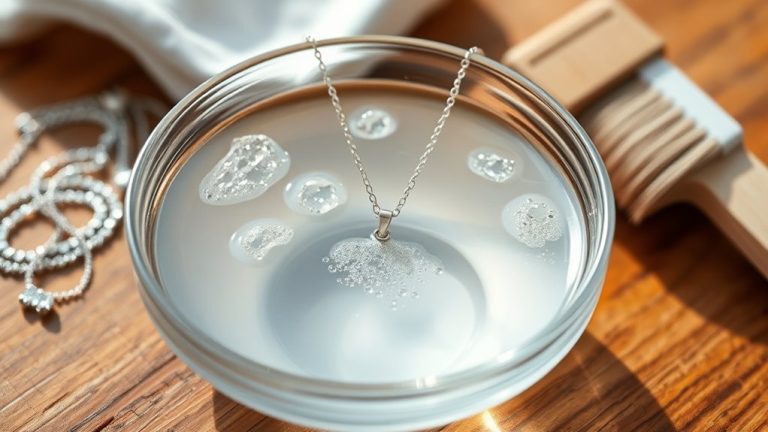
For effective brass cleaning, mix lemon juice and baking soda to create a paste that removes tarnish.
Gently scrub the jewelry with a soft toothbrush, rinse with warm water, and dry it off with a microfiber cloth.
Commercial cleaning solutions and brass polish also work well if you follow the instructions.
Regularly cleaning your brass jewelry will help prevent tarnish buildup and those unwanted green stains.
| Cleaning Method | Tools Needed | Benefits |
|---|---|---|
| Lemon & Baking Soda Paste | Soft toothbrush, cloth | Natural tarnish removal |
| Commercial Brass Polish | Polishing cloth | Restores shine quickly |
| Regular Maintenance | Microfiber cloth | Tarnish prevention, shine |
Best Practices for Storing Brass Jewelry
To keep your brass jewelry looking its best, store it in airtight containers or zip-lock bags that limit moisture and air exposure.
Proper storage slows oxidation and prevents tarnishing, which can cause discoloration and corrosion. Always keep your jewelry in a cool, dry place away from direct sunlight to avoid accelerating these processes.
Before storing, make sure your pieces are clean and dry to remove oils, sweat, and residues that can worsen tarnishing.
Consider adding anti-tarnish strips or silica gel packs inside your storage containers to absorb humidity.
Also, avoid mixing brass with other metals during storage, as some metals used together can cause cross-reactive tarnishing or corrosion.
Following these practices helps maintain your brass jewelry’s shine and longevity.
Comparing Brass to Other Jewelry Metals Regarding Skin Reactions
When you wear brass jewelry, you might notice your skin turning green due to copper oxidation. This is a common reaction with brass and other copper alloys.
The green staining happens because of the metal’s copper content, which corrodes and tarnishes over time. This leaves harmless green stains on your skin.
Green stains appear as copper in the metal oxidizes, leaving harmless marks on your skin.
In a jewelry metals comparison, metals like stainless steel and titanium really stand out as hypoallergenic options. They don’t oxidize or cause discoloration.
Sterling silver, which contains about 7.5% copper, can also tarnish and cause skin marks, though less intensely than brass.
High-karat gold and platinum rarely cause skin to turn green because they have minimal reactive metals.
Unlike green stains, metal allergies—often triggered by nickel—can cause itching and redness.
Understanding these differences helps you choose metals that suit your skin sensitivity.
Frequently Asked Questions
How to Keep Brass From Turning Skin Green?
You can keep brass from turning your skin green by applying clear nail polish.
This creates a barrier between your skin and the metal.
Also, be sure to remove jewelry before water exposure.
Water can accelerate tarnishing and increase skin reactions.
Cleaning it regularly is important too.
A simple wipe down can help remove any tarnish buildup.
Store your brass jewelry in an airtight container when not in use.
This helps minimize exposure to air and moisture.
Lastly, consider choosing coated or alternative metals like stainless steel.
These options can help minimize reactions altogether.
Does Brass Jewelry Make Skin Green?
Yes, brass jewelry can make your skin green because copper reacts with sweat and oils.
To prevent this, you can apply clear nail polish on the jewelry or keep it dry when wearing it to avoid discoloration.
Is There a Way to Stop Jewelry From Turning Skin Green?
You can stop jewelry from turning your skin green by sealing it with clear nail polish, cleaning it regularly, and avoiding moisture exposure.
These simple steps create a barrier that prevents the metal from reacting with your skin.
Just a little bit of effort can go a long way in keeping your skin looking its best!
How to Prevent Brass Jewelry From Oxidizing?
You can prevent brass jewelry from oxidizing by applying clear nail polish.
Storing it in airtight containers is also a great idea.
Cleaning it regularly helps keep it looking fresh.
Make sure to avoid water exposure as much as possible.
Finally, reapplying protective sprays or lacquer can maintain a barrier against moisture and air.
Conclusion
Think of your skin and brass jewelry like old friends dancing in the rain—sometimes, their chemistry leads to green stains.
Just as water leaves marks on metal, the interaction between your skin and brass can create that pesky discoloration.
But with the right care and protection, you can keep their bond bright and beautiful.
By understanding why brass turns your skin green and how to prevent it, you ensure that your jewelry remains a joyful partner.
You don’t want it to become a troublesome guest on your skin’s delicate stage.
In conclusion, while brass jewelry can turn your skin green due to the reaction with sweat, moisture, and skin oils, you can easily prevent this.
Using clear nail polish, avoiding prolonged wear, and keeping it dry can help maintain its shine without leaving marks.
With a little care, your brass jewelry can stay stunning, allowing you to enjoy its beauty without concerns.