How to Get Rid of Tarnish on Jewelry Step by Step
To get rid of tarnish on your jewelry, it’s important to first identify the metal type. This ensures you choose the most effective method for cleaning.
Start by lining a bowl with aluminum foil.
Then, add hot water and baking soda to the bowl.
Soak your tarnished jewelry briefly in this solution.
After soaking, gently scrub with a soft toothbrush and rinse thoroughly.
For gold or delicate pieces, stick to gentle soap and steer clear of harsh chemicals.
Once you’re done cleaning, make sure to dry your jewelry properly.
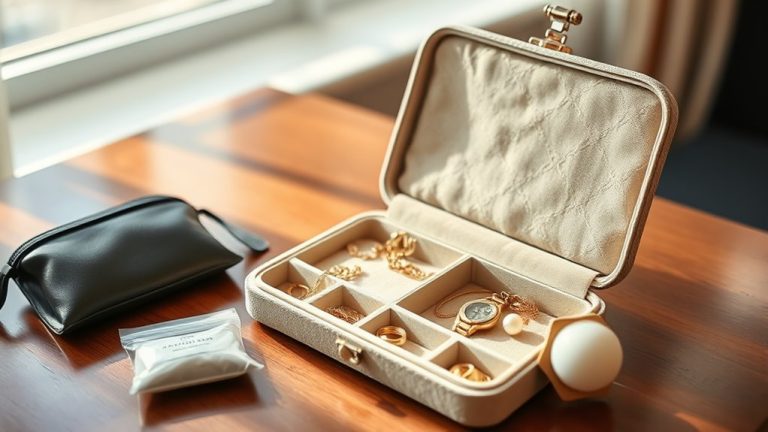
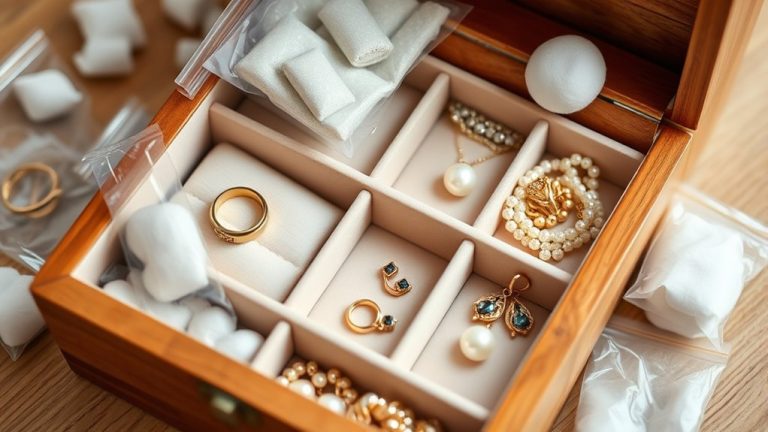
To help prevent future tarnish, store your jewelry in airtight bags.
Keep reading to discover tailored tips for different metals and gemstones!
Understanding Jewelry Tarnish

Although it might seem like just dirt, jewelry tarnish is actually a chemical reaction between metals like silver or copper and sulfur compounds in the air.
Jewelry tarnish isn’t just dirt—it’s a chemical reaction between metals and sulfur in the air.
When silver reacts with sulfur, it forms silver sulfide—a dark, dull layer that covers your jewelry. Tarnish develops faster if your jewelry encounters moisture, sweat, or chemicals.
And guess what? Exposure to oxygen speeds up the process, dulling the original shine.
Understanding this helps you realize why regular cleaning is essential.
By cleaning your silver pieces properly and storing them in dry, airtight places, you can slow tarnish and keep your jewelry looking bright and beautiful.
Taking these simple steps ensures your favorite pieces stay in great condition for years to come.
Identifying Your Jewelry Material

Before you start cleaning, you’ll want to identify the metal type of your jewelry by looking for hallmark stamps like “925” for silver or “14K” for gold.
Don’t forget to check any gemstones or settings, since some stones like opals and pearls need extra care.
Testing a small hidden spot first helps guarantee your cleaning method won’t cause damage.
Metal Type Identification
Identifying your jewelry’s metal type plays a crucial role in choosing the right cleaning method.
Start with metal identification by looking for hallmark stamps or engravings on your jewelry metal.
Common markings like “925” indicate sterling silver, while “14K” or “18K” signal gold content.
Next, observe the color and weight—copper shows a reddish hue, silver appears bright and shiny, and gold has a characteristic yellow tone.
You can also perform a simple magnet test; silver, gold, and copper are usually non-magnetic.
So if your piece is attracted to a magnet, it might be a base metal.
If you’re still unsure about the metal type or dealing with valuable pieces, consult a professional jeweler for precise identification before proceeding with tarnish removal.
Gemstone and Setting Check
Since different gemstones and settings require specific care, you should carefully examine your jewelry before cleaning.
First, identify if your piece is silver, gold, copper, or another metal, as tarnish removal methods differ.
Check whether your gemstones are real or glass, and if pearls are natural or synthetic—this affects how you clean them without damage.
Look closely at the setting: are the stones glued or securely set in metal?
If glued, use gentle cleaning to avoid loosening.
Also, determine if your jewelry has any plated or coated surfaces; harsh cleaning can wear these finishes away.
For valuable or delicate items, it’s best to consult a professional jeweler before tackling tarnish removal yourself.
This careful check helps protect your jewelry’s beauty and integrity.
Preparing Your Cleaning Supplies

Although tarnish can be stubborn, you can tackle it effectively by preparing the right cleaning supplies.
Start by gathering essentials like baking soda, a soft cloth, warm water, and a gentle toothbrush if needed.
Gather baking soda, a soft cloth, warm water, and a gentle toothbrush to begin cleaning your jewelry.
Make sure all cleaning supplies are clean and free of grease or debris before use to avoid further damage.
If your jewelry has delicate finishes, use non-abrasive, tarnish-resistant products such as jewelry polishing cloths.
Before proceeding, check if your pieces contain gemstones or pearls.
Research suitable cleaning methods to prevent harm.
Always read and follow manufacturer instructions on any commercial cleaning products you plan to use.
Proper preparation guarantees a safe and effective cleaning process, helping you restore your jewelry’s shine without risk.
Using Baking Soda and Aluminum Foil for Tarnish Removal
When you want a simple yet effective way to remove tarnish, using baking soda and aluminum foil is a great choice.
This method uses a chemical reaction to lift tarnish without harsh scrubbing.
To get started:
- Line a shallow dish with aluminum foil, shiny side up.
- Place your tarnished jewelry on the foil, avoiding pieces touching each other.
- Pour hot water over the jewelry, then add about 2 tablespoons of baking soda per piece.
Let the jewelry soak for 20 minutes or until the water cools; this allows tarnish removal through an electrolytic reaction.
Rinse thoroughly with clean water and dry with a soft cloth.
This approach transfers tarnish from your jewelry to the aluminum foil, restoring shine safely and effectively.
Applying Commercial Silver Polish Safely
If you choose to use commercial silver polish, make sure you follow the manufacturer’s instructions carefully to protect your jewelry from damage.
Apply a small amount of polish to a soft, lint-free pad or cloth.
Gently rub the jewelry using circular motions to avoid scratching.
Keep in mind, avoid polish on delicate gemstones, pearls, or glued parts.
After polishing, rinse thoroughly with lukewarm water to remove residue.
Then buff dry with a clean cloth.
Proper storage in a dry, airtight container or tarnish-resistant pouch will keep your jewelry shining longer.
| Step | Action |
|---|---|
| Apply | Use a soft pad with polish |
| Rub gently | Circular motions, avoid scratches |
| Rinse & Dry | Lukewarm water, buff with cloth |
Cleaning Jewelry With Toothpaste
When cleaning your jewelry with toothpaste, choose plain white, non-gel toothpaste without whitening agents to avoid damage.
Apply a small amount to a soft cloth or toothbrush and gently rub for about five minutes.
Afterward, rinse thoroughly with warm water and dry completely with a lint-free cloth to prevent water spots.
Toothpaste Types to Use
Although many toothpastes claim to clean effectively, you should stick to a plain, white, non-gel toothpaste without whitening agents to safely remove tarnish from your jewelry.
Using the right toothpaste helps clean silver without causing scratches or damage.
When choosing toothpaste, keep these tips in mind:
- Avoid gel-based or abrasive toothpastes that can harm delicate surfaces.
- Pick a non-whitening, plain white toothpaste for safe polishing.
- Use a soft polishing cloth or a gentle toothbrush to apply toothpaste.
- Apply a small amount and gently rub tarnished areas to loosen buildup.
- After cleaning, buff your jewelry dry with a soft cloth to restore shine and prevent water spots.
Selecting the correct toothpaste ensures you can safely clean silver and keep your jewelry sparkling.
Application and Rinsing
Since proper application and rinsing are vital, you’ll want to start by applying a small amount of white, non-gel toothpaste onto a soft cloth or toothbrush.
Gently rub the toothpaste onto the tarnished areas of your jewelry using circular motions. This targeted application helps break down the tarnish effectively without damaging the piece.
After rubbing, let the toothpaste sit for about five minutes to loosen stubborn tarnish.
Next, rinse your jewelry thoroughly with warm or lukewarm water to remove all toothpaste residue. Proper rinsing is essential to prevent any leftover toothpaste from causing dullness or spots.
Finally, dry the jewelry completely with a soft, clean cloth to avoid water spots and further tarnish, leaving your piece clean and shiny.
Removing Tarnish From Gold Jewelry
If you notice discoloration on your gold jewelry, it often results from exposure to chemicals, sweat, or cosmetics rather than tarnish itself.
To clean your gold and restore its shine, follow these steps:
- Soak the jewelry in warm water with a few drops of mild dish soap.
- Gently scrub with a soft toothbrush to remove dirt and light tarnish.
For heavier tarnish, make a paste from baking soda and water, then rub gently.
Rinse thoroughly with warm water to avoid water spots.
Dry completely with a soft cloth and avoid abrasive cleaners or harsh chemicals.
Cleaning Tarnished Copper Jewelry
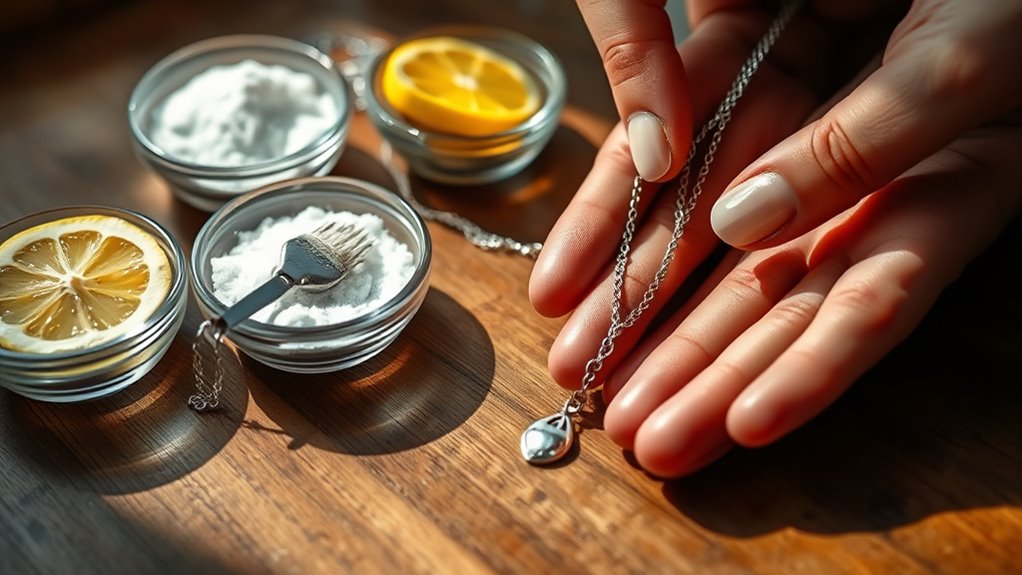
When your copper jewelry starts to lose its shine, you can restore its brilliance by using a simple homemade paste made from vinegar or lemon juice and baking soda.
Mix 1 tablespoon of vinegar or lemon juice with 2 tablespoons of baking soda to create the paste.
Combine 1 tablespoon of vinegar or lemon juice with 2 tablespoons of baking soda to make a cleaning paste.
Apply it gently to your copper jewelry using an old toothbrush or a soft cloth, scrubbing to lift the tarnish.
Let the paste sit on the surface for about 30 minutes to loosen stubborn spots.
Afterward, rinse the jewelry thoroughly with warm water to remove all residue.
Dry it with a soft cloth to prevent water spots.
If tarnish persists, repeat the process or try a commercial copper polish to get your jewelry clean and shiny again.
Preventative Tips to Keep Jewelry Tarnish-Free
Although tarnish can seem inevitable, you can keep your jewelry looking bright by taking simple preventative steps.
Following these preventative tips will help you minimize tarnish and extend the life of your pieces.
- Store jewelry in airtight ziplock bags with anti-tarnish paper. This blocks air and sulfur exposure, which is key to preventing tarnish.
- Keep your jewelry in a cool, dry place. This reduces humidity, which speeds up tarnishing.
- Clean your jewelry regularly with a polishing cloth after wearing it. This prevents buildup and keeps your pieces shining.
- Avoid contact with harsh chemicals like chlorine, bleach, and perfumes. These can cause tarnish and dull your jewelry’s finish.
- Use tarnish-resistant storage solutions or coatings. They create protective barriers on your jewelry, ensuring they stay beautiful for longer.
Frequently Asked Questions
How Do You Remove Tarnish From Jewelry?
You remove tarnish by soaking your jewelry on aluminum foil with baking soda in hot water, or gently polishing with commercial silver cleaner.
Avoid harsh methods on delicate stones, and store pieces properly to prevent future tarnish.
How to Get Tarnish off Permanent Jewelry?
You can’t rush; you must gently wipe.
You won’t scrub harshly; you’ll soak softly.
You’ll avoid chemicals and choose mild soap.
You’ll rinse thoroughly, dry completely, and keep your permanent jewelry shining without damage.
What Household Items Remove Tarnish?
You can use baking soda, vinegar, lemon juice, salt, and toothpaste to remove tarnish from jewelry.
Combine some with hot water or aluminum foil, then gently scrub with a soft cloth or toothbrush for best results.
Can Tarnishing Be Reversed?
Yes, you can reverse tarnishing on most jewelry by cleaning it with household methods or commercial polishes.
Just remember, deeply corroded or pitted pieces might need professional restoration or replacement.
Conclusion
Now that you know how to tackle tarnish step by step, you’ll keep your jewelry sparkling longer.
Did you know that over 70% of people don’t clean their jewelry regularly? This allows tarnish to build up over time.
By taking these simple steps, you’ll not only restore your pieces but also protect their shine for years.
Just a little care goes a long way in preserving your favorite accessories and making them look brand new!
So, make it a habit to clean your jewelry regularly. This will keep those gorgeous pieces in top condition and allow you to enjoy their beauty for many years to come.
Remember, a little maintenance can prevent tarnish from ruining your treasured items. Happy cleaning!