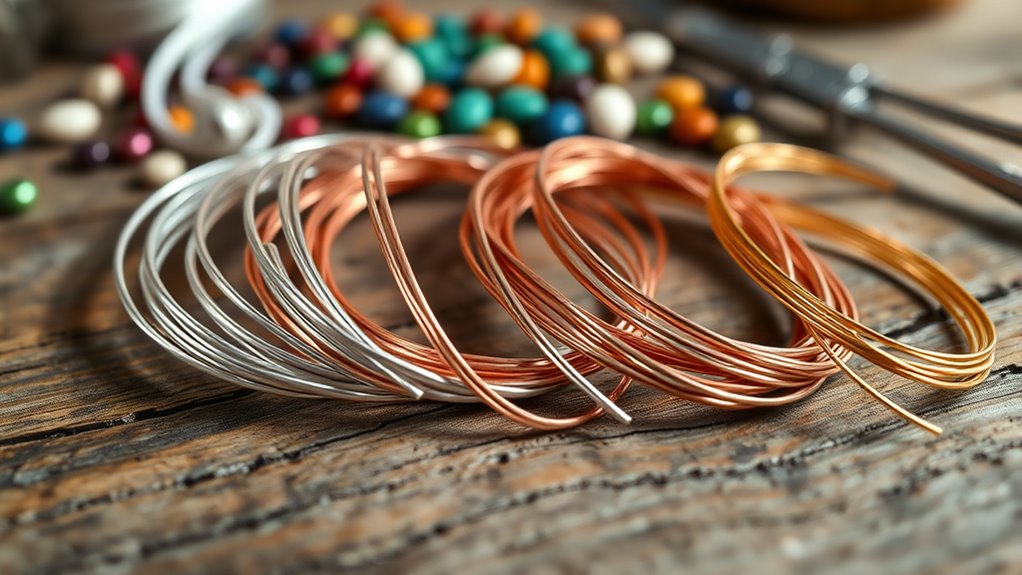
5 Best Wires for Jewelry Making
You’ll want to consider the best wires for jewelry making to elevate your designs. Copper wire is a fantastic option for affordability and ease of shaping, making it ideal for beginners and seasoned crafters alike.
Sterling silver wire is another top choice due to its bright, durable finish, adding a touch of elegance to any piece.
If you’re looking for something that resists tarnish and is suitable for sensitive skin, gold-filled wire is perfect.
Fine silver wire offers a pure shine, making it great for delicate designs that require a lightweight touch.
Brass wire strikes a balance between strength and malleability, ensuring your pieces are both sturdy and flexible.
Remember, picking the right gauge, shape, and hardness is crucial for your project’s success.
So, keep exploring to discover how each wire choice impacts your jewelry’s style and durability!
Copper Wire for Jewelry Making
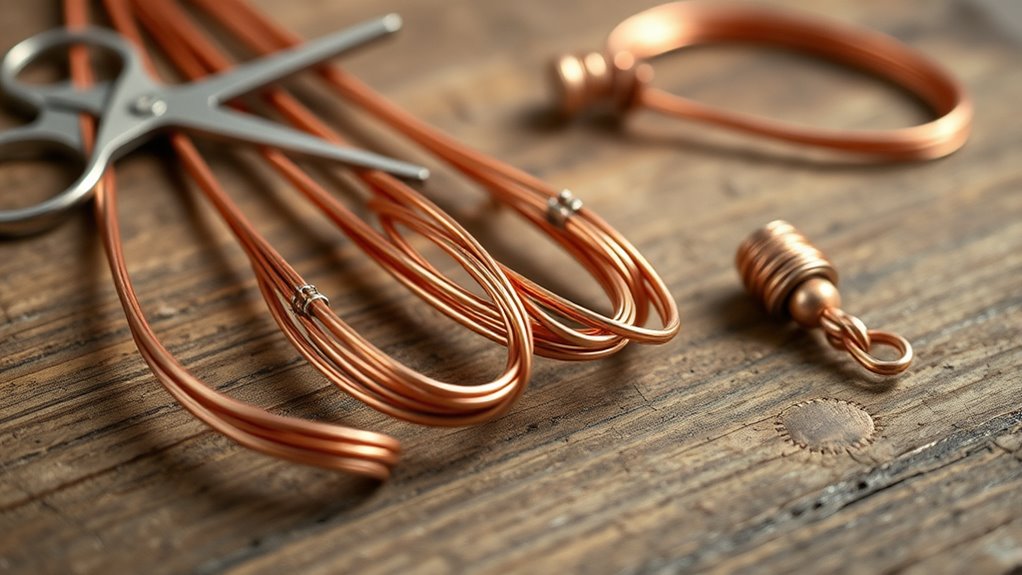
Why choose copper wire for your jewelry projects?
Copper wire is often used in jewelry making because it’s affordable, versatile, and easy to shape.
When choosing wire, you’ll find copper craft wire comes in different sizes, typically from 16 to 28 gauge.
For detailed wire wrapping, 24 or 26 gauge is usually the best option.
You can pick from round wire, square wire, or even half-round shapes.
These are perfect for making ear wires or intricate designs.
Working with wire is simple since copper can be soldered, hammered, or textured.
This gives you plenty of creative freedom to explore.
Feel free to experiment with copper before moving to pricier options like sterling silver.
It’s ideal for both beginners and advanced makers in your jewelry-making journey.
Sterling Silver Wire Benefits
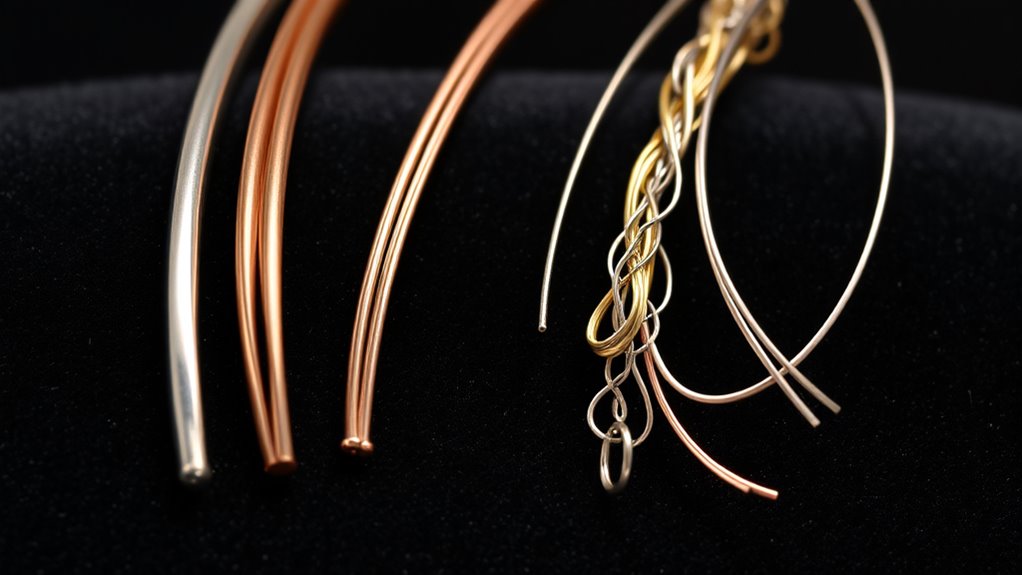
When you choose sterling silver wire, you get both durability and a bright, lasting finish that stands up to wear.
Its softness lets you shape intricate designs with ease, making your jewelry truly stand out.
Plus, with proper care, your pieces will maintain their shine for years to come.
Durability and Longevity
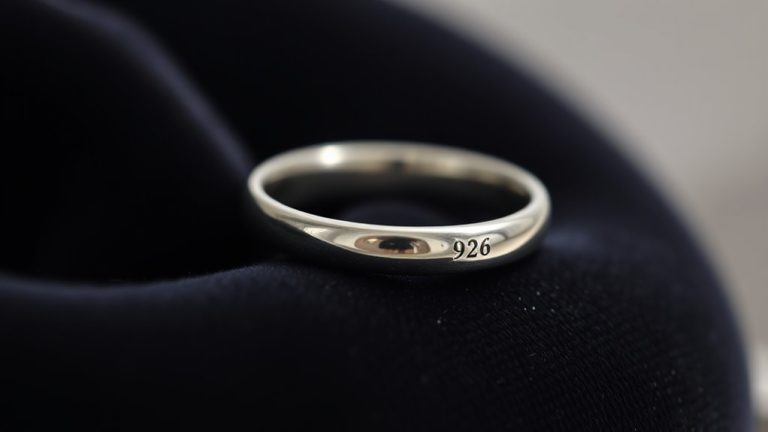
Although sterling silver wire contains 92.5% silver, it offers remarkable durability that helps your jewelry resist tarnishing and corrosion over time.
This strength makes sterling silver wire ideal for intricate designs that need to hold their shape, even with regular wear.
You’ll find that its toughness reduces the risk of breaking or bending during everyday use, ensuring your pieces stay intact longer.
With proper care—like cleaning and storing your jewelry correctly—sterling silver wire maintains its shine and structural integrity for decades.
Choosing sterling silver wire means investing in long-lasting jewelry that can become cherished heirlooms.
Its durability and longevity make it a reliable choice for both beginners and experienced jewelry makers who want pieces that stand the test of time.
Workability and Finish
Because sterling silver wire is soft and malleable, you can easily shape it into detailed and intricate jewelry designs without much effort.
Its excellent workability lets you bring your creative visions to life with precision. Plus, the wire provides a smooth, shiny finish that makes your pieces stand out.
Here’s why sterling silver wire excels in workability and finish:
- It maintains its lustrous shine over time with proper care, ensuring your jewelry always looks fresh.
- The high purity (92.5% silver) guarantees a valuable, attractive finish.
- Consistent diameter and clean cuts allow for precise wire wrapping and intricate techniques.
- Its malleability reduces breakage, letting you experiment freely.
Sterling silver wire truly combines ease of use with lasting beauty.
Gold-Filled Wire Characteristics
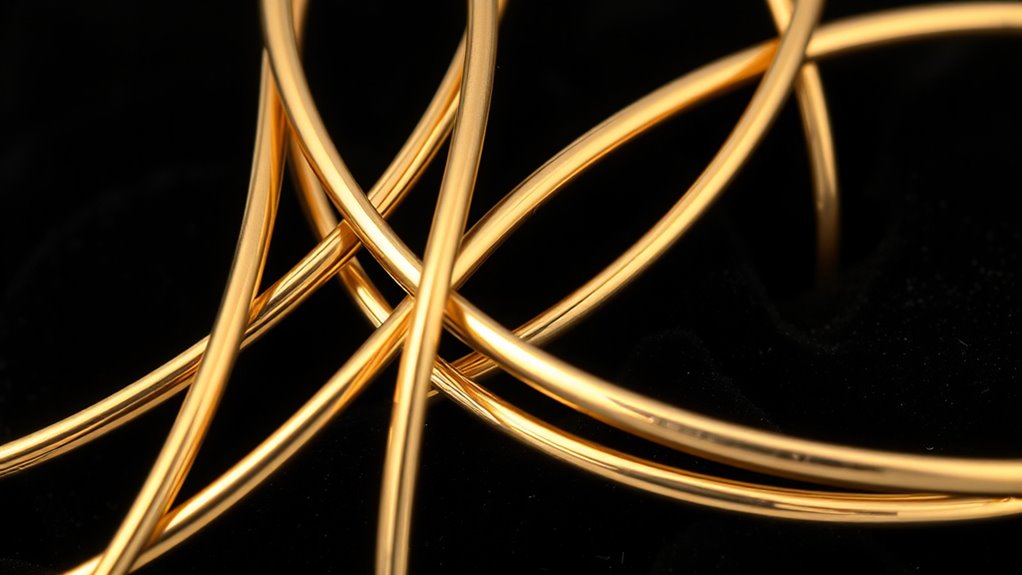
When you choose gold-filled wire, you’re working with a base metal bonded to a thick layer of real gold.
This gives you durability and a rich look without the high cost.
Plus, this wire resists tarnish and holds its shine through daily wear.
That means your creations will be long-lasting!
Its strength and variety in karat options make it easy to craft pieces that fit your style and budget.
Composition and Durability
If you want jewelry that combines the look of gold with lasting durability, gold-filled wire is an excellent choice.
Its composition features a solid layer of gold mechanically bonded to a base metal, usually brass or copper. This guarantees strength and a genuine gold appearance.
Here’s what you get with gold-filled wire:
- At least 5% of its weight is pure gold, offering affordability without sacrificing quality.
- A thick gold layer that resists tarnishing and corrosion, keeping your pieces shiny over time.
- Much less prone to wear or flaking compared to gold-plated alternatives.
- Hypoallergenic properties, as the gold layer protects you from the base metal underneath.
This durable composition makes gold-filled wire ideal for jewelry that lasts.
Crafting Benefits
Gold-filled wire offers more than just durability and a genuine gold look—it also brings several advantages that make crafting jewelry easier and more enjoyable.
Because it contains a thick layer of gold bonded to a base metal, you get solid gold’s appearance without the hefty price.
This means you can create stunning pieces that resist tarnishing and don’t require special cleaning, saving you time and effort.
Plus, gold-filled wire is hypoallergenic, so it’s a great choice if you or your customers have sensitive skin.
Its strength lets you shape and manipulate it confidently, knowing your designs will hold up well over time.
Fine Silver Wire Features
What makes fine silver wire stand out in jewelry making is its remarkable purity—composed of 99.9% pure silver, it offers a bright, shiny finish that brings delicate designs to life.
Fine silver wire’s 99.9% purity delivers a bright, shiny finish that beautifully highlights delicate jewelry designs.
When you work with fine silver wire, keep these features in mind:
- Its softness and malleability let you create intricate wire wrapping and delicate details with ease.
- The high purity gives your pieces a luminous, pure silver look that’s hard to match.
- Because it’s softer, it can scratch or tarnish more easily, so you’ll want to store and handle it carefully.
- It’s perfect for fine, lightweight jewelry and artistic wirework where you want that brilliant, pure silver aesthetic.
Fine silver wire truly shines when you need both beauty and flexibility.
Brass Wire Uses and Advantages
You’ll appreciate how brass wire combines durability with strength, making it perfect for jewelry that lasts.
Its flexibility lets you create intricate designs without worrying about breakage.
With brass, you get both reliability and creative freedom in your pieces.
Durability and Strength
Although brass wire offers a natural malleability that lets you shape intricate designs with ease, its true strength lies in its high tensile durability.
When you choose brass wire, you get a material that supports your jewelry’s longevity and sturdiness.
Here’s why brass excels in durability and strength:
- It boasts high tensile strength, perfect for structural components needing toughness.
- Its resistance to corrosion means your pieces stay beautiful over time.
- Compared to softer metals like copper or silver, brass resists deformation more effectively.
- The excellent strength-to-weight ratio ensures secure findings and sturdy decorative elements without added bulk.
With brass wire, your creations won’t just look good—they’ll last.
Design Versatility
Because brass wire combines a warm, golden hue with excellent malleability, it lets you create intricate designs that stand out in vintage and bohemian styles.
You can easily shape it for detailed wire wrapping, weaving, and other fabrication techniques without worrying about breakage.
Its strength ensures your pieces hold up well, especially in structural components like bangles and links.
Brass is also budget-friendly, so you can experiment freely or tackle larger projects without overspending.
Plus, you can customize the finish by polishing it for shine or applying patina for an aged look, adding even more design flexibility.
With brass wire, you get a versatile material that adapts to your creative vision while balancing beauty, durability, and cost-effectiveness.
Plated Wire Options Explained
When choosing wire for jewelry making, plated wire offers a budget-friendly way to achieve the look of precious metals without the high cost.
You’ll find these wires have a base metal core, usually copper, coated with a thin layer of silver or gold to mimic solid metals.
Here’s what you should know about plated wire options:
- They provide a cost-effective alternative, perfect for practice or decorative projects.
- Silver plated and gold plated wires come in various styles to match your design goals.
- The plating can wear off over time, especially with frequent bending, so they’re best for accents rather than structural parts.
- Plated wires are easier to bend, making them ideal if you’re just starting or want flexible materials.
Plated wire helps you create beautiful pieces without breaking the bank.
Choosing the Right Wire Gauge
Selecting the right wire gauge plays a crucial role in guaranteeing your jewelry holds up and looks polished.
Thinner wires, like 24-28 gauge, suit intricate wire wrapping, beadwork, and delicate designs perfectly.
Medium gauges such as 20-22 gauge are versatile, great for crafting jump rings, earring hooks, and small findings.
If you need strength for structural pieces like bangles, cuffs, or chain links, thicker wires in the 16-18 gauge range work best.
Choosing the correct gauge prevents your wire from being too fragile or too stiff for your project.
Always consider the wire gauge relative to your beads or components’ size to guarantee a proper fit and durability.
This balance ensures your jewelry not only looks great but lasts long.
Wire Shapes and Their Applications
How do different wire shapes affect your jewelry design?
Each shape offers unique benefits, influencing both function and style.
Every wire shape lends distinct advantages that enhance both the look and performance of your jewelry.
Here’s how you can use them:
- Round wire is your go-to for versatility—it’s perfect for wrapping, coiling, and making loops.
- D-shaped wire works great for rings and bangles because the flat side adds strength and stability.
- Square and rectangular wires bring a modern edge, ideal for geometric designs and structural pieces.
- Beaded wire, with beads along its length, adds decorative flair, especially for stacking rings.
Wire Hardness Levels and Jewelry Making
Different wire shapes set the foundation for your jewelry’s style and function, but the wire’s hardness level determines how you’ll work with it.
Dead soft wire is the most flexible, perfect for intricate wrapping.
Half-hard wire balances strength and flexibility, while full-hard wire offers maximum stiffness for structural pieces.
Choosing the right hardness depends on your technique and the piece’s purpose.
| Hardness Level | Characteristics |
|---|---|
| Dead Soft | Most flexible, easy to shape |
| Half-Hard | Stronger, some springiness |
| Full-Hard | Stiffest, maximum strength |
| Manipulation | Affected by hardness level |
| Tool Use | Varies with wire hardness |
Understanding these levels helps you select wire that fits your jewelry-making needs perfectly.
Tips for Working With Jewelry Wire
Although working with jewelry wire can seem tricky at first, using the right techniques will make the process smoother and your designs more polished.
To get the best results, follow these key tips:
Follow these essential tips to achieve smooth, polished, and durable jewelry wire designs every time.
- Use dead soft wire for intricate wrapping and detailed sculptures, as it bends easily without breaking.
- Choose half-hard wire when you need strength and shape retention without over-bending.
- Always straighten your wire before starting to create cleaner loops and more precise designs.
- For thicker gauges (2mm+), use pliers with a good grip to avoid deforming the wire.
Additionally, work-harden your wire gently by hammering or twisting.
This step boosts durability and reduces the chance of bending or breaking during wear.
Frequently Asked Questions
What Is the Best Wire for Jewelry Making?
The best wire for jewelry making depends on your project, but you’ll often choose sterling silver or gold-filled for durability.
Use dead soft for wrapping, half-hard for strength, and pick the right gauge for your design needs.
It’s important to consider the characteristics of the wire you select to ensure it fits your creative vision.
Different projects may require different types of wire, so don’t hesitate to experiment!
What Wire Gauge to Use for Jewelry?
When it comes to wire gauge, you’ll want to pick 24-28 gauge for delicate details.
For versatile pieces, 20-22 gauge is the way to go.
And if you’re looking for sturdy designs, opt for 16-18 gauge.
Don’t put all your eggs in one basket—choose based on strength and flexibility.
What Is the Strongest String for Jewelry Making?
You’ll find nylon-coated stainless steel wire or Tigertail to be the strongest strings for jewelry making.
They resist snapping and handle tension well, especially in thicker gauges like 0.6mm.
This gives your designs durability and strength.
What Gauge Wire Is Best for Crafts?
You’ll want 20-22 gauge wire for crafts—it’s the ultimate multitasker, balancing strength and flexibility perfectly.
It lets you create stunning designs without breaking a sweat or your tools.
This makes your projects shine effortlessly.
Conclusion
Choosing the right wire is like picking the perfect thread for your favorite sweater—it holds everything together beautifully.
Just like a jeweler who once switched to gold-filled wire and saw her sales double, you’ll find that the right wire can transform your creations.
Whether it’s copper’s warmth or sterling silver’s shine, understanding wire types, gauges, and hardness lets you craft jewelry that truly stands out.
So, pick your wire and start weaving your masterpiece!
In conclusion, selecting the best wire for jewelry making is crucial for your designs.
Each type of wire, from copper to gold-filled, offers unique qualities that can enhance your work.
By knowing the differences in gauges and hardness, you can create stunning pieces that showcase your style.
So, dive into the world of jewelry making and let your creativity shine with the perfect wire!