What Is Filigree Jewelry and How Do Beginners Make It?
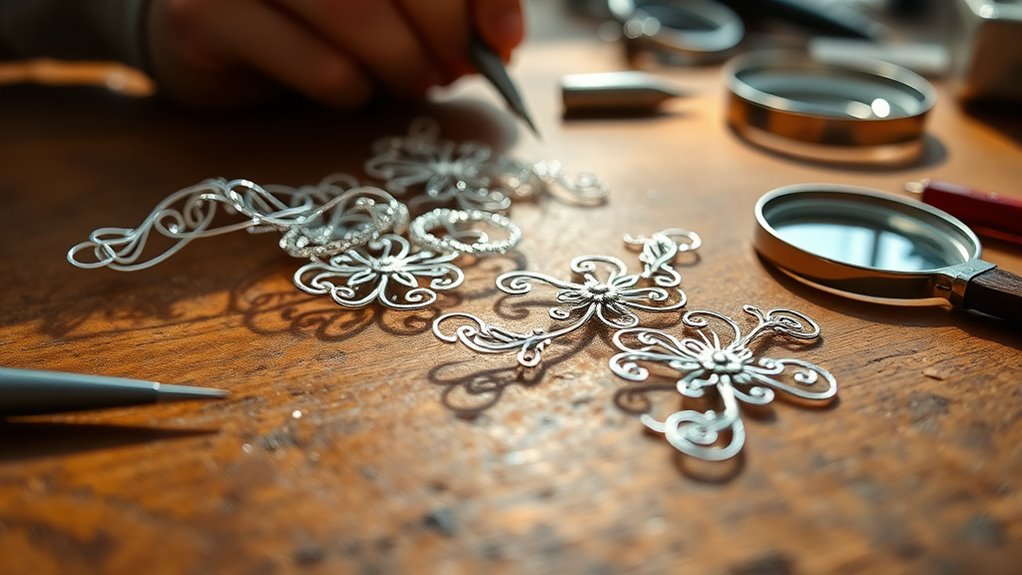
Filigree jewelry is a beautiful form of delicate metalwork that involves twisting and shaping fine wires into intricate, lace-like patterns. It’s a craft that has been cherished for centuries, known for its elegance and artistic expression.
If you’re a beginner looking to dive into filigree, you’ll want to start with high-quality thin wire.
The first step is to carefully anneal the wire to soften it, making it easier to manipulate.
Next, you’ll use pliers to form loops and scrolls.
As you practice, focus on mastering the steady twisting and shaping of the wire, as well as precise soldering techniques.
With patience and dedication, you’ll not only develop solid skills but also uncover the rich history and refined methods that make filigree jewelry a timeless craft.
So, grab your tools and get ready to create some stunning pieces!
Understanding the Filigree Technique
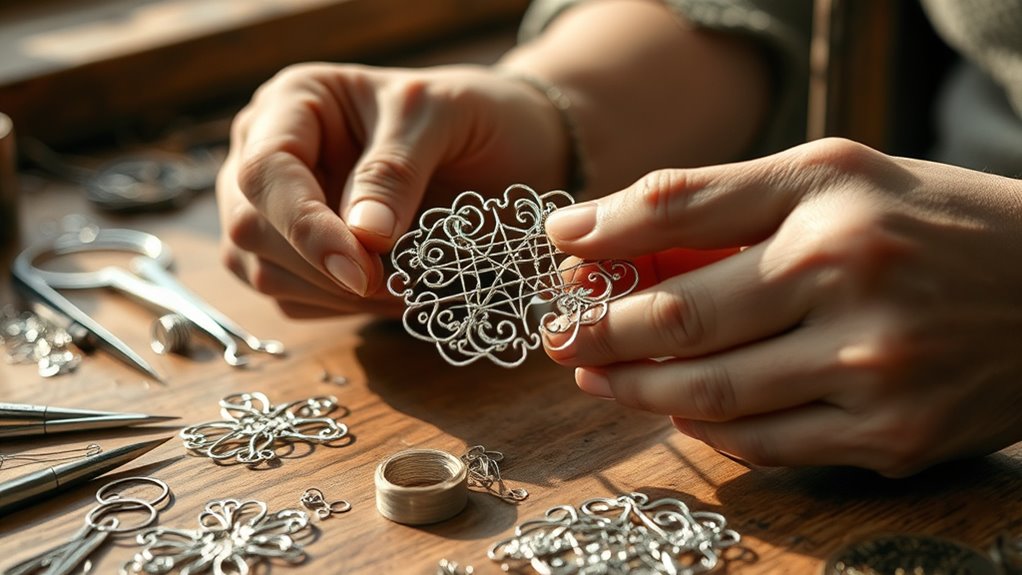
Although modern tools like laser cutters can aid in precision, filigree jewelry mainly relies on the skilled handcrafting of thin metal wires twisted and woven into intricate, lace-like patterns.
Filigree jewelry blends traditional handcrafting with delicate wirework, creating intricate, lace-like metal designs.
When you work with filigree, you’ll handle fine wires of silver or gold, often as thin as 0.15 mm.
This technique demands delicate craftsmanship, as you carefully shape, twist, and weave these wires to form detailed motifs.
You then solder the wire patterns precisely, ensuring each element stays in place without losing its delicate appearance.
Mastering filigree means developing steady hands and acute attention to detail.
The beauty of this technique comes from the intricate assembly of fine wirework.
It’s a craft that celebrates patience and skill above all.
Historical Origins of Filigree Jewelry
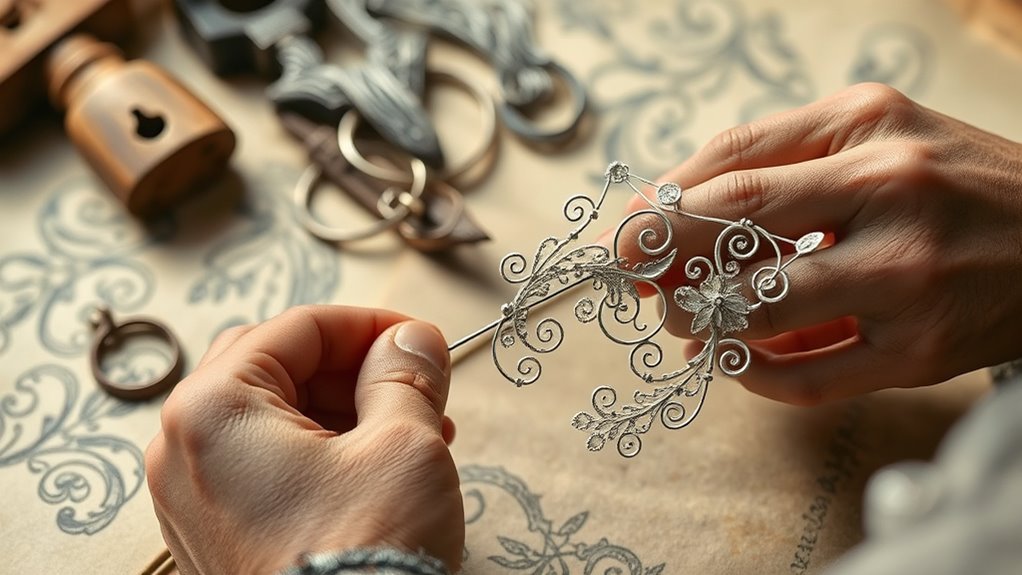
Where did filigree jewelry originate, and how did it evolve over millennia?
Filigree traces its historical origins back over 5,000 years to ancient Greece and Mesopotamia, where artisans crafted intricate designs from delicate metal threads.
The term “filigree” stems from Latin roots—“filum” meaning thread and “granum” meaning grain—highlighting the fine wire and tiny beads used to form lace-like patterns.
This technique gained popularity with the Romans, who refined it further.
Later, it blossomed uniquely in Russia from the 12th century onward.
By hand-manipulating thin metal wires, craftsmen created symbolic motifs for jewelry, religious icons, and decorative objects.
Understanding these ancient beginnings helps you appreciate filigree’s enduring artistry and cultural significance as you start your own filigree journey.
Preparing Metals for Filigree Work
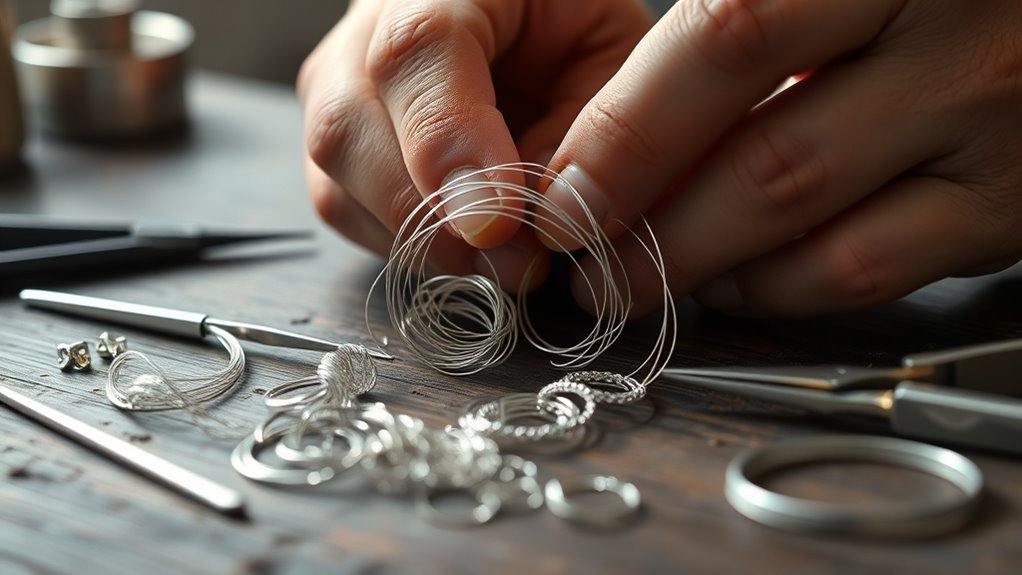
To create delicate filigree designs, you’ll start by selecting fine gauge wire, typically between 24 and 26 gauge.
This fine wire is cut into manageable lengths, making it easier to twist and shape.
Before shaping, you’ll anneal the wire by heating it to about 1100°F with a torch and letting it cool—this softens the metal for better malleability.
Proper metal preparation also involves melting scrap or coin metal, carefully cut or filed into small pieces.
During melting, you’ll add alloying metals like copper to achieve the desired color and strength.
This metalworking step ensures your base metal is perfect for filigree work.
These foundational steps prepare your materials for the intricate art of filigree crafting.
Creating Fine Wires Through Rolling and Drawing
After annealing the wire to soften it, you’ll move on to refining its thickness and texture through rolling and drawing.
Start by passing the metal through a rolling mill, which gradually flattens and stretches it into thinner sheets.
Begin with a rolling mill to evenly flatten and thin the metal into sheets.
Then, use a drawplate with various-sized holes to pull the metal through, reducing the wire thickness step by step.
This metal manipulation process produces the delicate thin metal wires essential for filigree work.
You’ll need to anneal the wire repeatedly during drawing to keep it soft and prevent breakage.
Controlling temperature and tension precisely guarantees uniform, high-quality wires.
Basic Wire Twisting and Shaping Techniques for Beginners
Although working with delicate wire can seem challenging at first, starting with thin, high-quality wire around 24 to 26 gauge makes twisting and shaping much easier.
Cut your wire into manageable lengths, then use your fingers or small pliers to gently twist it.
Practice consistent tension for uniform patterns.
For shaping wire, needle-nose pliers or mandrels help you create loops, scrolls, and intricate designs.
Annealing the wire by heating it until it glows softens it, making shaping smoother and reducing breakage.
Focus on mastering these basic wire twisting and shaping techniques before advancing.
With practice, you’ll create beautifully twisted and shaped wire elements that form the foundation of intricate filigree jewelry designs.
Keep your movements controlled and deliberate for the best results.
Methods for Joining Filigree Elements
When joining filigree elements, you’ll often rely on micro-soldering techniques using fine solder wire or paste for precise, secure connections.
You can also explore alternative methods like tiny pins or rivets to fasten pieces without heat.
No matter the method, ensuring durable joins means cleaning surfaces and applying flux carefully to protect the delicate design.
Soldering Techniques Overview
How do you join delicate filigree elements without damaging their intricate design?
You use soldering, a precise technique that heats metal to a specific temperature to join parts without melting them.
Mastering soldering ensures your filigree stays intact and beautifully connected.
To solder effectively, remember to:
- Clean the metal thoroughly to remove oils or dirt.
- Apply flux to prevent oxidation and help the solder flow.
- Choose the right solder type—hard, medium, or easy—based on your metal and joint strength needs.
- Use a torch to control the temperature carefully, heating just enough to melt the solder.
- After soldering, cool the piece and clean it in a pickle solution to remove oxidation and polish the joint.
These steps help you join filigree elements flawlessly and securely.
Alternative Joining Methods
While soldering remains the go-to method for joining filigree elements, you can explore alternative techniques like laser micro-welding, mechanical fastenings, and specialized adhesives to suit delicate designs or specific project needs.
Micro-welding uses focused laser heat to join tiny filigree parts precisely without risking damage from excessive heat.
Mechanical fastening involves tiny pins or rivets to secure components when soldering isn’t ideal or to reinforce connections.
When soldering, applying flux is essential to prevent oxidation and ensure clean, strong joints.
Though adhesives aren’t traditional in filigree, modern jewelry sometimes uses specialized bonding agents for lightweight or non-metallic pieces.
Ensuring Durable Connections
Exploring alternative joining methods can be useful, but mastering micro-soldering remains the most reliable way to guarantee durable filigree connections.
When soldering delicate filigree, you need to focus on creating a clean, well-prepared joint that ensures strong bonds between elements.
Here’s how to ensure durable connections:
- Clean all surfaces thoroughly before soldering to remove oils and dirt.
- Apply proper flux to the joint to promote solder flow and prevent oxidation.
- Use a small, controlled flame to heat the joint evenly without warping wires.
- Employ delicate, properly fluxed solder for seamless melting and bonding.
- After soldering, clean the joint in an acid pickle to remove residual flux and strengthen the connection.
Following these steps helps you achieve lasting, flawless filigree jewelry.
Tools Essential for Filigree Jewelry Making
A successful filigree jewelry project depends on having the right tools at your fingertips.
You’ll need fine-tipped pliers, wire cutters, a jeweler’s saw, and a torch for soldering delicate pieces.
A bench pin or soldering station offers the stability required for precise shaping and soldering.
For polishing, a pickling dish and cleaning acids help remove oxidation and brighten your work.
Don’t forget magnification tools like a jeweler’s loupe to ensure accuracy with intricate wire details.
A rolling mill and drawplate thin and flatten wire before shaping.
| Tool | Purpose | Emotion Evoked |
|---|---|---|
| Fine-tipped pliers | Wire shaping | Confidence |
| Torch | Soldering | Precision |
| Jeweler’s loupe | Magnification | Focus |
| Pickling dish | Polishing | Satisfaction |
| Rolling mill | Wire thinning | Creativity |
Tips for Designing and Crafting Your First Filigree Piece
Before you plunge into complex filigree designs, start by mastering basic wire patterns using thin, high-quality wire like 24 to 26 gauge.
This foundation will improve your shaping wire skills and metal manipulation techniques essential for filigree design.
Focus on precision and patience to develop your craftsmanship.
Remember these tips as you craft your first piece:
- Use fine pliers or a jeweler’s saw for accurate bends and smooth curves.
- Practice steady soldering techniques with flux to avoid oxidation.
- Keep your workspace organized with magnification tools for detailed work.
- Handle precious metals gently to prevent damage during manipulation.
- Finish with careful polishing to enhance the wire’s delicate beauty.
Following these steps will help you confidently create elegant filigree jewelry with professional results.
Frequently Asked Questions
How Is Filigree Jewellery Made?
You make filigree jewelry by twisting thin metal wires into intricate patterns.
Then, you solder them together carefully before polishing the piece.
Beginners usually start with simple designs, practicing wire shaping and soldering.
Once they get the hang of it, they can move on to creating complex motifs.
Is Filigree Hard to Make?
Think of filigree as weaving spider silk—yes, it’s delicate and tricky.
You’ll find it hard at first, but with patience and practice, your steady hands will master this intricate dance of wire and artistry.
What Is the Easiest Jewelry to Start Making?
The easiest jewelry to start making is simple wire-wrapped pieces like rings or earrings.
You’ll only need basic tools and materials, which makes it accessible for beginners.
This allows you to practice wrapping and twisting wires while creating attractive designs quickly and confidently.
How to Filigree Jewelry?
You’ll weave delicate metal threads like a spider spins its web,
twisting and shaping thin wires with steady hands.
Then, you’ll solder and polish each intricate detail,
turning fragile strands into sparkling, timeless art.
Conclusion
Now that you’ve unraveled the delicate dance of filigree, you’re ready to weave your own shimmering stories with wire and skill.
Like a spider spinning its intricate web, each twist and turn brings your creation to life.
Don’t rush—let patience guide your hands as you transform simple metals into lace-like treasures.
With practice, your filigree pieces will sparkle with the timeless elegance of craftsmanship.
As you embark on this artistic journey, remember that each piece tells its own story.
Your jewelry dreams can become reality, turning ordinary materials into extraordinary works of art.
So, embrace the creativity that filigree jewelry offers, and let your imagination flow.
With dedication and time, you’ll master the art of filigree, creating unique pieces that reflect your personal style.
In conclusion, filigree jewelry is a beautiful craft that combines skill and creativity.
With patience and practice, you can turn simple materials into stunning, lace-like treasures that showcase your artistic expression.