What Is Cameo Jewelry and How to Get Started
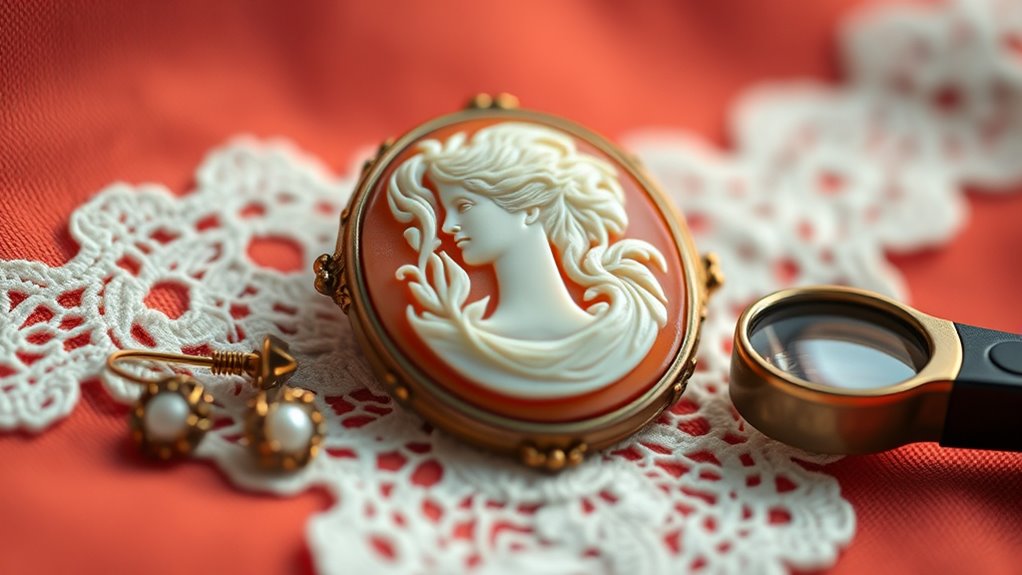
Cameo jewelry is a unique and captivating art form that showcases hand-carved relief images. Often made from layered materials like shells, agate, or coral, these pieces create striking contrast and depth.
You’ll find classical motifs such as profiles and mythological figures, which reflect centuries of history, spanning from ancient Egypt to the Victorian era.
If you want to get started with cameo jewelry, it’s essential to focus on identifying authentic pieces. Look for fine carving details and natural material veining as key indicators of quality.
Exploring various styles and materials can enhance your appreciation of cameo artistry and craftsmanship. It’s a journey that not only expands your collection but also deepens your understanding of this beautiful jewelry tradition. Enjoy the process!
Understanding Cameo Jewelry
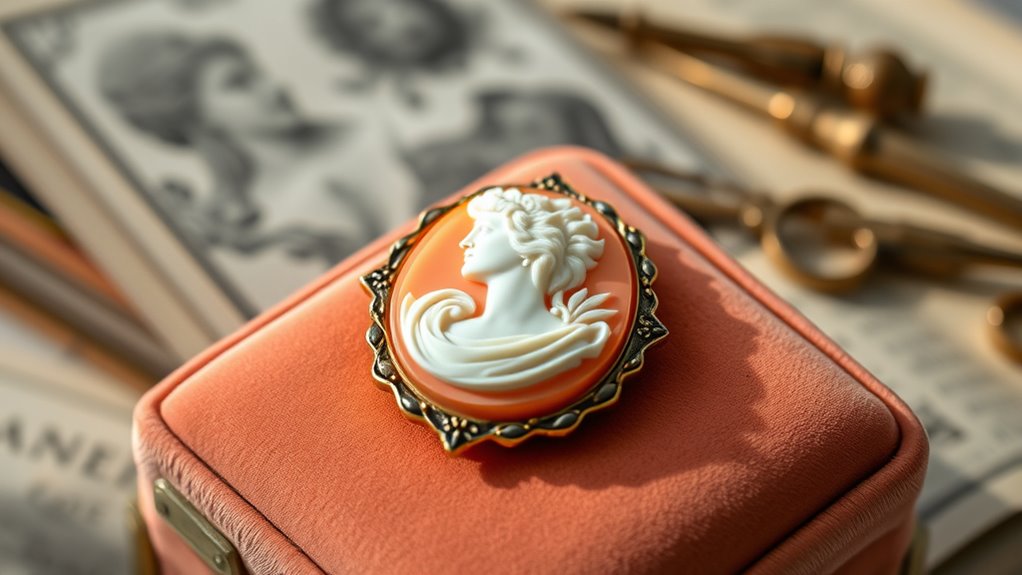
Although cameo jewelry has ancient origins, you can still appreciate its timeless charm today through the finely carved relief images that adorn shells, stones, and glass.
When you look closely, you’ll notice cameo jewelry features carved relief images, often depicting mythological figures or elegant profiles.
Skilled artisans select a layered material—like shell or stone—so they can carve images that stand out in intricate detail.
This layered material allows natural colors to contrast beautifully, enhancing the design’s depth.
The craftsmanship behind each piece varies, but true hand-carved cameos show crisp details and unique veining that mass-produced imitations lack.
Materials Used in Cameo Jewelry
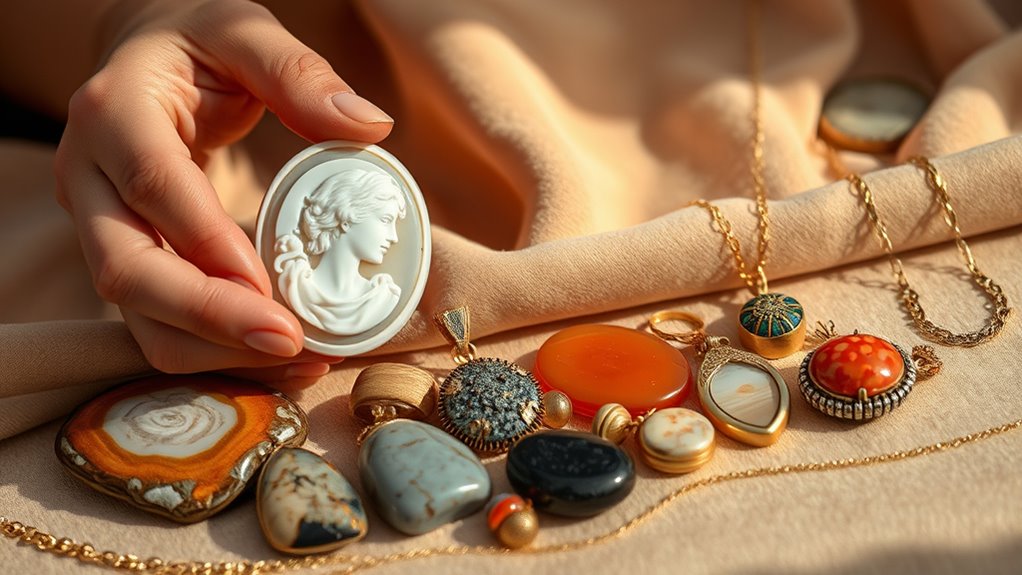
When you examine cameo jewelry, you’ll notice artisans choose materials like shell, agate, onyx, coral, and lava for their natural contrast and durability.
Shell cameos are carved from layered seashells such as sardonyx and conch, using their natural color variations to create detailed reliefs.
Shell cameos use layered seashells like sardonyx and conch, highlighting natural colors for intricate relief carvings.
Hardstone materials like agate and onyx offer rich colors and fine contrast, making them ideal for intricate carving.
Coral cameos, crafted from red or pink Mediterranean coral, stand out with vibrant hues and unique natural growth lines.
These natural materials not only enhance the cameo’s beauty but also guarantee longevity.
By understanding the qualities of these materials, you’ll better appreciate the craftsmanship behind each piece.
Plus, you’ll know what to look for when starting your own collection!
Historical Background and Origins
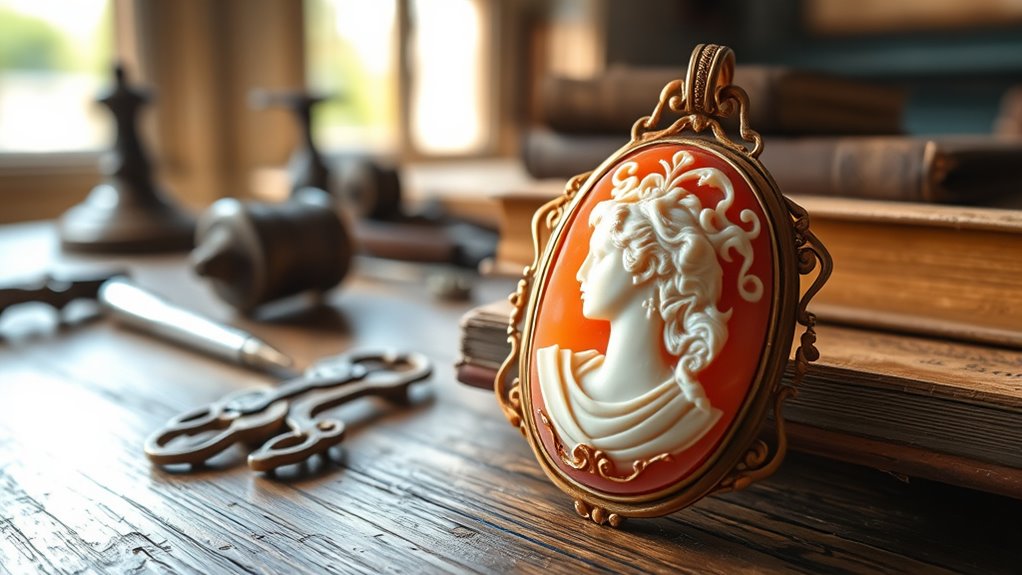
You’ll find that cameo jewelry has ancient roots, dating back over 5,000 years to Egyptian and Mesopotamian civilizations.
It saw a major revival during the Renaissance, especially in Italy, where shell cameos became a symbol of art and culture.
Later, the Victorian era brought cameo fashion to its peak, thanks to Queen Victoria’s influence across social classes.
Ancient Beginnings
Since ancient times, artisans have carved cameos from stone and glass, creating jewelry that dates back over 5,000 years to the Egyptians and Mesopotamians.
You’ll find that cameo jewelry’s ancient origins include mythological scenes and portraits. These were often used as signet rings or seals.
Over time, shell cameos became popular for their delicate carved materials, showcasing the era’s historical craftsmanship.
The Victorian era later embraced these detailed motifs, celebrating romantic and allegorical themes.
| Period | Key Features |
|---|---|
| Ancient Egypt | Stone and glass carvings, seals |
| Greece & Rome | Mythological scenes, signet rings |
| Renaissance | Shell cameos, classical motifs |
| Victorian Era | Intricate carvings, romantic themes |
Renaissance Revival
The Renaissance Revival period, stretching from the mid-19th to early 20th century, reignited a passion for classical art and craftsmanship, especially in cameo jewelry.
You’ll find that Italian artisans, particularly from Florence and Naples, led this renaissance by mastering shell carving and hardstone relief techniques.
They drew inspiration from Greek and Roman art, creating detailed, antique-inspired cameos featuring mythological motifs and portraits.
This revival emphasized refined classical craftsmanship, blending elaborate designs with cultural sophistication.
As you explore Renaissance Revival cameos, you’ll notice how the artistry captures the era’s fascination with antiquity.
It’s fascinating how these pieces become timeless symbols of elegance.
Whether you’re collecting or learning, understanding this period helps you appreciate the depth and history behind cameo jewelry’s resurgence.
Victorian Era Popularity
How did cameo jewelry reach its peak popularity during the Victorian era?
You can thank Queen Victoria herself—her love for Victorian cameos set jewelry trends that spread through all social classes.
You’ll notice many pieces featuring detailed profile carvings of women, along with mythological themes and religious scenes that captivated the period.
In the 1840s, habillé cameos became a hit, showing women adorned with elegant jewelry, perfectly aligning with Victorian fashion’s ornate style.
Don’t forget men’s cameo accessories, like watch fobs, stickpins, and cufflinks, which made cameos a unisex statement.
If you want to explore cameo jewelry, understanding this era’s influence gives you a solid foundation.
It shows how Victorian cameos combined artistry and cultural symbolism in timeless designs.
Identifying Authentic Cameos
When you want to identify an authentic cameo, you should look closely at its material and craftsmanship.
Authentic cameos are typically hand-carved from natural materials like genuine shell, agate, or coral.
You’ll notice fine tool marks and natural veining, especially in genuine shell, which often feels cool to the touch.
Check for layered materials that create depth through layered coloring, producing a detailed relief that’s crisp and clear.
Avoid pieces with uniform surface striations—these often indicate machine-made carvings rather than hand-carved artistry.
Using a loupe can help you spot undercutting or repetitive marks, suggesting plastic or mass-produced origins.
Popular Styles and Motifs
Although cameo jewelry spans centuries, you’ll often find recurring styles and motifs that reveal its rich history.
Classical motifs like elegant profiles and mythological figures such as Bacchus and Diana frequently appear, connecting you to ancient traditions.
Victorian cameos stand out with detailed depictions of women’s faces, featuring elaborate hairstyles and jewelry that reflect that era’s elegance.
If you’re drawn to bold designs, Art Deco cameos showcase geometric shapes and stylized motifs, often with striking color contrasts.
You’ll also encounter allegorical scenes and religious symbols that add layers of meaning to these pieces.
Whether you prefer traditional or modern cameos, understanding these popular styles and motifs helps you appreciate the artistry and stories each piece carries.
Tips for Starting a Cameo Collection
Before diving into your cameo collection, focus on quality carving and craftsmanship rather than just the age of each piece.
Authenticity matters, so learn to spot hand-carved details like surface striations and tool marks.
Look for hand-carved surface striations and tool marks to ensure your cameo’s authenticity and craftsmanship.
Prioritize pieces with expressive storytelling, as they hold greater value.
Consider the materials too—shell, sardonyx, and agate each bring distinct beauty and durability.
- Study different styles from various eras to appreciate cameo evolution.
- Examine craftsmanship closely to assess authenticity and value.
- Choose materials that suit your aesthetic and collection goals.
- Seek detailed, emotional carvings that tell a story.
Frequently Asked Questions
What Is so Special About Cameo Jewelry?
You’ll love cameo jewelry for its intricate, hand-carved designs that bring depth and history to each piece.
It blends timeless elegance with versatile style, making it a unique, meaningful accessory you’ll cherish forever.
What Is the Correct Way to Wear a Cameo Ring?
You wear a cameo ring on your right hand’s third finger for elegance.
But feel free to choose the index or middle finger based on your style.
Keep it secure, pair it with matching jewelry, and match your outfit accordingly.
Are Cameo Jewelry Worth Anything?
Yes, your cameo jewelry can be worth a lot if it’s genuine, hand-carved, and made from premium materials.
Look for age, craftsmanship, and signatures to determine value.
Modern or mass-produced pieces usually aren’t worth much.
Does Anyone Wear Cameo Jewelry Anymore?
Yes, you’ll find people still wear cameo jewelry, especially for vintage style or formal events.
Designers blend classic and modern looks, so you can easily incorporate cameos into your wardrobe and showcase timeless elegance today.
Conclusion
You might worry that starting a cameo collection feels overwhelming or expensive, but it doesn’t have to be.
With a little knowledge and patience, you can find beautiful, authentic pieces that fit your style and budget.
Cameo jewelry offers timeless elegance and a unique connection to history, making each piece truly special.
Once you start, you’ll discover the joy of owning wearable art that tells a story—something you’ll treasure forever.
Starting your collection can be an exciting journey. Remember, it’s not about how much you spend; it’s about finding pieces that resonate with you.
So, take your time exploring different styles and artisans, and enjoy the thrill of discovering unique cameos.
Embrace the elegance and history of cameo jewelry, and let your collection reflect your personal taste and passion. Happy collecting!