What Is Art Deco Jewelry and How Do You Identify Its Key Features?
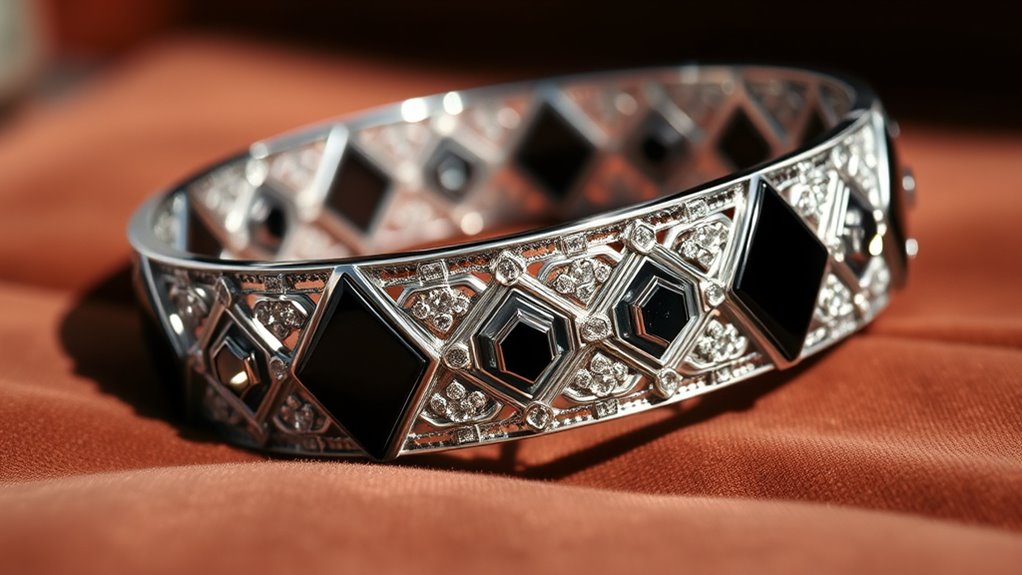
Art Deco jewelry, which gained popularity during the 1920s and 1930s, is known for its bold geometric shapes and sharp angles.
These striking designs often feature symmetrical patterns influenced by modern art and various global cultures, including Egyptian and African motifs.
When identifying Art Deco pieces, you’ll typically find settings made of platinum or white gold, combined with colorful gemstones and vibrant enamel inlays.
Look for precise symmetry and angular cuts, such as Asscher diamonds, which perfectly exemplify the style.
Cultural motifs like chevrons or scarabs are also common in these captivating designs.
Ultimately, Art Deco jewelry beautifully blends vintage luxury with modern flair.
As you explore further, you’ll discover how to spot authentic designs and contemporary twists that pay homage to this iconic era.
Origins and Historical Context of Art Deco Jewelry
Although you might associate Art Deco jewelry with luxury and style, its origins trace back to the 1920s and 1930s—a time when the world embraced modernity and innovation.
Art Deco jewelry began in the 1920s and 1930s, reflecting a world embracing modernity and innovation.
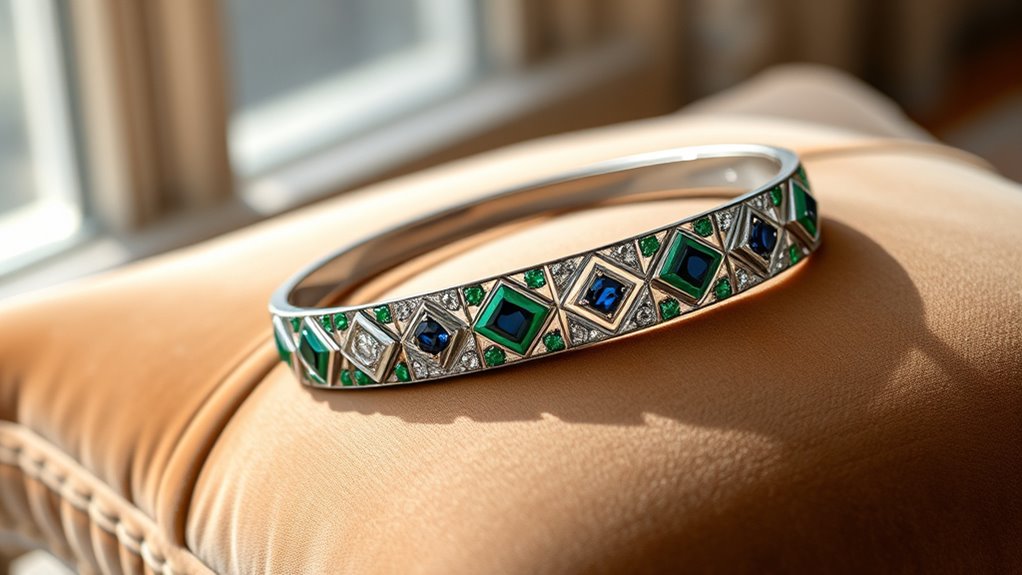
Inspired by the 1925 Exposition Internationale des Arts Décoratifs et Industriels Modernes in Paris, Art Deco jewelry reflected a shift toward sleek, architectural designs.
You’ll notice geometric shapes and bold lines, a clear departure from the flowing curves of earlier styles.
This period celebrated progress and prosperity, influencing jewelry that combined modern aesthetics with luxurious materials like platinum and colored gemstones.
The style’s architectural influence is evident in its symmetry and structured forms, making Art Deco jewelry a striking symbol of the 1920s’ embrace of modernity and elegance.
Distinctive Materials and Techniques Used
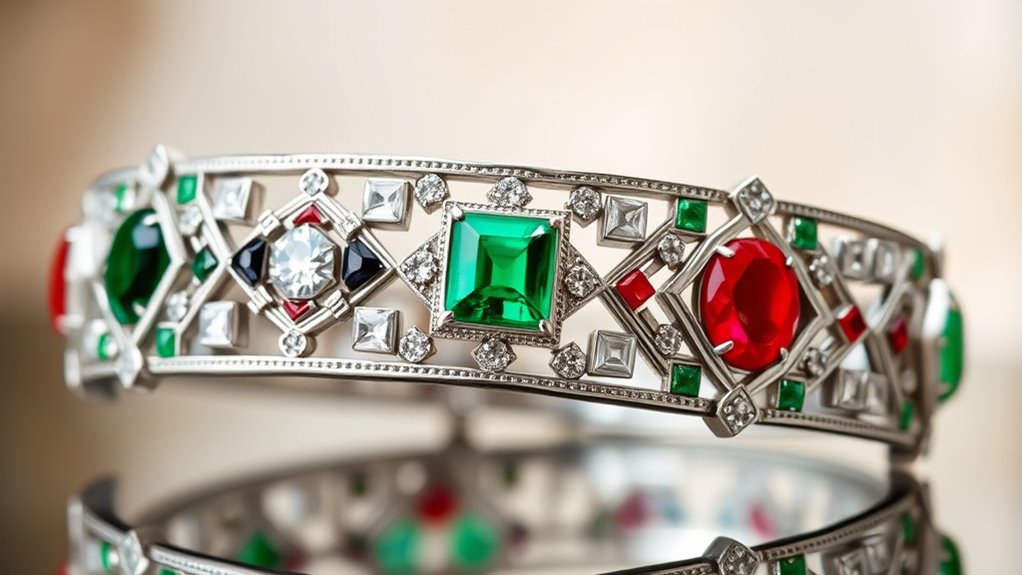
When you examine Art Deco jewelry, you’ll see how platinum and white gold set the stage for its sleek, modern look.
These metals perfectly frame bold geometric designs.
The era’s innovative gemstone cuts like trapezoids and step cuts highlight sharp angles.
You’ll also notice intricate filigree work and colorful enamel inlays that add fine detail.
Synthetic materials such as Bakelite brought fresh textures while keeping pieces affordable.
These elements combine to create striking contrasts and emphasize geometric motifs without overwhelming the design.
| Material/Technique | Characteristic Use |
|---|---|
| Platinum | Sleek, durable metal base |
| White Gold | Enhances brightness, modern appeal |
| Gemstone Cuts | Angular shapes like trapezoids |
| Filigree Work | Delicate, detailed metal patterns |
| Enamel Inlays | Colorful accents and texture |
Signature Geometric Shapes and Design Motifs
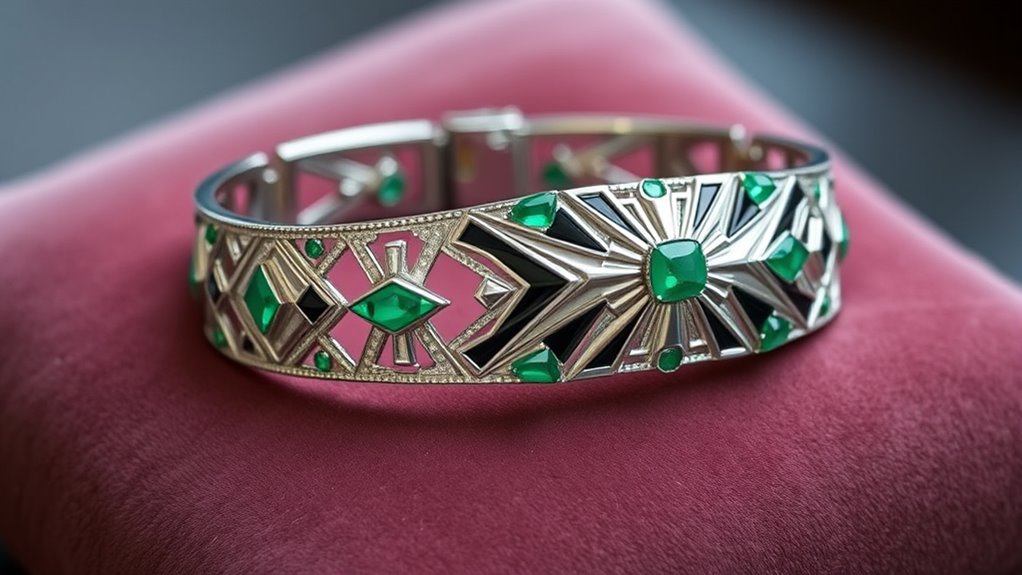
You’ll notice Art Deco jewelry stands out with its bold angular patterns and precise symmetry.
Repetition of geometric shapes like chevrons and zigzags creates a balanced, striking look.
These designs often draw inspiration from ancient cultures, blending modern style with historic motifs.
Bold Angular Patterns
Because Art Deco jewelry thrives on bold geometric shapes, you’ll notice sharp triangles, rectangles, and fan motifs that demand attention.
These angular motifs feature sharp lines and step forms inspired by architecture, creating striking geometric patterns. You’ll often see chevron patterns adding dynamic flair, emphasizing the bold shapes that define this style.
While symmetry plays a role in balancing these elements, the focus here is on the crisp, angular details themselves. The clean edges and precise cuts highlight the jewelry’s modernity, making each piece visually powerful.
When you look closely, you’ll spot how these bold angular patterns work together to create a cohesive, eye-catching design that’s unmistakably Art Deco.
Symmetry and Repetition
Although bold angular patterns grab your attention, it’s the precise symmetry and repetition of geometric shapes that define Art Deco jewelry’s distinctive style.
You’ll notice how designers arrange rectangles, triangles, and fan motifs in perfectly balanced, symmetrical layouts. This symmetry mirrors elements along central axes, creating a sense of structure and modernity.
Repetition plays a key role, with motifs like chevrons, zigzags, and stepped forms repeated consistently to emphasize order and uniformity.
These geometric designs form harmonious patterns that make each piece feel both dynamic and cohesive.
When you spot jewelry with these carefully repeated, balanced patterns and signature motifs, you’re looking at authentic Art Deco—where modernity and meticulous design come together seamlessly.
Cultural Motif Influences
How do Art Deco jewelers blend global influences into their designs?
They draw inspiration from diverse art influences, incorporating iconic patterns and cultural symbols to create striking pieces.
You’ll notice Egyptian motifs like scarabs and lotus flowers combined with bold geometric shapes such as chevrons, triangles, and fan designs.
These design elements emphasize symmetry and modernity while reflecting a rich cultural heritage.
Key features include:
- Architectural motifs like stepped edges and zigzags inspired by urbanism and technological progress.
- Cultural symbols from African, Asian, and Egyptian art integrated with geometric abstraction.
- Vibrant contrasts using materials like onyx and colorful gemstones to highlight these motifs.
Influences From Global Cultures and Artistic Movements
When you explore Art Deco jewelry, you’ll notice it draws heavily from global cultures and artistic movements, creating a rich tapestry of design.
Egyptian Revival motifs like scarabs and pyramids blend seamlessly with geometric patterns inspired by Cubism and Modernism.
You’ll find exotic materials such as lapis lazuli, turquoise, and coral that highlight influences from Indian, African, and Far Eastern art, emphasizing a cosmopolitan aesthetic.
This fusion reflects a fascination with international traditions sparked by archaeological discoveries, including Tutankhamun’s tomb.
Artistic movements encouraged stylized, streamlined forms, while the diverse motifs created an eclectic yet modern look.
Iconic Jewelry Types and Their Evolution
Art Deco jewelry takes the global influences and artistic inspiration you’ve seen and turns them into distinctive, wearable art.
You’ll notice how iconic pieces like geometric earrings, long necklaces, and statement rings showcase the design evolution from delicate to bold styles.
Brooches became angular and striking, often doubling as convertible jewelry for versatility.
Here’s what you should look for:
- Early 1920s geometric earrings and narrow bangles evolved into larger statement cuffs and naturalistic designs by the 1930s.
- Long necklaces, especially sautoirs, combined intricate craftsmanship with length and layering.
- Statement rings featured large, step-cut gemstones, reflecting the era’s love for drama and symmetry.
These shifts in Art Deco jewelry highlight how form and function merged beautifully throughout the period.
Recognizing Authentic Art Deco Pieces
Although distinguishing genuine Art Deco jewelry can seem challenging, you can identify authentic pieces by focusing on key characteristics like geometric shapes, platinum or white gold settings, and distinctive diamond cuts.
Look for precise symmetry in the arrangement of rectangles, triangles, and fan motifs—hallmarks of Art Deco design.
Precise symmetry in rectangles, triangles, and fan motifs defines authentic Art Deco design.
Authentic pieces often feature old European cuts or Asscher-cut diamonds, known for their angular brilliance.
Pay attention to enamel work in bold, flat colors such as blue or black, which adds striking contrast.
The use of platinum not only enhances durability but also reflects the era’s sleek modern aesthetic.
Finally, inspect craftsmanship closely; detailed handiwork and hallmarks or maker’s marks can verify authenticity, ensuring you’re appreciating a true Art Deco masterpiece.
Modern Interpretations and Styling of Art Deco Jewelry
You’ll notice modern Art Deco jewelry keeps the bold geometry and clean lines of the original style,
but adds fresh materials like rose gold and sustainable gemstones.
Designers now mix vintage motifs with minimalist settings to create pieces that feel both timeless and current.
By blending classic patterns with contemporary trends,
you can wear a look that honors the past while standing out today.
Contemporary Styling Trends
How do designers bring the glamour of the 1920s into today’s jewelry?
They use modern interpretations that highlight geometric shapes, sleek silhouettes, and bold color contrasts.
You’ll notice mixed metals like white gold, platinum, and rose gold adding a fresh twist while maintaining that classic Art Deco sophistication.
Designer brands lead the way with pieces emphasizing symmetry and vibrant gemstones.
Here are three contemporary styling trends to spot:
- Incorporating traditional Art Deco motifs such as chevrons and fan shapes with advanced settings like pave and channel.
- Offering customization options so you can personalize jewelry with vintage-inspired designs.
- Creating statement engagement rings that balance historic elegance with modern wearability.
These trends keep Art Deco jewelry timeless and relevant for today’s fashion.
Mixing Vintage With Modern
When you blend vintage Art Deco elements with modern design, you create jewelry that feels both timeless and fresh.
Contemporary designers excel at mixing vintage geometric motifs with sleek lines and modern craftsmanship.
This results in pieces that honor classic aesthetics while embracing innovation.
Many new creations showcase vintage-inspired cuts like Asscher and baguette diamonds, paired with vibrant gemstones and natural diamonds.
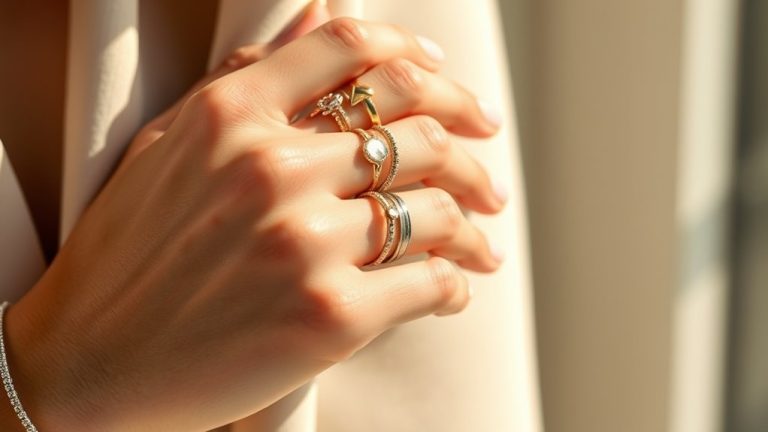
You can easily incorporate Art Deco jewelry into your wardrobe by stacking rings, layering necklaces, or choosing statement earrings that highlight bold geometry.
Brands like Sylva & Cie and Chinchar Maloney lead the way, offering versatile pieces perfect for casual or formal wear.
Frequently Asked Questions
How to Identify Art Deco Jewelry?
You can identify Art Deco jewelry by spotting geometric shapes, symmetrical patterns, and clean lines.
Look for platinum or white gold, baguette or emerald-cut stones, bold enamel colors, and intricate craftsmanship like filigree or pave settings.
What Are the Characteristics of Art Deco Jewelry?
You’ll notice bold shapes, sharp symmetry, and sleek lines;
you’ll find contrasting gems, white metals, and vivid colors.
You’ll appreciate precise cuts, intricate details, and modern techniques—
these define Art Deco jewelry’s striking, timeless style.
What Are the Key Features of Art Deco?
You’ll spot key Art Deco features in bold geometric shapes, symmetry, and sleek designs.
Look for contrasting metals with vibrant gemstones, stepped or fan motifs, and unique gemstone cuts.
Also, pay attention to intricate details like filigree and enamel work.
How Do You Identify Art Deco?
You identify Art Deco by spotting bold geometric shapes, symmetry, and platinum or white gold settings.
Look for unique cuts like baguette, vibrant colors, enamel work, and motifs inspired by Egyptian or Asian art styles.
Conclusion
Now that you know the dazzling details of Art Deco jewelry, you can confidently celebrate its charm.
From geometric gems to glamorous global influences, these timeless treasures tell tales of tradition and trend.
Whether you’re seeking authentic adornments or stylishly modern spins, spotting signature shapes and sophisticated styles sharpens your savvy.
So, plunge into the dazzling world of Art Deco and delight in designs that dazzle, define, and dazzle again!
In conclusion, Art Deco jewelry embodies a unique blend of elegance and innovation.
With its distinctive geometric patterns and rich cultural influences, it continues to capture the hearts of collectors and fashion enthusiasts alike.
Whether you choose vintage pieces or contemporary interpretations, understanding the key features will enhance your appreciation for this iconic style.
So embrace the allure of Art Deco jewelry and let its timeless charm elevate your collection!