What Does 750 Mean on Jewelry?
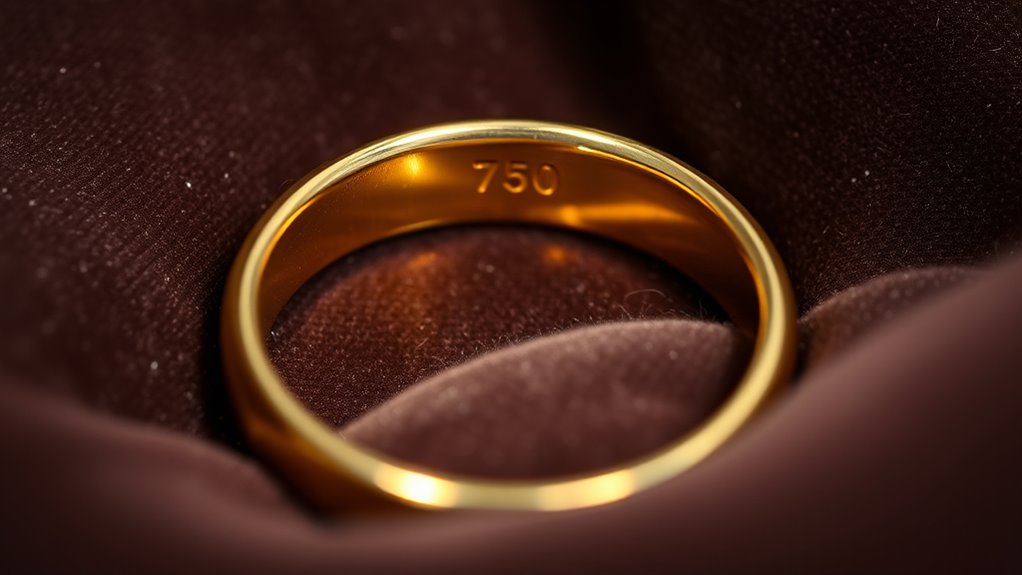
When you see “750” on jewelry, it indicates that the piece is made of 75% pure gold, which is classified as 18-karat gold.
This mark assures you of high quality and durability, as the gold is typically alloyed with metals like copper or silver. It’s a popular choice in the world of fine jewelry because it strikes a perfect balance between luxury and strength.
Recognizing this mark not only helps you confirm the authenticity of the jewelry but also gives you insight into its value.
So, when you’re shopping for jewelry, knowing what “750” means can really guide your decisions and enhance your appreciation for the craftsmanship involved.
Keep exploring to understand how this impacts jewelry’s look and worth!
Understanding Gold Purity and the 750 Mark
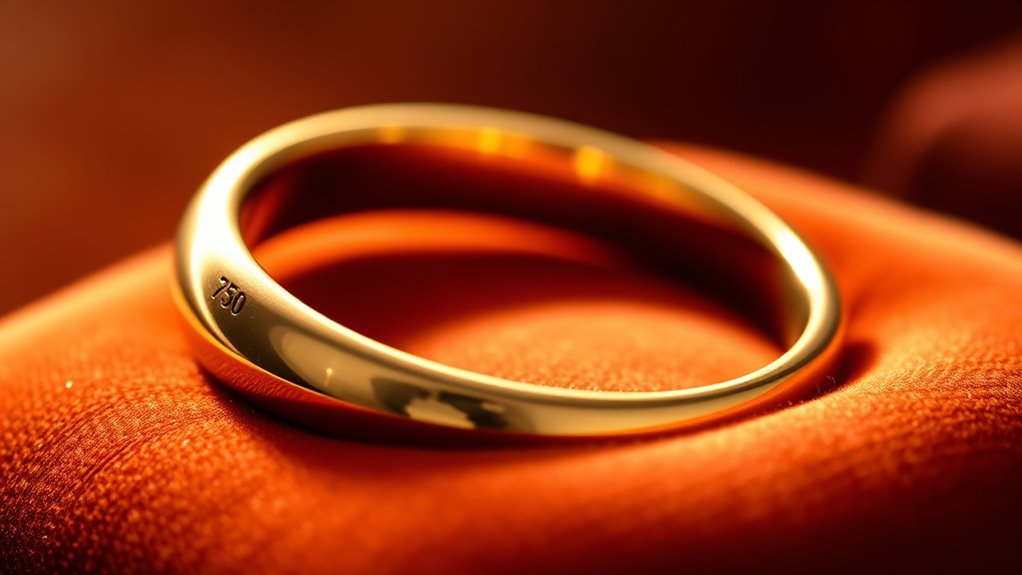
When you see the number “750” stamped on jewelry, it means the piece is made of 18-karat gold.
This gold contains 75% pure gold mixed with other metals for strength.
The “750 mark” indicates that out of 1,000 parts, 750 are pure gold, while the remaining 250 parts are alloy metals.
These alloys enhance durability without compromising gold purity.
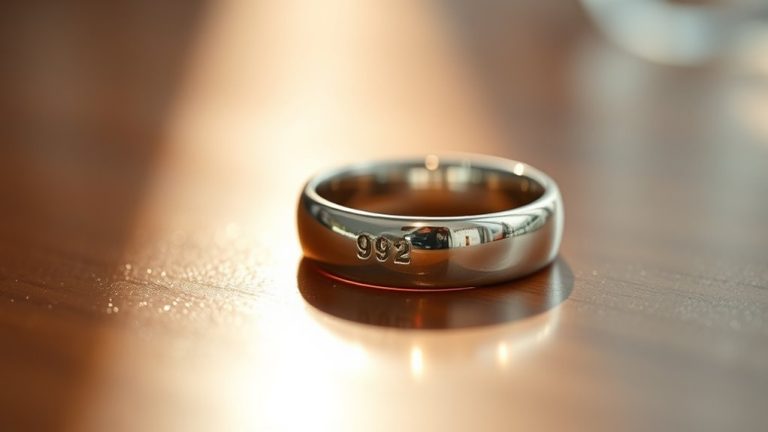
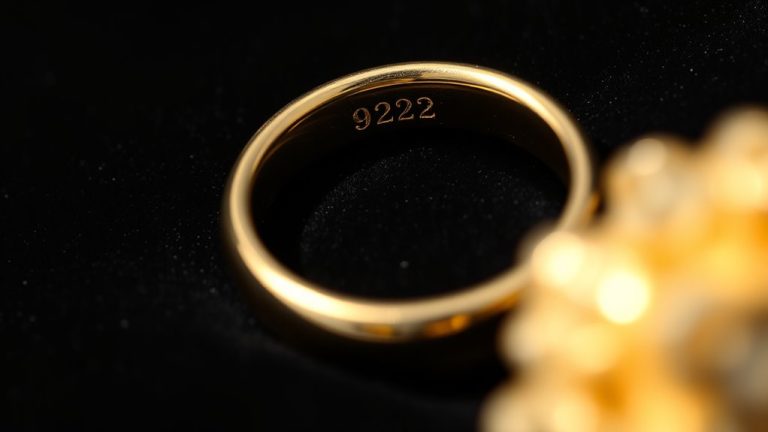
You’ll often find this stamp inside rings, on clasps, or near edges.
Look for the 750 stamp inside rings, on clasps, or along edges to verify gold purity.
It serves as a quick reference for gold content.
Trusted assay offices worldwide verify this mark to ensure authenticity and consistent quality.
By understanding the “750” mark, you can confidently assess the jewelry’s gold purity, value, and sturdiness before making a purchase.
This knowledge helps you avoid confusion and ensures you get genuine 18-karat gold.
The Hallmarking Process and Its Importance
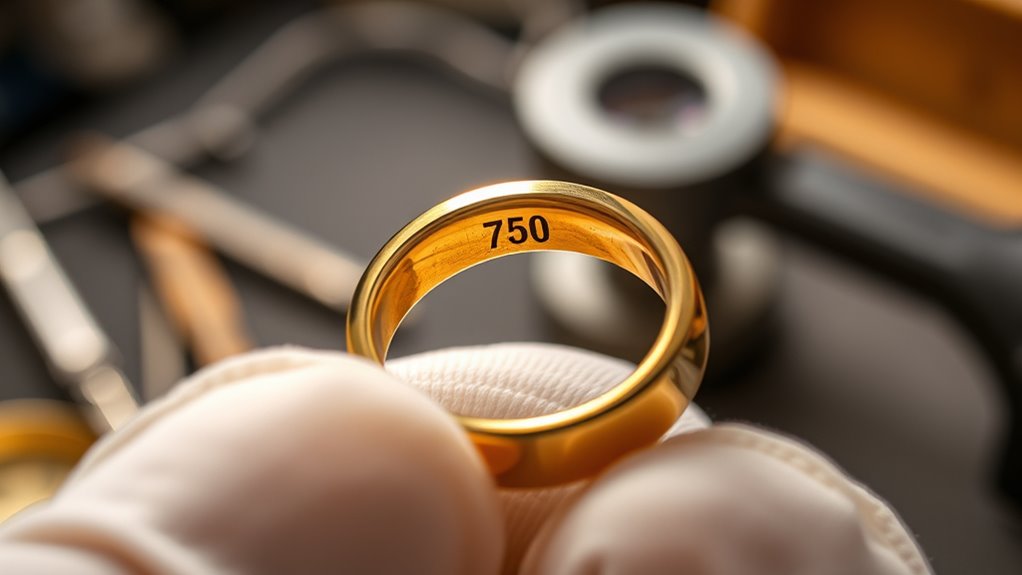
When you see the “750” hallmark, it’s backed by strict certification standards that verify the gold’s purity.
Keep in mind, hallmark symbols and their placements can vary depending on the country where the jewelry was made.
Understanding these regional differences helps you confidently assess the authenticity and value of your piece.
Hallmark Certification Standards
Although jewelry may look beautiful, you shouldn’t rely on appearance alone to judge its value.
The hallmark certification standards exist to give you confidence in what you’re buying.
When you see “750” stamped on a piece, it guarantees 75% purity—equivalent to 18-karat gold.
The certification process involves:
- Chemical testing to verify the metal’s composition.
- Precise weighing to ensure authenticity and correct metal content.
- Official stamping by an independent assay office confirming the hallmark’s validity.
This hallmark not only confirms the gold’s purity but also protects you from counterfeit or substandard items.
Regional Hallmark Variations
Because hallmarking standards differ across countries, understanding regional variations helps you verify the authenticity and value of your jewelry more accurately.
Different regions use specific assay marks and symbols to certify metal purity.
For example, the UK adds a sponsor’s mark and date letter alongside purity marks, while other countries rely heavily on numeric purity indicators like “750” for 18K gold.
Being aware of these hallmarking differences means you can trust your gold’s quality wherever you buy or sell it.
| Country | Common Assay Marks | Purity Indication Example |
|---|---|---|
| UK | Sponsor, Assay Office, Date Letter | 750 (18K) |
| France | Minerva Head | 750 |
| India | BIS Hallmark | 916 (22K) |
Knowing these regional variations keeps you confident in your jewelry’s authenticity.
Composition and Types of 18K Gold Alloys
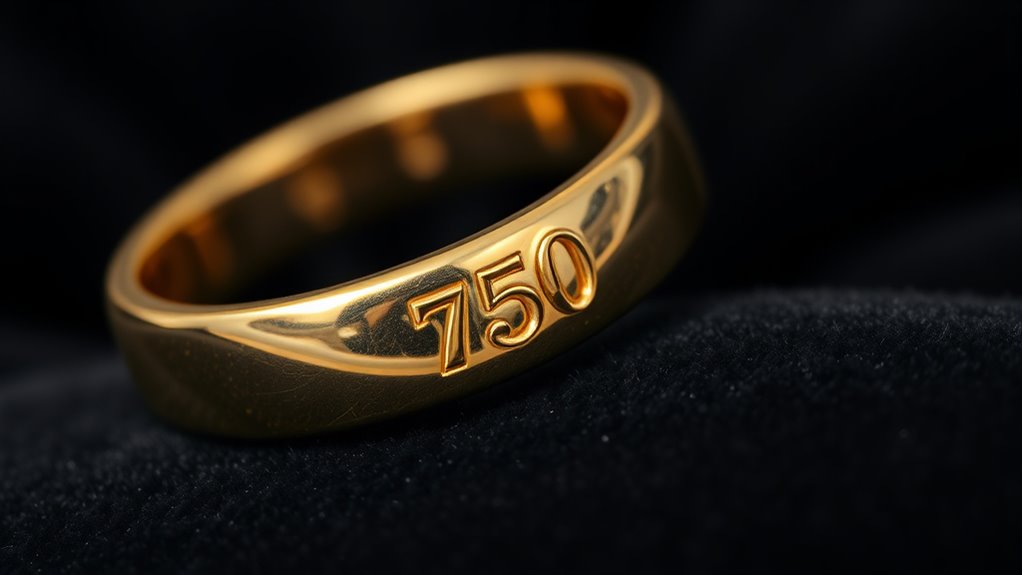
Understanding the composition of 18K gold, often stamped as 750, helps you appreciate why it combines 75% pure gold with 25% other metals like copper, silver, or palladium.
This alloy blend directly affects the jewelry’s color and durability. Here’s what you should know about 750 gold alloys:
- Yellow 18K gold mixes gold with copper and silver, keeping a classic gold shade.
- Rose gold has a higher copper content, giving it a warm, pinkish hue.
- White gold uses more silver or palladium, often coated with rhodium for extra shine and scratch resistance.
Knowing these alloy variations helps you choose jewelry that fits your style while understanding the purity and strength behind the 750 hallmark.
Comparing 750 Gold to Other Purity Levels
When you compare 750 gold to other purity levels, you’ll notice it strikes a balance between luxury and durability.
With 75% gold purity, 750 gold corresponds to 18-karat gold, placing it above 585 gold (14K) but below 999 gold (24K).
This means jewelry marked 750 gold offers more value and a richer look than 585 gold, while maintaining better scratch resistance and strength than nearly pure 999 gold.
Jewelry standards recognize 750 gold as a premium choice because its alloy metals enhance durability, making it ideal for everyday wear.
While 585 gold is more affordable and resilient, 750 gold is favored for its higher purity and refined appearance, meeting both quality and aesthetic expectations in fine jewelry.
Identifying Authentic 750 Gold Jewelry
If you want to make sure your 750 gold jewelry is authentic, start by checking for the “750” hallmark. This hallmark indicates 75% pure gold or 18-karat gold.
To verify authenticity, focus on these key steps:
To verify authenticity, carefully check hallmark clarity, consistency, and look for supporting assay or maker’s marks.
- Locate the hallmark, usually inside rings, on clasps, or near necklace clasps.
- Examine the stamp’s clarity and consistency. Authentic 750 gold has a sharp, even hallmark. If you see uneven or faint marks, it might be counterfeit.
- Look for additional marks, like assay office stamps or maker’s marks. These can support the authenticity of your jewelry.
Factors Influencing the Value and Pricing of 750 Gold
When you shop for 750 gold jewelry, the market gold price plays a big role in its base value.
You’ll also notice that craftsmanship and design can push the price higher than just the gold content.
Plus, the type of alloy—whether white, yellow, or rose gold—affects durability and appearance, which can influence what you pay.
Market Gold Price
How do you determine the market price of 750 gold?
It starts with understanding that 750 gold is 75% pure gold, so its market value closely tracks the current gold spot price.
You can estimate the melt value of 750 gold as about 75% of the prevailing gold price per ounce.
However, the final price you pay often exceeds this due to several factors.
Here’s what influences the market gold price:
- Global economic factors and geopolitical stability affect gold’s spot price daily.
- Currency fluctuations and demand in key markets, like India and China, impact value.
- Purity verification, weight, and additional elements such as gemstones can raise the price above melt value.
Keeping these in mind helps you gauge the true market value of your 750 gold jewelry.
Craftsmanship Impact
Because craftsmanship directly affects the quality and appeal of 750 gold jewelry, it plays a crucial role in determining its value and price.
When you choose pieces with expert craftsmanship, you’re getting intricate designs and fine finishing that not only boost aesthetic appeal but also increase durability.
This attention to detail during manufacturing, including precise hallmarking, signals superior quality and authenticity.
High craftsmanship raises labor costs, which in turn influences the market value of 750 gold jewelry.
Often, handcrafted items are more valuable than mass-produced ones.
Alloy Composition Effects
Craftsmanship shapes the appeal and durability of 750 gold jewelry, but the alloy composition plays an equally significant role in defining its value and price.
The purity and metal content determine not only the look but also the strength and longevity of your piece.
Here’s how alloy composition affects 750 gold:
- Copper-rich alloys yield rose gold, while silver or palladium create white gold. This influences both color and toughness.
- Higher purity alloys with balanced metal content often fetch better market prices due to enhanced quality.
- Variations in alloy metals impact tarnish resistance and scratch hardness. This affects maintenance and durability.
Understanding these factors helps you appreciate why not all 750 gold jewelry shares the same value or appearance.
Frequently Asked Questions
Is 750 Gold Worth Anything?
Yes, 750 gold is definitely worth something.
Since it’s 75% pure gold, its value is tied to the current gold price and weight.
You’ll find it more valuable than lower-karat gold options.
Can Fake Gold Be Stamped 750?
Yes, fake gold can wear the “750” mask, tricking your eyes.
Don’t be fooled—only proper testing or trusted jewelers can reveal the truth behind that stamp.
Make sure you’re not chasing shadows instead of genuine gold.
Is 750 Real Gold?
Yes, 750 is real gold.
When you see that stamp, it means your jewelry contains 75% pure gold.
This makes it 18-karat gold, which is durable, valuable, and recognized internationally as authentic gold.
What Does 750 Mean on Silver?
If you see 750 on silver, it means the piece contains 75% pure silver.
This is often referred to as 18-karat silver or vermeil.
The remaining 25% includes other metals to enhance durability.
Sometimes, you might also find gold plating over sterling silver.
Conclusion
So, next time you see “750” stamped on jewelry, don’t panic—it’s just fancy code for 18K gold, not a secret treasure map.
You’re basically holding 75% pure gold, not a magic potion.
Remember, hallmarks are there to save you from buying fool’s gold, so trust them like your grandma’s advice.
Now, go flaunt that 750 bling and watch everyone wonder if you’ve struck gold—or just really good taste.
In conclusion, when you find jewelry marked with “750,” you can feel confident knowing it’s 18K gold, containing 75% pure gold.
These hallmarks are valuable to help you identify genuine pieces and avoid counterfeit items.
So, wear that stunning 750 jewelry with pride, and let your exquisite taste shine through!