How to Tell if Jewelry Is Real Gold With a Step-By-Step Guide
To tell if your jewelry is real gold, it’s essential to know how to identify its authenticity.
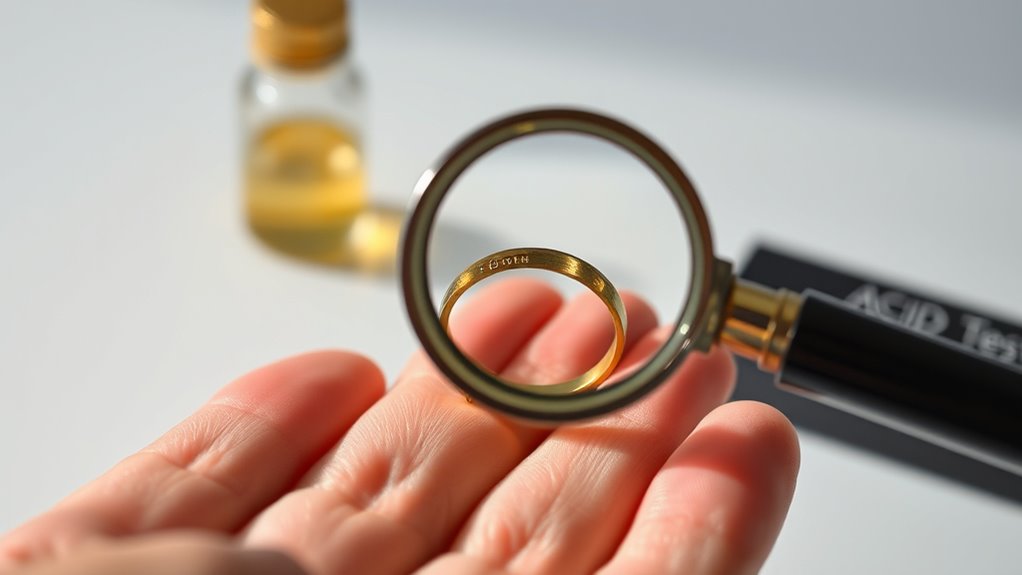
Start by checking for hallmarks like “14K” or “750” inside the piece. These markings indicate the gold’s purity.
Next, do a magnet test—real gold isn’t magnetic, so if your piece is attracted to the magnet, it’s likely not gold.
You can also try the ceramic scratch test; real gold leaves a gold streak on unglazed ceramic.
Weigh your item to feel its heft, as genuine gold is denser than most metals.
Lastly, inspect for discoloration or wear that might expose base metal underneath.
Using these steps, you’ll have a solid idea of authenticity, and you can explore more detailed methods to confirm your gold’s value.
Understanding Gold Purity and Hallmarks
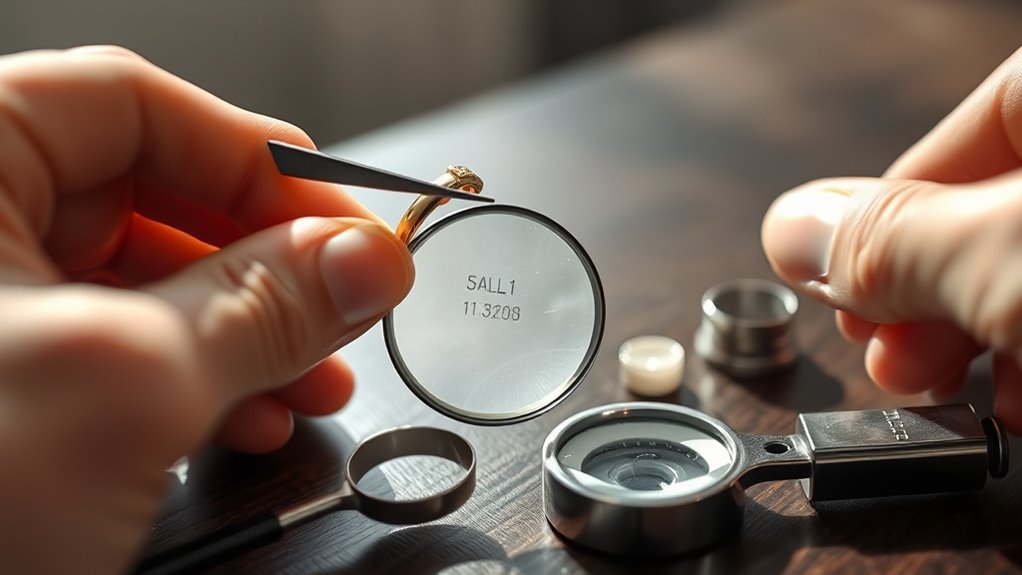
When you’re trying to determine if jewelry is real gold, understanding gold purity and hallmarks is essential.
Gold purity is measured by karat markings like 10K, 14K, 18K, and 24K, with higher numbers indicating greater gold content.
Gold purity is indicated by karat markings such as 10K, 14K, 18K, and 24K, with higher karats meaning more gold.
You’ll often find these stamped jewelry marks—such as “750” for 18K or “999” for pure gold—inside rings or near necklace clasps.
These hallmarks serve as certification of the metal composition and purity level.
Genuine gold pieces show clear, consistent marking consistency, while fake items might lack hallmarks or display poorly stamped symbols.
Keep in mind, older or vintage jewelry might not have hallmarks, so verifying gold purity may require additional testing.
Recognizing these hallmarks helps you confidently identify genuine gold and avoid counterfeit pieces.
Visual and Physical Indicators of Authentic Gold
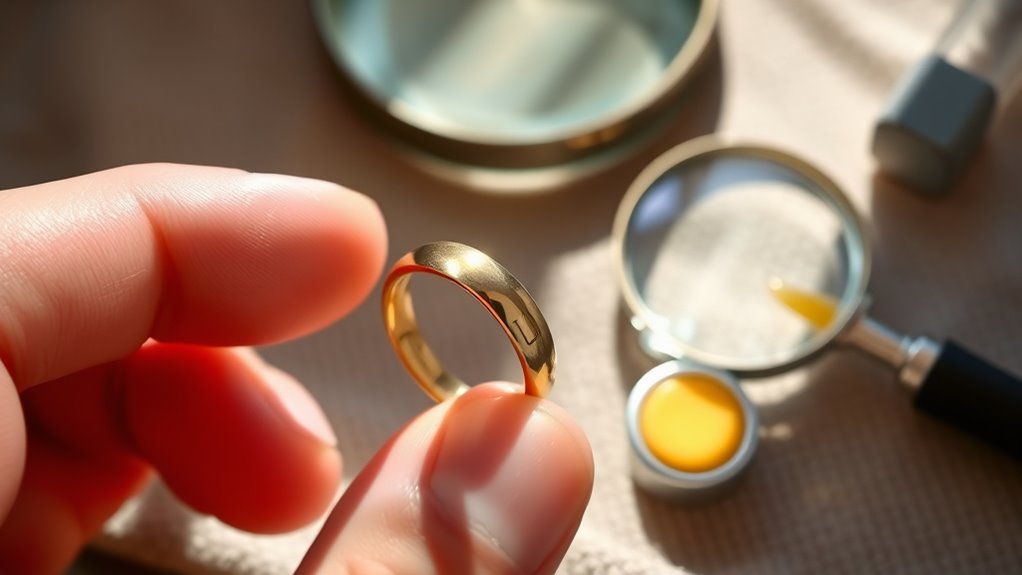
Although hallmarks provide important clues, you can also rely on visual and physical indicators to verify if your gold jewelry is authentic.
Start with a close visual inspection of the markings—clear hallmarks like “14K” or “750” indicate purity.
Next, check the appearance and weight. Real gold has a warm, consistent glow and feels noticeably heavier than fake pieces.
Look for signs of wear and tear, especially on edges or worn areas. Genuine gold maintains a uniform appearance without exposing any base metal underneath.
Be cautious of discoloration or greenish marks on your skin, as these often signal plated or fake gold.
Basic At-Home Gold Testing Techniques

Since authenticating gold can sometimes require more than just visual inspection, you can try several simple at-home tests to check your jewelry’s genuineness.
Start by looking for hallmarks or purity marks like “14K” or “18K” as a gold stamp.
Then, perform the magnet test; real gold isn’t magnetic.
Next, try the ceramic scratch test—genuine gold leaves a gold streak. The vinegar test also helps; real gold stays shiny after soaking.
Finally, do a weight comparison: real gold is denser and heavier than fake pieces.
| Test Type | What to Look For |
|---|---|
| Gold Stamp | Hallmarks or purity marks |
| Magnet Test | No attraction |
| Ceramic Scratch Test | Gold-colored streak |
| Vinegar Test | No tarnish or discoloration |
| Weight Comparison | Heavier than similar-sized fake gold |
These at-home jewelry testing methods help you spot fake gold signs easily.
Using Gold Testing Kits Safely and Effectively
After trying simple at-home tests, you might want a more reliable method to confirm your gold’s authenticity.
Gold testing kits offer that precision, but you must prioritize jewelry safety.
Always start by cleaning your jewelry thoroughly to remove dirt and oils that could skew results.
Next, read and follow the manufacturer instructions carefully for the testing procedure.
When performing an acid test, wear protective gear like gloves and goggles to guard against harmful testing solutions.
Conduct the test in a well-ventilated area and apply acids only to an inconspicuous area to avoid visible damage.
These steps ensure you’re authenticating gold accurately while minimizing risks.
Using gold testing kits safely and effectively gives you confidence in your results without compromising your health or your jewelry.
Advanced Scientific Methods for Gold Verification
When you want the most accurate results, advanced scientific methods offer reliable ways to verify gold authenticity.
Electronic gold testers provide quick gold purity verification by measuring electrical conductivity with minimal impact on your jewelry.
XRF analysis uses non-destructive testing to reveal the elemental composition and alloy identification. This ensures you know exactly what metals are present.
Specific gravity testing calculates density, comparing weight in air and water to confirm if your gold matches the expected 19.3 g/mL for pure gold.
Ultrasonic testing detects inconsistencies like hollow spots or plating by sending sound waves through the piece.
Combining these advanced testing methods gives you a thorough, precise assessment of gold authenticity.
This helps you confidently identify genuine gold jewelry without damaging it.
Identifying Red Flags and Avoiding Common Gold Scams
Watch out for prices that seem too good to be true—they often signal fake or plated gold.
Always check for official markings and be cautious of labels like “HGE” or “GF,” which indicate gold-filled or plated items.
Knowing these signs helps you avoid scams and make smarter purchases.
Suspicious Pricing Alerts
Although a tempting deal might catch your eye, prices considerably below the current gold market rates often signal counterfeit or plated jewelry.
Suspicious pricing is a key red flag, especially when offers come from untrusted sources lacking certification or receipts.
Fake gold can be disguised as gold-filled or gold-plated items, which cost less but aren’t solid gold.
Always perform hallmark verification to verify authenticity, as vague or inconsistent stamps often indicate counterfeits.
Keep an eye on price alerts to stay informed about market value fluctuations.
Avoid rushing into purchases, and don’t let low prices blind you.
Misleading Markings and Labels
Since counterfeiters often rely on misleading markings and labels, you need to scrutinize any gold jewelry carefully before buying.
Watch out for fake gold labels like “HGE,” “GF,” or “GEP,” which indicate gold-filled vs. solid gold and not genuine gold.
Check the jewelry markings closely—counterfeit markings often mimic gold hallmarks but lack gold stamp authenticity.
Always perform hallmark verification with a magnifying glass or consult a professional appraiser to confirm stamped gold quality.
Misrepresented gold frequently comes without official certification or receipts, signaling potential scams.
Be cautious of inconsistent or unofficial stamps that don’t match standard purity marks like “14K,” “18K,” or “999.”
Proper Care and Maintenance of Genuine Gold Jewelry
To keep your genuine gold jewelry looking its best, store each piece separately in soft pouches or lined boxes. This helps prevent scratches and tangling.
Proper care involves regular cleaning with mild soap, warm water, and a soft cloth or brush. This will help maintain shine and remove oils.
Avoid exposure to harsh chemicals like chlorine or bleach. These can lead to discoloration and damage.
Be sure to handle your gold jewelry carefully. It’s a good idea to remove it during physical activities and before applying lotions or perfumes to prevent buildup.
Regular upkeep also includes professional inspection and cleaning at least once a year. This ensures that settings remain secure and surfaces stay pristine.
Following these maintenance tips will help preserve your gold’s beauty, extending its lifespan effectively.
Frequently Asked Questions
What Are the Two Letters for Gold?
The two letters for gold you’ll often see are “K” and “G.”
“K” stands for karat, showing purity like 14K.
And “G” indicates grams, which tells you the weight of the gold jewelry or item.
How to Test for Real Gold Jewelry at Home?
Wondering if your jewelry’s real?
Start with a magnet—if it sticks, it’s not gold.
Next, try a ceramic scratch test.
If it leaves a gold streak, you’re holding genuine gold.
Simple, right?
How Accurate Is the Vinegar Gold Test?
The vinegar gold test’s fairly accurate but not foolproof.
If your jewelry changes color, it’s likely fake, but some gold alloys or coatings can mislead you.
Use it with other tests for better certainty.
How to Test Gold at Home With Toothpaste?
You can test gold at home by rubbing a small dab of white toothpaste on a discreet spot, then wiping it off.
If the gold’s shine returns without dark residue, it’s likely real, but not guaranteed.
Conclusion
Just like gold’s true value shines through its unmistakable glow, your knowledge acts as a beacon, guiding you away from fakes and toward genuine treasure.
By understanding purity marks, trusting your senses, and using the right tests, you hold the key to revealing authenticity.
Treat your gold jewelry with care, and it’ll remain a timeless symbol of worth—proof that what’s real always endures, shining brighter with every step you take.
In conclusion, recognizing real gold jewelry is essential for ensuring you invest in genuine pieces.
By familiarizing yourself with purity marks and conducting simple tests, you can confidently distinguish between authentic gold and imitations.
Remember, your care and attention to detail will not only help you spot real gold but also preserve its beauty for years to come.
Embrace your knowledge, and let it guide you to the treasures that truly shine!