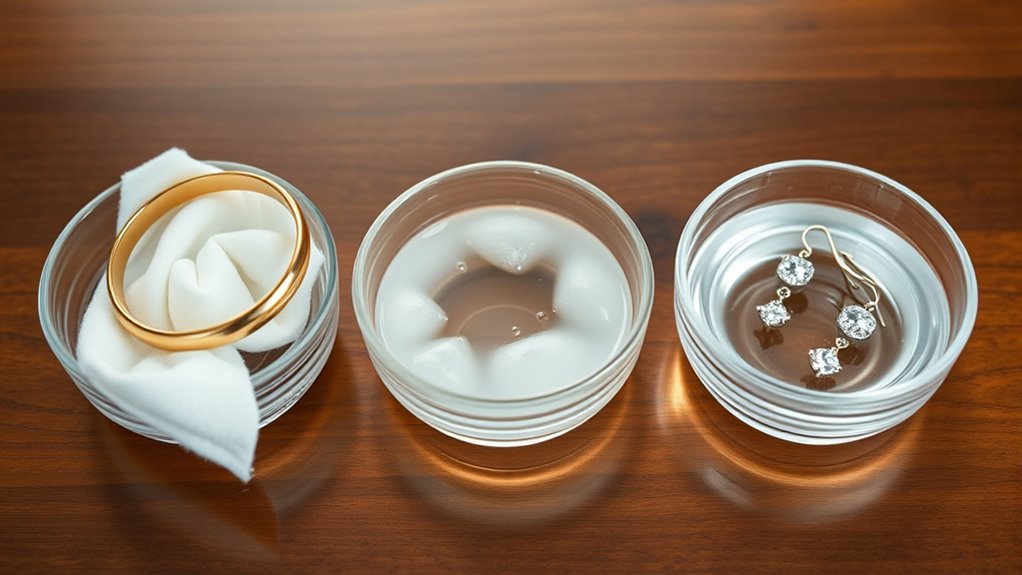
Three Steps to Remove Tarnish From Fake Jewelry
To remove tarnish from your fake jewelry, you’ll want to ensure it looks its best. Fake jewelry can easily accumulate tarnish over time, but don’t worry! With a few simple steps, you can restore its shine and sparkle.
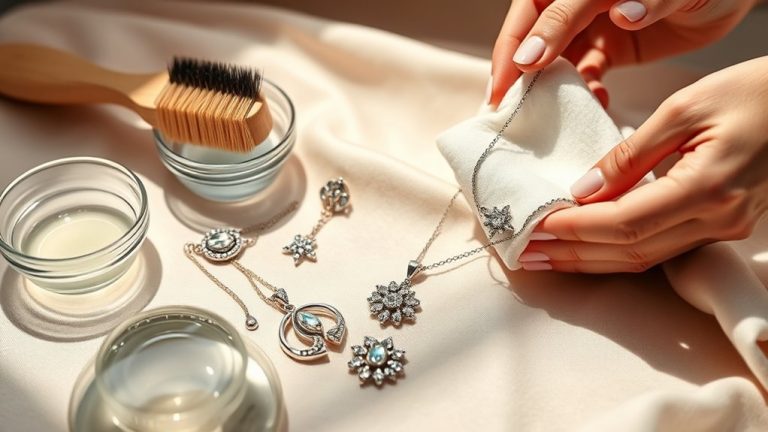
Start by wiping your piece gently with a soft cloth to clear away any surface dirt. This will prepare your jewelry for the cleaning process.
Next, soak your jewelry in warm water mixed with baking soda or a mild soap solution for about 10-15 minutes. This helps to loosen the tarnish and makes it easier to clean.
Finally, use a soft toothbrush to carefully scrub detailed areas. Make sure to rinse your jewelry thoroughly and dry it with a microfiber cloth to avoid any water spots.
Want to keep your jewelry looking its best? There’s more you can do to protect and maintain it.
Identifying Fake Jewelry and Preparing for Cleaning
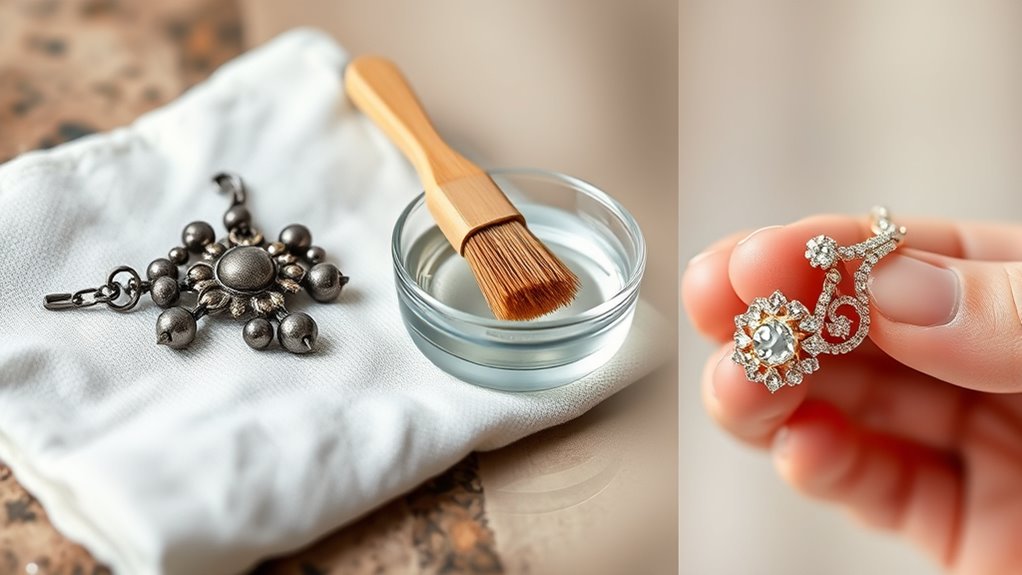
Although fake jewelry can look convincing, you can tell it apart by checking for signs like discoloration or visible layering.
Costume jewelry often has a base metal coated with a thin layer of gold or silver, which makes it prone to tarnish over time.
Costume jewelry features a base metal with a thin gold or silver coating that can tarnish over time.
Authentic gold won’t discolor or dull like plated pieces.
Before cleaning, examine your jewelry carefully to identify any tarnish or buildup.
To prepare for cleaning, gently wipe the piece with a soft cloth to remove dirt and oils.
This step helps ensure your cleaning method works effectively without damaging the delicate layers.
Knowing how to spot fake jewelry and properly prepare it will make removing tarnish much easier and keep your costume jewelry looking its best.
Creating a Safe Cleaning Solution
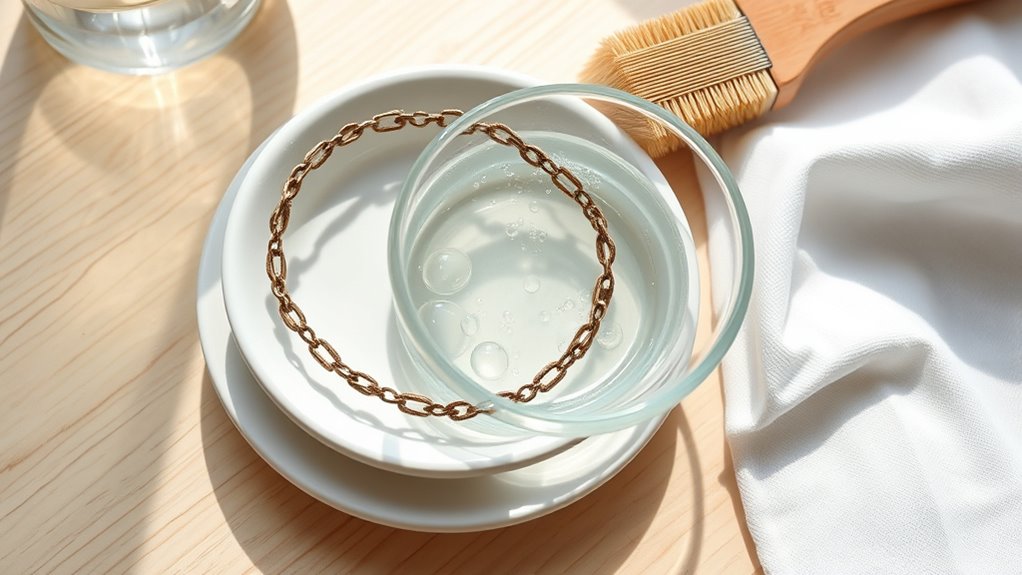
When you create a cleaning solution for fake jewelry, you want to use mild ingredients that won’t harm delicate surfaces.
Start by lining a bowl with aluminum foil, shiny side up, to help trigger a gentle cleaning reaction.
Then, mix equal parts warm water with about 1-2 tablespoons of baking soda to form your solution.
This combination encourages effective tarnish removal without harsh chemicals or abrasive agents that could damage your pieces.
It’s important to avoid using bleach or commercial tarnish removers, as they’re too strong for fake jewelry.
By relying on this baking soda and warm water mix in contact with aluminum foil, you’ll safely loosen tarnish while protecting your jewelry’s finish.
This simple method ensures a gentle cleaning process that’s both safe and effective.
Soaking Jewelry to Loosen Tarnish
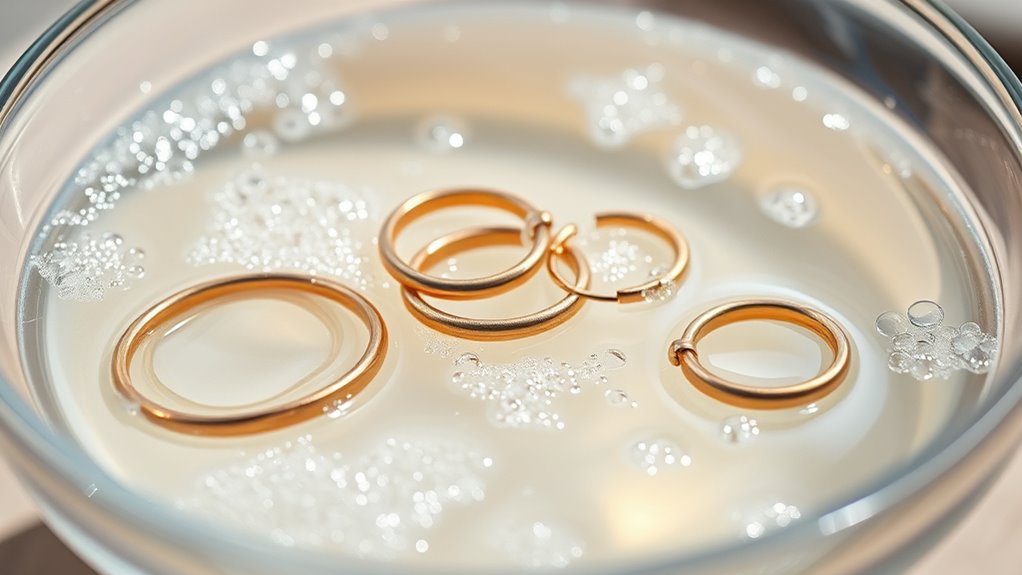
You’ll want to choose a gentle soaking solution like warm water mixed with mild soap, lemon juice, or baking soda to safely loosen tarnish.
Make sure your jewelry is fully submerged and soak it for 10 to 15 minutes. Just be careful not to leave it too long to prevent damage.
After soaking, a quick scrub with a soft toothbrush will help remove any remaining buildup.
This process can really help restore the shine to your pieces!
Choosing Soaking Solutions
How do you choose the best soaking solution to loosen tarnish on your fake jewelry?
Start by considering the material of your pieces to avoid damage.
Soaking solutions like a vinegar water solution work well by breaking down tarnish through a mild chemical reaction, especially when submerged for 5-10 minutes.
Alternatively, a mixture of lemon juice and baking soda creates a stronger reaction that lifts oxidation effectively.
If you prefer convenience, commercial jewelry cleaner designed for costume pieces offers safe and efficient tarnish removal without harming delicate finishes.
Hydrogen peroxide also helps by bubbling tarnish away in minutes.
Always match your soaking solution to your jewelry’s composition to protect its appearance while ensuring the tarnish loosens properly.
Timing and Safety Tips
Although soaking fake jewelry can effectively loosen tarnish, you shouldn’t leave pieces submerged too long to avoid damage.
Always test soaking time on a small, hidden area first to ensure the solution won’t harm finishes or glue.
Use warm water—not hot water—during soaking to prevent warping or melting delicate parts like plastic or foil backing.
Typically, 5-10 minutes in lemon juice or vinegar works well.
Avoid prolonged soaking beyond 15 minutes, as this can cause discoloration or deterioration.
After soaking, rinse your jewelry thoroughly and dry it immediately to prevent water spots or new tarnish from forming.
Following these timing and safety tips helps keep your costume jewelry looking great without risking damage.
Gentle Scrubbing Techniques for Detailed Cleaning
When tackling detailed areas on your fake jewelry, using a soft-bristled toothbrush or cotton swab dipped in a gentle cleaner helps reach crevices without causing damage.
Gentle scrubbing is key for effective tarnish removal. Follow these steps for precise, detailed cleaning:
- Use a soft-bristled toothbrush to apply light, circular motions. This loosens dirt and tarnish without harming the finish.
- For stubborn tarnish, reapply your gentle cleaner and continue scrubbing delicately, avoiding abrasive force.
- Focus on intricate areas patiently to ensure all grime is lifted, maintaining the jewelry’s appearance.
These gentle scrubbing techniques protect your jewelry’s plating and ensure thorough tarnish removal in hard-to-reach spots.
This way, you’ll be preserving its shine and detail!
Rinsing and Drying Procedures
After scrubbing, you’ll want to rinse your fake jewelry thoroughly with cool, clean water to wash away any leftover residue.
Then, gently pat it dry with a soft, lint-free cloth, making sure to remove moisture from all the tiny crevices.
Taking these steps carefully helps prevent water damage and keeps your jewelry looking its best.
Proper Rinsing Techniques
Because leftover cleaning agents can cause tarnish to return quickly, you’ll want to rinse your fake jewelry thoroughly right after cleaning.
Proper rinsing removes residues that attract tarnish and keeps your pieces looking clean and bright.
Follow these steps for effective rinsing:
- Use cool or lukewarm water to avoid damaging delicate materials during rinsing.
- Hold your jewelry under a gentle stream of water or briefly dip it in a bowl to ensure all cleaning agents wash away without soaking.
- Make sure to remove all moisture afterward, as trapped water can lead to tarnish over time.
Effective Drying Methods
Proper rinsing sets the stage for effective drying, which helps keep your fake jewelry free from water spots and tarnish.
After rinsing with cool water, gently dry with a clean, soft cloth—preferably microfiber or cotton—to blot away excess moisture, especially from intricate crevices.
Don’t rely solely on air-drying, particularly in areas with high humidity, as this can promote tarnish and discoloration.
Instead, hold your jewelry in front of a fan or use a blow dryer on a cool, low setting to circulate air evenly.
Always make sure your jewelry is completely dry before storing it to prevent moisture-induced damage.
Following these drying methods ensures your fake jewelry stays bright and tarnish-free longer.
Preventing Water Damage
When you rinse your fake jewelry, use cool, fresh water right away to wash away any cleaning agents or dirt.
This quick step helps prevent water damage and reduces tarnish buildup.
After rinsing, follow these essential steps for effective tarnish prevention:
- Gently pat dry jewelry with a soft microfiber cloth—avoid rubbing to prevent scratches.
- Make sure your jewelry is completely dry before jewelry storage; lingering moisture can cause tarnish and deterioration.
- Store dry jewelry in airtight containers or ziplock bags with the air removed to minimize exposure to humidity.
Using Polishes and Commercial Cleaners Safely
Although commercial cleaners can quickly restore the shine of your fake jewelry, you’ll want to handle them with care to avoid damage.
Always read and follow the manufacturer’s instructions on jewelry cleaners to prevent damage while you clean tarnished jewelry.
Carefully follow the manufacturer’s directions to safely clean and protect your tarnished jewelry from damage.
Before full use, test the commercial cleaner on a small, hidden area to ensure it won’t discolor or harm your piece.
Apply polish or cleaner gently with a soft cloth or brush, avoiding excessive rubbing that can scratch delicate surfaces.
Limit contact time to about 30 seconds, then rinse thoroughly with cool water.
Finally, dry completely to prevent leftover chemicals from causing further tarnish.
Following these steps ensures safe cleaning and helps keep your jewelry looking fresh without risking harm.
Daily Care and Storage Tips to Prevent Tarnish
To keep your fake jewelry looking its best, you should store it carefully and handle it thoughtfully every day.
Proper jewelry care is key to tarnish prevention.
Follow these storage tips and cleaning methods to protect your pieces:
- Store fake jewelry in airtight ziplock bags or jewelry boxes with anti-tarnish lining to limit exposure to air and moisture.
- Avoid contact with perfumes, lotions, and hairsprays. Wait until they’re fully dry before wearing your jewelry.
- Wipe your jewelry with a microfiber cloth after each use. This helps to remove oils and residues that accelerate tarnishing.
Also, consider applying a clear coat of nail polish or jewelry gloss. This creates a protective barrier.
And remember to avoid water exposure like showers or swimming. Moisture can loosen glued stones and cause tarnish.
Frequently Asked Questions
How to Make Artificial Jewellery Anti-Tarnish?
You can make artificial jewelry anti-tarnish by applying a thin clear nail polish layer.
This creates a protective barrier against the elements.
Also, store it in airtight bags to minimize exposure to air and moisture.
Regularly cleaning it with mild soap and water helps prevent oxidation and keep it looking shiny.
These simple steps can help extend the life of your jewelry!
How Do I Make My Fake Jewelry Not Tarnish?
You can prevent your fake jewelry from tarnishing by applying clear nail polish.
Storing it in airtight containers is also a great idea.
Make sure to avoid water and lotions, as they can cause damage.
Additionally, regularly cleaning it gently with mild soap or a lemon juice and baking soda mixture will help keep it looking fresh.
Will Vinegar Clean Fake Jewelry?
Yes, vinegar can clean fake jewelry, but you shouldn’t soak it too long.
Dilute vinegar with water, and test a small area first.
Rinse thoroughly, and dry completely to avoid damaging coatings or finishes on your jewelry.
What Household Items Remove Tarnish?
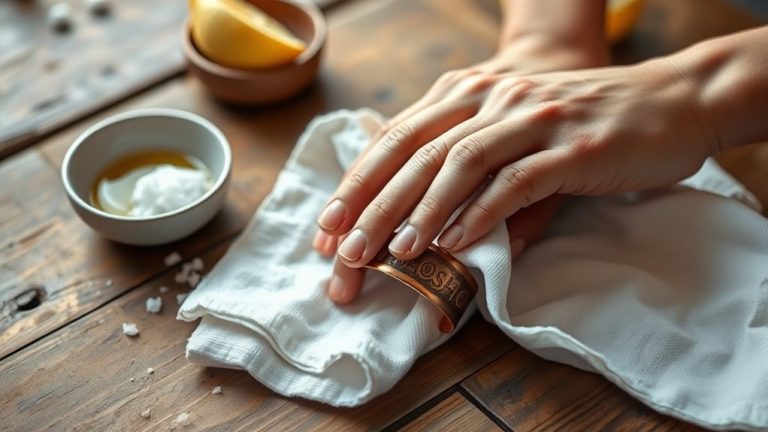
When it comes to removing tarnish, you can’t judge a book by its cover—household items like lemon juice, baking soda, vinegar, olive oil, and mild dish soap work wonders.
Just soak, rub, and rinse gently for sparkling results!
Conclusion
Think of your fake jewelry like a garden—neglected, it’ll wilt with tarnish, but with regular care, it blooms beautifully.
Just like a gardener uses the right tools and gentle hands, you’ve learned to clean and protect your pieces carefully.
Remember, a quick soak and soft scrub can revive their shine, turning dullness into sparkle.
Keep up this routine, and your jewelry will shine as brightly as a freshly blossomed flower every day.
In conclusion, maintaining your fake jewelry is similar to nurturing a garden.
With simple cleaning methods and consistent care, you can keep your pieces looking vibrant and beautiful.
So, don’t shy away from giving your jewelry the attention it deserves.
Stay committed to your cleaning routine, and you’ll enjoy dazzling, tarnish-free accessories for years to come!