How to Know if Jewelry Is Real Gold With a Step-By-Step Guide
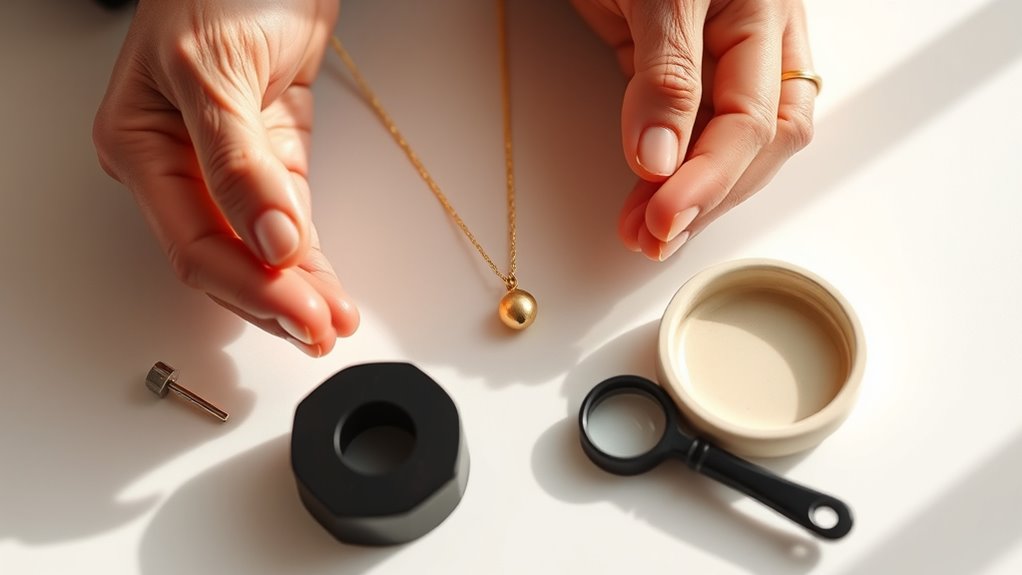
To know if your jewelry is real gold, you can follow a few simple steps. First, check for hallmarks like “14K” or “18K” using a magnifying glass.
Next, feel its weight—real gold is dense and heavy.
Also, observe its warm, consistent shine; it won’t tarnish easily.
Another quick test is the magnet test since gold isn’t magnetic.
For more accuracy, you can measure its density by water displacement or perform an acid test.
Keep going to discover how to confidently confirm your gold’s authenticity step by step!
Identifying Gold Purity Through Hallmarks
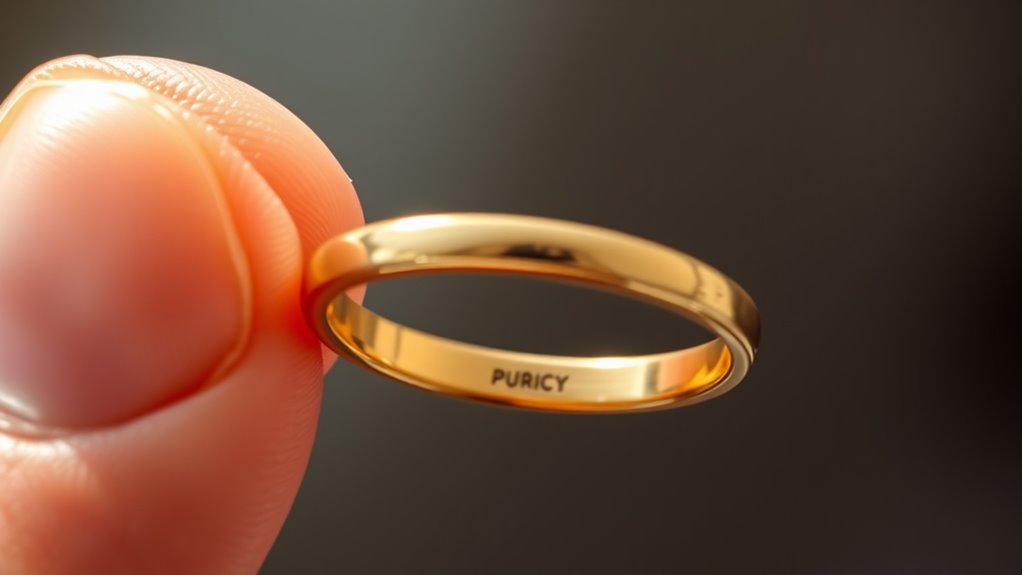
When you’re trying to determine if jewelry is real gold, the first thing you should look for is the hallmark.
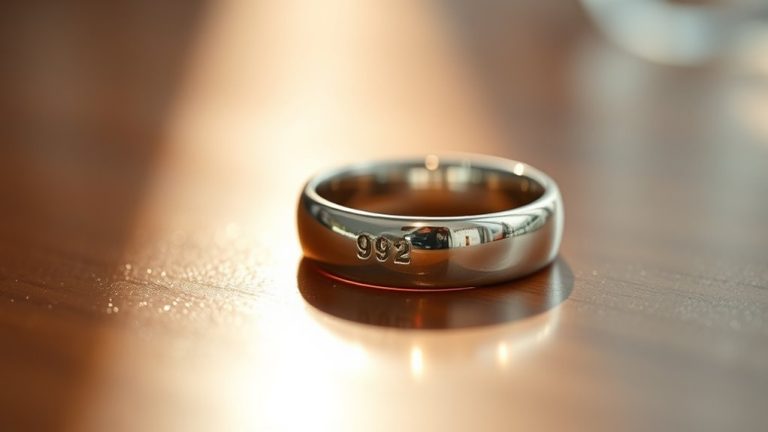
Hallmarks are small stamps on jewelry that indicate gold purity, like “14K,” “18K,” or “999.” These stamps usually appear inside rings, on clasps, or the back of pendants.
Hallmarks are tiny stamps showing gold purity, often found inside rings, on clasps, or pendant backs.
You might need a magnifying glass to see them clearly.
Different countries follow various hallmarking standards—Europe often uses numbers like 585 for 14K gold, while the U.S. relies on the karat system ranging from 10K to 24K.
Genuine gold jewelry will have clear, well-defined hallmarks, sometimes including symbols from an assay office or manufacturer.
Identifying gold through hallmarks offers a quick way to verify authenticity and gold purity.
This makes it an essential first step in spotting genuine gold.
Visual and Physical Signs of Genuine Gold
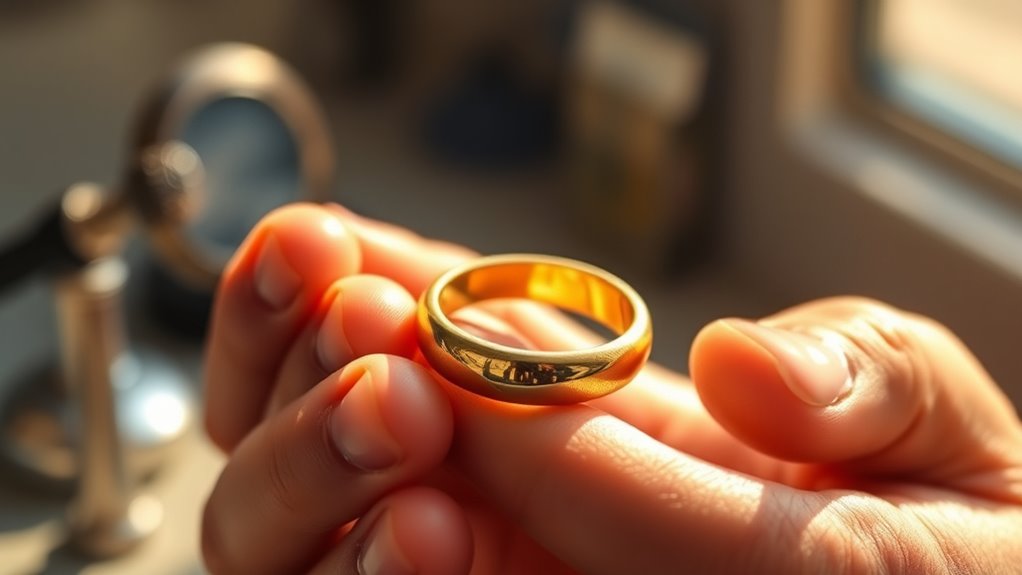
You can often spot real gold by checking for clear hallmarks like “14K” or “18K” stamped on the jewelry.
When you hold genuine gold, it feels heavier and denser compared to similar-sized fake pieces.
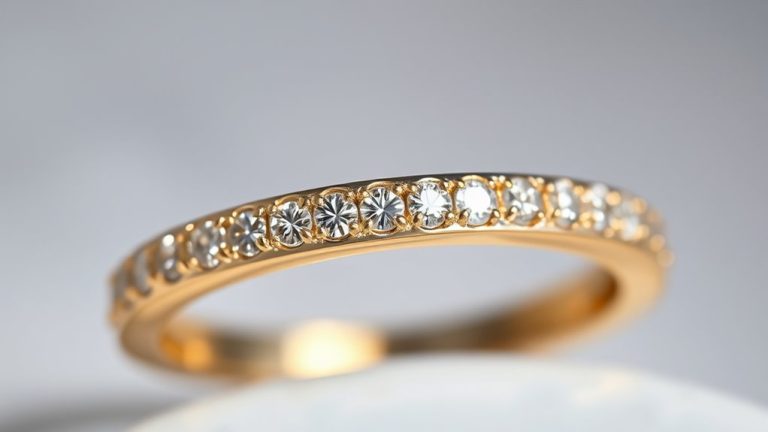
Plus, real gold shines with a warm glow that doesn’t easily fade or tarnish over time.
Hallmarks and Stamps
Although some gold jewelry may lack visible markings, genuine pieces usually carry hallmarks or stamps indicating their purity, such as “14K,” “18K,” or “999.”
You can often find these tiny symbols inside rings, on clasps, or at the back of pendants. Hallmarks are small engravings certifying the karat weight and authenticity of genuine gold, often including a manufacturer mark or country of origin.
To read these faint engravings clearly, use a magnifying glass or jeweler’s loupe.
While the absence of hallmarks doesn’t always mean the gold isn’t real, spotting these stamps is a quick and reliable way to confirm the purity and certification of your jewelry.
Understanding hallmarks helps you verify authenticity confidently.
Weight and Color
Since gold is denser than most metals, genuine gold jewelry feels noticeably heavier than similar-sized pieces made from brass or other alloys.
To check the weight and color for authenticity, consider these points:
- Weight: Genuine gold’s high density makes it heavier than gold-plated or fake items of the same size.
- Color: Real gold has a rich, consistent color that doesn’t fade; 24K is bright yellow, 18K is deeper, and white karat gold looks silvery.
- Signs of wear: Look for scratches revealing a different metal underneath—this often means gold-plated, not solid gold.
- Tarnish: Authentic gold jewelry resists tarnish and rust, maintaining its luster, unlike lower-karat or fake pieces.
These visual and physical signs help you distinguish genuine gold from imitations.
Simple At-Home Tests to Verify Gold Authenticity
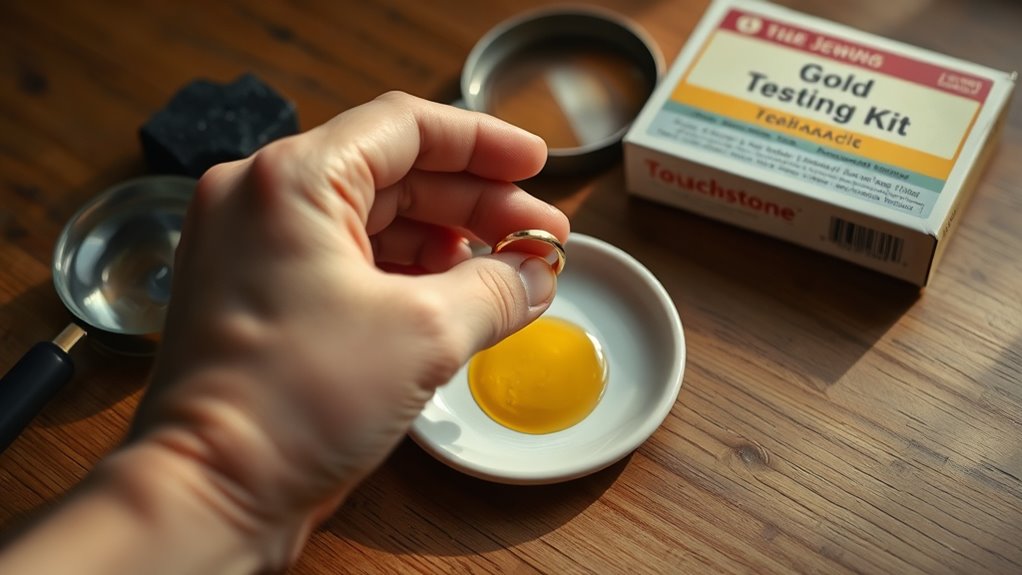
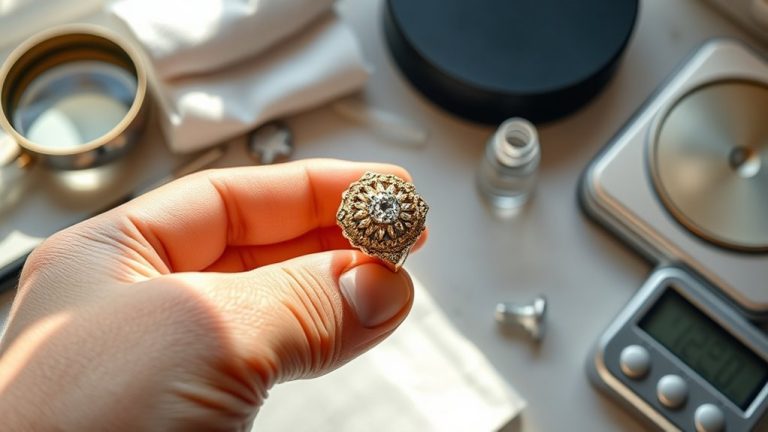
You can start by closely inspecting your jewelry for visual clues like color and markings.
Then, try simple chemical tests, such as applying vinegar or using a magnet to check how the piece reacts.
These quick checks can help you determine if your gold is genuine before moving on to more advanced methods.
Visual Inspection Tips
When inspecting gold jewelry at home, start by looking for official hallmarks like “14K,” “18K,” or “999” stamped on the inside or clasp. These stamps indicate purity and can help you identify genuine pieces.
A thorough visual inspection helps you spot fake items quickly.
- Check for clear stamps or purity marks with a magnifying glass. Genuine gold usually has precise hallmarks that are easy to see.
- Examine the gold color for consistency. Genuine gold shows a warm tone without any discoloration or fading.
- Look for tarnish or dull spots. Real gold resists tarnishing, while plated items often reveal base metals where the plating has worn away.
- Perform a magnet test. Gold isn’t magnetic, so if your jewelry is attracted to a magnet, it’s likely fake.
These steps can help you identify real gold without needing chemical tests. Happy inspecting!
Basic Chemical Tests
Although visual inspections provide a good starting point, basic chemical tests offer a more reliable way to verify gold authenticity at home.
Start by scratching a discreet area of your jewelry on a ceramic plate. Real gold leaves a gold-colored streak, while a greenish mark or black streak suggests it’s fake.
Next, use acid testing kits designed for different karats of gold. Apply a drop of the acid to the scratched surface—if the gold is real, it won’t react to the acid.
However, if you see a greenish mark or discoloration, the item is likely counterfeit.
These tests help you test the authenticity efficiently, but always handle acids with care.
And remember, it’s a good idea to consider professional testing for definite results.
Using Density and Water Displacement Methods
Since gold has a distinct density, you can determine if your jewelry is real by measuring its weight and volume through water displacement.
Follow these steps for precise results:
- Measure weight: Use an accurate scale to weigh your jewelry in grams.
- Record initial water level: Fill a graduated cylinder halfway with water and note the level.
- Submerge jewelry: Gently place the jewelry in water, avoiding air bubbles, and note the new water level.
- Calculate volume and density: Subtract the initial from the new water level to get the displaced water volume; then divide weight by volume to find density.
Compare your calculated density to gold’s density (about 19.3 g/mL) to determine if your gold is real.
This water displacement method offers a reliable way to verify authenticity.
Chemical Testing With Acid Kits
While measuring density can give you a good indication of your jewelry’s authenticity, chemical testing with acid kits provides a more direct way to verify gold purity.
Start by performing a scratch test on a touchstone. This means rubbing a small, hidden part of your jewelry to leave a visible streak.
Next, apply a drop of nitric acid to the streak and watch the reaction. If the mark remains unchanged or shows a gold-colored reaction, you’re dealing with genuine gold.
However, a green or foamy reaction indicates fake gold or plating.
Acid testing kits come with different acids tailored to various karat levels, from 12K to 22K, so use the appropriate one for accurate results.
Always wear gloves and test in a ventilated area for safety.
When to Seek Professional Gold Authentication
If your home tests leave you uncertain about your jewelry’s authenticity, it’s wise to turn to a professional jeweler for a thorough evaluation.
Here’s when to seek professional gold authentication:
- Your gold testing kit results are inconclusive or contradict the jewelry’s weight or appearance.
- The piece lacks a clear hallmark, or the markings are faint and questionable, needing expert verification.
- You’re dealing with high-value or antique jewelry requiring precise appraisal and advanced testing like X-ray fluorescence or acid test.
- You want to avoid counterfeit detection risks before making significant investments or sales.
A professional jeweler can verify authenticity accurately, ensuring you don’t fall victim to counterfeit or misrepresented gold items.
Frequently Asked Questions
How to Test for Real Gold Jewelry at Home?
You can test real gold at home by checking for hallmarks.
Look for any stamps or markings that indicate the purity of the gold, such as 10K, 14K, or 24K.
Using a magnet is another simple test.
Real gold is not magnetic, so if your jewelry is attracted to the magnet, it’s likely not real gold.
Next, try applying vinegar to see if there’s a reaction.
Genuine gold will not react to vinegar, while fake gold may change color or show signs of corrosion.
Another method is scratching the jewelry on a ceramic plate.
If you see a gold streak, it’s likely real, but if it leaves a black mark, it’s not.
Lastly, weigh your piece and compare its density with genuine gold.
Real gold is denser than most other metals, so this can be a helpful test.
What Are the Two Letters for Gold?
You’d think gold’s secret code is a treasure map, but it’s simpler: the two letters are “K” for karats and “CT” or “kt” for carats.
Spotting these tells you if your jewelry’s truly golden or not.
How to Tell if Jewelry Is Real at Home?
You can check for official stamps like “14K.”
Also, test with a magnet since real gold isn’t magnetic.
Scratch it on ceramic for a gold streak, and try vinegar for discoloration.
Finally, weigh it to compare density at home.
How to Test Gold at Home With Toothpaste?
Think of toothpaste as a gentle gardener testing soil’s truth.
Rub some on your gold, scrub softly, then rinse.
If your treasure shines unchanged, it’s real gold;
if not, it might just be a mirage.
Conclusion
Think of testing gold like peeling an onion—you uncover layer after layer until you reach the truth.
Just like a jeweler once told me, “Every hallmark and scratch tells a story.”
By using hallmarks, simple at-home tests, and even acid kits, you’ll peel back the doubts and reveal real gold beneath.
Remember, each step brings you closer to confidence, so don’t rush—authenticity shines brightest with patience and care.
In conclusion, knowing if jewelry is real gold requires careful examination and testing.
Utilize hallmarks, conduct at-home tests, and consider acid testing to ensure the gold’s authenticity.
With each method, you’ll gain clarity and confidence in your jewelry’s value.
Take your time through each step, and you’ll uncover the true nature of your gold pieces.