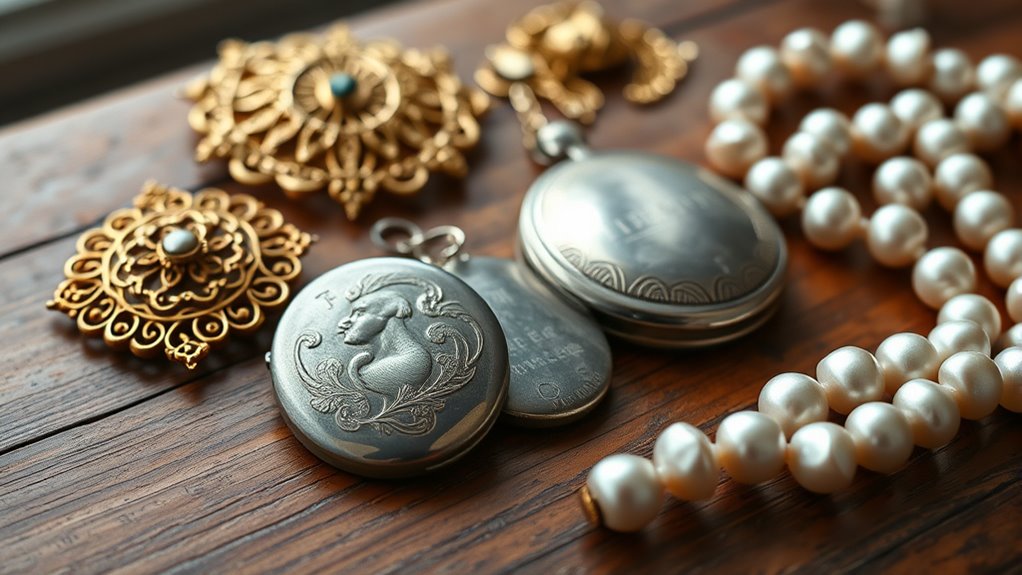
10 Tips to Identify Antique Jewelry
To identify antique jewelry, you’ll want to hone your skills in recognizing its unique features and craftsmanship. Antique jewelry often showcases exquisite hand-finished clasps and intricate settings that set it apart from modern pieces.
Start by checking for signs of wear, like a natural patina, which can indicate age and authenticity.
Don’t forget to look closely for hallmarks or maker’s marks. Using magnification can help you verify their authenticity, which is crucial in the world of antique jewelry.
Recognizing style elements is key, too. Look for motifs that hint at specific eras, like Victorian designs or Art Deco patterns.
Also, inspect clasps carefully for period-appropriate closures, as these details can reveal a lot about the piece’s origin.
Be mindful of any repairs or alterations, as these can affect the jewelry’s value significantly.
With the right knowledge and attention to detail, you’ll gain the confidence to spot genuine antiques and uncover fascinating stories behind each piece.
Examine Craftsmanship and Construction Details
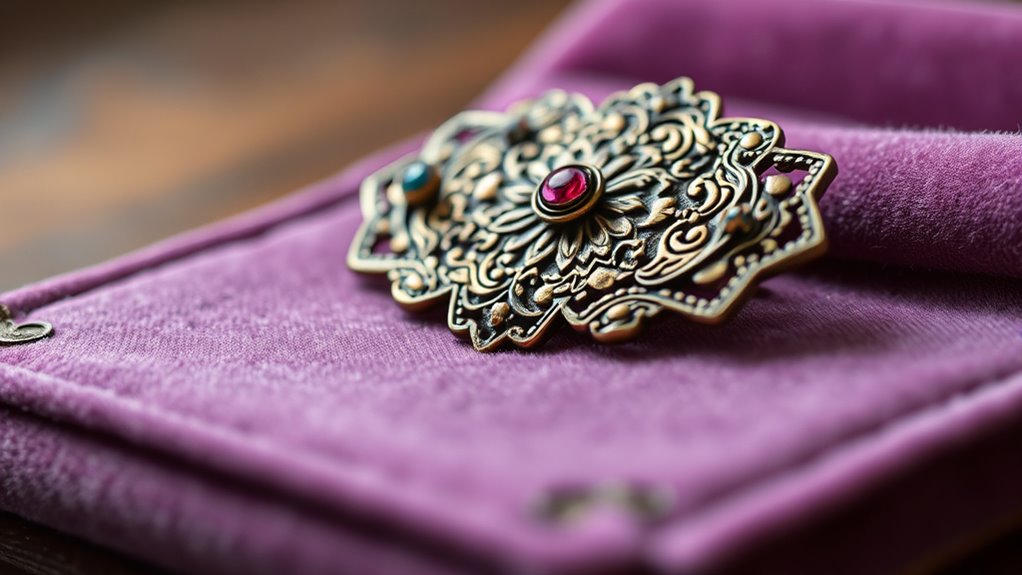
When you examine antique jewelry, pay close attention to craftsmanship and construction details, as these reveal its authenticity.
Look for hand-finished touches like tiny, irregular engravings or subtle tool marks that show artisanal skill.
Seek out delicate, uneven engravings or faint tool marks that reveal genuine artisanal craftsmanship.
Intricate settings such as hand-bezel or hand-prong work highlight careful manual construction rather than machine precision.
Check clasps and hinges for hand-soldered joints and complex fastening mechanisms typical of vintage pieces.
Genuine antique jewelry often shows slight wear or imperfections in metalwork, reflecting the period’s craftsmanship.
Techniques like filigree, millegrain, or hand-cut stones also indicate high-quality materials and expert craftsmanship.
Identify Hallmarks and Maker’s Marks
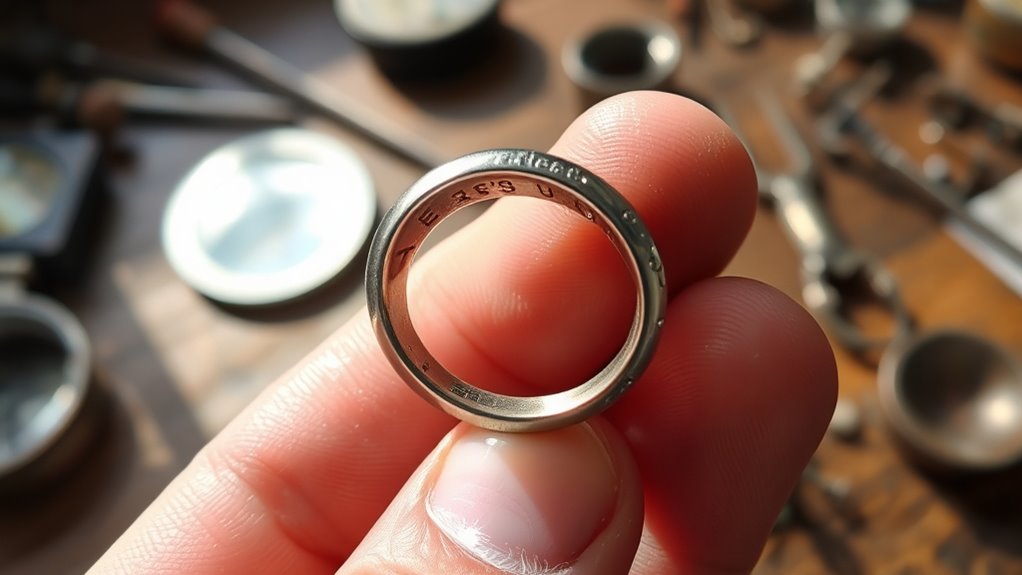
A jeweler’s loupe or microscope lets you closely examine hidden spots like the back, edges, clasps, and pinstems for small or worn hallmarks and maker’s marks.
These markings help you verify the jewelry’s authenticity and origin. Look for symbols, initials, or names indicating metal purity, country, or assay office.
Since hallmark styles and locations vary by period and region, you might find them on the clasp, shank, or near the setting.
Always cross-reference identified marks with hallmark directories or online databases to confirm their meaning.
Don’t forget to document every mark clearly—it’s essential for accurate identification and helpful when consulting experts.
- Hallmarks may include symbols, initials, or full names.
- Commonly found on clasps, shanks, or near settings.
- Styles vary over time and by region.
- Use directories or databases to verify marks.
- Document all findings for expert consultation.
Assess Signs of Wear and Patina
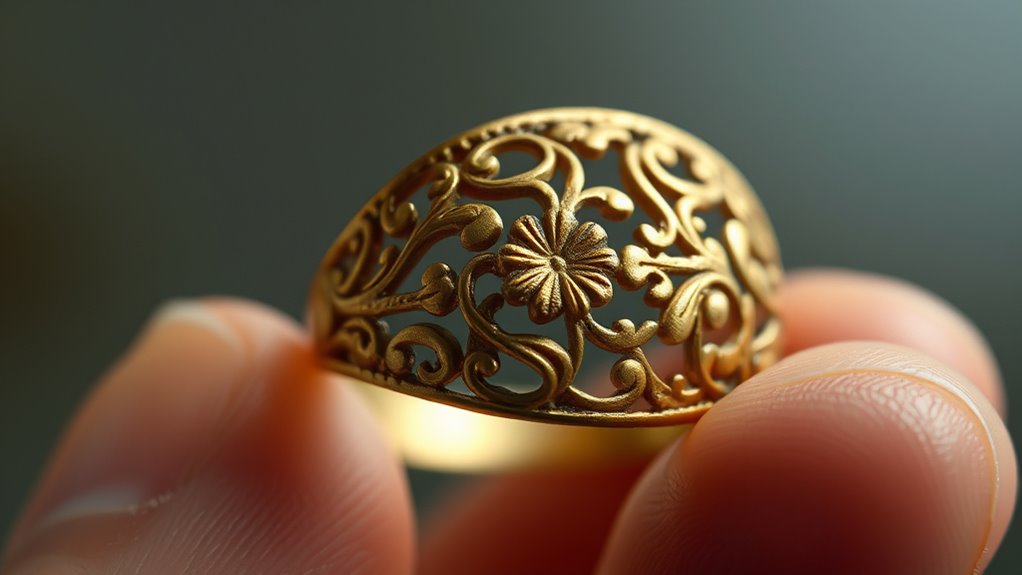
When you examine antique jewelry, look closely for natural tarnish and uneven patina that develop over time.
Pay attention to subtle surface textures and oxidation patterns, especially on silver and gold pieces.
These signs help confirm the jewelry’s genuine age and history.
Natural Tarnish Indicators
Although it might be tempting to overlook tarnish, you should pay close attention to natural patina when evaluating antique jewelry.
Tarnish and oxidation develop slowly over decades, creating subtle signs of authenticity. Genuine pieces often show uneven discoloration, especially in crevices and recessed areas, revealing a natural aging process.
Look for these natural tarnish indicators:
- Thin, dark layers of tarnish on metal surfaces.
- Black oxidation spots in engravings and recessed parts.
- Warm, slightly brassy hues on aged gold jewelry.
- Uneven patina indicating long-term exposure.
- Absence of overly polished or artificially cleaned surfaces.
Spotting these signs helps you distinguish genuine antiques from modern reproductions or refinished items.
Age-Related Surface Texture
Natural tarnish offers valuable clues, but examining the surface texture reveals even more about a piece’s history.
When you look closely, genuine antique jewelry shows signs of wear like light scratches, softened details, and rounded edges.
The patina, a thin oxidation layer, adds subtle unevenness that enhances authenticity.
Tiny pits or irregularities in the surface texture often result from old manufacturing methods or natural aging.
Beware of overly shiny, uniform surfaces—they might be over-polished or modern reproductions.
| Feature | What to Look For |
|---|---|
| Patina | Subtle, uneven oxidation layer |
| Wear | Light scratches, softened edges |
| Surface Texture | Tiny pits or irregularities |
| Over-Polishing | Uniform shine, reduced detail |
Metal Oxidation Patterns
Metal oxidation patterns reveal essential signs of wear and authenticity in antique jewelry.
When you examine pieces, look for natural tarnish and patina that develop over time due to exposure to air, moisture, and oils.
Genuine oxidation is usually uneven, showing the piece’s age.
This is unlike modern reproductions that often appear uniformly aged.
- Silver shows dark spots or black patina in crevices.
- Gold develops a warm, slightly matte patina.
- Uneven oxidation indicates authentic age.
- Overly polished surfaces may signal restoration.
- Natural tarnish adds character and value.
Understand Historical Jewelry Styles
How can you tell an antique piece from a modern one? Understanding historical jewelry styles is key.
Each era showcases unique design elements and period-specific motifs that help date a piece. For example, Georgian jewelry (1714–1837) features foil-backed stones and intricate engravings inspired by nature.
Distinctive design elements and motifs from each era help accurately date antique jewelry pieces.
Victorian pieces (1837–1901) often include romantic symbols like hearts and flowers, alongside mourning motifs.
Art Nouveau jewelry (1890–1910) stands out with flowing lines and natural forms such as insects, often using enamels.
Finally, Art Deco designs (1920–1935) emphasize geometric shapes, bold contrasts, and symmetrical patterns in platinum or white metals.
Inspect Clasps and Closures for Dating Clues
Take a close look at the clasp types and how they’re constructed. These details often reveal the jewelry’s era.
You’ll notice certain closures, like hook clasps or screw-back styles, point to specific time periods.
Also, check for wear and patina on the clasp. This can help confirm the piece’s age.
Common Clasp Types
When you inspect antique jewelry, the clasp can reveal a lot about its age and origin.
Different clasp types help you identify authentic pieces and understand their era. For example, Victorian jewelry often features delicate C-clasps or simple hooks, while Art Deco designs use box or tongue-and-groove clasps.
Mid-20th-century pieces might have hook clasps, and screw-back clasps were common in the early 1900s.
The lobster claw clasp, introduced in the 1970s, signals a more modern piece.
Common clasp types to look for include:
- C-clasp (Victorian era)
- Hook clasp (1950s)
- Screw-back clasp (early 20th century)
- Box clasp (Art Deco)
- Lobster claw clasp (post-1970s)
Examining these helps you identify authentic antique jewelry accurately.
Era-Specific Closure Styles
Although clasps might seem like small details, they offer valuable clues for dating antique jewelry.
By examining clasp styles and the material used, you can often pinpoint the era-specific origin of a piece.
For example, Victorian jewelry typically features hook clasps or safety chain fastenings common in the late 19th century.
Art Deco pieces showcase box or tongue-and-groove clasps with geometric designs, reflecting the period’s focus on symmetry.
Retro jewelry from the 1940s and 1950s often uses screw-back or lever-back closures, marking a shift toward more secure fastening methods.
Finally, the lobster claw clasp, introduced in the 1970s, signals more modern vintage styles.
Paying close attention to these era-specific closure styles helps you accurately date antique jewelry.
Clasp Wear and Patina
Since clasps endure constant handling, inspecting their wear and patina can reveal important clues about a piece’s age.
When you examine clasp wear on antique jewelry, look closely at discoloration and oxidation. These features develop naturally over decades.
The type of clasp also helps date the piece.
Simpler hooks often indicate older items, while spring-loaded lobster claw clasps suggest late 20th-century origins.
Pay attention to loose hinges or worn mechanisms. These signs show frequent use and authenticity.
Hand-finished clasps with subtle irregularities usually point to genuine antique craftsmanship rather than modern reproductions.
- Natural patina and discoloration on clasps
- Simple hook clasps for earlier eras
- Lobster claw clasps from the 1970s onward
- Wear on hinges indicating regular use
- Hand-finished details versus machine-made parts
Evaluate Materials and Gemstones Used
When evaluating materials and gemstones used in antique jewelry, focus on natural gemstones that show unique inclusions and slight color variations.
These characteristics indicate authenticity and help distinguish them from synthetics.
These traits confirm genuine origin and effectively separate natural stones from synthetic counterparts.
Check for hallmarks or stamps on precious metals like gold, silver, or platinum; these marks specify purity, such as 925 for sterling silver or 18K for gold, confirming the materials used.
Also, consider vintage materials like Bakelite, coral, jet, or enamel, which can help date the piece based on their historical popularity.
Look closely at handcrafted settings and intricate metalwork around stones, as these often reveal older manufacturing techniques.
Signs of aging like patina, tarnish, or light scratches on metals, and wear on gemstones, further support the piece’s antique status.
Look for Alterations and Repairs
When inspecting antique jewelry, pay close attention to signs of alterations and repairs that might affect its value and authenticity.
You want to spot any soldering marks or new metal fills that suggest repairs.
Differences in metal color or texture often reveal alterations.
Carefully examine clasps, settings, and mountings for resizing evidence like uneven edges.
Replaced or modern-looking safety catches and hinges can also indicate changes.
Use a magnifying glass or jeweler’s loupe to detect subtle tool marks or solder joints.
- Soldering marks or new metal fills
- Inconsistent metal color, texture, or finish
- Uneven edges or misaligned findings on clasps
- Modern safety catches, pins, or hinges
- Subtle tool marks or solder joints visible under magnification
Use Reference Books and Online Resources
Although identifying antique jewelry can be challenging, using reference books and online resources makes the process much easier.
You can consult well-known reference books like “Jackson’s Hallmarks” or “The Book of Old Silver” to find detailed images and descriptions of hallmarks.
These books often organize information by country, era, or manufacturer, helping you narrow down your piece’s origin and age.
Additionally, online resources provide quick access to hallmark directories and databases.
This allows you to cross-reference maker’s marks, assay symbols, and country-specific stamps efficiently.
Combining multiple sources, including both reference books and reputable online resources, improves your accuracy when identifying the provenance and age of antique jewelry.
This approach saves time and helps you confidently recognize authentic pieces.
Research the Origin and Maker’s Background
You’ll want to carefully inspect for maker’s marks or hallmarks, often tucked away in less obvious spots on the jewelry.
Use reference books and online databases to match these marks and learn about the maker’s history.
This research helps you pinpoint the piece’s origin and era with greater confidence.
Maker’s Mark Significance
Since maker’s marks serve as unique identifiers stamped on jewelry, they offer valuable clues about the piece’s origin, manufacturer, and authenticity.
When you spot a maker’s mark, it’s not just a signature—it’s a key to revealing the jewelry’s history and verifying its authenticity.
By comparing these marks with hallmarks and reference guides, you can pinpoint the time period and verify the maker’s background, adding provenance to your piece.
Look for these insights from maker’s marks:
- Unique symbols or initials identifying the creator
- Clues to the jewelry’s production era
- Links to renowned jewelers like Cartier or Tiffany
- Verification of authenticity through hallmark directories
- Historical context enriching the jewelry’s story
Understanding maker’s marks is essential for identifying antique jewelry accurately.
Hallmark Location Tips
Maker’s marks provide valuable insights, but to fully understand a piece’s origin, you need to pay close attention to hallmark locations.
Hallmarks often hide in discreet spots like the back of pendants, inside clasps, or beneath rings to maintain authenticity without disturbing the design.
Different countries and eras favor specific hallmark locations. For example, the British hallmark usually appears on the ring shank, while French gold items might show an eagle head hallmark.
By researching these placement patterns, you can better trace the origin and maker’s background.
Keep in mind that wear or repairs may obscure hallmarks, so use magnification for a thorough inspection.
Cross-referencing the hallmark’s location and style with historical standards strengthens your ability to date and authenticate antique jewelry accurately.
Reference Book Resources
Although identifying hallmarks can be challenging, using specialized reference books like “Jackson’s Hallmarks” and “Les Poincons de Garantie Internationaux” makes it much easier to research a piece’s origin and maker.
These reference books provide detailed catalogs of maker’s marks and assay symbols, which are essential for accurate background research.
To deepen your understanding, consult regional publications focusing on European, American, or Mexican silver marks.
Cross-referencing marks with online databases organized by country or era also sharpens your identification skills.
Keep thorough records of hallmark characteristics to compare and verify pieces effectively.
- Identify maker’s marks and assay symbols using hallmark reference books.
- Cross-reference marks by country, era, or manufacturer in catalogs and databases.
- Study hallmark evolution to date jewelry accurately.
- Consult regional specialty publications for contextual knowledge.
- Record hallmark design, size, and placement for verification.
Consult With Jewelry Experts or Appraisers
When you want to confirm the authenticity of antique jewelry, consulting with certified appraisers is essential.
These experts analyze hallmarks, materials, and craftsmanship to accurately verify the piece’s age and authenticity.
Experts examine hallmarks, materials, and craftsmanship to precisely determine the jewelry’s age and authenticity.
Appraisers use tools like microscopes and hallmark reference books to spot subtle details that separate genuine antiques from reproductions.
They can also uncover hidden repairs or alterations affecting value, providing you with a complete picture.
Beyond identification, experienced appraisers offer historical context and valuation insights, helping you make informed decisions whether buying, selling, or preserving your jewelry.
To guarantee reliable assessments, always work with reputable appraisers or jewelers, especially when handling high-value or inherited pieces.
Their expertise safeguards your investment and peace of mind.
Frequently Asked Questions
How to Recognize Antique Jewelry?
You can recognize antique jewelry by spotting age signs like patina, unique period designs, and handmade details.
Check clasps and hallmarks for authenticity.
Also, look for natural, old-cut stones set in vintage styles to confirm its age.
What Are the 5 C’s of Jewelry?
You might think the 5 C’s are just a sales gimmick, but they’re real: Cut, Color, Clarity, Carat, and Certification.
These factors help you judge a gemstone’s quality and value before making a purchase.
Is There an App That Can Identify Vintage Jewelry?
Yes, you can use apps like GemHunter or Jewelry ID to identify vintage jewelry.
They’ll give you a basic idea, but don’t rely solely on them—
always consult a certified expert for accurate identification and valuation.
How to Tell if Antique Jewelry Is Valuable?
You might think value only lies in age, but craftsmanship, unique gemstones, and maker’s marks matter more.
You’ll want to examine wear, provenance, and get an expert appraisal to truly tell if your antique jewelry is valuable.
Conclusion
By using these tips, you’ll become more confident in identifying authentic antique jewelry.
Did you know that over 60% of jewelry buyers rely on hallmarks to verify age and origin?
This shows how vital it is to recognize those tiny stamps.
Remember, combining your knowledge of craftsmanship, wear, and history will help you spot true antiques and avoid fakes.
Keep learning and don’t hesitate to consult experts when in doubt.
In conclusion, understanding how to identify antique jewelry is crucial for any jewelry enthusiast or buyer.
Paying attention to hallmarks is a key step in verifying authenticity.
By blending your insights on craftsmanship with a keen eye for wear and historical context, you’ll be well-equipped to distinguish genuine pieces from replicas.
Stay curious, keep exploring, and don’t shy away from seeking expert advice when needed!