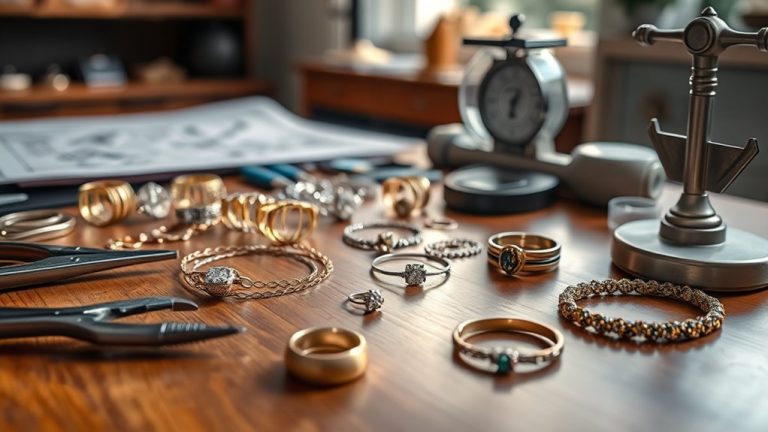
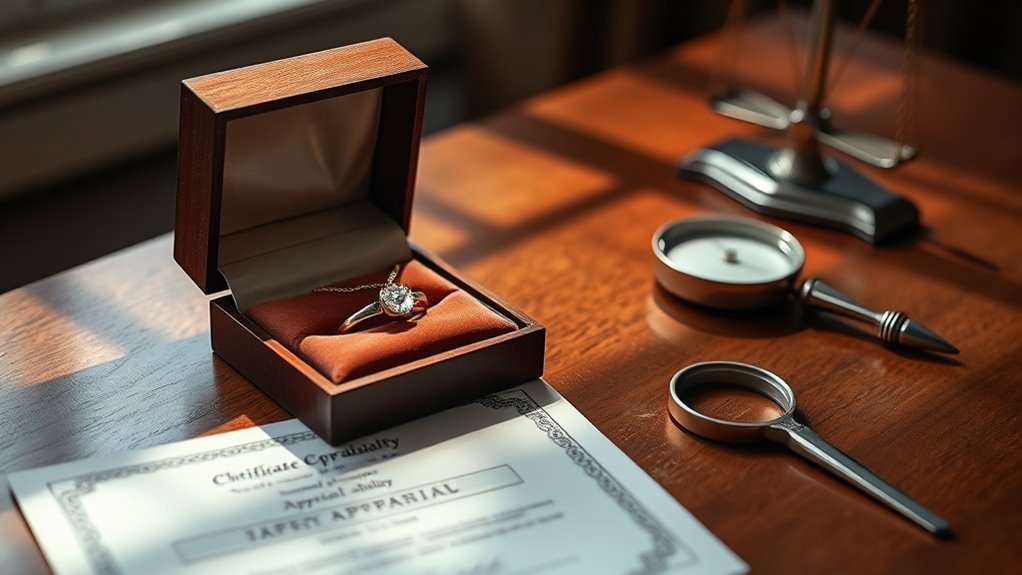
How Much Does It Cost to Get Jewelry Appraised?
You’ll likely pay between $100 and $200 to get your jewelry professionally appraised.
The exact cost, however, depends on several factors like your jewelry’s complexity, the credentials of the appraiser, and the purpose of the appraisal—whether it’s for insurance, resale, or something else.
Antique or rare pieces typically cost more due to the need for specialized evaluation.
Certified appraisers utilize detailed reports and advanced tools to ensure accurate valuations.
If you’re curious about how these factors influence pricing and what to expect from the appraisal process, keep reading for deeper insights.
What Is a Jewelry Appraisal and Why Is It Important?
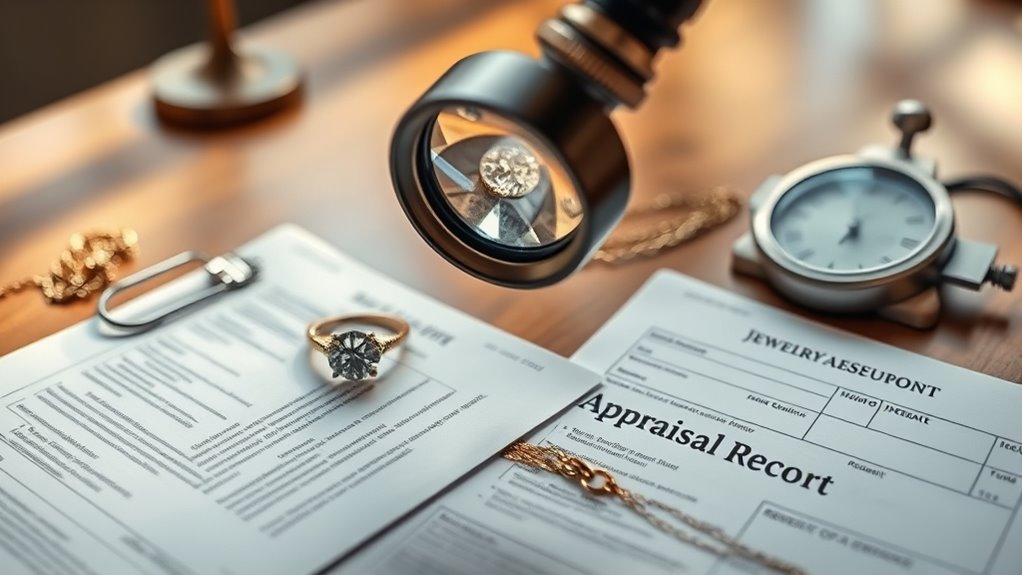
What exactly is a jewelry appraisal, and why should you care?
A jewelry appraisal is a professional evaluation that determines the monetary value of your jewelry.
Conducted by a certified gemologist, it results in an official appraisal report detailing gemstone quality, metal type, weight, and craftsmanship.
Performed by certified gemologists, appraisals provide detailed reports on gemstone quality, metal type, weight, and craftsmanship.
You’ll want this report for insurance coverage, ensuring your valuable pieces are properly protected against loss or theft.
Beyond insurance, it helps if you plan to sell your jewelry or need to verify authenticity.
The process involves precise examination with specialized tools to assess every component accurately.
While the appraisal cost typically ranges from $100 to $200, depending on complexity, having a thorough jewelry appraisal safeguards your investment and provides peace of mind.
Factors That Affect the Cost of Jewelry Appraisals
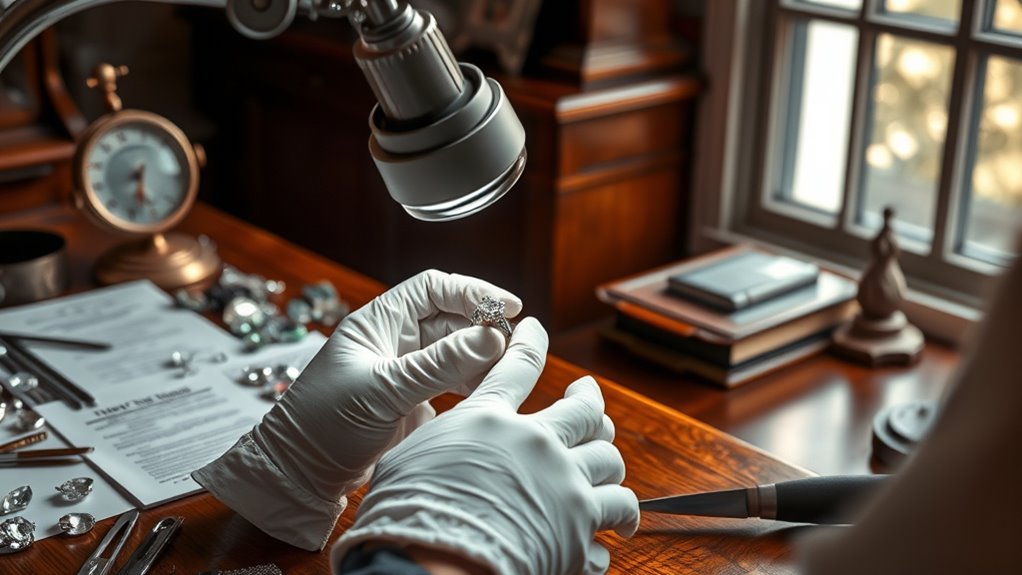
You’ll find that the complexity of your jewelry plays a big role in the appraisal cost, especially if it has unique or antique features.
The appraiser’s credentials also matter since certified experts often charge more for their specialized skills.
Plus, the purpose of the appraisal—whether for insurance or resale—can influence the overall price you’ll pay.
Jewelry Complexity Impact
Because complex jewelry requires more time and expertise to evaluate, its appraisal costs tend to be higher.
When you bring in pieces with significant jewelry complexity, expect appraisal fees to reflect that.
Here’s why your costs might increase:
- Antique jewelry demands specialized research and authentication, taking extra time.
- High-value stones, like large diamonds or rare gems, need detailed assessments for accuracy.
- Multiple components, such as numerous stones or intricate settings, require thorough examination.
- Custom jewelry often involves one-of-a-kind craftsmanship, calling for expert documentation.
Understanding these factors helps you prepare for the appraisal process.
The more complex your jewelry, the more precise and costly the evaluation becomes, ensuring you get an accurate value that reflects your piece’s true worth.
Appraiser Credentials Influence
Since appraiser qualifications vary widely, the credentials they hold directly impact the cost you’ll pay for a jewelry appraisal.
Certified appraisers with recognized appraiser credentials like GIA GG or ASA typically charge higher fees because their expertise guarantees accurate, detailed evaluations.
When you choose an appraiser with advanced certifications and extensive experience, expect to pay more. These professionals bring deeper knowledge and industry recognition.
Independent, accredited appraisers generally cost more than jewelry store staff offering quick estimates. This reflects the thoroughness and impartiality of their work.
If your jewelry is antique or rare, an appraiser with specialized training will likely charge a premium.
Ultimately, investing in appraiser credentials means you get a reliable and well-supported appraisal, justifying the higher cost.
Purpose of Appraisal
Choosing an appraiser with the right credentials sets the foundation for an accurate evaluation.
But understanding why you need the appraisal also plays a big role in the cost.
The purpose of appraisal affects both the depth of the examination and the fees.
For example, insurance appraisals require a detailed report and certification, which cost more than simple market value assessments.
Legal appraisals demand thorough documentation, adding to the price.
Here’s what influences the cost:
- Insurance appraisals need certification and detailed reports.
- Resale evaluations are often quicker and less costly.
- Estate planning may require extensive documentation.
- Legal purposes involve precise, formal appraisals.
Knowing your purpose helps you choose the right service and budget accordingly.
Different Types of Jewelry Appraisals and Their Pricing
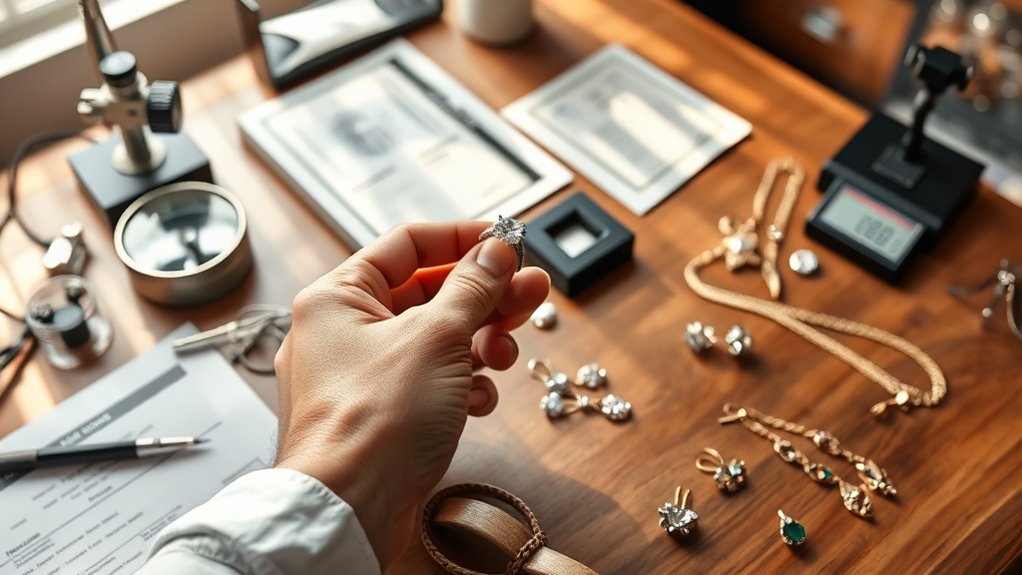
Understanding the different types of jewelry appraisals can help you determine the most suitable option for your needs and budget.
Jewelry appraisals vary mainly by purpose, affecting appraisal cost and required expertise.
For insurance purposes, expect more detailed reports and higher appraisal fees, often performed by a professional appraisal expert.
Resale appraisals typically cost less but provide general market value.
| Appraisal Type | Price Range | Description |
|---|---|---|
| Resale | $50 – $150 | General value for selling |
| Insurance | $100 – $200 | Detailed, requires certified expert |
| Specialized/Vintage | $150+ | Expertise for unique or antique |
Your appraisal cost depends on jewelry complexity, gemstone quality, and possible lab testing.
What Information Is Included in a Jewelry Appraisal Report?
When you get a jewelry appraisal report, you’ll find detailed descriptions of the piece, including its design, metal type, and gemstone qualities.
The report also provides a clear valuation, stating the estimated replacement value.
Plus, it often includes certification details and photos to verify authenticity.
Jewelry Description Details
Although jewelry appraisal reports vary, they all include detailed descriptions that help you understand your item’s specifics.
This jewelry description covers every essential aspect, ensuring you know exactly what you own.
Here’s what you can expect in an appraisal report:
- Identification of the metal type and purity, confirming the quality of your piece.
- Gemstone specifications, including cut, color, clarity, and carat weight, detailing the value and beauty of each stone.
- Clear, high-quality photographs from multiple angles, helping you visually verify your jewelry’s condition.
- Description of the item’s type, design, and any unique marks or engravings that make it one of a kind.
These details give you confidence and clarity about your jewelry’s true worth.
Valuation and Certification
Beyond the detailed description of your jewelry, the appraisal report also provides a valuation and certification that confirms its worth and authenticity.
Certified appraisers include their credentials, signature, and the date to validate the document.
The report estimates a replacement value based on current market conditions, which is essential for insurance claims.
It details gemstone characteristics such as cut, color, clarity, and carat weight, especially for diamonds and other precious stones.
| Feature | Description | Purpose |
|---|---|---|
| Gemstone Characteristics | Cut, color, clarity, carat weight | Identifies quality and value |
| Replacement Value | Market-based estimate | Insurance and resale |
| Certified Appraisers | Credentials and signature | Authenticates the report |
| Photographs | Multiple high-res images | Verifies condition and details |
How Long Does a Jewelry Appraisal Take and Who Performs It?
Because jewelry appraisal times can vary, a typical appraisal for a single item usually takes about an hour.
However, if you have larger or more intricate collections, it might take one to two weeks.
Certified jewelers and independent appraisers perform the jewelry appraisal using specialized tools during the process.
The appraisal time really depends on the item’s complexity and the level of detail needed in the report.
When you get your jewelry appraised, consider these points:
- The expertise of certified jewelers ensures accurate value.
- The use of microscopes and lab equipment guarantees thorough inspections.
- The appraisal process respects your time, balancing speed with precision.
- Complex pieces may need more time, but they provide detailed, trustworthy appraisals.
This approach helps you feel confident and reassured about your jewelry’s true worth.
Tips for Choosing a Qualified Jewelry Appraiser
Knowing how long an appraisal takes and who performs it is just the start. Choosing the right appraiser is key to getting an accurate and fair evaluation.
You should always look for a certified appraiser with recognized credentials like GIA, ASA, or NAJA.
Verify their experience with your specific jewelry type and ensure they follow strict industry standards.
It’s best to avoid appraisers who charge fees based on your jewelry’s value to prevent bias.
Checking their reputation through references or reviews also helps guarantee reliability.
| Factor | What to Look For |
|---|---|
| Credentials | GIA, ASA, NAJA certification |
| Industry Standards | Membership in reputable associations |
| Reputation | Positive reviews, references |
| Fees | Fixed rate, not percentage-based |
Frequently Asked Questions
Do Jewelry Stores Appraise for Free?
Jewelry stores rarely appraise for free.
They might offer quick, basic assessments, but detailed, certified appraisals usually cost you.
Don’t expect a full report without paying, as free appraisals often serve as marketing tools.
How Do I Find Out How Much My Jewelry Is Worth?
You can find out your jewelry’s worth by getting a certified appraisal, which typically costs $100 to $200.
Certified appraisers, like GIA Graduate Gemologists, provide detailed reports with accurate market values and descriptions.
It’s a good investment to ensure you know the true value of your pieces!
How to Tell if Inherited Jewelry Is Valuable?
You can tell if inherited jewelry is valuable by checking for hallmark stamps, unique craftsmanship, and gemstone quality.
Getting a professional appraisal helps confirm rarity, condition, and market demand.
This ensures you understand its true worth.
Conclusion
Think of getting your jewelry appraised like tuning a classic car—it’s not just about value, but understanding its true worth and history.
Just as a mechanic’s expertise can save you from costly repairs, a qualified appraiser guarantees you get an accurate report without surprises.
Remember, investing in a good appraisal protects your treasure’s story and value.
Much like a well-tuned engine keeps a vintage car running smoothly for years to come, an accurate appraisal ensures your jewelry remains safeguarded.
In conclusion, getting your jewelry appraised is essential for understanding its value and history.
A qualified appraiser not only provides an accurate report but also helps protect your investment.
So, don’t overlook this important step in preserving your jewelry’s legacy—just like maintaining a classic car ensures it stays in optimal condition for years to come!