
Do You Know If Jewelry Is Real?
You can tell if jewelry is real by checking for hallmarks like 14K or 925 stamps.
Using simple tests can also help—magnetism is a key factor since real gold and silver aren’t magnetic.
Additionally, vinegar resistance is another test to consider.
Look closely at the stones for natural flaws and weight differences; these can be good indicators of authenticity.
Did you know that diamonds clear fog quickly and can even scratch glass?
Real gold feels heavier in your hand and won’t discolor over time.
If you want to feel more confident identifying genuine pieces, there’s plenty more useful info to explore.
Don’t hesitate to dive deeper into the world of jewelry authenticity!
Identifying Hallmarks and Metal Stamps
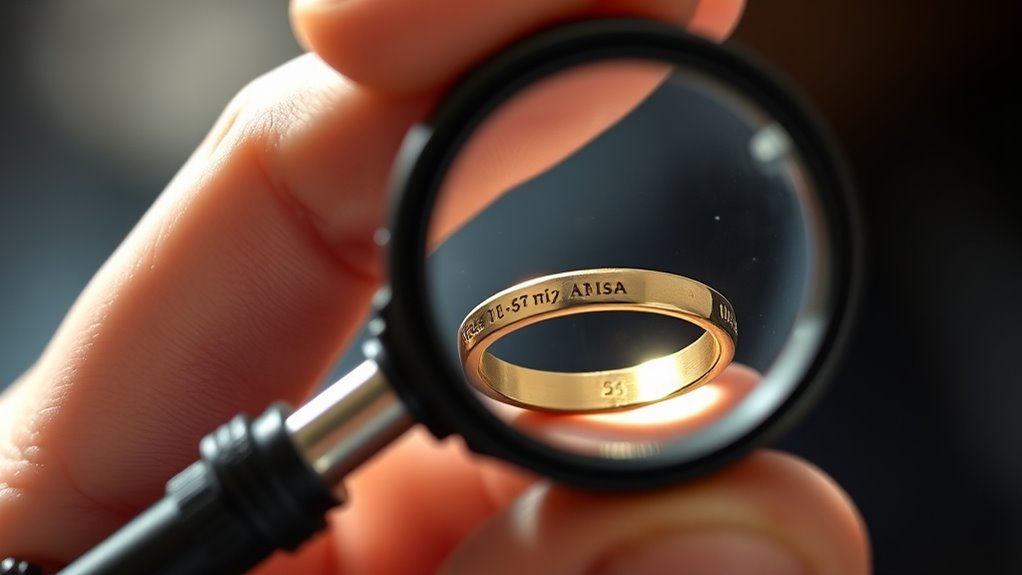
When you’re examining jewelry, identifying hallmarks and metal stamps helps you verify its authenticity and metal purity.
These small stamped symbols or markings usually appear inside rings, on clasps, or the back of pendants.
Look for tiny stamped marks inside rings, on clasps, or behind pendants to identify jewelry authenticity.
For gold, you’ll often see karat stamps like 10K, 14K, or 18K, or numerical equivalents such as 375, 585, or 750, indicating purity percentages.
Silver pieces typically bear “925” or “Sterling,” showing 92.5% pure silver.
Platinum jewelry is marked with “PLAT,” “950,” or “900,” reflecting its platinum content.
Keep in mind, some genuine pieces, especially older or handmade items, might lack hallmarks or metal stamps.
If you find no markings, you might need additional methods to confirm the jewelry’s purity and authenticity.
Performing Basic Jewelry Tests at Home
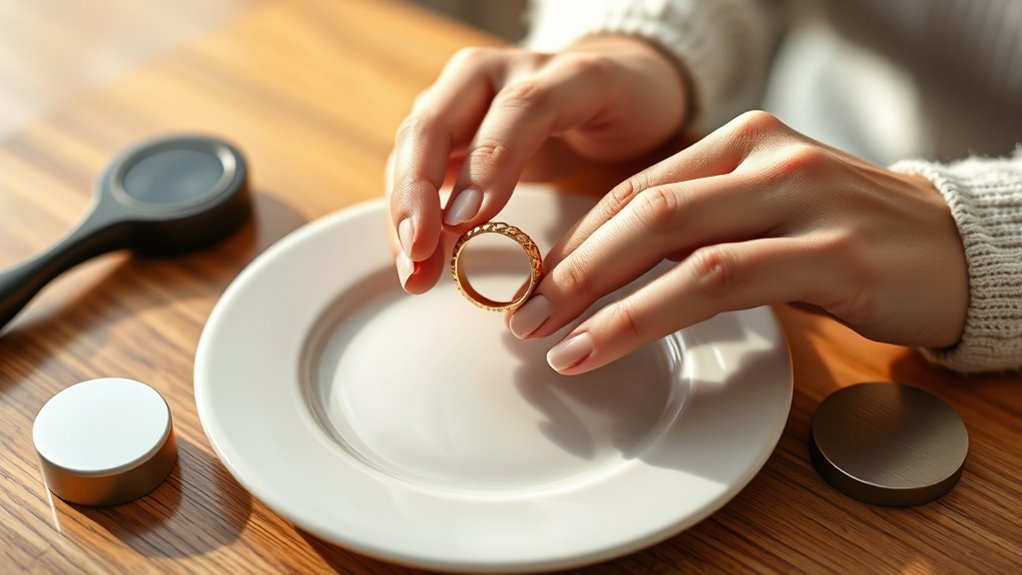
You can start by using a magnet to see if your jewelry is attracted—real gold and silver usually aren’t magnetic.
Next, drop a bit of vinegar on the piece and watch for any discoloration, which can signal fake metal.
Finally, check the weight and appearance closely, as genuine jewelry often feels heavier and more solid than imitations.
Magnet and Vinegar Tests
Although professional testing provides the most reliable results, you can perform simple magnet and vinegar tests at home to get a quick sense of your jewelry’s authenticity.
Start with the magnet test: genuine gold and silver aren’t magnetic. So, if your piece sticks to a strong magnet, it’s likely fake jewelry or plated.
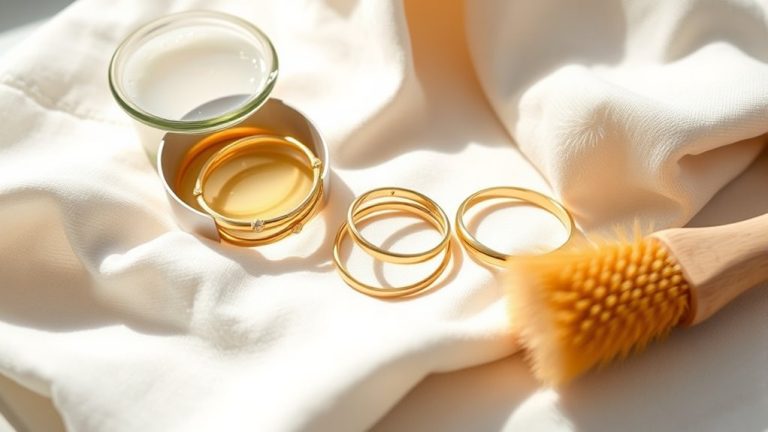
Next, try the vinegar test by cleaning your item first, then applying a small drop of vinegar. Genuine gold won’t react or change color, but fake jewelry may corrode or discolor within minutes.
Keep in mind, some fake pieces use non-magnetic metals, so neither test alone guarantees accuracy.
These quick checks help assess metal content and authenticity, but always consider professional evaluation for definitive results.
Visual and Weight Checks
Since genuine gold and silver have distinct physical qualities, performing visual and weight checks can quickly help you judge your jewelry’s authenticity at home.
Start with a visual inspection: look for consistent, rich color without flaking or peeling, which often signals authentic metal.
Pay attention to signs of wear, like darker areas or scratches, that might indicate gold plating or fake materials.
Next, compare your piece’s weight to similar known authentic jewelry; real gold and silver feel noticeably heavier due to their density.
You can also revisit the magnet test—authentic gold and silver aren’t magnetic, so if your jewelry is attracted to a magnet, it’s likely not genuine.
Combining these simple checks gives you a solid initial assessment before seeking professional evaluation.
Recognizing Real Versus Costume Jewelry Stones
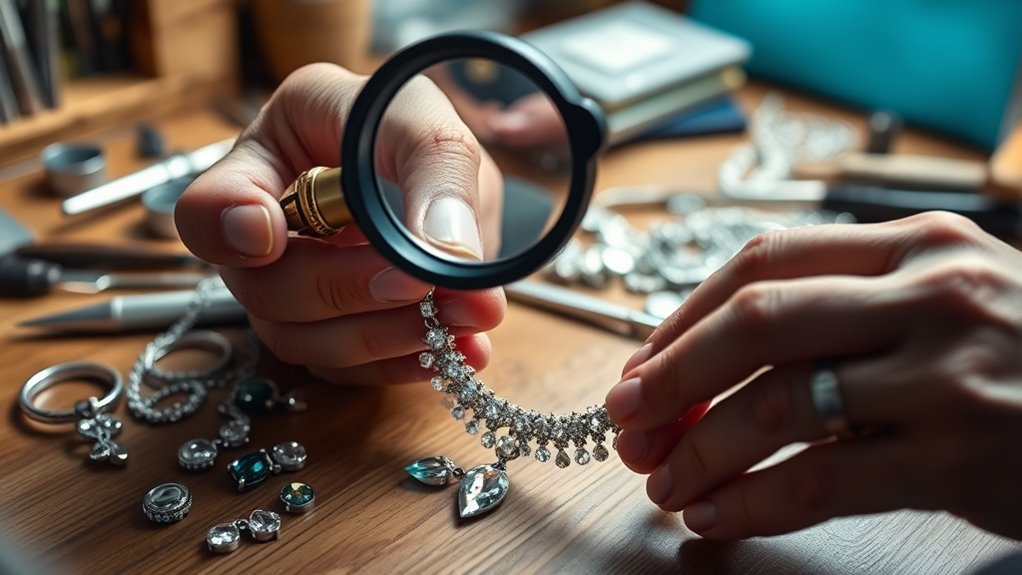
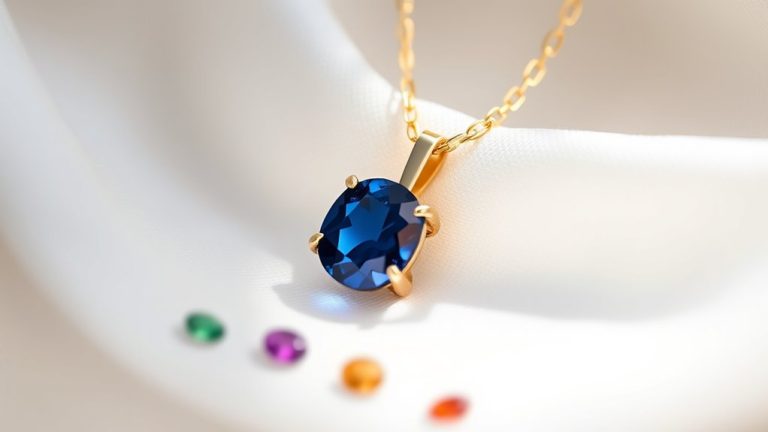
When you examine jewelry stones closely, you’ll notice that real gemstones often have natural inclusions or slight flaws.
On the other hand, costume jewelry stones tend to look flawless and uniformly manufactured.
Real gemstones feel heavier and show vibrant color saturation with subtle variations.
They also reveal natural facets and internal characteristics under magnification.
In contrast, costume stones often appear dull or overly perfect and feel lighter.
Here’s a quick comparison:
| Feature | Real Gemstones | Costume Jewelry Stones |
|---|---|---|
| Flaws | Natural inclusions or slight flaws | Flawless, uniform |
| Weight | Heavier, substantial | Lighter, often plastic or glass |
| Color Saturation | Vibrant, subtle variations | Dull or overly perfect |
| Facets | Natural, sharp | Uniform, synthetic |
| Internal Characteristics | Visible under magnification | Usually absent or artificial |
How to Verify If a Diamond Is Genuine
How can you tell if a diamond is genuine?
Start with simple testing at home.
Real diamonds won’t fog up when you breathe on them; they disperse heat quickly, so any fog disappears in seconds.
Try scratching a piece of glass—since diamonds rate a 10 on the Mohs scale, a real diamond will leave a scratch.
Look closely under magnification; natural diamonds usually have tiny inclusions, unlike flawless fakes.
Avoid relying on a magnet test, as diamonds and precious metals like gold aren’t magnetic.
For a definite answer, professional testing using thermal conductivity devices or gemological exams is best.
These methods accurately confirm if your diamond and any accompanying precious metals are authentic, ensuring you know you have the real deal.
Understanding the Properties of Gold Jewelry
When you’re checking gold jewelry, look for hallmarks like 14K or 18K that show its purity.
Notice its rich, warm color that won’t tarnish and how it feels heavier than fake pieces.
You can also test by observing if it’s non-magnetic and resists water or vinegar without changing.
Gold Purity Indicators
Why does gold jewelry come with different numbers like 14K or 18K stamped on it?
These karat markings show the gold purity, helping you know how much pure gold is in the piece.
For example, 24K means nearly 100% pure gold, while 14K means gold mixed with other metals for durability.
To identify gold purity, look for:
- Karat markings: Numbers like 14K, 18K, or 24K indicate the purity level.
- Hallmarks: Numeric stamps such as 585 (14K) or 750 (18K) certify the metal’s authenticity and origin.
- Purity effects: Higher karats mean softer gold; lower karats have more alloy metals, affecting color and strength.
Knowing these indicators helps you verify if your gold jewelry is genuine and understand its quality.
Visual and Physical Traits
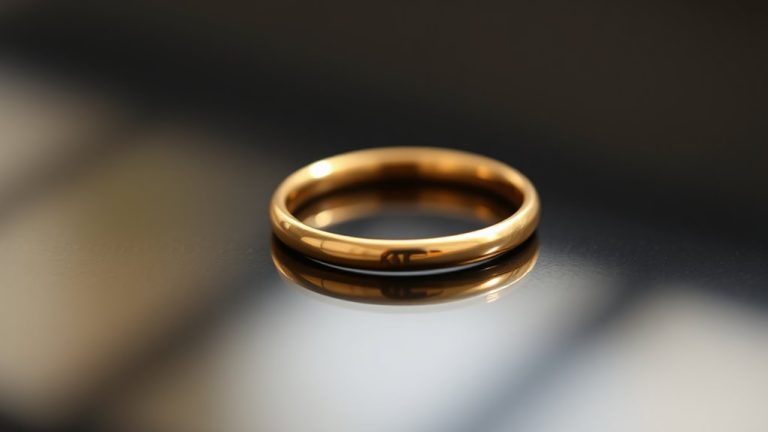
Although gold jewelry comes in many styles, you can usually tell if it’s real by its rich yellow color and substantial weight.
Real gold has a consistent appearance, showing no signs of tarnishing, peeling, or discoloration over time. When you hold genuine gold jewelry, you’ll notice it feels heavier than costume pieces of similar size, thanks to the metal’s density.
Look closely for markings like 14K, 18K, or 750, often stamped inside rings or on clasps—these hallmarks confirm the metal’s purity. The surface of authentic gold jewelry is smooth and free from flaking.
When to Consult a Professional Appraiser
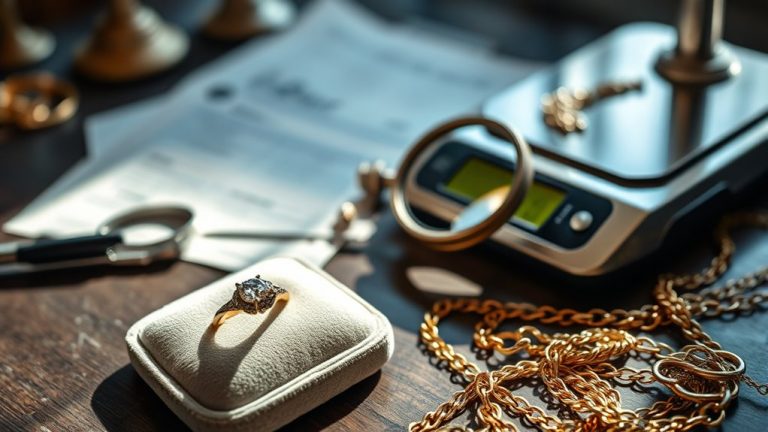
If you want to be certain about your jewelry’s authenticity and value, consulting a professional appraiser is essential—especially for high-value items.
A professional appraiser provides certified verification of metal purity and gemstone authenticity using advanced methods like X-ray fluorescence.
They can detect subtle inconsistencies that suggest fake or altered pieces, which might be missed without expert training.
You should definitely seek their help when:
- Your jewelry lacks a hallmark or shows unclear signs of authenticity.
- You need official certification for insurance or resale.
- You want precise gemstone verification and metal purity testing.
Relying on a professional appraiser guarantees accurate assessment and trusted documentation.
This gives you confidence in your jewelry’s true worth.
Frequently Asked Questions
How to Tell if a Piece of Jewelry Is Real?
You can tell if jewelry is real by checking for hallmarks.
These are small stamps that indicate the metal’s purity.
You can also use a magnet to test for attraction.
If the piece sticks, it’s likely not real.
Another test is the vinegar test.
When you apply vinegar to real gold or silver, it won’t change color.
Also, pay attention to how it feels in your hand.
Real jewelry tends to have a heavier weight compared to fake pieces.
And if you’re still unsure, it’s always best to get a professional appraisal for accurate verification.
They can provide you with the most reliable information.
How Can I Test My Jewelry at Home?
You can test your jewelry at home by using a magnet.
This method helps you determine if the piece is made of magnetic metals, which could indicate it’s not real.
Another option is to apply vinegar to see if there’s any color change.
If the metal reacts, it may not be genuine.
You can also drag your jewelry on unglazed ceramic to observe the streak color.
This can help identify the metal composition.
Don’t forget to check for hallmarks, as they can indicate authenticity and quality.
Lastly, feel the weight and appearance of your jewelry; often, fakes are lighter and less refined.
Does Real Jewelry Stick to a Magnet?
Of course, real jewelry loves magnets—just kidding!
It actually doesn’t stick because genuine gold, silver, and platinum are non-magnetic.
If your piece clings, it’s probably not the real deal.
Is Real Jewelry Heavy or Light?
Real jewelry usually feels heavy because precious metals are dense.
If your piece feels surprisingly light compared to similar items, it might be fake or hollow.
Trust your touch, but also compare to be sure.
Conclusion
Now that you know how to spot hallmarks, test metals, and tell real stones from costume ones, you’re better equipped to see through jewelry’s glittering disguise.
Remember, gold and diamonds have secrets only careful observation can reveal.
When in doubt, don’t hesitate to call in a professional appraiser—it’s like having a trusted guide in the treasure hunt of authenticity.
Trust your instincts, and soon you’ll wear confidence, not just jewelry.
In conclusion, understanding how to identify real jewelry can empower you in your purchasing decisions.
Equipped with knowledge about hallmarks, metal testing, and recognizing genuine stones, you’ll be able to discern the difference.
When you’re unsure, seeking help from an appraiser can ensure you make wise choices.
So go ahead and embrace your confidence in jewelry authenticity!