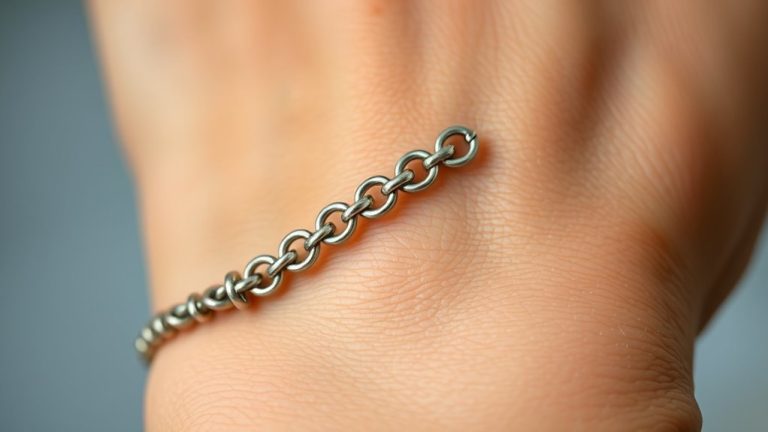
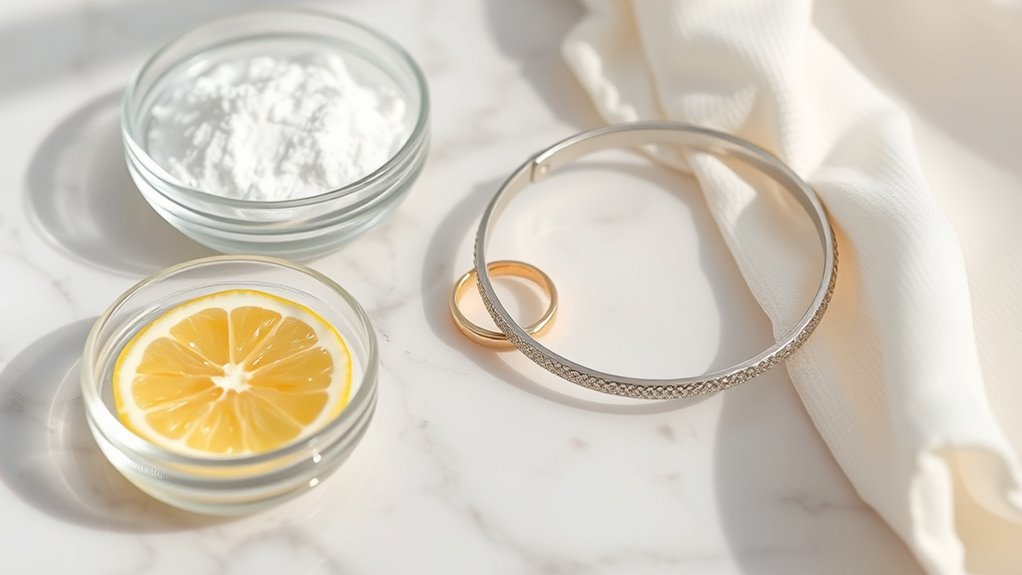
Do You Know How to Keep Jewelry From Turning Your Skin Green?
You can keep jewelry from turning your skin green by choosing pieces made from less reactive metals like stainless steel, titanium, or high-karat gold.
Avoid those with copper alloys, as they are more likely to cause discoloration.
Applying a clear nail polish or a barrier coat on the jewelry’s surface helps prevent skin contact with oxidized metals.
Regular cleaning and drying also reduce the chances of discoloration.
Remember, green stains are harmless oxidation—not allergies—so simple protective steps work well.
Learn more about identifying metals and other effective ways to protect your skin from staining.
Why Does Jewelry Turn Skin Green?
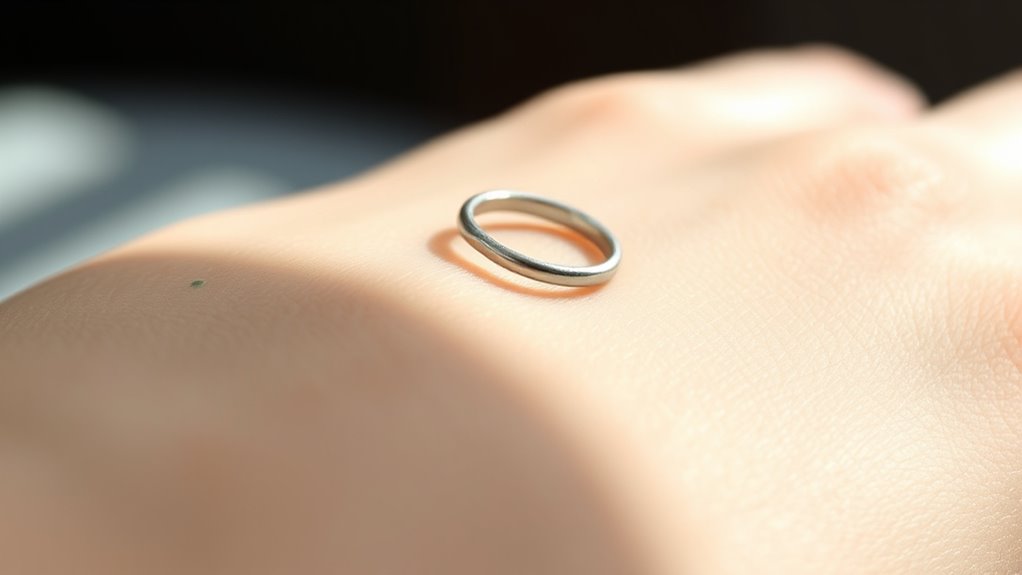
Although it might seem surprising, jewelry turns your skin green because copper in the metal reacts with moisture, salts, and acids on your skin.
Jewelry turns your skin green due to copper reacting with moisture and acids on your skin.
When copper undergoes oxidation, it forms copper salts that cause the green discoloration you see on your skin.
This reaction is common with alloys like sterling silver, brass, and some gold types, which contain copper as a base metal.
The green skin tint isn’t harmful; it’s just a surface effect from the oxidation process.
Environmental factors like sweat, humidity, and lotions can speed up this reaction, making the discoloration more noticeable.
Metals Commonly Causing Green Skin Discoloration
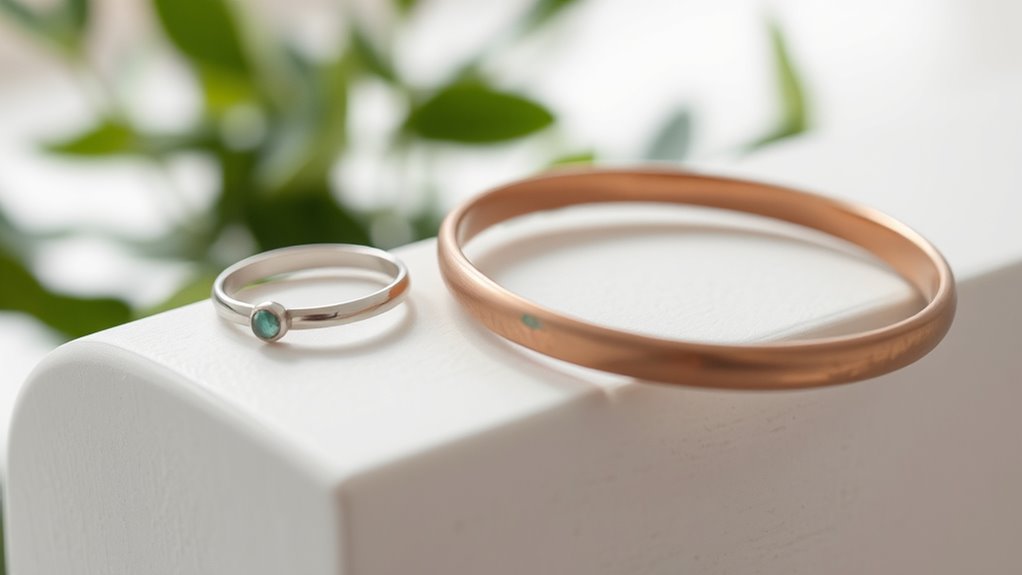
You’ll notice that metals with copper content, like pure copper and brass, often cause green discoloration because they react with moisture and salts on your skin.
Even sterling silver and some zinc alloys can trigger this reaction due to their copper components.
Understanding how these alloys behave helps you choose jewelry that won’t leave a green mark.
Copper Content Effects
When copper in jewelry reacts with your sweat and skin oils, it often causes your skin to turn green.
This happens because the copper content in many metal alloys oxidizes, leading to jewelry discoloration and green stains on your skin.
Metals like brass and bronze, which contain significant copper, are especially prone to causing skin green issues.
Even some gold alloys, such as 14K and 18K gold, contain enough copper to trigger this reaction.
The higher the copper content, the more likely you’ll notice green discoloration after wearing the piece.
To avoid this, consider jewelry made from metals with little or no copper, like platinum or high-karat gold.
These options typically won’t cause skin green problems linked to copper oxidation.
Alloy Metal Reactions
Since copper reacts easily with sweat and skin oils, jewelry containing copper alloys often causes your skin to turn green.
This happens because copper undergoes oxidation, reacting with acids and moisture on your skin to form copper salts that leave a green stain.
Alloy jewelry like brass, made from copper and zinc, and sterling silver, which contains about 7.5% copper, commonly triggers these metal reactions.
Even zinc alloys and lower-quality gold often include copper, increasing the chance of green skin discoloration.
When you wear such pieces, the higher copper content accelerates the oxidation process, leading to noticeable green marks.
Understanding these alloy metal reactions helps you choose jewelry that minimizes green skin by avoiding high-copper alloys or applying protective coatings to your pieces.
How to Identify If Your Jewelry Contains Copper
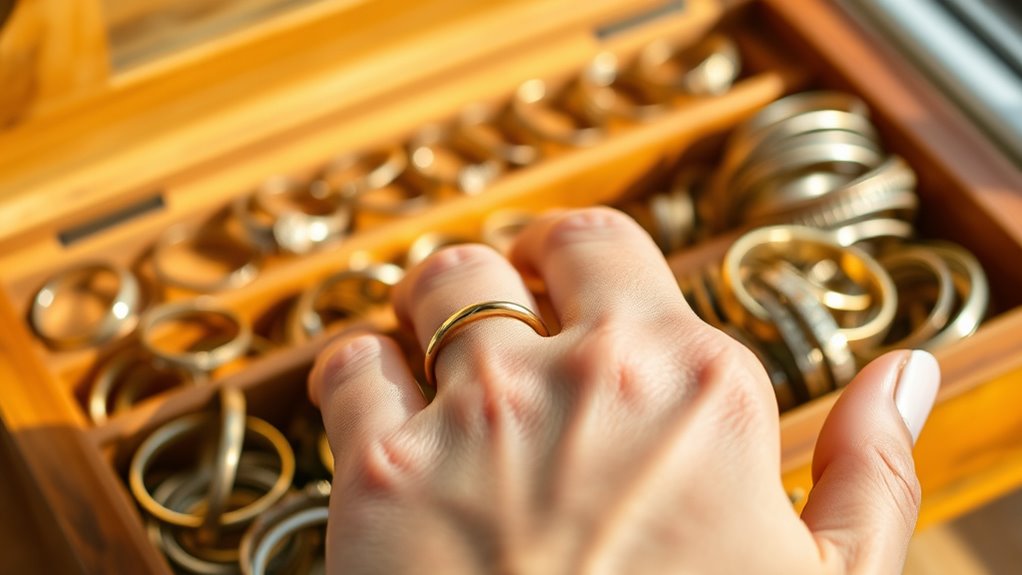
You can often spot copper in your jewelry by looking for a reddish-brown tint or checking the label for copper, brass, or bronze alloys.
If your piece tarnishes quickly or develops a greenish hue, copper is likely present.
Simple tests, like applying vinegar or using a magnet, can also help you identify copper content.
Copper Content Indicators
Although copper isn’t always obvious, you can spot its presence in jewelry by looking for certain visual cues and markings.
Jewelry with a reddish or pinkish tint often contains copper, especially in copper alloys like rose gold or brass.
Check for hallmarks like “925” on sterling silver or “14K” on gold alloys—both can include varying copper content.
Sterling silver typically has about 7.5% copper, while some gold alloys can have over 40%.
Costume jewelry often uses copper for affordability and malleability, so it’s a common ingredient.
If you’re unsure, try a copper test or a patina test to confirm copper presence.
Recognizing these indicators helps you understand your jewelry’s makeup and prevent green skin discoloration.
Alloy Composition Clues
When trying to identify if your jewelry contains copper, pay close attention to its color and how it changes over time.
Copper alloys, like brass or rose gold, often have a reddish-brown tint that can darken or develop a green stain on your skin.
Since copper isn’t a precious metal, it’s commonly mixed with silver or gold, affecting the alloy composition.
To spot copper presence, consider these clues:
- Look for reddish hues or tarnishing that isn’t typical of pure gold or silver.
- Check product details or ask the seller if the item includes brass or copper alloys.
- Notice if your skin shows a green stain after wearing the piece, especially if it’s uncoated.
These tips help you avoid unwanted discoloration linked to copper in your jewelry.
Simple Home Remedies to Remove Green Stains
If green stains appear on your skin from wearing jewelry, simple home remedies can quickly clear them up.
To remove green from skin, start by soaking the affected area in warm water with mild soap to gently lift the discoloration.
Next, make a paste of baking soda and water, then scrub the stain softly with a cloth or toothbrush.
You can also apply lemon juice or vinegar for their acidic properties, but be sure to rinse thoroughly afterward.
Another effective method is rubbing the area with a jewelry cleaning cloth or cotton ball dipped in rubbing alcohol.
These home remedies help clean jewelry residue and prevent skin discoloration.
Afterward, moisturize your skin to soothe and restore its natural balance, keeping your skin healthy and stain-free.
Effective Ways to Prevent Jewelry From Staining Skin
To keep your skin from turning green, you can take simple yet effective steps that protect both your skin and jewelry.
Prevent jewelry turning green by reducing metal oxidation and minimizing contact with your skin. Here’s how you can do it:
- Apply a thin layer of clear nail polish inside rings or bracelets to create a barrier that prevents metal from touching your skin.
- Choose hypoallergenic jewelry made from stainless steel, platinum, or high-karat gold to avoid reactions that cause discoloration.
- Clean your jewelry regularly with mild soap and warm water to remove oils and sweat that accelerate oxidation.
These tips can help you enjoy your jewelry without worrying about skin stains!
Protective Coatings and Barrier Methods for Jewelry
Besides choosing the right materials and cleaning your jewelry regularly, applying protective coatings offers another reliable way to stop metals from reacting with your skin.
One simple barrier method is using clear nail polish on the inside of rings to prevent copper and other reactive metals from causing skin discoloration.
Just a heads up, you’ll need to reapply it often since it wears off with daily wear and exposure to water or sweat.
You can also try beeswax or specialized jewelry sealants to protect against jewelry oxidation.
For faux jewelry, waterproof protective sprays like Atsko Silicone Spray work well but require careful application to avoid damage.
Always test any coating on a small, hidden area first to ensure it doesn’t alter your piece’s appearance or irritate your skin.
Differences Between Chemical Reactions and Allergic Responses
Although green discoloration from jewelry might seem like an allergic reaction, it’s actually a harmless chemical reaction between copper-containing metals and your skin’s acids, salts, or oils.
Green jewelry stains are harmless chemical reactions, not allergic responses, caused by copper interacting with your skin’s natural substances.
This discoloration results from surface oxidation and typically fades without causing discomfort.
In contrast, a metal allergy triggers your immune system, leading to redness, itching, or swelling, often requiring medical care.
To help you distinguish the two, consider this:
- Chemical reaction causes green discoloration but no pain or rash.
- Metal allergy involves inflammation and persistent skin issues.
- Using a barrier like clear nail polish can prevent oxidation but won’t stop allergic responses.
Understanding these differences helps you manage skin reactions and choose the right approach for your jewelry-wearing comfort.
Best Jewelry Choices to Avoid Skin Discoloration
When you choose jewelry made from materials like stainless steel, titanium, platinum, or high-karat gold, you considerably reduce the chances of your skin turning green.
These metals are less likely to oxidize and cause discoloration.
Opt for hypoallergenic jewelry labeled nickel-free to prevent irritation and staining.
Avoid plated jewelry with visible copper or brass, as these metals often cause skin discoloration issues due to oxidation.
If you prefer plated jewelry, select those with rhodium or platinum coatings.
These coatings create a protective barrier to prevent skin reactions.
To further prevent jewelry from turning green, regularly clean and dry your pieces.
You can also consider applying a clear nail polish layer on inner surfaces.
Making these smart choices will help you enjoy your jewelry without worrying about skin discoloration.
Frequently Asked Questions
Is There a Way to Stop Jewelry From Turning Skin Green?
Yes, you can stop jewelry from turning your skin green by coating it with clear nail polish.
Cleaning it regularly can also help maintain its appearance and prevent reactions.
Storing it properly is important too, as it can minimize exposure to moisture and air.
Additionally, choosing hypoallergenic metals like stainless steel or high-karat gold can significantly reduce the chances of skin discoloration.
These options are great for those with sensitive skin or allergies.
Is There a Way to Stop a Ring From Turning Your Finger Green?
Yes, you can stop a ring from turning your finger green by applying clear nail polish or a protective spray inside the band.
Avoiding water and lotions can also help prevent discoloration.
Additionally, consider choosing higher-quality metals like gold or stainless steel for your rings.
Does Clear Nail Polish Stop Jewelry From Turning Green?
Yes, clear nail polish stops jewelry from turning your skin green by creating a protective barrier.
Just apply a thin layer inside the piece, let it dry, and reapply regularly to keep the green stains away effectively.
Is My Sterling Silver Real if It Turns Skin Green?
If your sterling silver turns your skin green, it’s still real—coincidentally, the copper alloy causes this harmless reaction.
Look for “925” stamps to confirm authenticity.
Conclusion
Now that you know why jewelry turns your skin green—usually because of copper reacting with sweat or moisture—you can take steps to prevent it.
For example, imagine Sarah, who struggled with green stains from her favorite bracelet. Once she started applying clear nail polish as a barrier, the discoloration stopped completely.
By choosing jewelry with protective coatings or metals like stainless steel, you can enjoy wearing your pieces without worrying about green marks on your skin.
In conclusion, keeping your skin free from green stains is possible with a few simple strategies. Whether it’s using clear nail polish or selecting jewelry made from safer materials, you can confidently flaunt your favorite accessories.
So, keep these tips in mind, and enjoy your jewelry without the worry of discoloration!