Does Stainless Steel Jewelry Turn Skin Green and How to Prevent It
Stainless steel jewelry is a popular choice for many, often praised for its durability and resistance to tarnish. However, a common concern is whether it will turn your skin green.
The good news is, if you choose high-quality pieces, like those made from 316L stainless steel, you’re less likely to experience discoloration. This grade has a protective chromium oxide layer that helps prevent skin reactions.
On the other hand, lower-grade or plated items that contain copper or nickel can cause skin discoloration.
To minimize any chances of staining, it’s essential to keep your jewelry clean and dry. Avoid exposing it to harsh chemicals or prolonged moisture, as these factors can wear down the protective layer.
Caring for your jewelry properly can help maintain its surface and reduce the likelihood of reactions.
Curious about other causes of skin discoloration or how to identify quality jewelry? You’ll want to explore further!
What Causes Skin to Turn Green From Jewelry
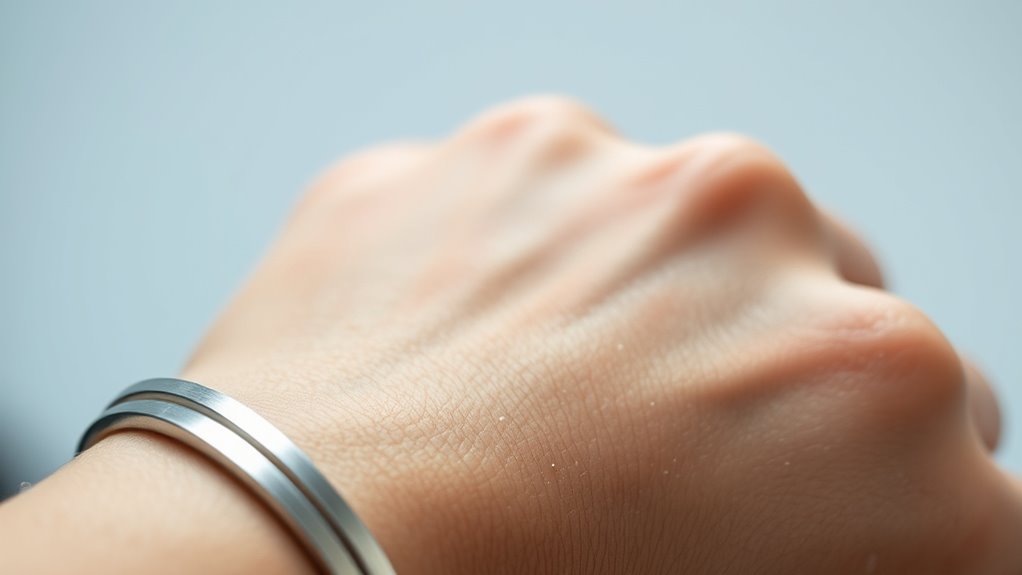
Although it might surprise you, green skin from jewelry happens because copper or copper-containing alloys react with your skin’s acids and moisture.
When copper in jewelry undergoes oxidation, it forms copper salts that leave a green stain on your skin.
This reaction is more common with low-quality or plated stainless steel that contains small amounts of copper or other reactive metals.
Your body heat, sweat, and skin acidity speed up the oxidation process, making green skin more likely.
The green discoloration is just a surface reaction and doesn’t pose any health risks or allergies.
Knowing this helps you understand why some jewelry leaves green marks and how oxidation of copper plays a key role in causing that green skin effect.
Composition of Stainless Steel Jewelry
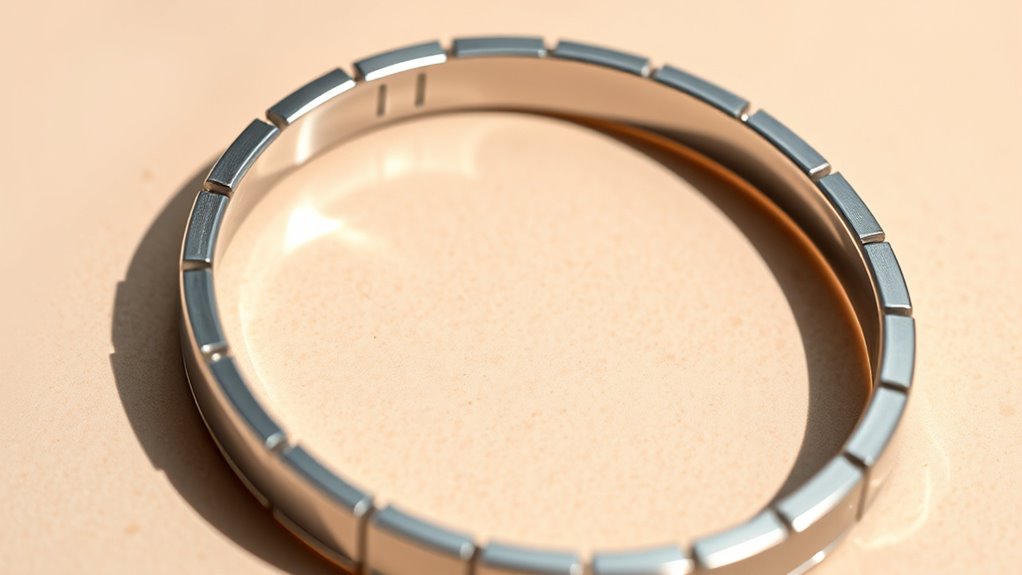
Stainless steel jewelry owes its durability and resistance to skin discoloration primarily to its carefully balanced composition.
When you choose stainless steel pieces, you’re getting an alloy designed to stand up to daily wear without causing green stains.
Key components include:
- Chromium (16-18%) forms a protective oxide layer that blocks oxidation and corrosion.
- Nickel, molybdenum, and other alloys improve strength and hypoallergenic qualities.
- High-quality 316L stainless steel maintains stability and resists skin reactions over time.
- Lower-grade or plated stainless steel may contain reactive metals like copper, which can cause discoloration.
Understanding this composition helps you pick jewelry that’s both durable and less likely to affect your skin’s color.
Why Stainless Steel Usually Does Not Cause Green Stains
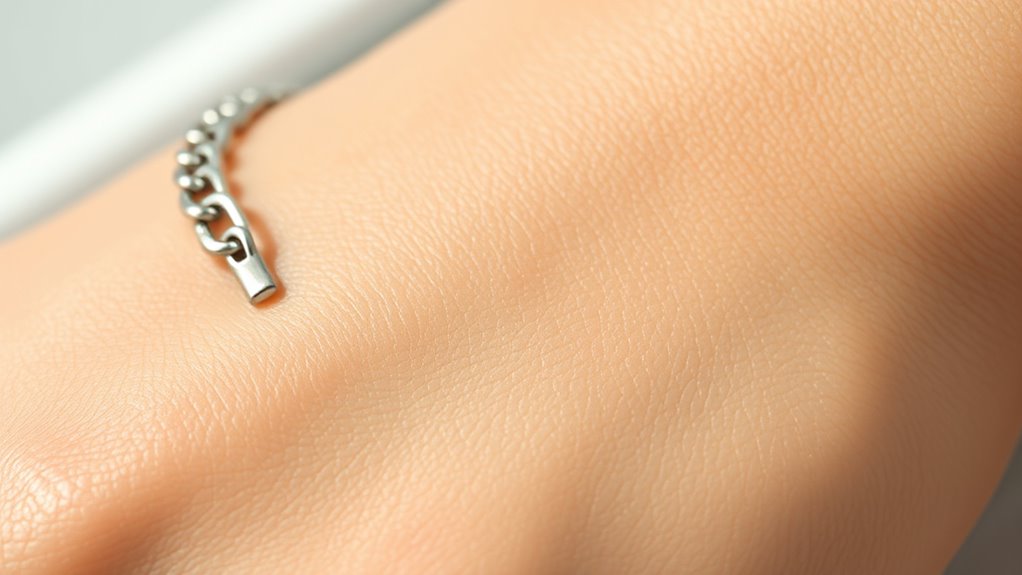
Because high-quality stainless steel, especially 316L, forms a strong chromium oxide layer, it prevents oxidation that typically causes green stains on your skin.
This passive chromium oxide layer blocks moisture, sweat, and oils, minimizing green discoloration.
Unlike copper alloys, stainless steel lacks reactive metals that stain skin.
When you wear properly made stainless steel jewelry, you reduce the chance of skin reactions or green marks.
Keeping your jewelry clean and away from harsh chemicals also helps maintain its protective surface.
| Feature | Stainless Steel (316L) | Copper/Brass Alloys |
|---|---|---|
| Passive Chromium Oxide Layer | Present, prevents oxidation | Absent |
| Reaction with Skin | Minimal, hypoallergenic | Often causes green discoloration |
| Resistance to Moisture | High | Low |
| Maintenance Required | Simple cleaning | Frequent polishing needed |
Conditions That May Cause Stainless Steel to Turn Skin Green
You might notice your stainless steel jewelry turning your skin green under certain conditions.
Your skin’s acidity and sweat can wear down the protective chromium layer.
Especially if you’re often in contact with water or harsh environments, these factors combine to cause the green discoloration you want to avoid.
Skin Chemistry Effects
Why does your skin sometimes turn green after wearing certain jewelry?
It all comes down to your unique skin chemistry and how it triggers metal reactions.
When stainless steel meets your skin, variations like acidic pH can speed up discoloration.
Other factors include:
- Higher sweat or oil production increasing oxidation on the metal
- Skin conditions such as dermatitis or eczema weakening your skin’s barrier
- Lotions, perfumes, or body oils interacting with skin acids and sweat
- Personal genetics and diet influencing skin acidity and composition
These elements combine to create green salts on stainless steel, causing that unwanted green tint on your skin.
Understanding your skin chemistry helps you manage or prevent these discoloration issues effectively.
Environmental Influences
Understanding how your skin’s chemistry affects stainless steel discoloration is just part of the picture.
Environmental influences play a big role in whether your jewelry leaves green marks. High humidity and sweat increase moisture around the metal, which accelerates oxidation reactions that break down the protective chromium oxide layer.
If you frequently swim in chlorinated pools or soak in hot tubs, the chemicals can degrade this layer. This makes green staining more likely.
Environmental pollutants and everyday products like lotions or perfumes also weaken the metal’s surface. This can make it more reactive with your skin.
Even high-quality stainless steel isn’t immune—prolonged exposure to moisture and heat can cause it to develop a greenish tint on your skin.
Being mindful of these conditions helps you prevent unwanted discoloration.
Identifying Low-Quality or Plated Stainless Steel Jewelry
You’ll want to watch for signs like uneven color or peeling, which often indicate plated jewelry.
Low-quality alloys can lack the protective layer that keeps your skin safe from discoloration.
Knowing these risks helps you avoid pieces that might turn your skin green over time.
Signs of Plated Jewelry
Although plated stainless steel jewelry can look appealing at first, you can often spot its lower quality by examining certain details.
Plated jewelry usually has a thin layer of metal over a base metal, which wears off with time. This can reveal reactive metals that cause skin green discoloration.
So, watch for these signs:
- Visible seams or uneven edges where plating wear shows through.
- Lighter weight compared to solid stainless steel pieces.
- Tarnish or color changes around clasps and edges.
- Lower price points that seem too good to be true.
Keep these tips in mind to help you identify plated jewelry!
Risks of Low-Quality Alloys
When stainless steel jewelry contains low-quality alloys or thin plating, it often hides reactive metals like copper or nickel that can cause your skin to turn green.
These reactive metals oxidize and react with your skin, leading to discoloration.
Cheap or plated stainless steel jewelry may wear off, exposing the base metals underneath, which increases the risk of skin staining.
Low-quality alloys labeled as stainless steel sometimes include cheap metals that aren’t durable or hypoallergenic.
If you notice irregular plating or a green tint after wearing your jewelry, it’s likely due to nickel or other reactive metals present in inferior alloys.
To avoid this, choose high-grade stainless steel like 316L, which resists corrosion and is less likely to cause skin reactions or discoloration.
Effective Ways to Prevent Green Skin From Stainless Steel Jewelry
Since stainless steel jewelry can sometimes cause green discoloration on your skin, taking preventive measures is key to keeping both your skin and accessories looking their best.
To prevent oxidation and minimize green discoloration, you can:
- Apply a clear protective barrier like nail polish on the inner surfaces to stop direct skin contact.
- Remove your jewelry before swimming, showering, or exercising to keep your skin dry and reduce moisture exposure.
Choosing high-quality, surgical-grade 316L stainless steel jewelry with a robust passivation layer can provide better protection.
Also, avoid harsh chemicals such as chlorine or household cleaners that can damage the stainless steel’s surface.
How to Clean and Maintain Stainless Steel Jewelry
Taking steps to prevent green discoloration helps safeguard your skin, but keeping your stainless steel jewelry clean and well-maintained guarantees it stays looking its best over time.
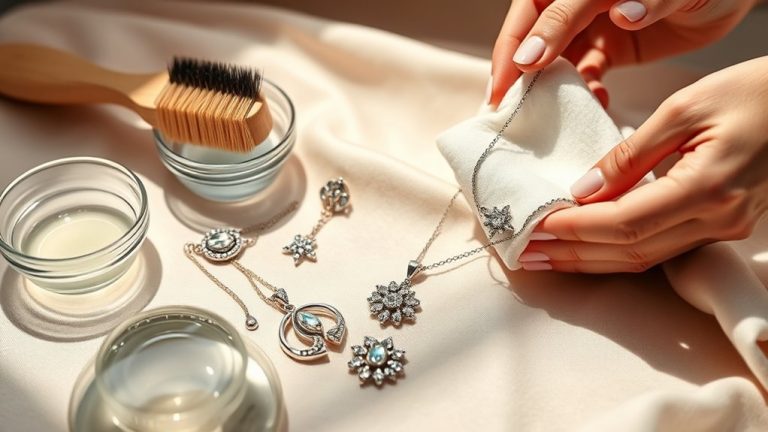
Regular cleaning with mild soap, warm water, and a soft cloth removes dirt and oils that can cause discoloration.
Regularly clean with mild soap, warm water, and a soft cloth to remove dirt and oils that cause discoloration.
For stubborn spots, gently scrub with a soft-bristled toothbrush or use a jewelry polishing cloth to restore shine without harming the chromium oxide layer.
Avoid harsh chemicals and abrasive cleaners that can damage the surface and reduce corrosion resistance.
After cleaning, rinse thoroughly and dry completely with a soft towel to prevent moisture buildup.
Store your stainless steel jewelry in a dry, airtight container or pouch to minimize humidity exposure and avoid scratches.
This helps preserve its appearance and prevent discoloration.
Comparing Stainless Steel With Other Metals Regarding Skin Discoloration
Although many metals are popular for jewelry, stainless steel stands out because it rarely causes skin discoloration.
Its high-quality grades, like 316L, contain chromium that forms a protective oxide layer, preventing oxidation and skin greenening.
When comparing stainless steel with other metals, consider these points:
- Copper and brass often cause skin discoloration due to their reactive nature.
- Precious metals such as gold, platinum, and titanium are inert, therefore rarely cause skin green.
- Low-grade or plated stainless steel may contain nickel or copper, increasing discoloration risks.
- Stainless steel’s corrosion resistance makes it less likely to turn your skin green compared to nickel alloys or plated base metals.
Choosing quality stainless steel jewelry helps you avoid skin discoloration better than many other metals.
Frequently Asked Questions
How Can I Stop a Stainless Steel Bracelet From Turning My Skin Green?
You can stop your stainless steel bracelet from turning your skin green by applying clear nail polish.
Cleaning it regularly is also important.
Make sure to store it dry to avoid any moisture buildup.
Choosing high-quality steel can make a big difference, too.
And remember to remove it before swimming, bathing, or sweating heavily.
How Do I Stop Fake Jewelry From Turning My Skin Green?
Want to avoid green stains from fake jewelry?
You can stop it by applying clear nail polish on the inner side.
Cleaning regularly and removing jewelry before sweating helps too.
Choosing quality pieces is a smart move—why settle for less?
Can I Wear Stainless Steel Jewelry 24-7?
Yes, you can wear stainless steel jewelry 24/7 without worry.
Just keep it clean and avoid harsh chemicals.
Choose high-quality 316L stainless steel to prevent irritation or discoloration.
This way, you can ensure comfortable all-day wear!
Is There a Way to Stop a Ring From Turning Your Finger Green?
Yes, you can stop a ring from turning your finger green by applying clear nail polish on the inside.
This creates a barrier between your skin and the metal.
Also, avoid moisture exposure to keep the ring in good condition.
Cleaning it regularly is important too, as dirt and oils can contribute to the problem.
Lastly, choose high-quality, hypoallergenic stainless steel with a durable coating to minimize reactions.
This will help you enjoy your ring without the worry of discoloration!
Conclusion
So, you’re worried stainless steel jewelry will turn your skin green like some kind of leprechaun curse?
Relax. True stainless steel usually plays nice with your skin—no green drama here.
But if you snag a cheap knockoff, your skin might throw a green tantrum.
Just keep your jewelry clean, avoid the dodgy stuff, and you’ll be more stylish than a leprechaun at a fashion show.
Green skin? Only if you really want that look!
In conclusion, stainless steel jewelry is generally safe for your skin, and it won’t turn you green unless you opt for low-quality pieces.
By choosing reputable brands and maintaining cleanliness, you can enjoy your jewelry without worry.
So, make informed choices, and you’ll sparkle without the green surprise!