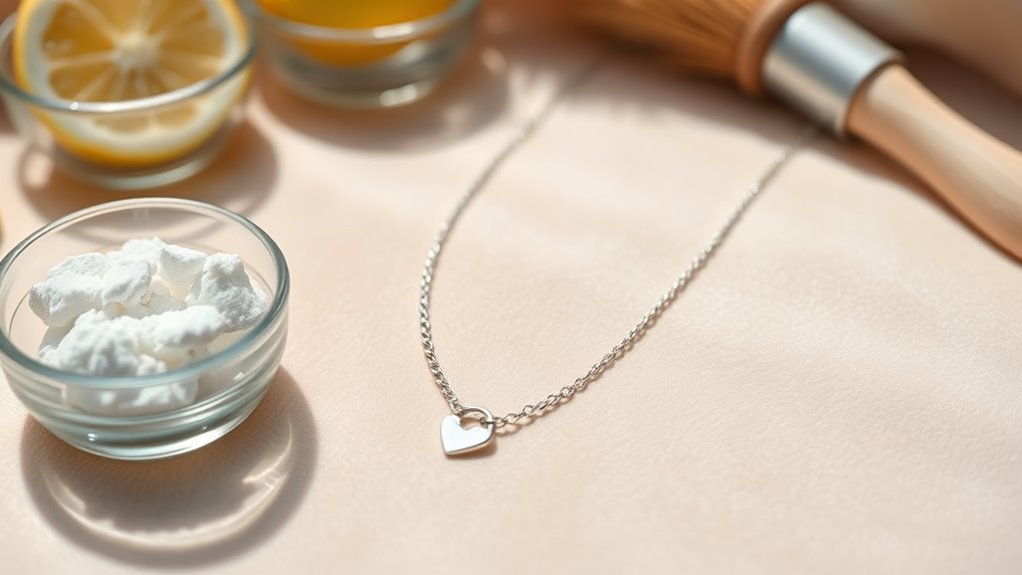
Does Nickel Free Jewelry Tarnish and How to Keep It Shiny
Nickel-free jewelry, which is often crafted from materials like titanium or surgical stainless steel, is a popular choice for those with sensitivities. While it’s a great option to avoid allergic reactions, it can still tarnish over time. Factors such as moisture, sweat, and exposure to chemicals found in lotions or perfumes can contribute to this issue.
To keep your nickel-free jewelry shiny and looking its best, consider a few simple maintenance tips. First, store your pieces in airtight containers to minimize exposure to air and moisture.
Regular cleaning is also essential! Use mild soap and a soft cloth to gently wipe down your jewelry.
Additionally, steer clear of harsh chemicals and avoid wearing your jewelry in humid environments.
Applying a protective coating can also help maintain that brilliant shine.
By following these steps, you can preserve your jewelry’s beauty and durability for years to come!
What Is Nickel Free Jewelry Made Of
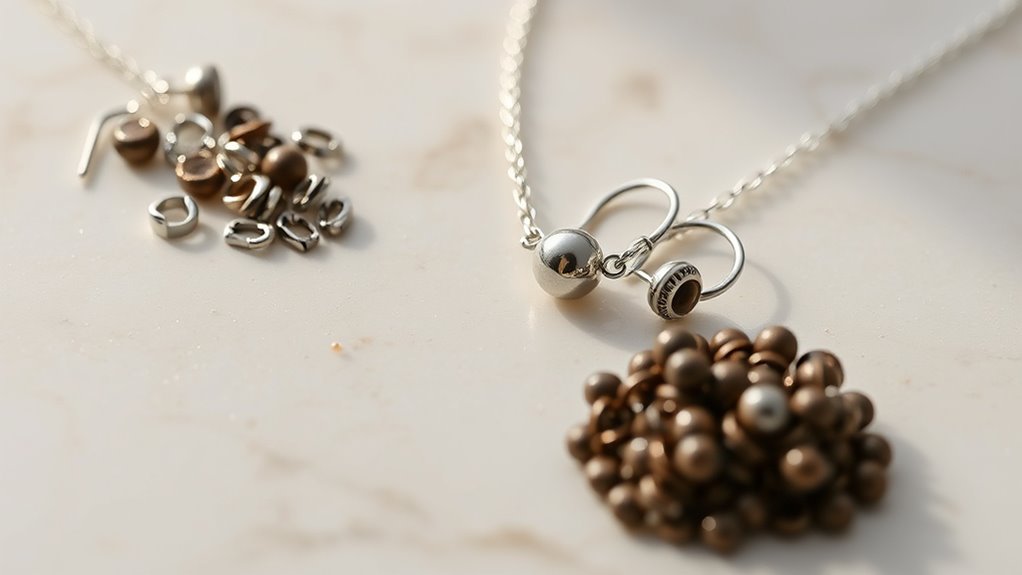
Nickel-free jewelry is made from metals that minimize allergic reactions and resist tarnishing.
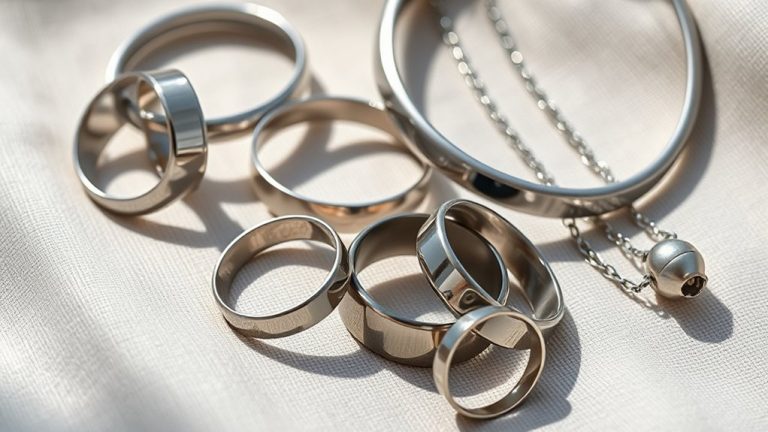
When you choose nickel-free metals, you often get hypoallergenic materials like titanium and surgical stainless steel. Both are known for their excellent corrosion and tarnish resistance.
Titanium, which is naturally nickel-free, offers durability without irritating your skin.
Surgical stainless steel, especially grade 316L, contains minimal nickel but is processed to prevent nickel release, making it safe for sensitive skin.
High-karat gold alloys, usually 18K or higher, replace nickel with metals like palladium to maintain a nickel-free metal composition.
Many pieces also use protective coatings such as rhodium or platinum plating to enhance both durability and shine.
This combination guarantees your jewelry stays beautiful and comfortable to wear over time.
Common Causes of Tarnishing in Nickel Free Jewelry
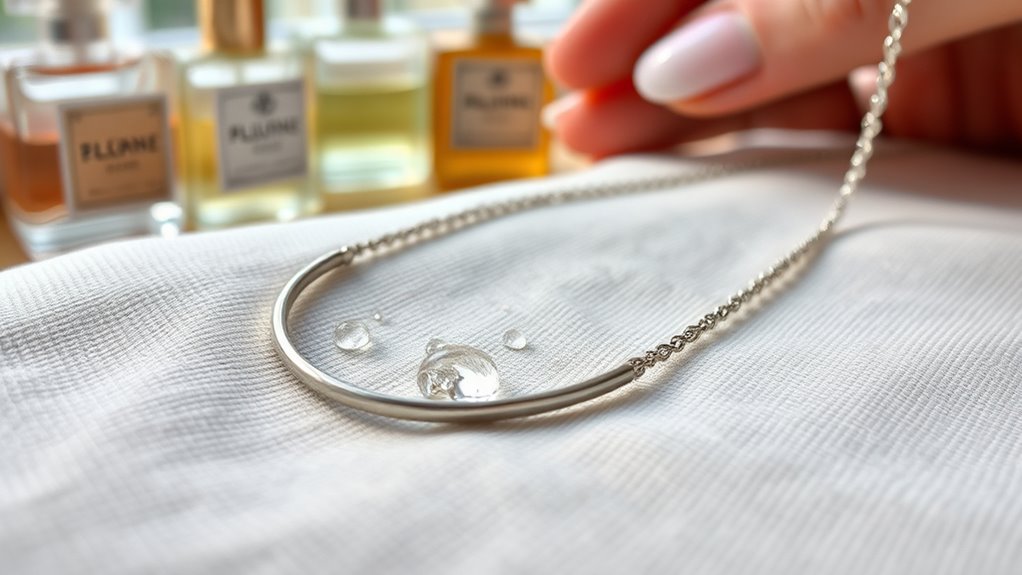
While choosing metals like titanium or surgical stainless steel helps reduce allergic reactions and resist tarnish, your jewelry can still develop discoloration over time.
Tarnish mainly occurs due to the oxidation process, which accelerates when your pieces are exposed to moisture from water, sweat, or humidity.
Chemical exposure from lotions, perfumes, and cleaning agents also triggers reactions that cause staining and tarnish.
Lotions, perfumes, and cleaning agents can cause staining and tarnish through chemical reactions.
Environmental pollutants, such as sulfur compounds and hydrogen sulfide, react with metals—especially silver and copper alloys—leading to discoloration.
Wearing your jewelry in damp conditions or storing it improperly increases the risk of tarnishing.
Understanding these common causes emphasizes the need for proper care to help prevent tarnishing and maintain your nickel-free jewelry’s shine and beauty over time.
How to Prevent Tarnish on Nickel Free Jewelry
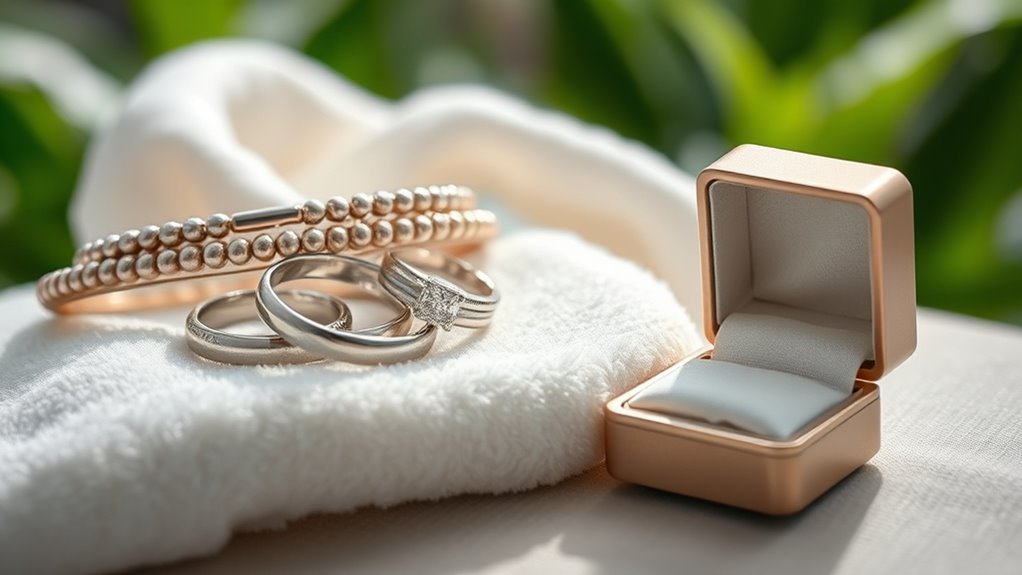
Although tarnish can develop over time, you can markedly slow the process by storing your jewelry properly and keeping it clean.
To prevent tarnish on your nickel-free metals, follow these key jewelry care steps:
- Use airtight, anti-tarnish storage containers or pouches to limit exposure to moisture and oxygen, which cause oxidation.
- Clean your jewelry regularly with a soft cloth and mild soap to remove oils, dirt, and pollutants that promote tarnishing.
- Apply a clear protective coating or jewelry sealant periodically to create a moisture and chemical barrier.
- Avoid direct contact with perfumes, lotions, and hairsprays.
Also, limit exposure to humidity, heat, and sunlight to reduce environmental factors that accelerate tarnish.
Following these tips will help keep your nickel-free jewelry shiny and tarnish-free longer.
Effective Cleaning Methods for Nickel Free Jewelry
Keeping your jewelry clean is one of the best ways to prevent tarnish and maintain its shine.
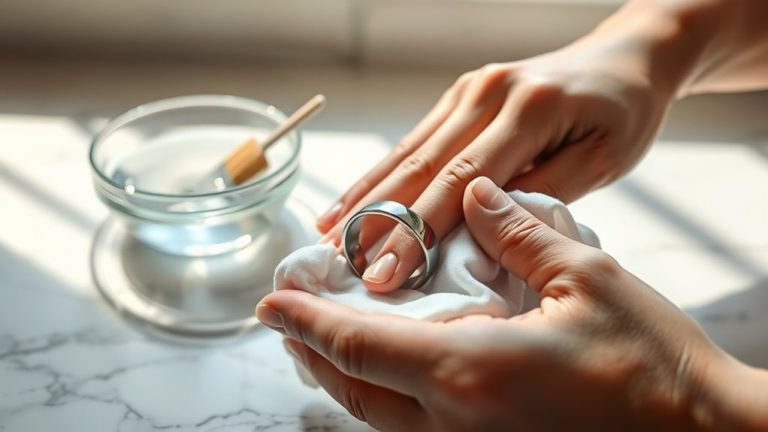
Start by wiping your nickel free jewelry with a soft cloth after each wear to remove oils and dirt.
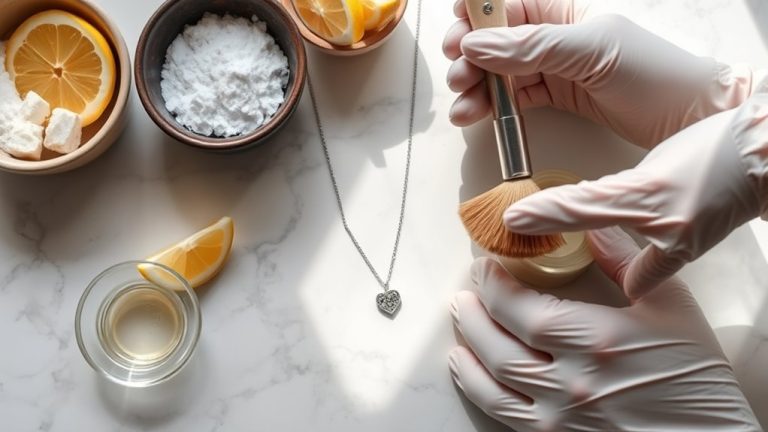
For deeper cleaning, soak it in a gentle solution of lukewarm water and mild dish soap.
Then, use light brushing with a soft toothbrush to reach crevices.
Always rinse thoroughly and dry with a soft cloth to maintain shine.
Avoid chemicals like bleach or ammonia, as they can damage your jewelry’s finish.
While airtight storage and anti-tarnish strips help prevent tarnish, regular cleaning methods are essential.
Best Practices for Long-Term Care and Storage
To preserve the beauty of your nickel-free jewelry over time, you should store it in airtight, anti-tarnish pouches or lined boxes that block moisture and air.
Proper storage prevents tarnish and metal degradation.
Proper storage is key to preventing tarnish and preserving your jewelry’s metal quality over time.
For effective long-term care, follow these best practices:
- Clean your jewelry regularly with a soft cloth and mild soap to remove oils and dirt.
- Keep it away from direct sunlight, humidity, and extreme temperatures to reduce tarnishing.
- Use anti-tarnish strips or silica gel packets in storage containers, replacing them every few months.
- Apply a clear protective coating, like jewelry sealant or nail polish, periodically to shield against moisture.
Frequently Asked Questions
Will Nickel-Free Jewelry Tarnish?
Yes, nickel-free jewelry can tarnish, especially if it’s made from metals like sterling silver.
You can keep it shiny by cleaning regularly, avoiding moisture and chemicals, and storing it in dry, airtight containers.
Can You Wear Nickel-Free Jewelry in the Shower?
Wearing nickel-free jewelry in the shower is like giving your favorite book a splash;
you can do it, but too much moisture might blur the pages.
Can Nickel-Free Jewelry Get Wet?
Yes, you can get nickel-free jewelry wet, but avoid prolonged exposure to water.
This is especially important when it comes to chlorinated or saltwater.
Always dry and store it properly after to keep it shiny and prevent tarnishing or damage.
Do Nickel-Free Necklaces Turn Green?
About 10% of people experience green discoloration from jewelry.
Nickel-free necklaces rarely turn green, especially if made from titanium or platinum.
To keep yours pristine, make sure to clean it regularly.
Also, try to avoid exposure to lotions or sweat.
Conclusion
Nickel free jewelry can tarnish, but you can prevent it by keeping it dry, avoiding harsh chemicals, and storing it properly.
You can clean it gently with mild soap and polish it carefully.
Wear it confidently!
To protect your pieces, just follow these simple care steps.
By maintaining their shine, you can enjoy their beauty every day.
Taking these actions will help you keep your nickel free jewelry looking bright, fresh, and beautiful for years to come.
In conclusion, while nickel free jewelry can tarnish, proper care ensures its longevity.
Keep your pieces dry, avoid harsh substances, and clean them with mild soap.
With a little attention, you can maintain their shine and enjoy the beauty of your jewelry for many years.