Does Gold Jewelry Tarnish and How to Keep It Shiny
Gold jewelry can tarnish, particularly if it’s of lower purity, such as 14K or 10K. This is because alloy metals like copper can react with air, sweat, and various chemicals.
To keep your gold shiny, it’s essential to avoid moisture, perfumes, and harsh cleaners.
Gently clean your pieces with mild soap and a soft cloth for the best results.
Store your jewelry in dry, airtight containers to keep humidity at bay.
By taking these simple steps, you can help protect the shine and longevity of your gold pieces.
There’s a lot more to discover about caring for your gold jewelry and ensuring it stays beautiful for years to come!
Understanding Tarnish and Its Causes
Although pure gold rarely tarnishes, the alloys mixed with it in lower-karat jewelry react with moisture, chemicals, and even your skin’s oils to cause discoloration.
Tarnish forms as a thin layer on your jewelry’s surface due to chemical reactions like oxidation, which affects the metals in these alloys.
Environmental factors such as humidity, pollution, and exposure to perfumes or cosmetics speed up this process.
The metals combined with gold—like copper and silver—are particularly prone to reacting and causing that unsightly discoloration you want to avoid.
To prevent tarnish, you should store your pieces properly, keep them clean, and steer clear of harsh chemicals.
Understanding how these chemical reactions and environmental factors work helps you maintain your jewelry’s shine longer.
The Role of Gold Purity in Tarnishing
The purity of gold plays a significant part in how your jewelry reacts to tarnishing.
Pure gold (24K) has excellent tarnish resistance because it rarely reacts with oxygen or sulfur.
However, as the karat weight decreases, gold alloys contain more alloy metals like copper or nickel, which can cause tarnishing.
This means lower purity gold requires more jewelry maintenance to keep it shiny.
| Gold Purity (Karat) | Tarnishing Risk |
|---|---|
| 24K (Pure Gold) | Very Low (Highly Resistant) |
| 14K Gold Alloy | Moderate (Some Alloy Metals) |
| 10K Gold Alloy | Higher (More Alloy Metals) |
Understanding gold purity helps you choose jewelry with the right balance of beauty and tarnish resistance.
It’s all about finding what works for you!
How Alloyed Metals Affect Gold Jewelry
You’ll find that alloy metals like copper, silver, and nickel are mixed with gold to boost its strength and change its color.
However, these metals can react with air and moisture, causing your jewelry to tarnish over time.
Understanding how these alloys affect durability and tarnish helps you care for your gold pieces better.
Alloy Metals in Gold
Adding alloy metals like copper, silver, nickel, and zinc changes both the strength and color of gold jewelry.
These alloy metals in gold alloys influence how your jewelry ages and how prone it is to tarnishing.
Here’s what you need to know:
- Lower karat gold (like 10K or 14K) has more alloy metals, which increases the risk of discoloration and gold tarnish.
- Reactive metals such as copper and silver tend to interact with air and moisture, causing tarnishing over time.
- The specific mix of alloys determines the tarnish color—black, green, or dark layers may form.
Understanding alloy metals helps you manage tarnish prevention and keep your karat gold jewelry shiny longer.
Tarnish Causes by Alloys
When alloy metals like copper, silver, and nickel mix with gold, they create a blend that’s more vulnerable to tarnish.
These reactive metals in lower-karat gold alloys, such as 10K and 14K, react with air, moisture, and sulfur compounds, causing oxidation and discoloration.
Copper and silver, common base metals in these alloys, speed up tarnishing, especially in humid or chemically exposed environments.
Unlike pure 24K gold, which resists tarnish, the presence of these reactive metals means your gold jewelry can develop dark tarnish layers over time.
To minimize tarnishing, focus on tarnish prevention by storing your jewelry properly and avoiding exposure to harsh chemicals or moisture.
Understanding how alloys cause tarnishing helps you keep your gold jewelry shining longer.
Alloy Impact on Durability
Although pure gold offers exceptional softness, alloy metals substantially boost your jewelry’s durability by increasing hardness and resistance to wear.
The type and amount of alloy metals in your gold alloy directly affect its longevity and tarnish resistance. Here’s what you should know:
- Lower karat gold (10K, 14K) contains more reactive metals like copper and silver, which enhance durability but reduce tarnish resistance.
- Higher karat gold has fewer alloy metals, making it softer but less prone to tarnishing.
- The balance of alloy metals determines both your jewelry’s color and how quickly tarnishing occurs.
Understanding these factors helps you choose gold jewelry with the right mix of durability and beauty that suits your lifestyle.
Environmental Factors That Lead to Tarnish
You might not realize it, but air and moisture play a big role in speeding up tarnish on your gold jewelry.
Pollution and dirt introduce chemicals that react with the metals, causing discoloration.
Understanding these environmental factors can help you protect your pieces better.
Air and Moisture Exposure
Since gold jewelry often contains alloy metals like copper and silver, exposure to air and moisture can trigger chemical reactions that cause tarnish.
When your jewelry meets air and moisture, oxidation and corrosion occur, leading to discoloration.
Here’s what you should know:
- Airborne oxygen reacts with alloy metals, causing oxidation that darkens your jewelry over time.
- Moisture, especially in humid environments, accelerates these chemical reactions, making tarnish appear faster.
- Regular contact with sweat and environmental moisture creates an ideal environment for tarnish to develop.
High humidity levels, like those in tropical climates, increase the risk of tarnish by boosting moisture exposure.
To keep your gold jewelry shiny, minimize its contact with air and moisture whenever possible, as these elements drive the corrosion process that dulls your precious pieces.
Pollution and Dirt Impact
When gold jewelry encounters pollution and dirt, chemical reactions with alloy metals can quickly cause tarnish and discoloration.
Pollution introduces sulfur compounds and environmental pollutants that speed up the oxidation process, especially in humid or industrial areas.
Dirt traps moisture on your jewelry’s surface, increasing oxidation risks and leading to a dull, blackened appearance.
Regular cleaning helps remove these contaminants, slowing down tarnish formation and preserving shine.
| Factor | Effect on Gold Jewelry |
|---|---|
| Pollution | Speeds oxidation, causes discoloration |
| Dirt | Traps moisture, promotes tarnish |
| Environmental Pollutants | React with alloys, accelerate tarnish |
| Oxidation Process | Leads to surface darkening |
| Cleaning | Removes contaminants, maintains shine |
Impact of Sweat, Cosmetics, and Chemicals
Although gold itself resists tarnish, the alloys mixed with it react easily to sweat, cosmetics, and chemicals you encounter daily.
Pure gold resists tarnish, but the alloys it contains react with everyday sweat, cosmetics, and chemicals.
Sweat contains salt and acids that cause oxidation in alloy metals like copper and silver, leading to tarnish and darkening.
Cosmetics and hair sprays have chemicals that can strip gold’s surface or cause discoloration. Chlorinated water accelerates these effects, especially in pools or hot tubs.
Here’s what you should watch for:
- Sweat and skin oils reacting with alloy metals causing dullness and blackening.
- Cosmetics and perfumes triggering chemical reactions that damage gold’s shine.
- Frequent exposure to chemicals weakening gold’s surface, increasing tarnish risk.
Regular cleaning helps remove buildup and keeps your gold jewelry bright and beautiful.
Caring for Gold-Plated Jewelry
Because gold-plated jewelry has only a thin layer of gold over a base metal, you need to handle it with care to prevent the gold from wearing off.
To avoid tarnishing, practice proper care by keeping your pieces away from water, sweat, and harsh chemicals.
Always avoid chemicals like perfumes and cleaning agents, which can accelerate deterioration.
For cleaning, stick to gentle methods using mild soap and a soft cloth—never abrasive materials.
When not in use, proper storage is essential; keep your gold-plated jewelry in a dry, airtight container to minimize exposure to air and moisture.
If the gold layer becomes too thin or worn, consider professional re-plating to restore its shine and extend its life.
Following these steps will keep your gold-plated jewelry looking beautiful longer.
Effective Cleaning Methods for Gold Jewelry
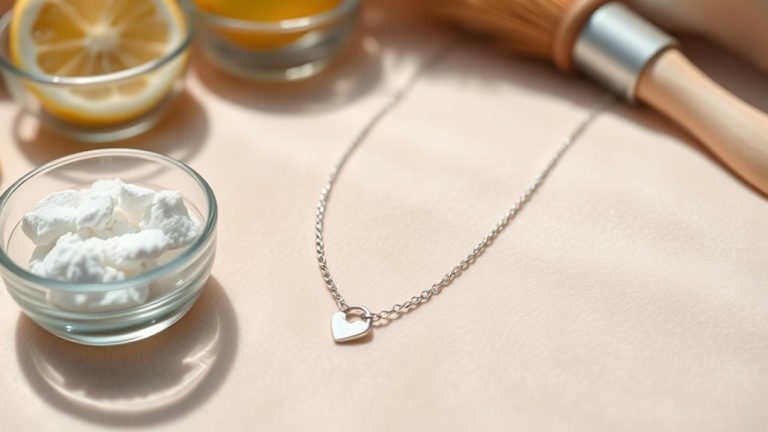
To keep your gold jewelry sparkling, start by soaking it in warm water mixed with mild dish soap or baby shampoo for 15 to 20 minutes.
This gentle cleaning helps loosen dirt and prevent tarnish.
Next, follow these steps:
- Use a soft-bristled toothbrush to gently scrub hard-to-reach areas, like prongs and settings, removing trapped oils and grime.
- Rinse your gold jewelry thoroughly under warm running water to wash away all soap residue.
- Dry the piece carefully with a soft, lint-free cloth to avoid scratching.
For heavily tarnished jewelry, consider using a specialized gold polishing cloth.
And remember, avoid abrasive cleaners or rough materials that can damage your gold jewelry’s surface during cleaning.
Proper Storage Techniques to Prevent Tarnish
When you store your gold jewelry properly, you can considerably reduce the risk of tarnish and keep your pieces looking their best.
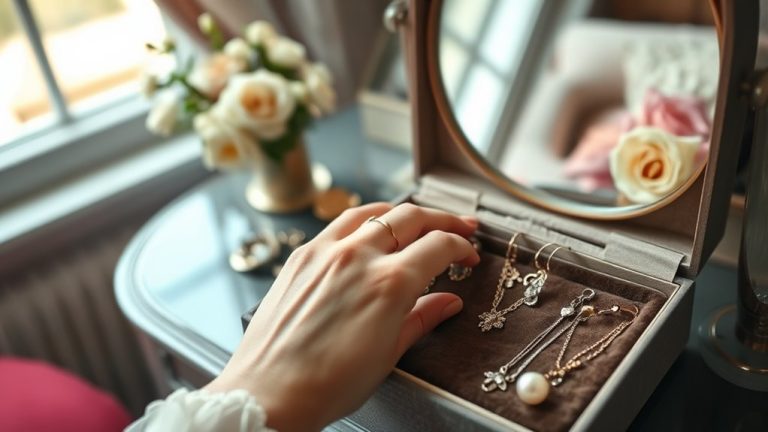
Store each item in individual pouches or compartments to avoid scratches and exposure to moisture.
Always place your jewelry in a cool, dry place, away from humidity and direct sunlight, which cause oxidation.
Adding anti-tarnish strips or silica gel packets to your storage can further prevent tarnish by absorbing excess moisture.
| Storage Tip | Benefit |
|---|---|
| Individual pouches | Prevents scratches, limits moisture exposure |
| Anti-tarnish strips | Absorbs humidity, reduces oxidation risk |
| Dry place, no sunlight | Minimizes moisture and heat, prevents discoloration |
Keep jewelry dry before storing to maintain its shine and longevity.
When to Seek Professional Jewelry Care
If your gold jewelry shows heavy tarnish or stubborn stains that home remedies can’t remove, it’s time to seek professional care.
A jeweler can expertly inspect and clean your pieces to maintain shine and prevent damage.
Here are three key reasons to turn to professional cleaning:
- Re-plate gold-plated jewelry: When the plating wears off, professionals restore its original luster.
- Jewelry repair: Address bent prongs, loose stones, or other structural issues before they worsen.
- Care for valuable jewelry: Professionals clean delicate pieces safely, protecting gemstones and settings.
Regular professional inspections help you catch problems early and keep your gold looking its best.
Don’t hesitate to consult a jeweler if you notice any heavy tarnish or damage—your jewelry deserves expert attention.
Frequently Asked Questions
How to Keep Gold Jewelry Shiny?
You can keep your gold jewelry shiny by regularly wiping it with a soft cloth.
Cleaning gently with mild soap and warm water helps too.
Just remember to avoid harsh chemicals to prevent damage.
Storing your jewelry separately is also important to avoid scratches.
Lastly, having it professionally polished occasionally can really make a difference!
How Do You Keep Gold Jewelry From Tarnishing?
Want to keep your gold jewelry from tarnishing?
You should store it dry and airtight.
Avoid chemicals and water, and clean it gently.
Also, separate pieces to prevent scratching.
Isn’t it easier with simple care habits?
How to Make Your Gold Jewellery Shine Again?
You can make your gold jewelry shine again by gently cleaning it with warm soapy water and a soft toothbrush.
Then, buff it with a gold polishing cloth.
Avoid harsh cleaners and consider professional polishing if needed.
Taking care of your jewelry can really bring back its luster!
How to Shine up Tarnished Gold?
You’ll shine tarnished gold by soaking it in warm, soapy water.
Then softly scrub with a toothbrush.
You’ll buff gently with a polishing cloth, avoiding abrasives.
If needed, use a baking soda paste or seek professional help.
Conclusion
Did you know that 18-karat gold contains about 75% pure gold, making it less prone to tarnish than lower karats?
By understanding how purity, alloys, and environmental factors affect your jewelry, you can keep your pieces shining longer.
Remember to clean your gold regularly, store it properly, and avoid harsh chemicals.
With simple care, your gold jewelry will stay stunning and tarnish-free, letting you enjoy its brilliance every day.
In conclusion, gold jewelry is a beautiful investment that can last for years if cared for properly.
By choosing higher karats like 18K, regularly cleaning, and storing it correctly, you can minimize tarnishing.
Avoiding exposure to harsh chemicals also plays a crucial role in maintaining its shine.
With these tips, your gold pieces will remain as radiant and eye-catching as the day you bought them.