Can You Shower With Gold Plated Jewelry?
You shouldn’t shower with gold-plated jewelry because water, soaps, and shampoos quickly wear away its thin gold layer. This leads to tarnish and damage over time.
Frequent exposure to moisture causes dullness and peeling. Remember, the plating isn’t designed to withstand harsh chemicals or constant wet conditions.
If you want your beautiful pieces to last, it’s better to avoid any water contact altogether. Alternatively, consider choosing more durable options that can handle everyday wear.
Keep exploring to learn how to protect and care for your gold-plated jewelry properly!
Understanding Gold-Plated Jewelry
Although gold-plated jewelry looks like solid gold, it actually consists of a base metal coated with a thin layer of gold applied through electroplating.
Gold-plated jewelry mimics solid gold but is a base metal coated with a thin gold layer via electroplating.
This gold layer typically ranges from 0.17 to 2.5 microns thick, depending on the plating process used. Common base metals include brass, copper, nickel, or silver, which provide the structure beneath the gold coating.
You’ll find that gold-plated jewelry offers an affordable alternative to solid gold. However, it’s more prone to tarnish and wear over time.
The durability largely depends on the thickness of the gold layer and the quality of the plating process.
While gold-plated pieces look beautiful, you should understand their delicate nature.
Especially how factors like water exposure can affect their lifespan and appearance.
How Water Affects Gold-Plated Jewelry
When you expose gold-plated jewelry to water, the thin gold layer starts to wear away, causing the piece to fade or peel over time.
Water exposure, especially when frequent, accelerates damage to your gold-plated jewelry by diminishing the thinner layer of gold that protects the base metal.
Wearing jewelry in the shower or during activities involving water increases the risk of this damage.
Harsh substances like chlorine and saltwater worsen the effects, breaking down the plating faster.
Prolonged contact with water also leads to tarnishing and dullness, reducing your jewelry’s aesthetic appeal.
Since the durability depends on the thickness of the gold layer, thinner plating suffers more from water exposure.
To keep your gold-plated jewelry looking its best, minimize wearing jewelry while bathing or swimming.
Common Causes of Tarnishing
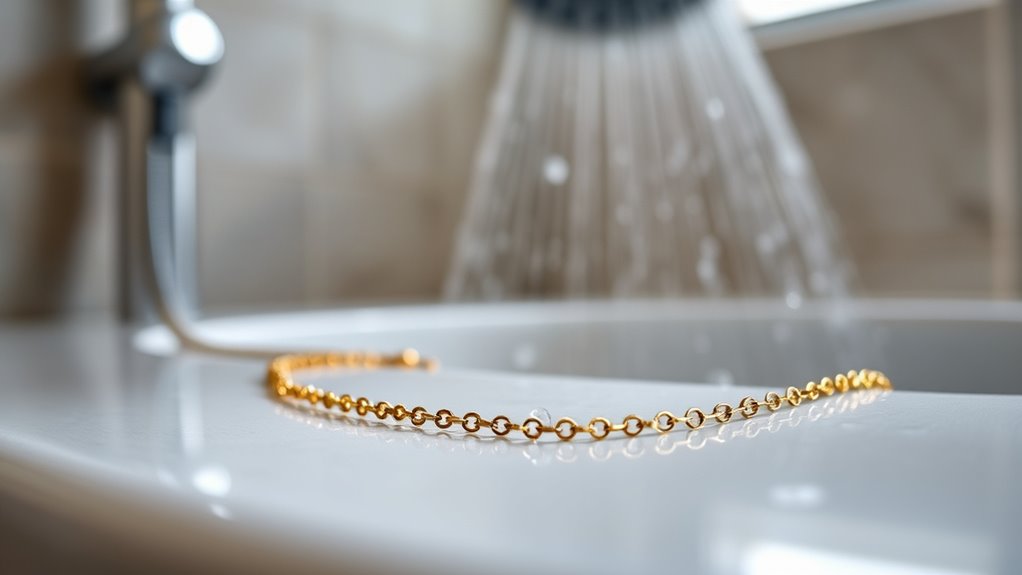
If you want to keep your gold-plated jewelry shining, you need to understand the common causes of tarnishing.
Tarnish happens when the gold layer reacts with air, water, and environmental elements.
Exposure to soaps, lotions, and chemicals breaks down this layer, revealing the base metals underneath, which oxidize faster.
Frequent contact with chlorinated or salty water speeds up this process.
Also, thin gold layers wear down quicker, increasing tarnish risk.
Here’s a quick overview of the causes of tarnishing:
| Cause | Effect on Jewelry | Why It Happens |
|---|---|---|
| Water | Accelerates tarnishing | Breaks down gold layer |
| Soaps/Lotions | Discoloration | Chemicals attack gold coating |
| Base Metals | Visible tarnish | Oxidize quickly underneath gold |
| Environmental Air | Gradual tarnishing | Reacts with gold surface |
| Wear and Tear | Layer thinning | Exposes base metals |
The Role of Plating Thickness and Quality
Since the durability of your gold-plated jewelry largely depends on plating thickness and quality, understanding these factors can help you protect your pieces better.
Thicker plating, usually above 2.5 microns, offers improved tarnish resistance and durability against water and daily wear. High-quality electroplating with proper sealing further strengthens your jewelry, reducing the risk of damage from shower exposure.
Compared to gold-plated items, gold-filled jewelry contains a much thicker gold layer—at least 5% of the total weight—making it far more water-resistant.
Keep in mind, the base metal and plating process also influence how well your jewelry holds up. Lower karat or alloyed gold layers tend to withstand water better than softer, higher karat plating.
Prioritize thickness and quality to keep your pieces looking great longer.
Impact of Soaps, Shampoos, and Lotions
Although gold-plated jewelry adds a touch of elegance to your look, soaps, shampoos, and lotions can quickly damage its delicate surface.
These everyday products contain chemicals that break down the thin gold plating, causing it to wear off faster.
Residue left behind dulls the shine and speeds up tarnish.
The reaction between these chemicals and the base metal beneath can also cause discoloration and skin irritation.
Consider how soaps, shampoos, and lotions can affect your gold-plated pieces:
- Soaps leave behind residues that dull the gold plating and accelerate tarnish.
- Shampoos contain harsh chemicals that break down the gold layer, causing it to chip.
- Lotions promote wear by trapping moisture and chemicals against the jewelry’s surface.
Frequent exposure to these substances markedly reduces your jewelry’s lifespan.
Best Practices for Caring for Gold-Plated Jewelry
When you want your gold-plated jewelry to stay beautiful, taking proper care is essential.
To protect your pieces, avoid wearing them in the shower or during any activity involving exposure to water, lotions, or chemicals. Water and moisture can cause the thin gold layer to wear off faster, leading to tarnish over time.
For proper care and maintenance, store your gold-plated jewelry in airtight, dry containers with anti-tarnish materials to slow oxidation.
Clean your pieces gently using a soft cloth and mild soap—never harsh chemicals or abrasive materials.
If your jewelry does lose its shine, consider professional replating to restore its original beauty.
Following these steps helps ensure your gold-plated jewelry stays radiant and lasts longer.
Risks of Wearing Gold-Plated Jewelry in the Shower
When you wear gold-plated jewelry in the shower, water slowly wears away the thin gold layer, causing it to lose shine and tarnish.
The chemicals in soaps and shampoos speed up this damage, making the plating fade even faster.
Over time, this exposure can ruin the jewelry’s appearance and durability.
Gold Layer Degradation
Since gold-plated jewelry has a very thin layer of gold, wearing it in the shower can quickly wear that layer away.
Water exposure accelerates gold layer degradation, causing the delicate gold plating to peel or chip.
When the thin gold layer fades, the base metal beneath becomes vulnerable and starts to tarnish, ruining the jewelry’s look.
Here’s what happens when you shower with gold-plated jewelry:
- Constant moisture softens the gold plating, making it more prone to damage.
- The thin gold layer, often just a few microns thick, wears off faster under water.
- Once the gold fades, the base metal’s tarnish becomes visible, dulling the piece.
To keep your gold-plated jewelry looking fresh, avoid water exposure during showers.
Chemical Exposure Effects
Beyond the natural wear caused by water, the chemicals found in soaps, shampoos, and conditioners can further damage your gold-plated jewelry during showers.
This chemical exposure accelerates corrosion, breaking down the delicate gold layer and exposing the base metal underneath.
When your gold-plated jewelry faces water and chemicals repeatedly, it risks tarnishing and discoloration, which dulls its original shine.
Substances like chlorine from pools and saltwater also speed up this degradation process.
Additionally, perfumes, lotions, and body sprays can worsen the effects by reacting with moisture, leading to peeling and premature wear.
To keep your gold-plated jewelry looking its best, avoid prolonged contact with water and chemicals during showers.
Continuous exposure markedly reduces its lifespan and aesthetic appeal.
Comparing Gold-Plated to Solid Gold and Gold-Filled
When you compare gold-plated jewelry to solid gold and gold-filled pieces, you’ll notice big differences in durability and cost.
Solid gold lasts the longest but comes with a higher price.
On the other hand, gold-filled offers a balance between durability and affordability.
Understanding these trade-offs helps you decide what’s worth wearing in the shower.
Durability Differences Explained
Although gold-plated jewelry looks beautiful, it doesn’t hold up as well as solid gold or gold-filled pieces when exposed to water and daily wear.
The thin gold layer on gold-plated items, often just 0.17 to 2.5 microns, offers limited durability and water resistance.
When you shower wearing gold-plated jewelry, the fragile coating can quickly wear off or fade.
In contrast, solid gold and gold-filled pieces resist water and tarnishing much better.
Here’s what you should keep in mind:
- Gold-plated jewelry’s thin gold layer wears off easily with water and friction.
- Gold-filled jewelry has a thicker gold layer, making it more durable and water-resistant.
- Solid gold, especially 14K or higher, maintains its shine and resists damage over time.
Cost Versus Longevity
Since gold-plated jewelry tends to wear out within a couple of years, you might think it’s the cheapest option.
But its short lifespan means you’ll likely replace it often.
Gold-plated pieces usually show signs of wear after exposure to water and daily use, which reduces their longevity.
On the other hand, solid gold jewelry costs more upfront but lasts a lifetime with proper care.
It resists wear from water and everyday activities, making it a solid investment.
Gold-filled jewelry strikes a balance, offering thicker gold layers than gold-plated options.
With good care, it can last several years.
While gold-plated jewelry is affordable initially, frequent replacements make it less cost-effective over time.
If you want pieces that retain value and appearance without constant worry about water damage or wear, investing in solid gold or gold-filled jewelry is a smarter choice.
Alternative Jewelry Options for Showering
If you want to keep your jewelry on while showering, choosing pieces made from stainless steel, titanium, or solid gold (14K and above) can help you avoid water damage.
These materials are water-resistant and require less jewelry care compared to delicate plated jewelry.
Alternative metals like ceramic, tungsten, and silicone also offer durable, non-reactive options perfect for showering.
Here are three alternatives for shower-safe jewelry:
- Stainless steel – highly water-resistant and sturdy, ideal for everyday wear.
- Solid gold (14K+) – resists tarnishing and corrosion better than gold-plated pieces.
- Alternative metals – ceramic, tungsten, and silicone provide affordable, durable options without worrying about water damage.
Choosing these options lets you enjoy your jewelry without constant removal during water activities.
Tips to Extend the Life of Your Gold-Plated Pieces
To keep your gold-plated jewelry looking its best, you’ll want to take steps that minimize exposure to water, chemicals, and air.
First, avoid wearing your pieces in the shower to reduce water exposure, which can wear down the gold layer and cause tarnishing.
Applying a protective sealant or clear lacquer creates a barrier that further shields your jewelry from moisture.
Using a clear lacquer adds an extra protective layer against moisture for your gold-plated jewelry.
Make sure to practice proper storage by keeping your gold-plated jewelry in airtight, anti-tarnish containers to limit contact with air and pollutants.
Ultimately, maintain your pieces with regular cleaning using a soft cloth and mild soap—steer clear of harsh chemicals.
Following these tips will help extend the life and shine of your treasured gold-plated jewelry.
Frequently Asked Questions
Can You Get Gold-Plated Jewelry Wet?
You shouldn’t get gold-plated jewelry wet because water wears away the thin gold layer.
Even quick exposure can cause fading or chipping over time.
To keep it looking great, try to avoid water whenever possible.
How Long Can You Shower With Gold-Plated Jewelry?
You shouldn’t shower with gold-plated jewelry at all.
Even brief exposure to water and soap will wear down the thin gold layer quickly,
causing it to fade and tarnish much faster than you’d like.
How Long Will Gold-Plated Jewelry Last?
Gold-plated jewelry lasts like a candle’s flicker—6 months to 2 years, depending on thickness and care.
If you avoid water and chemicals, clean it gently, and store it properly, you’ll keep it shining longer.
Does Gold Plating Come off in the Shower?
Yes, gold plating can come off in the shower.
You’ll find that water, especially with chlorine or salt, gradually wears down the thin gold layer.
Conclusion
You shouldn’t shower with your gold-plated jewelry if you want it to last.
Water, soaps, and lotions can wear down the delicate plating, making it fade or tarnish faster—like a thin layer of paint washing away in the rain.
To keep your pieces shining bright, save them for dry moments.
Consider alternatives like solid gold or gold-filled jewelry when you shower.
Treat your gold-plated items with care, and they’ll stay beautiful longer.
In conclusion, it’s best to avoid wearing gold-plated jewelry while showering.
The exposure to water and various products can significantly diminish its lifespan and shine.
Instead, opt for more durable options like solid gold or gold-filled pieces during your shower routine.
This way, you ensure your jewelry remains stunning and well-preserved for years to come!