How to Clean Jewelry With Alcohol Safely
You can safely clean solid metal jewelry like gold or platinum using a solution of 70% isopropyl alcohol diluted with water. This method is effective for removing dirt and grime, ensuring your precious pieces shine bright.
However, be cautious! Avoid using alcohol on porous or glued pieces such as pearls or opals, as it can cause damage.
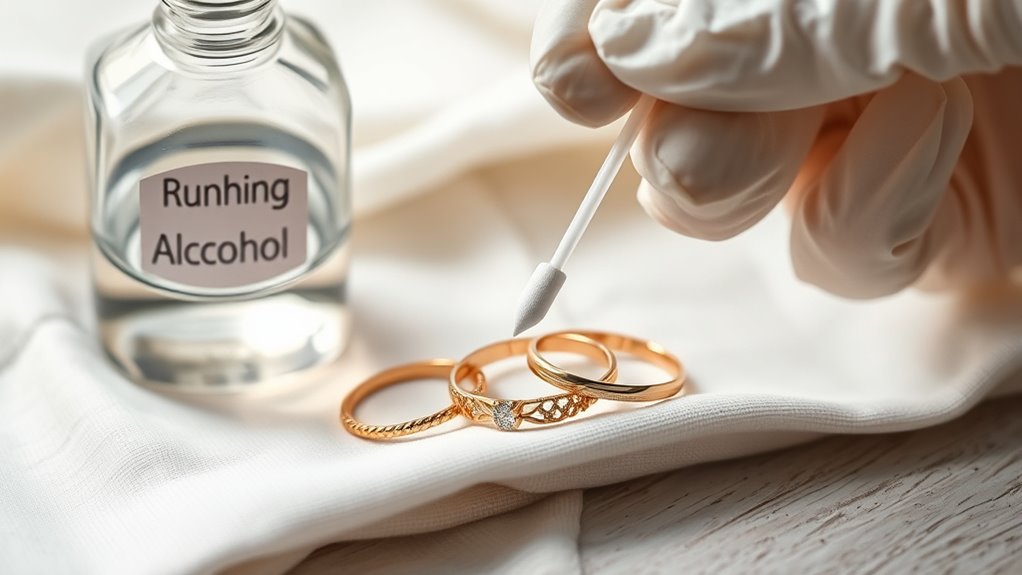
To clean your jewelry, simply dip a cotton swab into the solution. Gently wipe your jewelry to remove any buildup, then rinse it off and dry with a soft cloth.
Proper care is essential for preserving your jewelry, and if you’re looking for the best cleaning methods and storage tips, there’s plenty more to explore.
Understanding When Alcohol Is Safe for Jewelry
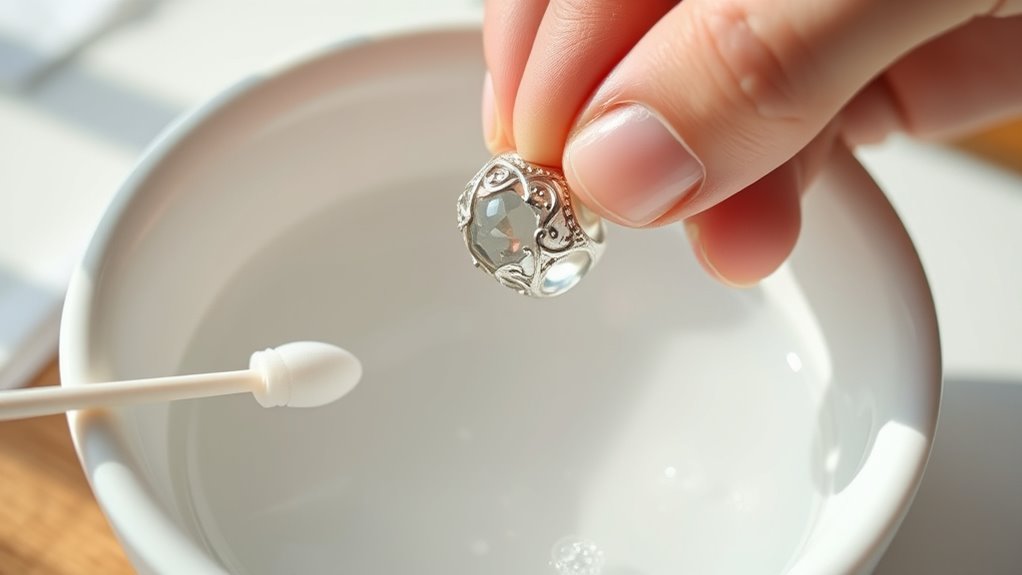
Although rubbing alcohol is a powerful cleaner, you should only use it on solid metals like gold, platinum, titanium, and surgical steel jewelry.
These solid metals resist damage from alcohol, which effectively removes oils, lotions, and bacteria without harming the metal’s surface.
Solid metals withstand alcohol cleaning, removing oils and bacteria without damaging the surface.
However, you need to avoid porous gemstones such as pearls, opals, and turquoise, as alcohol can dry them out or cause discoloration.
Jewelry with glued stones and delicate coatings also isn’t safe for alcohol cleaning because soaking or applying alcohol directly can dissolve adhesives or damage finishes.
Before using alcohol, always check what materials your jewelry contains.
Sticking to solid metals ensures you clean safely without risking damage to fragile components or coatings.
Identifying Jewelry Materials That Should Avoid Alcohol
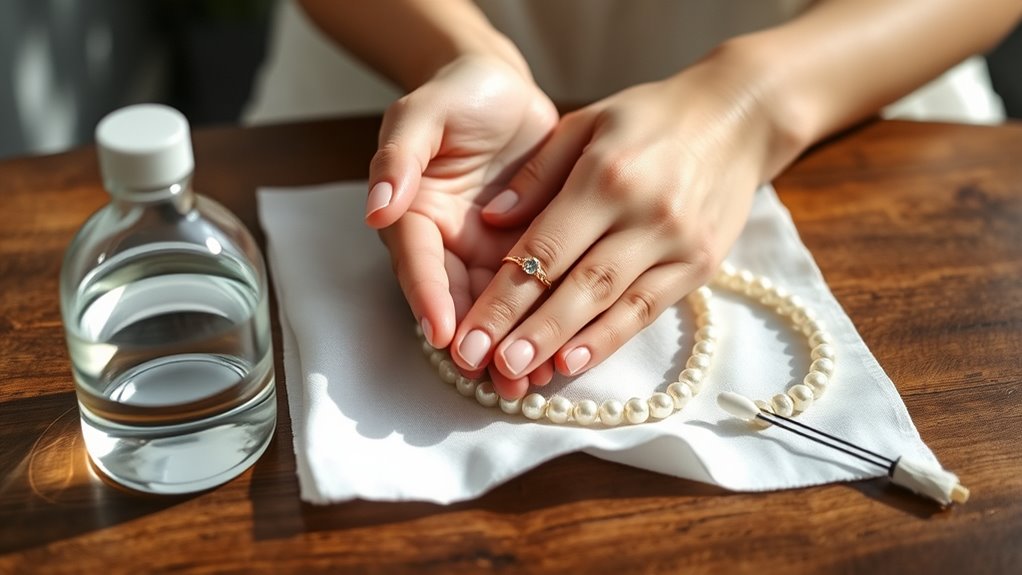
When you clean your jewelry with alcohol, you need to know which materials can’t handle it.
Certain pieces are vulnerable because alcohol can cause damage or discoloration.
Avoid using alcohol on:
- Pearls and other porous materials like opals and turquoise, which can absorb alcohol and degrade.
- Organic gemstones such as amber and coral, which may become brittle or lose color.
- Delicate jewelry, especially vintage or antique pieces with fragile settings that alcohol can weaken.
- Jewelry with glued-in stones, where the adhesive might dissolve or loosen.
Knowing these materials helps you protect your jewelry from harm.
Always check your pieces carefully before cleaning to keep them looking their best.
Preparing a Safe Alcohol-Based Cleaning Solution
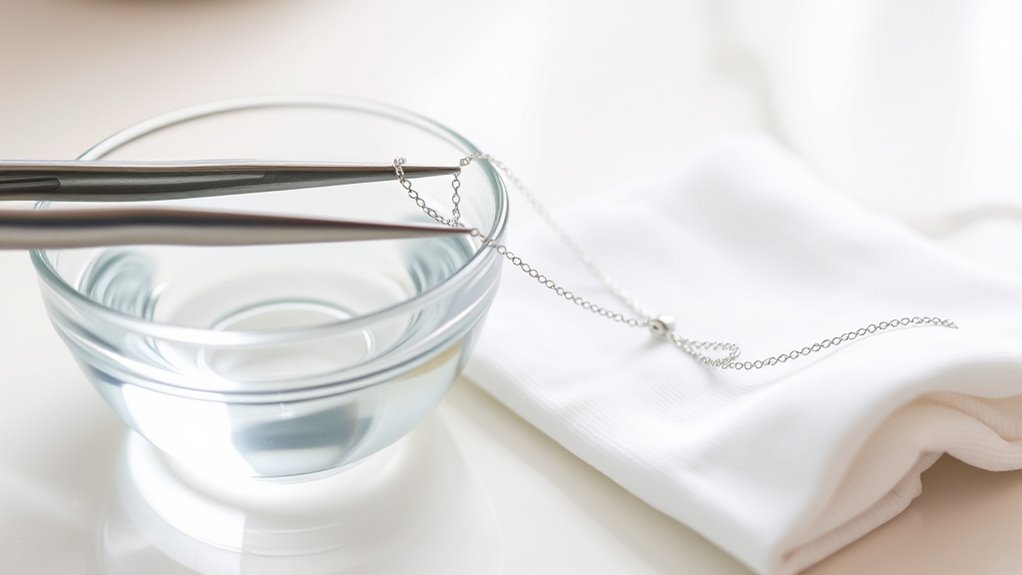
To prepare a safe alcohol-based cleaning solution, use 70% isopropyl rubbing alcohol without added scents or oils.
Mix one part alcohol with three parts water to guarantee gentle yet effective cleaning.
Always choose plain rubbing alcohol to avoid damaging your jewelry.
Choosing Safe Alcohol Types
Since using the right type of alcohol is essential, you should choose 70% isopropyl rubbing alcohol for cleaning your jewelry safely and effectively.
This concentration balances cleaning power without harsh effects. Avoid alcohol with added fragrances or oils, as they can harm delicate jewelry.
For glued or fragile pieces, prefer alcohol-based wipes or swabs to reduce damage risk. Always handle isopropyl alcohol in a well-ventilated space, keeping it away from heat or flames due to flammability.
Keep these tips in mind for safe cleaning:
- Use 70% isopropyl alcohol, not higher concentrations.
- Avoid scented or additive-containing rubbing alcohol.
- Opt for wipes on glued or delicate jewelry.
- Work in ventilated areas, away from heat sources.
This ensures your jewelry stays pristine with safe isopropyl alcohol use.
Mixing Proper Solution Ratios
Choosing the right type of alcohol is just the start; mixing it in the proper ratio makes all the difference in protecting your jewelry.
For general cleaning, combine one part isopropyl alcohol with three parts water to create a safe solution. This ratio effectively cleans without risking damage.
If you need a deeper clean, warm the solution until it’s about “coffee hot” before soaking your jewelry, but never boil it.
Store your mixture in a small, sealed container like a baby food jar for easy reuse.
When dealing with delicate or glued pieces, dilute the alcohol further or consider alternative solutions to avoid harming the materials.
Always check the recommended ratio for your specific jewelry type and never use pure alcohol directly on sensitive or porous gemstones.
Step-By-Step Guide to Cleaning Jewelry With Alcohol
Although cleaning jewelry with alcohol is straightforward, you should start by washing your hands thoroughly to avoid transferring oils or dirt onto your pieces.
To clean jewelry effectively, follow these steps:
- Use a cotton swab dipped in 70% isopropyl alcohol to gently wipe the surface, focusing on posts and hooks.
- Soak your jewelry in alcohol for 5 to 10 minutes for a deeper clean, but protect delicate or glued parts.
- Rinse the jewelry with clean, lukewarm water to remove alcohol residue and loosened debris.
- Dry completely with a soft, lint-free cloth to prevent water spots and moisture buildup.
Happy cleaning!
Alternative Gentle Cleaning Methods for Delicate Pieces
When cleaning delicate jewelry, you can use a mild soap solution with warm water to avoid damage.
Gently wiping with a soft cloth or cotton swab helps keep your pieces clean without harsh chemicals.
For valuable or intricate items, it’s best to trust professional cleaning services to maintain their condition.
Taking care of your jewelry doesn’t have to be complicated!
Just remember to be gentle and use the right tools.
Mild Soap Solutions
A few drops of fragrance-free dish soap mixed with warm water create an effective and gentle solution for cleaning delicate jewelry.
This mild soap cleaning solution lets you safely soak your pieces without risking damage.
To get the best results, follow these steps:
- Soak jewelry in the solution for 10-15 minutes to loosen dirt and oils.
- Gently clean with a soft-bristled toothbrush or microfiber cloth around settings and clasps.
- Rinse thoroughly with lukewarm water to remove all soap residue.
- Pat dry with a soft, lint-free cloth to avoid scratches.
Using this mild soap method helps maintain your jewelry’s sparkle without harsh chemicals.
It’s a dependable alternative to alcohol for delicate items that need extra care.
Soft Cloth Techniques
Since delicate jewelry requires gentle care, using a soft, lint-free cloth offers an effective way to polish without causing scratches or damage.
You should use a microfiber or flannel soft cloth to remove oils, fingerprints, and dullness from your pieces.
For intricate designs, wrap the cloth around a small brush or toothpick to reach tight spots carefully.
Before cleaning, dampen the cloth with warm water to help lift dirt more easily without harsh chemicals.
Avoid applying excessive pressure or using abrasive materials, as they can wear down delicate surfaces.
Regularly cleaning your jewelry with a soft cloth maintains its shine and minimizes the need for stronger cleaning methods, keeping your treasured pieces looking their best with minimal risk.
Professional Cleaning Benefits
While soft cloth techniques work well for everyday upkeep, some jewelry pieces call for more advanced care to maintain their beauty and integrity.
Professional cleaning offers a safer, more effective alternative, especially for delicate or intricate items.
Experts use specialized equipment and gentle methods like ultrasonic baths to clean without damage.
They also inspect jewelry closely, spotting loose stones or worn settings early.
Here’s why you should consider professional cleaning:
- Removes tarnish, grime, and oils better than DIY methods.
- Uses industry-approved, gentle techniques safe for fragile pieces.
- Employs ultrasonic baths for deep but safe cleaning.
- Inspects jewelry for hidden issues to prevent future damage.
Regular professional cleaning preserves your jewelry’s appearance and structure without risks from harsh chemicals like alcohol.
Post-Cleaning Care and Storage Tips
Once you’ve finished cleaning your jewelry with alcohol, make sure to let it air dry completely on a soft, lint-free cloth or paper towel before putting it away.
This step is crucial to prevent any moisture damage to your pieces.
To keep your jewelry looking its best, store each item separately in compartments or anti-tarnish pouches. This helps avoid scratches and tarnish over time.
Also, be sure to steer clear of fibrous materials like tissue paper, as they can catch on delicate settings.
Finally, keep your jewelry in a cool, dark place away from sunlight, moisture, and heat. This will help maintain and restore its shine.
| Tip | Reason |
|---|---|
| Air dry on soft cloth | Prevents moisture damage |
| Store individually | Avoids scratches and tarnish |
| Avoid tissue paper | Prevents snagging |
| Cool, dark storage | Maintains appearance |
When to Seek Professional Jewelry Cleaning Services
Although you can clean many pieces at home, it’s a good idea to seek professional jewelry cleaning services at least once a year. This will help ensure your items stay safe and well-maintained.
Professionals don’t just clean; they thoroughly inspect your jewelry for any signs of damage that could worsen over time.
You especially need expert care if you have:
- Delicate, antique, or high-value pieces
- Jewelry with glued or porous gemstones like pearls or opals
Also, keep an eye out for signs of loose stones or worn prongs, as well as pieces that have experienced visible wear or accidental impact.
A professional jeweler’s cleaning ensures your jewelry stays beautiful and secure while preventing costly damage.
Regular professional inspections help prolong your jewelry’s lifespan and maintain its appearance better than DIY methods alone.
Frequently Asked Questions
Is It Safe to Clean Jewelry With Alcohol?
Yes, you can safely clean solid metal jewelry and non-porous gemstones with alcohol.
However, avoid using it on plated, glued, or delicate pieces like pearls.
Always use alcohol sparingly to prevent damage or discoloration.
Is It Better to Clean Jewelry With Hydrogen Peroxide or Alcohol?
It’s better to clean jewelry with alcohol since it dries quickly and won’t damage metals or diamonds.
Avoid hydrogen peroxide on delicate stones, as it can cause discoloration or tarnishing if used improperly or too often.
What Is the Best Thing to Clean Jewelry With?
You’ll find that 70% of jewelers recommend mild soap and warm water as the best cleaner.
It’s gentle, effective, and safe for most metals and stones—perfect for keeping your jewelry sparkling without damage.
Does Alcohol Damage 14K Gold?
Alcohol doesn’t damage solid 14K gold, so you can use it for quick cleaning.
But don’t soak gold-plated pieces or jewelry with glued stones, as alcohol may wear plating or loosen adhesives.
Rinse and dry promptly.
Conclusion
Cleaning your jewelry with alcohol can be like giving your treasures a fresh breath of life—sparkling and renewed.
Just remember to treat each piece like a delicate bloom, knowing when alcohol’s a friend or foe.
With the right care and gentle touch, your jewelry will shine bright, ready to dazzle again.
When in doubt, don’t hesitate to pass the torch to a professional who can keep your gems glowing safely.
In conclusion, using alcohol to clean jewelry can be effective, but it’s essential to handle each piece with care.
Always consider the materials involved and if alcohol is suitable.
If you’re unsure, consulting a professional jeweler is a smart choice to ensure your favorite pieces remain radiant and safe.
Your jewelry deserves the best treatment to keep it looking its finest!