How Is Cameo Jewelry Made?
To make cameo jewelry, you start by selecting layered shells or stones with contrasting colors.
After drying the shell for stability, you shape and polish it into a smooth blank.
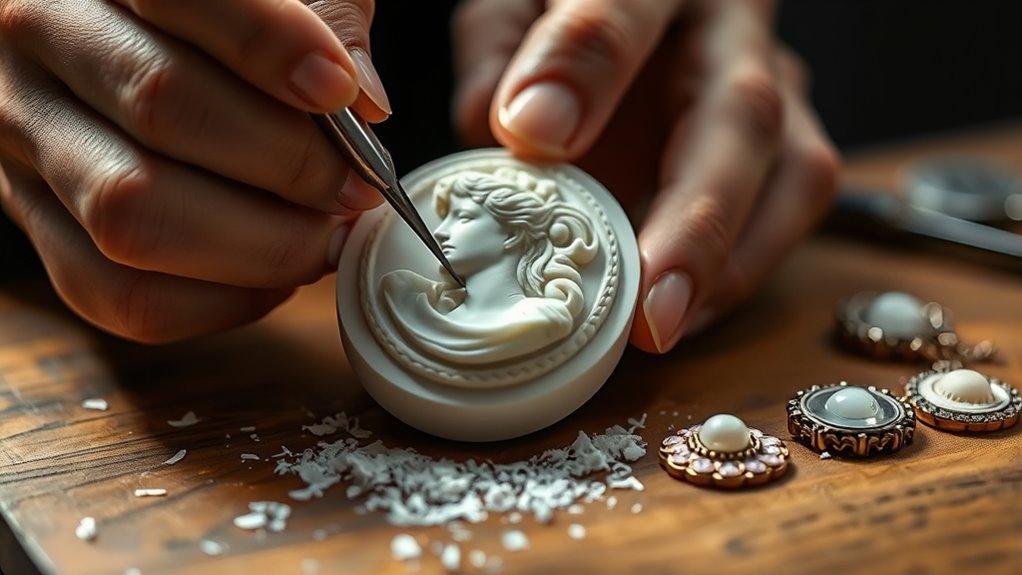
Then, using fine tools like burins, you carefully carve away layers to reveal a detailed relief image.
Finally, you polish and sometimes coat the piece before mounting it in precious metal.
If you want to understand the artistry and modern touches involved, there’s more to explore.
History and Significance of Cameo Jewelry

Although cameo jewelry dates back thousands of years to ancient Greece and Rome, it remains a timeless art form that continues to captivate people today.
Cameo jewelry, originating in ancient Greece and Rome, remains a timeless and captivating art form today.
When you explore cameo jewelry, you’ll find its rich history is deeply tied to the art of carving intricate scenes and figures, often mythological or historical.
During the Victorian era, cameo carving experienced a revival, with Queen Victoria herself popularizing these elegant pieces.
Antique cameos from this period often feature women’s silhouettes, symbolizing status and refinement.
You’ll notice that cameos have served not only as decorative jewelry but also as cultural symbols and signet rings, representing wealth and power.
Understanding this history helps you appreciate cameo jewelry’s lasting significance and unique artistry.
Materials Used in Cameo Carving

When you examine cameo carving, you’ll find artisans rely heavily on natural materials like layered shells and gemstones to achieve the striking contrast essential to these pieces.
They select layered shells such as carnelian and sardonyx, prized for their contrast colors that make the images carved in relief truly stand out.
These shells, often dried for over a year, provide a stable canvas for the delicate hand carved designs.
Besides shells, gemstones like agate and onyx are also popular for their durability and vivid layers.
Each cameo’s depth and detail come from carefully carving through these contrasting layers, revealing the image against the background.
While modern versions might use synthetic materials, traditional cameos depend on the natural beauty of layered shells and stones to create timeless art.
Selecting the Perfect Shell or Stone

To create a stunning cameo, you need to select shells or stones with natural contrasting layers and smooth surfaces that enhance the carved image.
When choosing a shell, look for species like Cypraea tigris or Cassis madagascariensis, known for their beautifully layered coloration.
These layered shells provide the perfect contrast, allowing your carving to stand out vividly.
Layered shells create striking contrasts that make your cameo carvings visually captivating and distinct.
Pay attention to the shell’s translucency and surface quality, as a smooth shell ensures finer detail in your work.
The contrast between the outer and inner layers is vital since it defines the cameo’s visual impact.
Preparing the Shell for Carving
After selecting a shell with strong layered contrast, you’ll need to prepare it carefully before carving.
First, the shells are dried for at least a year to prevent cracking during the process.
Next, the outer layer is sanded using a diamond wheel, known as scoppatura, to expose the contrasting inner layers essential for your design.
You then shape the shell into an oval or circular blank by grinding and polishing it, creating a smooth surface ready for carving.
Before you start carving, sketch your intended image lightly onto the translucent layer with a pencil.
Finally, attach the shell to a small wooden spindle, giving you control and precision as you begin the intricate carving process.
Traditional Carving Techniques and Tools
You’ll use fine steel tools like bullini or burins to carefully carve the raised figures from the shell’s surface.
The process demands steady hands and sharp focus as you scrape away layers to reveal the contrasting design.
Working under natural light helps you catch every detail and maintain precision throughout.
Hand Carving Tools
Although modern technology offers new tools, traditional cameo carving relies on small, sharp steel instruments called bullini or burins that scrape and etch fine details into the material.
When you use these hand tools, you’ll often reach for the bulino, a fine, pointed tool invented in Italy to carve intricate lines and delicate features in the relief.
Carving by hand demands steady hands and sharp eyes, usually working under natural light to guarantee precision.
Each tiny cut you make shapes the design, requiring patience and skill since the process can take hours or even days.
While some artisans now use ultrasonic carving machines, many still prefer these classic tools to maintain the authentic craftsmanship and detail that define traditional cameo jewelry.
Artisan Carving Process
Master artisans begin the carving process by carefully shaping and smoothing the shell or gemstone before transforming it into a raised relief.
You’ll notice they sketch the design first, then use fine steel tools like bullini or burins to carve the cameo.
Working under natural light helps them achieve precise details as they skillfully remove the background, making the figure stand out in relief.
Each piece is carved by hand, reflecting the artisan’s patience and expertise, often taking days or weeks to complete.
| Step | Description |
|---|---|
| Material Prep | Shape and smooth shell or stone |
| Design Sketch | Outline the relief design |
| Carving Tools | Use bullini or burins for detail |
| Relief Creation | Carve background to raise figure |
| Finishing Touch | Refine details and smooth edges |
The Role of Master Artisans in Cameo Creation
When you hold a finely crafted cameo from Torre del Greco, Italy, you’re witnessing the skill of artisans who spend days or even weeks carving intricate designs by hand.
Master artisans there use traditional hand-carving tools called bullini to carefully shape each piece. They select shells with natural layer contrast, like Carnelian or Sardonyx, to highlight the relief and bring the design to life.
This traditional craftsmanship demands patience and precision, often done in natural light to capture every delicate detail.
You can appreciate how these artisans blend the shell’s natural beauty with their expert technique, ensuring every cameo is a unique work of art.
Their dedication plays a pivotal role in preserving the timeless elegance of cameo jewelry.
Finishing and Polishing the Cameo
Now that you’ve carved your cameo, it’s time to focus on polishing techniques that bring out its shine and detail.
You’ll refine the edges and apply final touch enhancements to guarantee every line stands crisp.
Finally, adding a protective coating will preserve your work and keep it looking stunning for years to come.
Polishing Techniques
How do you bring out the true beauty of a carved cameo?
Polishing is key. After carving, you gently smooth the surface using fine pumice or oil, enhancing intricate details without damage.
Applying natural oils or waxes adds a glossy finish that highlights the cameo’s layered contrast, especially in shell pieces.
Using a soft cloth or buffing wheel, you carefully remove any roughness, preserving delicate features while achieving a smooth, reflective surface.
This process not only protects the cameo but also breathes life into its design.
| Technique | Effect on Cameo |
|---|---|
| Fine pumice | Smooths surface, refines details |
| Natural oils | Enhances luster and finish |
| Buffing wheel/cloth | Removes roughness, adds shine |
Final Touch Enhancements
Though the carving captures the cameo’s essence, final touch enhancements bring your piece to life by refining edges, polishing surfaces, and deepening contrasts.
You’ll carefully smooth and polish the edges to achieve a glossy, refined finish that highlights the cameo’s delicate details.
Polishing with a mixture of oil and pumice enhances the surface, while a light application of oil deepens the contrast, making the carved design stand out beautifully.
Afterward, you clean the cameo with water and soft cloths to remove any residual dust.
The finishing process prepares your piece perfectly for mounting, where it’s set into a gold or silver frame, transforming your polished cameo into a wearable work of art.
Protective Coating Application
After you’ve polished the cameo with oils and pumice, applying a protective coating becomes essential to preserve its surface and prevent tarnishing.
First, you carefully clean the cameo to remove any leftover dust or oils.
Then, you apply a thin layer of wax or resin as the protective coating.
This layer shields the delicate carving from environmental damage while enhancing its natural shine.
You might repeat the polishing and coating process multiple times to build up a smooth, glossy finish.
Finally, you gently buff the cameo to ensure an even surface that highlights every intricate detail.
This careful application of wax or resin not only protects your cameo but also extends its beauty and longevity for years to come.
Modern Innovations and Custom Cameo Designs
While traditional hand-carving remains essential, modern cameo jewelry blends these techniques with ultrasonic and laser technology to boost precision and efficiency.
You’ll find artisans using layered materials like dyed agates, onyx, and shells. They apply modern techniques to create stunning custom designs.
Digital software helps plan intricate details before hand-carving or machine engraving. This ensures your personalized cameo is flawless.
Mixed media also plays a role, combining cameos with metals, gemstones, or enamel for unique looks.
| Feature | Description |
|---|---|
| Layered Materials | Dyed agates, onyx, shells |
| Hand-Carving | Traditional skill enhanced by technology |
| Custom Designs | Family portraits, pets, symbolic motifs |
| Modern Techniques | Ultrasonic, laser, digital design software |
| Mixed Media | Integration with gems, metals, enamel |
Frequently Asked Questions
Are Old Cameos Worth Anything?
Yes, old cameos can be worth a lot, especially if they’re made from rare materials, well-preserved, and feature detailed craftsmanship.
You should check their condition, authenticity, and provenance to gauge their true value accurately.
How Are Real Cameos Made?
You’ll be amazed that over 90% of real cameos are handcrafted by skilled artisans.
They carve layered shells or stones with fine tools, revealing delicate relief designs.
Then, they polish and set them into elegant jewelry pieces you’ll cherish forever.
What Is so Special About Cameos?
What’s special about cameos is their unique, hand-carved relief images that showcase skilled craftsmanship and natural layered materials.
You’ll appreciate their depth, historical charm, and the intricate artistry that makes each piece truly one-of-a-kind.
What Shell Are Cameos Carved From?
You’ll find cameos carved from layered shells like Carnelian and Sardonyx.
These shells have contrasting colors, perfect for detailed reliefs.
They’re often sourced from Africa or the Caribbean, prized for their natural beauty and durability.
Conclusion
So, now you know cameo jewelry isn’t just a pretty face carved from shell or stone—it’s a labor of love, skill, and patience that master artisans have perfected over centuries.
Ironically, while you might think these tiny masterpieces are quick, casual crafts, they actually demand precision and artistry.
Next time you admire a cameo, remember: behind that delicate image is a world of tradition and dedication you’d never guess at first glance.
In conclusion, cameo jewelry represents a rich heritage of craftsmanship.
Each piece tells a story, reflecting the dedication and skill of the artisans who create them.
So, the next time you see a beautiful cameo, take a moment to appreciate the art and tradition woven into its design.