How Does Tarnish Appear on Silver Plated Jewelry?
You’ll notice tarnish on silver plated jewelry first as a thin, dull film that dims its shine.
Over time, this layer darkens into brown, black, or even blue patches, especially in crevices.
Since the silver layer is thin, oxidation happens quickly, and exposure to moisture, pollutants, or skin oils speeds it up.
Tarnish affects appearance more than strength but can reveal base metals if left untreated.
Keep going to understand how it develops and what causes it.
What Causes Tarnish on Silver Plated Jewelry

Although silver-plated jewelry looks beautiful, it tarnishes when the thin silver layer reacts with sulfur compounds in the air, forming silver sulfide.
Silver-plated jewelry tarnishes as its thin silver layer reacts with sulfur in the air, forming silver sulfide.
This silver tarnish results from tarnishing agents like polluted air, household chemicals, and natural sulfur gases triggering an oxidation process on the surface.
Environmental exposure to moisture and humidity speeds up tarnish formation, making the silver sulfide layer appear quickly.
When the silver plating wears down, the base metal underneath—often copper or brass—can also contribute to discoloration and tarnish.
Understanding this chemical reaction helps you grasp why your silver-plated pieces darken over time.
Protecting your jewelry from sulfur compounds and reducing exposure to tarnishing agents can slow down this natural oxidation process and preserve the shine longer.
Visual Signs of Tarnishing on Silver Plated Pieces

How can you tell when your silver-plated jewelry is starting to tarnish?
Look for a dull surface that loses its original shine and shows a muted shine instead.
Early signs include faint yellowish or brownish haze or gray or brown stains forming on the metal.
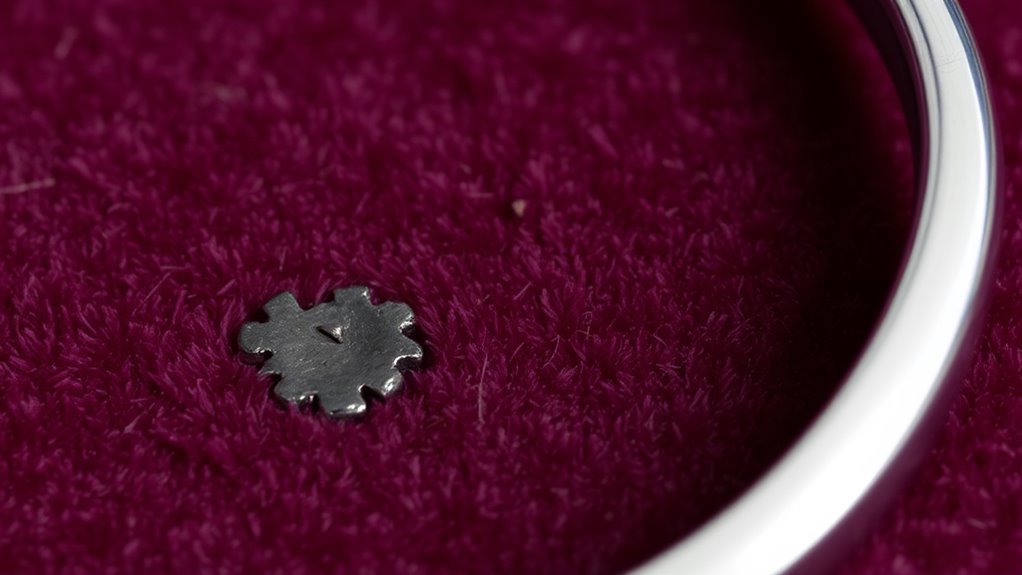
As oxidation progresses, you’ll notice more obvious discoloration, such as dark black patches and blue-black areas, especially in crevices or detailed designs.
These changes indicate tarnish buildup, which causes the jewelry to appear less reflective and lifeless.
If you spot these visual signs—dullness, discoloration, black patches, or blue-black areas—it’s time to clean your silver-plated pieces to prevent further damage and restore their bright appearance.
Differences Between Tarnish on Silver Plated and Sterling Silver

You’ll notice tarnish forms faster on silver plated jewelry because its thin silver layer wears down quickly, exposing the base metal underneath.
In contrast, sterling silver, with its thicker silver content, tarnishes more slowly and evenly over time.
Understanding these differences helps you care for each piece properly and spot when damage might be occurring.
Tarnish Formation Differences
When silver-plated jewelry tarnishes, it quickly develops a dull, dark layer because its thin silver coating reacts with sulfur compounds in the environment.
This reaction causes rapid tarnishing, unlike sterling silver, where tarnish forms more slowly through the oxidation of silver and copper alloys.
Since silver-plated pieces have only a thin silver layer, tarnish formation often leads to base metal exposure once the protective coating wears down.
You’ll notice tarnish on silver-plated jewelry appears uneven and patchy, while sterling silver tarnishes more uniformly.
Cleaning silver-plated jewelry also risks wearing down the silver layer, reducing its lifespan.
In contrast, sterling silver can be polished repeatedly without damaging the metal.
Understanding these differences helps you care for both types effectively.
Silver Layer Thickness
The thickness of the silver layer plays a crucial role in how tarnish appears on your jewelry.
Silver-plated pieces have a very thin layer of silver, usually just a few microns thick.
This makes their surface more vulnerable to the tarnishing process.
Because this plating is so delicate, silver reacts quickly to exposure from sulfur compounds and moisture.
Tarnish can develop within weeks or months.
As this thin layer wears down, the tarnish becomes uneven and more noticeable.
In contrast, sterling silver contains a much thicker silver layer—92.5% pure silver.
This offers greater resistance to tarnish and allows you to polish the surface without risking damage.
Understanding the silver layer’s thickness helps you manage and predict how tarnish will affect your jewelry over time.
Base Metal Exposure
Although silver-plated jewelry looks similar to sterling silver at first, the thin silver layer can wear away quickly, exposing the base metal underneath.
This exposure leads to a base metal reaction with sulfur and moisture, accelerating tarnishing.
Unlike sterling silver, where tarnish forms on the surface and can be polished away, silver-plated pieces reveal the underlying metal once the plating wears off.
The base metal—often copper or brass—has a different color, causing uneven and more noticeable tarnish appearance.
Continued wear thins the silver layer until corrosion sets in on the exposed base metal, making the jewelry look discolored and damaged.
Understanding base metal exposure helps you grasp why tarnish on silver-plated items differs from that on sterling silver.
Environmental Factors That Accelerate Tarnish Formation
You’ll notice that high humidity and moisture make silver jewelry tarnish faster, especially when it stays above 50%.
Chemicals from perfumes, lotions, and cleaning products also speed up tarnish by reacting with the metal’s surface.
Plus, your skin oils can contribute to the process, making it important to handle your silver carefully.
Humidity and Moisture
How does humidity affect your silver jewelry?
When environmental humidity rises above 50%, moisture speeds up tarnish formation on your silver-plated jewelry.
Moisture contact from sweat, water, or air causes silver sulfide to develop quickly, leading to oxidation.
The thin silver layer can dissolve slightly, exposing the base metal and accelerating tarnish layers that look like dull, dark patches.
| Humidity Level | Effect on Jewelry | Tarnish Formation Rate |
|---|---|---|
| Below 30% | Minimal moisture contact | Slow |
| 30%-50% | Moderate moisture | Moderate |
| Above 50% | High moisture contact | Rapid |
To slow tarnish, store your jewelry airtight with desiccants to reduce moisture contact.
Chemical Exposure Effects
Moisture in the air sets the stage for tarnish, but chemical exposure often speeds up the process on your silver-plated jewelry.
Sulfur-containing gases, like hydrogen sulfide found in environmental pollutants, act as powerful tarnish accelerators by triggering a chemical reaction with the silver surface.
This reaction leads to oxidation, which is the core of tarnish formation.
Household products such as perfumes and cleaning agents contain reactive compounds that also hasten tarnish development.
Additionally, contact with chlorinated or mineral-rich water intensifies oxidation, further damaging your jewelry.
These factors combine to accelerate tarnish formation beyond what moisture alone would cause.
Skin Oils Impact
Since your skin constantly touches silver-plated jewelry, the natural oils and acids it produces react with the metal, speeding up tarnish formation.
The oils from your skin contain natural acids and salts that interact with the silver plating, creating a microenvironment that promotes the buildup of tarnish layers.
Frequent skin contact means sulfur compounds from body sweat and oils accelerate this process further.
Your skin’s pH level also influences how quickly tarnish develops, making some pieces tarnish faster than others.
Wearing silver-plated jewelry regularly increases exposure to skin oils, so tarnish formation happens more rapidly compared to when jewelry is stored away.
Understanding this impact of skin oils helps you better care for your silver jewelry and slow down discoloration caused by them.
How Tarnish Progresses Over Time on Silver Plated Jewelry
Although silver-plated jewelry looks shiny at first, you’ll notice a thin yellowish or brownish film forming within just a few months of exposure to air and sulfur compounds.
This initial tarnish layer is very thin—only 10 to 100 nanometers thick—and results from oxidation on the silver plated surface.
As this layer develops, you’ll see subtle color changes caused by thin film interference.
Over time, the tarnish layer thickens, and its colors deepen into reddish-brown, blue, or black shades, reflecting the layer’s increasing thickness.
The progression accelerates with continued exposure to humidity, pollutants, and skin oils.
Eventually, as the silver plated layer wears down, the tarnish becomes more pronounced, signaling ongoing oxidation and the gradual loss of the protective silver layer beneath.
Impact of Tarnish on Jewelry Appearance and Durability
When tarnish forms on your silver-plated jewelry, it dims the surface with a dull, dark layer that steals its original shine and brightness.
This discoloration, caused by oxidation, can range from yellowish to black, depending on how thick the tarnish layer becomes.
While tarnish doesn’t weaken the metal beneath unless the plating wears off, it definitely affects your jewelry’s appearance, making it look aged and less vibrant.
Tarnish doesn’t harm the metal but dulls your jewelry, making it look aged and less vibrant.
The buildup of this dark layer can also obscure intricate details, reducing the overall aesthetic appeal.
To protect both the shine and durability of your silver-plated jewelry, it’s essential to clean off tarnish regularly.
Doing so preserves the plating and keeps your pieces looking their best for years to come.
Common Misconceptions About Tarnish and Silver Jewelry
Understanding how tarnish affects your silver jewelry is just part of the picture.
Many misconceptions surround tarnish and silver plated jewelry.
For instance, tarnish isn’t rust but a surface chemical reaction caused by oxidation and environmental factors.
You might think silver always tarnishes quickly, but with proper care and storage, you can slow down discoloration considerably.
Also, not all discoloration means permanent damage; tarnish often responds well to cleaning and can be reversed.
Some believe gold-plated jewelry doesn’t tarnish, yet it can wear down faster than silver if neglected.
Tarnish isn’t just a black layer—it can show yellow, red, blue, or green hues depending on the chemical makeup and surroundings.
Knowing these facts helps you maintain your jewelry’s shine longer.
Frequently Asked Questions
Can Silver Plated Jewelry Tarnish?
Yes, silver-plated jewelry can tarnish when exposed to humidity, chemicals, or pollutants.
You’ll notice dull, dark, or discolored patches forming quickly since the silver layer is thin.
Proper care helps slow tarnishing.
How to Remove Tarnish From Silver Plated Jewelry?
You won’t believe how easily you can restore shine—just grab a soft cloth and gently buff.
For stubborn spots, try mild soap and water or a silver cleaner.
But remember, never use harsh abrasives that’ll damage your jewelry.
What Causes Silver Plating to Tarnish?
You cause silver plating to tarnish when it reacts with sulfur compounds in the air, moisture, or chemicals.
Your skin oils, perfumes, and humidity speed up this process, especially if the base metal contains copper.
How Long Does Silver Plated Jewelry Last?
Imagine your favorite silver bracelet as a candle burning bright—it usually lasts 1 to 2 years before the shine dims.
But if you keep it dry and clean, you’ll make that glow last longer, trust me.
Conclusion
Now that you know how tarnish appears and progresses on your silver plated jewelry, you can better protect your cherished pieces from that pesky discoloration.
Environmental factors speed up tarnishing, so storing your jewelry properly is key.
No need to treat it like a medieval relic locked away in a dusty chest!
With the right care, your silver plated treasures will keep shining bright, looking great, and lasting longer than you might expect.
Remember to clean your jewelry regularly and store it in a dry, cool place.
By following these simple steps, you can minimize tarnish and enjoy your beautiful silver plated pieces for years to come.
So, keep those treasures sparkling and take pride in your collection.