How to Know If Jewelry Is Real Silver Step by Step
To know if your jewelry is real silver, you can follow a few simple steps to ensure authenticity. First, look for clear hallmarks like “925” or “Sterling,” which indicate that the piece is made of genuine silver.
Next, grab a magnet—silver isn’t magnetic at all, so if the jewelry sticks, it’s likely not real.
Another fun test is the ice cube trick; silver has excellent thermal conductivity, so it melts ice quickly.
Keep an eye out for natural tarnish or black residue when polished, as these can be signs of real silver.
When you tap the piece, listen for a clear ringing sound; genuine silver often produces a distinct tone.
You should also check for signs of plating wear or skin reactions, like green stains, which can indicate lower-quality materials.
If you want to confidently verify authenticity, there’s more to explore.
Understanding Silver and Its Alloys

Although pure silver is too soft for most jewelry, you’ll often find it alloyed with metals like copper or nickel to boost its strength.
When you see sterling silver, it means the piece contains 92.5% real silver mixed with 7.5% other alloys, usually copper. This combination helps prevent damage and reduces tarnish.
Fine silver, marked “999,” is nearly pure but too delicate for everyday wear.
You might also come across silver-plated items, where a thin layer of real silver covers base metals like brass or copper.
To verify authenticity, check for markings such as “925,” “Sterling,” or “92.5%,” but keep in mind these can sometimes be misleading.
Understanding these alloys and markings helps you recognize genuine sterling silver jewelry and avoid fakes.
Common Types of Fake Silver Jewelry

When you’re shopping for silver jewelry, it’s important to recognize common fakes that look real but aren’t.
One typical fake silver is nickel silver, which contains no actual silver, just copper, zinc, and nickel.
Silver-plated pieces have a thin layer of sterling silver over a base metal like copper or brass; over time, the base metal may show through, especially at worn spots.
Silver-plated jewelry features a thin silver layer that can wear away, revealing the base metal underneath.
Some fake silver items even bear hallmarks like “925,” but these can be misleading.
Genuine sterling silver tarnishes naturally, while some fake silver resists tarnish differently or not at all.
To avoid disappointment, watch for indicators like uneven tarnish or exposed base metal.
These hints can suggest that what you’re seeing isn’t solid sterling silver but a cleverly disguised imitation.
Identifying Hallmarks on Silver Jewelry

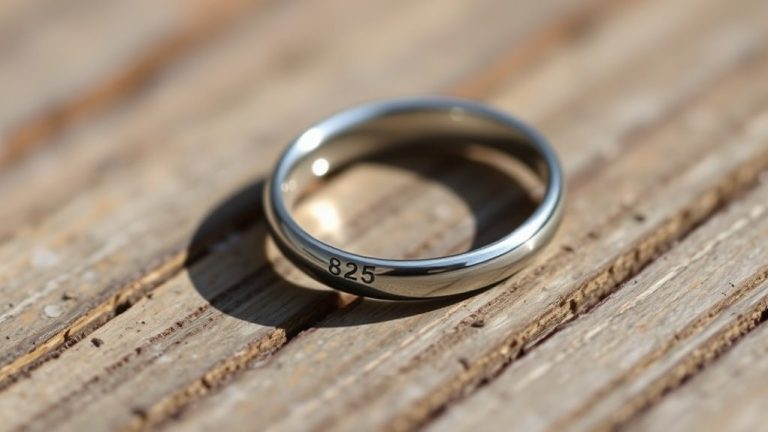
You’ll want to look for common silver hallmarks like “925” or “Sterling” stamped on hidden spots such as ring bands or clasps.
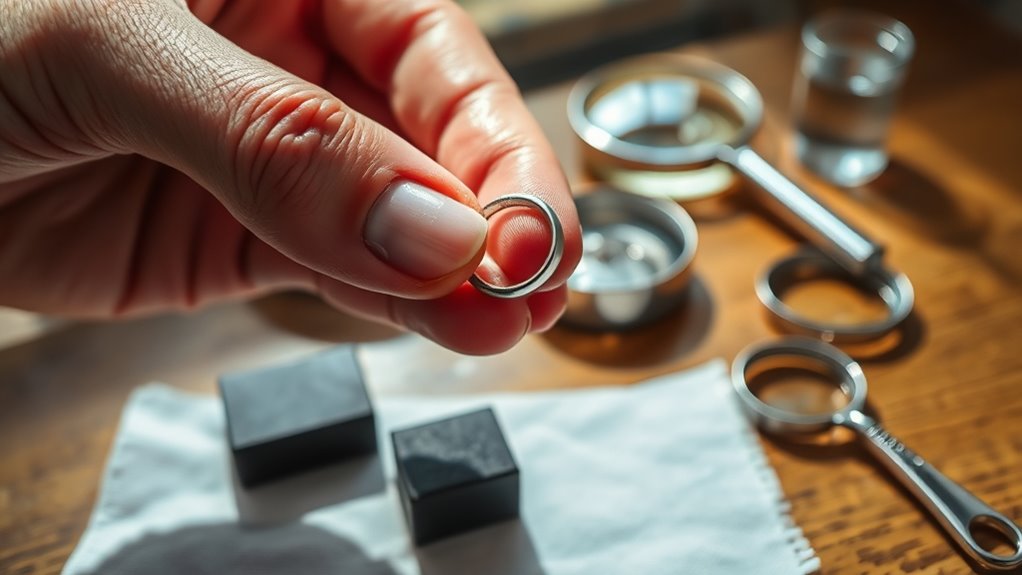
Use a magnifying glass to spot these tiny marks and check for clear, consistent fonts.
Keep an eye out for fake stamps by comparing them to trusted hallmark guides before trusting the silver’s authenticity.
Common Silver Hallmarks
Since silver purity is key to identifying real silver jewelry, you should look for common hallmarks like “925,” “.925,” or the word “Sterling” stamped on the piece.
These markings indicate the silver content— “925” means 92.5% pure silver, which is typical of sterling silver.
Authentic silver hallmarks often appear clearly on less visible areas such as inside rings or near clasps.
Besides numeric stamps, symbols like the lion passant or maker’s marks can confirm genuine silver.
Remember, these hallmarks serve as an initial guide to silver authenticity, but not all stamps guarantee real silver.
Always examine the clarity and consistency of the stamp since forged markings exist.
Recognizing these common silver hallmarks helps you confidently identify real silver jewelry.
Spotting Fake Stamps
How can you tell if a silver hallmark is genuine or fake? Spotting fake stamps requires a keen eye.
Authentic silver usually has clear hallmarks like “925,” “.925,” or “Sterling,” neatly engraved in proper places such as inner bands or clasps.
Beware of:
- Misspellings or inconsistent fonts on the hallmark
- Poor engraving that looks blurry or uneven
- Improper placement of the stamp, like on unusual surfaces
- Marks that appear laser printed rather than stamped
- Hallmarks that don’t match physical tests like magnetism or tarnish behavior
Fake stamps often imitate genuine marks but fail under close inspection.
Always verify hallmarks carefully to ensure you’re buying authentic silver, not counterfeit pieces with superficial or misleading marks.
Performing the Magnet Test
You can use a strong magnet to check if your silver jewelry is real since genuine silver isn’t magnetic.
Hold the magnet close to different parts, like clasps, without touching to see if there’s any attraction.
Remember, some small steel parts might stick even if the piece is authentic.
Magnetism and Silver
Although real silver is mostly non-magnetic, you can quickly check your jewelry by holding a strong magnet close without touching it.
This simple magnet test for silver helps you determine if your piece is real or fake.
Remember, sterling silver and most silver-plated items are non-magnetic, so little to no magnetic attraction should occur.
Keep these points in mind during your test:
- No attraction usually means genuine sterling silver or silver-plated.
- Strong magnetic pull suggests stainless steel or iron.
- Slight attraction may come from small magnetic parts like clasps.
- Magnet test alone isn’t foolproof; combine with other methods.
- Use a strong magnet for best results.
This quick test is a helpful step in verifying your silver jewelry.
Testing Tips and Tricks
Testing silver jewelry with a magnet requires a careful approach to get reliable results.
Start by using a strong neodymium magnet and slowly bring it close to the jewelry, focusing on flat surfaces and the main body.
Remember, real silver is non-magnetic, so if the magnet sticks strongly, the piece likely isn’t genuine.
However, check small steel parts like clasps or pins, which can attract magnets even on real silver jewelry.
It’s wise to test multiple areas to avoid false readings.
Always perform the test at room temperature and avoid using magnets on delicate or intricately designed pieces to prevent damage.
A weak or no magnetic response suggests the jewelry might be real silver or a non-magnetic alloy.
But remember to combine this test with others for an accurate assessment.
Using the Ice Cube Test for Silver
When you place a small piece of jewelry on aluminum foil and set an ice cube on top, the speed at which the ice melts can reveal if the silver is genuine.
This simple melting test relies on the fact that silver conducts heat exceptionally well.
Genuine silver will cause the ice cube to melt quickly due to its high thermal conductivity.
Here’s how to perform the at-home testing effectively:
- Place your jewelry on aluminum foil to isolate heat transfer.
- Set an ice cube directly on the jewelry surface.
- Observe how fast the ice cube melts; faster melting suggests genuine silver.
- Conduct the test in a cool environment to improve accuracy.
- Use this method alongside tarnish detection for reliable results.
This ice cube test is a quick way to check if your jewelry is real silver by measuring heat conduction.
Conducting the Smell and Polish Tests
Since real silver is odorless, you can quickly spot a fake by smelling your jewelry.
Any metallic or chemical scent usually means it’s not genuine.
A metallic or chemical smell often signals your jewelry isn’t real silver.
Before testing, make sure to clean your piece thoroughly; dirt or residues can affect your results.
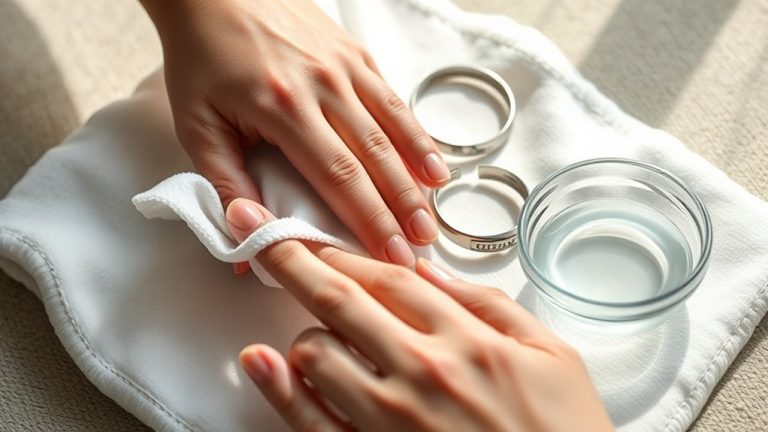
For the polish test, gently rub the jewelry with a soft white cloth.
If you see black residue appearing, it’s a good sign you’re dealing with tarnished silver.
This dark residue indicates the silver’s authentic surface beneath any plating.
If your jewelry remains odorless and produces black residue during the polish test, it’s likely real silver.
Checking for Tarnish and Skin Reactions
After checking for odor and polish residue, you can also look for natural signs like tarnish and how your skin reacts to the jewelry.
Real silver develops a dark tarnish from oxidation that’s easy to polish off, revealing a bright shine underneath.
On the other hand, silver plated or fake pieces often show uneven tarnish or peeling.
Now, let’s talk about how your skin responds:
- Pure silver rarely causes green discoloration.
- Silver plated items often leave green stains.
- Copper alloys can cause skin irritation or green marks.
- Real silver’s tarnish generally appears mostly in crevices.
- If you can wear it for a long time without any skin reactions, that’s a good sign of authenticity!
Listening to the Sound of Silver
Although it might sound unusual, you can often tell if jewelry is real silver by listening to the sound it makes when tapped gently.
When you tap a genuine silver piece with a coin or metal object, it should produce a clear, ringing sound with a high-pitched resonance.
This ringing sound indicates the authenticity of your jewelry.
Thicker sterling silver items, like rings or bangles, usually have a more sustained and audible ring.
If your silver piece emits a dull or muffled noise, it might be made from non-silver materials or plated metals.
To be sure, compare the sound of your jewelry with a known authentic silver piece.
This simple test helps you quickly assess the jewelry’s authenticity without causing any damage.
Inspecting Jewelry for Plating Wear
Listening to the sound your silver jewelry makes can give you a quick clue about its authenticity.
The sound your silver jewelry produces can offer an immediate hint about its authenticity.
But a closer look is often necessary to confirm its quality. When inspecting for plating wear, focus on these signs:
- Check high-contact areas like edges and clasps for thinning or missing silver coating.
- Look for discoloration or chipping that reveals the base metal underneath.
- Notice uneven tarnishing or discoloration, indicating worn-through plating.
- Use a magnifying glass to spot areas where silver flakes off or plating is rough.
- Feel for rough or uneven spots, which suggest poor quality or plating wear.
These details help you identify if the silver layer is intact or if plating wear has exposed base metal.
This can affect the jewelry’s authenticity and value.
Seeking Professional Silver Testing
When you want to be certain about your silver jewelry’s authenticity, seeking professional silver testing is the best approach.
Certified jewelers use reliable methods like acid tests, electronic testers, and XRF analysis to verify silver purity without guesswork.
These professional testing techniques guarantee accurate silver verification.
| Testing Method | Description |
|---|---|
| Acid Test | Applies acid to detect color change indicating silver. |
| Electronic Tester | Measures metal’s electrical properties nondestructively. |
| XRF Analysis | Uses X-ray fluorescence for precise metal composition. |
Frequently Asked Questions
How to Tell if Jewelry Is Real Silver at Home?
You can tell if jewelry is real silver by checking for “925” stamps.
Also, see if a magnet sticks to it.
Another way is to watch how fast ice melts on it.
Rubbing it with a cloth can help too; if you spot black streaks, that indicates authenticity.
Conclusion
Knowing if your jewelry is real silver is like peeling back layers of an onion—you uncover clues step by step.
By checking hallmarks, trying simple tests like the magnet or ice cube, and observing tarnish or sound, you’ll get closer to the truth.
Don’t forget to inspect for plating wear and consider professional testing when in doubt.
With these tools, you’ll confidently distinguish genuine silver from the fakes every time.
In conclusion, identifying real silver jewelry involves a combination of observing hallmarks, performing simple tests, and checking for signs of wear.
By being attentive and using these methods, you can confidently determine if your piece is authentic.
Remember, when in doubt, seeking professional testing adds an extra layer of assurance.
With practice, you’ll become adept at spotting real silver jewelry from the imitations.