What Does the Duck Mark Mean on Antique Gold Jewelry?
If you spot a duck mark on antique gold jewelry, it usually symbolizes loyalty, fidelity, and lifelong bonds. This mark reflects deep cultural meanings of trust and protection.
Interestingly, the duck mark often ties to marriage happiness in Chinese tradition or signifies emotional connection in European pieces.
Regional styles and craftsmanship can affect its look and significance.
Recognizing these symbols can significantly boost both sentimental and market value.
So, keep exploring! You’ll uncover how these themes and their history shape the jewelry’s charm and worth.
The Historical Significance of the Duck Symbol in Jewelry

Although you might not immediately recognize it, the duck symbol on antique gold jewelry carries rich historical significance.
When you see a duck motif on antique jewelry, it often represents loyalty and fidelity, reflecting the lifelong pair bonds ducks form.
This imagery wasn’t just decorative; it conveyed harmony, trust, and lasting relationships across many cultures.
For instance, in ancient art and jewelry, ducks symbolized good fortune, protection, and abundance.
If you explore pieces influenced by Chinese tradition, you’ll find mandarin ducks specifically symbolize marital happiness and union.
So, when you come across the duck mark on antique gold jewelry, you’re looking at a symbol that historically communicated deep emotional values and cultural ideals.
This makes your piece much more meaningful than it might first appear.
Cultural Meanings of Ducks in Antique Gold Pieces

Understanding the historical significance of the duck symbol helps illuminate its cultural meanings in antique gold jewelry. Ducks often appear on antique gold pieces as a maker’s mark or decorative motif, symbolizing loyalty, trust, and prosperity.
When you see a duck engraved on antique gold jewelry, it reflects more than craftsmanship—it represents harmonious relationships and good fortune rooted in Chinese and European traditions.
These makers marks not only identify the creator but also convey themes of adaptability and tranquility. Antique gold jewelry featuring ducks carries emotional weight, embodying fidelity and familial bonds.
Symbolism of Ducks: Love, Loyalty, and Protection

When you spot a duck mark on antique gold jewelry, know it’s more than decoration—it stands for love, loyalty, and protection.
Ducks have long symbolized faithful bonds and nurturing care, making them powerful symbols of commitment and safety.
You’ll also find they represent prosperity and good fortune, adding another layer of meaning to these treasured pieces.
Duck Symbolism in History
Why do ducks appear so often in antique gold jewelry as meaningful symbols?
Duck makers chose this motif because ducks are known for their strong qualities—loyalty, protection, and adaptability—that resonate deeply across cultures.
When you see a duck design on a piece of jewelry, it isn’t just decorative; it carries rich symbolism.
Antique duck motifs often represented good fortune and emotional commitment, making such pieces prized tokens of trust.
The protective nature of ducks, especially toward their young, inspired artisans to embed these qualities in their work.
Love and Loyalty
Because ducks form lifelong pair bonds and often return to the same partner each season, their image in antique gold jewelry powerfully symbolizes love and fidelity.
When you wear or gift such pieces, you’re sharing a message of loyalty and lasting commitment.
Ducks in jewelry also highlight trustworthiness, making them a perfect emblem for meaningful, enduring relationships.
| Symbolism | Meaning | Significance |
|---|---|---|
| Lifelong Bond | Love & Fidelity | Enduring Romance |
| Loyalty | Trustworthiness | Relationship Strength |
| Emotional Loyalty | Commitment | Deep Connection |
This symbolism makes duck-marked antique gold jewelry a meaningful token of love and loyalty that resonates through generations.
Protection and Prosperity
Although ducks are widely recognized for their loyalty and love, they also symbolize protection and prosperity in antique gold jewelry.
When you see a duck mark, it’s more than decoration—it’s a meaningful emblem of safety and abundance.
Ducks fiercely guard their young, so the symbol represents strong parental protection.
Across cultures, they’re linked to prosperity, signaling good fortune and growth.
This symbolism makes duck-marked jewelry a powerful token of well-being and emotional strength.
Here’s what the duck mark conveys:
- Fierce protection and care for loved ones
- Prosperity, abundance, and positive growth
- Trust, commitment, and lasting emotional security
Regional Variations of the Duck Mark in Hallmarking
You’ll notice the duck mark takes on different styles depending on where the jewelry was made.
In Europe, it often symbolizes loyalty or water themes.
Meanwhile, in Asia, especially China, the duck mark can indicate authenticity or a specific maker.
Understanding these regional differences helps you identify the piece’s origin and cultural background.
European Duck Mark Styles
When exploring European hallmarking, you’ll notice that stylized duck symbols play a significant role in identifying assay offices and regional standards.
These marks often vary widely in shape, posture, and detail. This reflects local customs and artistic styles in different countries.
Here are key European duck mark styles to recognize:
- Scandinavia (Denmark, Sweden): Ducks signify silver purity or serve as regional hallmarks unique to certain cities.
- France and Belgium: Duck-like or stylized bird motifs mark specific assay offices or 19th-century periods.
- Variations: Different duck shapes and detailing can indicate the time period, with styles tied to hallmark reforms or decades.
Understanding these regional differences helps you accurately date and locate your antique gold jewelry’s origin.
Asian Duck Mark Usage
How does the duck mark differ in Asian hallmarking compared to European styles?
In Asia, especially China and Japan, the duck mark carries deep cultural meanings like good fortune, prosperity, and fidelity.
Unlike European marks that focus on purity or maker’s identity, Asian duck symbols often appear stylized and are combined with other characters to highlight specific qualities or artisanship.
You’ll find these marks primarily on wedding or marital jewelry, symbolizing happiness and lifelong commitment.
| Region | Duck Mark Style | Meaning |
|---|---|---|
| China | Simplified/stylized duck | Good fortune, marital happiness |
| Japan | Artistic duck motifs | Prosperity, fidelity |
| Southeast Asia | Combined symbols | Purity, quality, artisanship |
This regional variation reflects rich cultural symbolism unique to Asian hallmarking.
Common Types of Antique Gold Jewelry Featuring Duck Motifs
Although duck motifs appear in various antique gold jewelry pieces, rings, pendants, and brooches are among the most common types you’ll encounter.
These pieces often feature engraved or carved duck designs, sometimes accented with gemstones or enamel to highlight details.
Victorian-era pendants and charms with duck imagery symbolized loyalty and love, making them popular keepsakes.
You’ll also find brooches combining duck motifs with floral or other animal designs, showcasing intricate craftsmanship.
When exploring antique gold jewelry with duck marks, pay attention to these common types:
- Engraved rings with detailed duck imagery
- Small duck-shaped pendants and charms from the Victorian period
- Brooches featuring carved or stamped ducks alongside complementary motifs
These pieces not only carry aesthetic value but also historical significance tied to their design and markings.
Methods for Identifying Duck Marks on Antique Jewelry
Since duck marks on antique gold jewelry can be tiny and faint, you’ll need the right tools and techniques to spot them accurately.
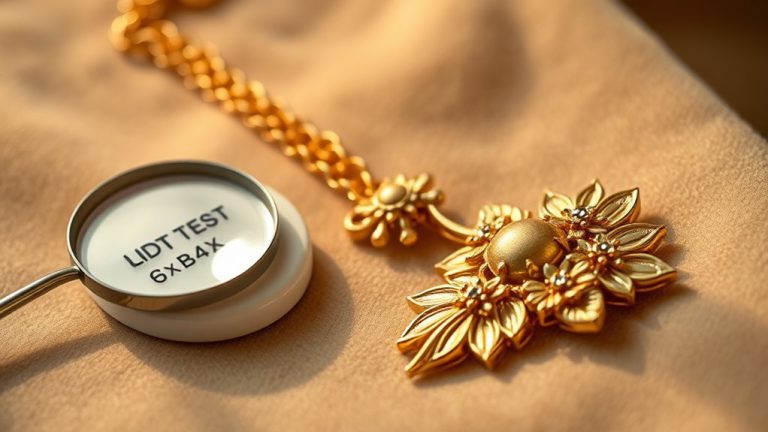
Start by using a magnifying glass or jeweler’s loupe to examine all surfaces closely.
Take high-resolution photos from multiple angles to capture any subtle marks.
Use a smartphone’s macro feature or flashlight to highlight worn or small details.
Gently clean the piece with non-abrasive materials to remove dirt that may hide the mark.
Finally, compare your findings to hallmark guides or online databases to verify the duck symbol.
| Method | Purpose |
|---|---|
| Magnifying glass/loupe | Detect tiny or faint duck marks |
| High-resolution photos | Document and analyze marks from various angles |
| Smartphone macro/flashlight | Enhance visibility of worn or subtle marks |
| Gentle cleaning | Remove dirt/tarnish obscuring marks |
| Reference guides/databases | Confirm authenticity and meaning of marks |
The Role of Ducks in European and Asian Jewelry Traditions
When you explore European and Asian jewelry traditions, you’ll find duck motifs carry deep symbolic meanings tied to loyalty, love, and harmony.
These symbols often highlight the importance of relationships and family bonds. In Chinese culture, mandarin ducks represent marital happiness and lasting partnerships, commonly featured in gold and silver pieces.
Meanwhile, Victorian European jewelry uses ducks to emphasize fidelity and trust. Ducks also signify good fortune, prosperity, and nurturing qualities in Asian craftsmanship.
Here’s what you should know:
- Mandarin ducks symbolize enduring love and marital bliss in Asian jewelry.
- Victorian-era European pieces reflect fidelity and emotional connection through duck motifs.
- Asian artisans use duck imagery to convey prosperity and family harmony.
Understanding these cultural meanings helps you appreciate the rich history behind antique duck-marked jewelry.
How Duck Symbols Influence Collectibility and Value
Because duck symbols carry rich meanings of loyalty, love, and good fortune, they often boost the collectibility of antique gold jewelry.
When you come across pieces featuring duck motifs, you’ll notice they’re rarer than common floral or heart designs, which makes them more desirable among collectors.
This rarity, combined with the deep symbolic significance, adds emotional value.
It turns these items into treasured heirlooms or thoughtful gifts.
If you find authentic antique duck jewelry in good condition with clear markings, expect it to command higher market prices, often between $400 and $550.
Additionally, knowing the historical and cultural associations tied to specific regions or traditions can further enhance your appreciation and the jewelry’s collectible appeal.
Duck symbols truly elevate both value and sentiment in antique gold jewelry.
Caring for Antique Gold Jewelry With Duck Motifs
The unique appeal and value of antique gold jewelry with duck motifs make it worth preserving with care.
To keep your pieces looking their best, follow these essential tips:
Maintain your antique gold duck jewelry’s charm by following these simple, essential care tips.
– Clean gently using a soft cloth and mild soap.
Steer clear of harsh chemicals that could damage the metal or delicate duck designs.
– Store each item separately in soft pouches or lined boxes.
This helps avoid scratches and reduce tarnishing.
– Protect your jewelry from moisture, perfumes, and lotions.
These can accelerate wear or harm the motifs.
Regularly check for wear or loosening around the duck accents.
And don’t hesitate to seek professional cleaning and repairs.
This approach will help maintain your jewelry’s beauty and value for years to come.
Frequently Asked Questions
What Are the Old Markings for Gold?
You’ll find old gold markings like 375, 585, or 750 indicating purity levels.
Symbols such as crowns or regional insignia often accompany these numbers.
They show the gold’s origin and authenticity in antique jewelry.
How Do I Know if My Duck Decoy Is Valuable?
You can tell if your duck decoy is valuable by checking its age, craftsmanship, condition, rarity, and provenance.
Consult an expert or appraiser to authenticate and evaluate it, especially if it has unique features or historical significance.
What Does the Duck Signify?
The duck signifies loyalty, faithfulness, and protection.
You’ll find it symbolizes good fortune, prosperity, and harmony.
This reminds you of trust and long-lasting relationships, making it a meaningful emblem on your antique gold jewelry.
What Are Common Gold Hallmark Symbols?
You’ll find common gold hallmark symbols like numeric stamps (375, 585, 750) indicating purity.
These stamps help you understand the gold content in your jewelry.
Maker’s initials or logos are also present, which tell you who crafted the piece.
Then, you have assay office marks showing where the gold was tested.
Finally, there are date letters specifying the year the piece was hallmarked.
All these marks work together to verify your jewelry’s authenticity.
Conclusion
Now that you know the duck mark on antique gold jewelry symbolizes love, loyalty, and protection across cultures, you can appreciate its deep historical roots.
These tiny symbols carry stories richer than a treasure chest, boosting both the piece’s charm and value.
When you spot a duck mark, you’re not just holding jewelry—you’re holding a timeless emblem that connects you to centuries of tradition and artistry.
Handle it with care, and its magic will last forever.
In conclusion, the duck mark serves as a captivating reminder of the deeper meanings and rich history behind antique gold jewelry.
Understanding its significance not only enhances your appreciation for the piece but also adds to its value.
So, the next time you encounter a duck mark, remember you’re engaging with a beautiful legacy that intertwines love, loyalty, and protection throughout time.