What Does Jewelry Do to Turn Skin Green?
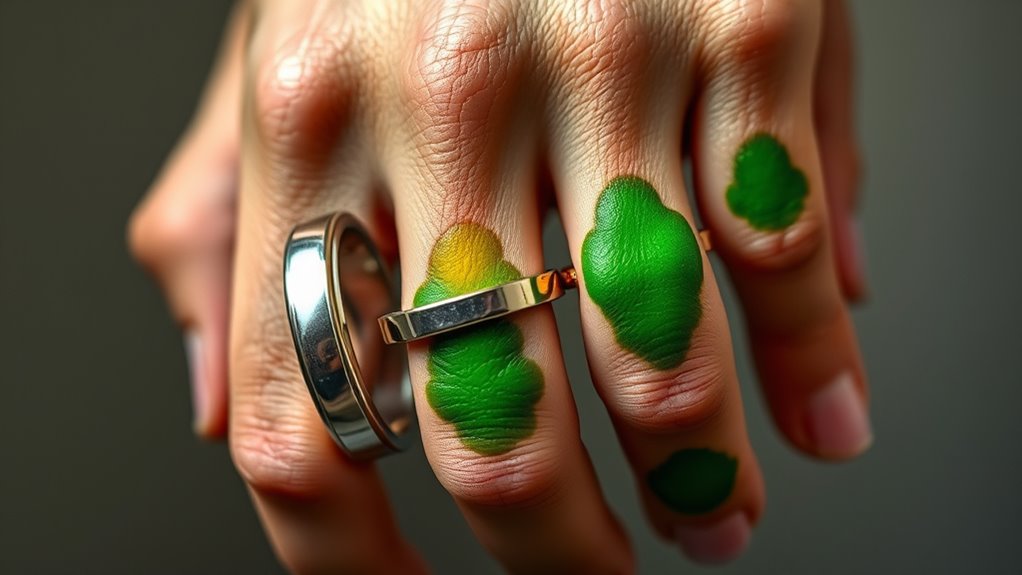
When you wear jewelry made of copper or copper alloys, it can lead to an unwanted effect: green stains on your skin. This happens because the metal reacts with your skin’s moisture, sweat, and acids.
As a result, copper oxidizes and forms green salts, which can leave marks on your skin.
Interestingly, alloys like sterling silver and lower-karat gold often have enough copper in them to cause this green discoloration as well.
Your body chemistry and environment can also play a significant role in how quickly this reaction occurs.
If you’re curious about why this happens and how to prevent it, there’s a lot more to explore on the topic!
How Copper Causes Skin to Turn Green

Have you ever wondered why your jewelry sometimes leaves a green mark on your skin?
It’s all due to copper in the metal reacting with sweat, acids, and chemicals on your skin.
Copper in jewelry reacts with sweat, acids, and skin chemicals, causing those green marks you sometimes see.
This reaction, called oxidation, causes copper to form copper salts like copper chlorides and sulfates.
These salts lead to green discoloration and skin staining.
Jewelry made from alloys containing copper—like sterling silver or 14k and 18k gold—can also trigger this effect since they have varying copper content.
The higher the copper content, the more likely you’ll see green marks from metal oxidation.
Rest assured, this green discoloration isn’t harmful; it’s just a surface chemical reaction between your skin and the copper in your jewelry.
The Role of Jewelry Alloys in Skin Discoloration

Copper’s reaction with your skin isn’t limited to pure copper jewelry.
It’s a key factor in how various metal alloys affect skin color.
Jewelry alloys like sterling silver and lower-karat gold contain copper and other reactive metals that interact with your skin chemistry.
When these metals meet sweat and oils, metal reactions produce copper salts, causing the familiar green stain or other skin discoloration.
Alloys with zinc, brass, or bronze also contribute to this effect due to their copper content.
Higher-karat gold, with less copper, reduces your chances of developing green discoloration.
While nickel in some alloys may cause irritation, copper remains the main culprit behind the green stain.
Understanding alloy composition helps explain why certain jewelry turns your skin green while others don’t.
Environmental and Body Factors Affecting Green Stains

Although metal alloys play a big role, environmental conditions and your body’s chemistry substantially influence whether your jewelry will leave green stains on your skin.
Copper oxidation is accelerated by various environmental factors, leading to noticeable discoloration.
Your skin’s pH and body chemistry also determine how metals react with sweat and moisture, affecting metal reactions and tarnishing speed.
Here are key influences:
- Sweat contains salts and acids that trigger oxidation and discoloration on contact with metals.
- Moisture from the environment or trapped in jewelry boxes speeds up tarnishing and copper salts formation.
- Your unique skin pH and body chemistry affect how strongly oxidation occurs, impacting green stain intensity.
Understanding these factors helps you minimize unwanted metal reactions and keep your skin stain-free.
Common Metals That Lead to Green Skin
Which metals are most likely to turn your skin green?
Copper tops the list, as its reaction with sweat, oils, and acids causes that familiar green discoloration.
Many metal alloys, including sterling silver—which contains about 7.5% copper—and brass, an alloy of copper and zinc, commonly lead to green stains due to copper’s oxidation.
Even zinc alloys in some costume jewelry can cause discoloration when they oxidize.
The key lies in the alloy composition: the more copper present, the higher the chance of a copper reaction on your skin.
In contrast, precious metals like platinum, stainless steel, and high-karat gold resist oxidation and usually don’t cause green skin.
Understanding these metals helps you identify which jewelry might trigger that unwanted green mark.
Preventative Measures to Avoid Green Skin From Jewelry
If you want to keep your skin free from green stains, taking simple preventative steps can make a big difference.
When metal reacts with sweat and oils, oxidation can cause discoloration or even an allergic reaction.
Here’s how to prevent skin discoloration:
Here’s how to prevent skin discoloration and keep your jewelry looking great without green stains.
- Apply a thin layer of clear nail polish on the inner surface of your jewelry. This creates a barrier layer that stops metal from reacting with your skin.
- Choose high-quality metals like stainless steel, platinum, or 14K+ gold. This will help reduce the chance of green stains.
- Avoid wearing jewelry during activities like swimming or exercising. This minimizes exposure to water and chemicals that speed up oxidation.
Following these tips helps you enjoy your jewelry without worrying about green skin.
Cleaning and Maintaining Jewelry to Reduce Discoloration
Taking preventative steps is a great start, but keeping your jewelry clean and well-maintained plays a big role in reducing discoloration.
Regularly cleaning your jewelry with mild soap, warm water, and a soft toothbrush helps remove oils and sweat that cause chemical reactions leading to oxidation.
Also, using a silver polishing cloth to gently remove tarnish can really help restore that shine.
Reapplying protective coatings, like clear nail polish or jewelry sealants, adds a barrier to prevent your skin from turning green by slowing oxidation.
Always store your jewelry properly in dry, airtight containers to avoid humidity and pollutants that can accelerate tarnish.
Effective cleaning methods and consistent jewelry maintenance work together to reduce discoloration and protect your pieces from the chemical reactions that lead to skin stains and metal corrosion.
Frequently Asked Questions
Is It Bad for Jewelry to Turn Your Skin Green?
No, it’s not bad for your jewelry to turn your skin green.
The discoloration is just a surface reaction and doesn’t harm your jewelry’s durability or appearance if you clean and maintain it properly.
What Jewellery Turns Skin Green?
Think of your skin as a garden; jewelry with copper—like brass, sterling silver, or lower-karat gold—acts like rain causing green moss to grow.
Is My Sterling Silver Real if It Turns Skin Green?
Yes, your sterling silver is real if it turns your skin green.
That green tint happens because of copper in the alloy reacting with your skin.
It’s a normal and expected reaction for genuine sterling silver.
Conclusion
When you wear jewelry, imagine tiny rivers of copper flowing beneath your skin, leaving a green trail like whispered secrets of metal and moisture.
These green stains aren’t just marks—they’re nature’s fingerprint of your body’s dance with alloys and environment.
To keep your skin glowing and clear, treat your jewelry with care.
Clean it like a delicate treasure, and shield yourself from the elements.
That way, your skin stays as radiant as your favorite piece.
In conclusion, jewelry can cause skin discoloration due to the reaction of metals, particularly copper, with moisture and sweat.
To prevent green stains, proper care of your jewelry is essential.
Regular cleaning and protection from harsh conditions will help maintain both your skin’s clarity and the beauty of your jewelry.
So, embrace your accessories while keeping your skin healthy and vibrant!